Compliance Updates
Sweden’s government proposes increased gambling tax

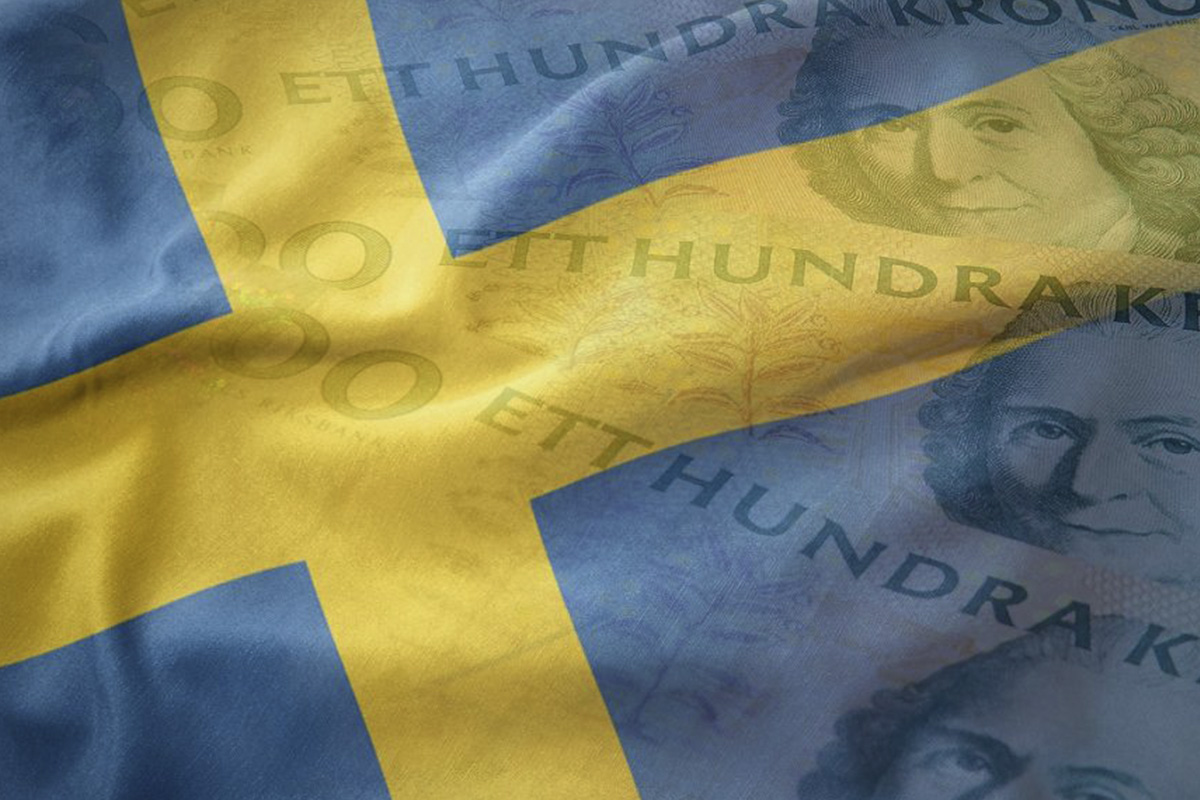
Sweden’s government has today Wednesday proposed an increase in the gambling tax, from 18 percent of GGR to 22 percent of GGR. The reason, according to the government, is that the gambling market should have stabilized since the reregulation in 2019 and that channelization is said to be high.
BOS Secretary General Gustaf Hoffstedt comments:
The announcement from the government is deeply disappointing, above all because it shows that the government does not understand or has taken to heart what kind of market it is set to govern. Even less has the government understood the vulnerable position that market is in.
We were recently able to show that channelization in the Swedish gambling market is 77 percent. Some gambling verticals, including online casino, are as low as 72 percent. The trend is also declining, in other words the channeling decreases over time.
We are already far from the state’s goal of at least 90 percent channelization, and if this tax increase is approved by the Riksdag, we will soon be down to the channelization we had before Sweden reregulated its gambling market in 2019. A reregulation that took place because Sweden had such a low channelization at the time.
Sweden’s government must perform much better than this. There is still time to withdraw the proposal, concludes Gustaf Hoffstedt.
The government’s proposal can be found in Swedish on pages 289-290 here: https://www.regeringen.se/contentassets/e1afccd2ec7e42f6af3b651091df139c/forslag-till-statens-budget-for-2024-finansplan-och-skattefragor-kapitel-1-12- appendices-1-9.pdf
Below a Google translation of the same text:
Increased gaming tax
The government’s assessment: The excise tax on gambling should be increased from 18 to 22 percent of the balance for each tax period.
The upcoming proposal should enter into force on 1 July 2024.
The reasons for the government’s assessment: One of the purposes of today’s gambling regulation is to protect the surplus from gambling activities for the general public by contributing to the financing of government activities. With the exception of gambling that is reserved for public benefit purposes, licensed gambling is taxed according to the Act (2018:1139) on tax on gambling. According to this law, excise duty is levied at 18 percent of the balance for each tax period. The balance is made up of the difference between the total stakes and the total payouts. A taxation period consists of one calendar month.
An increase in the tax on gambling should be well balanced to avoid a major negative impact on the proportion of gambling that takes place at the companies that have a license for gambling in Sweden. From the bill A reregulated gambling market it appears that a tax of just over 20 percent can be considered compatible with an aim to achieve a channelization rate of at least 90 percent (prop. 2017/18:220 p. 258). In that bill, however, a lower tax level was proposed for precautionary reasons. The current tax rate of 18 percent has applied since the Swedish gambling market was reregulated in 2019. The gambling market has since stabilized and channelization has increased significantly. In addition, measures have been taken to exclude unlicensed gambling from the Swedish market, which came into effect 1 July 2023 (prop. 2022/23:33). The reasons for caution when setting the tax level should therefore not be as strong now as during the re-regulation. An increase from 18 to 22 percent is judged to be at a suitable level to strengthen the financing of government activities, without it leading to too great an impact on the companies and the size of the tax base. The excise tax on gambling should therefore be increased from 18 to 22 percent.
The upcoming proposal should enter into force on 1 July 2024. The government intends to return to the Riksdag in the spring of 2024 with a proposal according to the above. The upcoming proposal is estimated to increase tax revenue by SEK 0.27 billion in 2024 (half-year effect) and thereafter by SEK 0.54 billion per year.








The Dutch Gaming Authority (KSA) has updated the good and bad practices for the implementation of the means test. The adjustments follow follow-up research into how online gambling providers verify whether players’ gambling behaviour aligns with their financial means.
Since October 2024, online providers have been required to conduct a means test when players wish to deposit more than €300 net (young adults aged 18 to 24) or €700 (aged 24 and over). This test is intended to prevent players from spending more money on gambling than is responsible.
Follow-up research
In February 2025, the KSA published an overview of good and bad practices for conducting the financial capacity test for the first time. Subsequently, in a follow-up investigation, the KSA conducted sample checks at 20 license holders, during which concrete financial capacity tests were assessed. The KSA concludes from this that the good and bad practices have ensured that many providers have adjusted their working methods for conducting the financial capacity test in a positive way. At the same time, areas for improvement and violations were still identified. In total, the KSA applied a total of ten improvement interviews, three warnings and one binding instruction to various providers.
More clarity
The findings from the follow-up study have been incorporated into an updated version of the good and bad practices. With this, the KSA aims to provide providers with more clarity regarding the correct implementation of the affordability test. The new version clarifies, among other things, that liquid assets, such as savings, may not be part of the affordability test. The assessment must be based on the player’s structural income. The previous explanation regarding this led to confusion among providers in practice.
Supervision
The proper application of the means test remains an important subject for the KSA. The test helps prevent players from gambling away more money than they can afford, thereby contributing to the protection of vulnerable players.
The KSA continues to supervise the implementation of the capacity test and, in response to these tightened good and bad practices, will conduct new sample checks on permit holders.
The post KSA Updates Guidelines for Conducting Means Test appeared first on EE Gaming | Global iGaming & Tech Intelligence Hub.
The Gambling Regulatory Authority of Ireland (GRAI) officially began issuing Business-to-Consumer (B2C) remote betting and betting intermediary licences on July 1, 2026. The issuance of in person betting licences will commence later this year.
With the commencement of GRAI licences, licensed operators must now meet strict obligations designed to protect consumers and uphold the integrity of the market. These include age verification requirements to prevent underage gambling, obligations to pay out winnings, safeguards such as a ban on facilitating credit or accepting credit cards and requirements on closing accounts on request. Operators are subject to ongoing compliance monitoring, and the GRAI has powers to investigate operators, enforce compliance, apply significant sanctions and take action against unlicensed or illegal activity.
Minister for Justice Jim O’Callaghan TD said: “The commencement of licences for remote betting operators establishes a clear and robust regulatory regime for the gambling sector, strengthening Ireland’s reputation as a well-regulated market, and ensuring operators are held to consistent standards of compliance. I welcome the progress made today as part of the phased implementation of licences for the gambling sector in Ireland.”
Anne Marie Caulfield, Chief Executive Officer of the GRAI, said: “We commenced the roll out of our licensing with the largest segment of the Irish betting market, remote betting. Once an operator is licensed by the GRAI, they are required to comply with all commenced obligations under the Gambling Regulation Act 2024. This means that as of today, consumers in Ireland have important new protections when they bet online or over the phone.
“The GRAI licensing application process is substantial with a number of important requirements that operators must satisfy before they can be approved, this is to check that operators are (a) fit and proper, (b) have financial capacity to provide gambling activity, and (c) that winnings are funded from lawful means.
“It is important for consumers to understand the dangers of unlicensed operators. When gambling is unlicensed, oversight is removed and the risk of harm is radically increased. Tackling illegal operators is also a major priority for the GRAI, it is a criminal offence to operate without a betting licence, and our work has commenced in identifying unlicensed operators.”
GRAI licences are being rolled out on a phased basis, applications for further licence including gaming, lotteries, B2B, charitable and philanthropic will be opened throughout 2027 and 2028.
The post GRAI Starts Issuing Remote Betting Licences appeared first on EE Gaming | Global iGaming & Tech Intelligence Hub.

Coljuegos, the regulatory authority overseeing gambling sites in Colombia, continues its efforts to block illegal gambling websites. Since the beginning of the Government of Change in 2022, Coljuegos has issued a total of 46,228 blocking orders against websites that operate unauthorized betting.
According to the president of Coljuegos, Marco Emilio Hincapié, this is the result of an intense fight against gambling structures that operate outside the law.
“Never before has an administration fought illegal gambling with such force. At Coljuegos, and through our Artificial Intelligence Center, we have optimized the detection and blocking of unauthorized websites,” the official said.
He added: “We have been working with the Ministry of ICT to simplify the process with Internet Service Providers and effectively block any page that operates or promotes gambling illegally.”
It is worth noting that, throughout the history of the entity, 55,658 blocking requests have been issued, of which 83% correspond to the Government of Change.
“While past administrations only issued around 9,000 blocking requests, we multiplied that figure by 5, and in just 4 years. Illegals have never had it so bad,” Hincapié asserted.
Furthermore, the official reiterated the importance of players only betting with the 15 operators authorized by Coljuegos.
“By playing on legal websites, you are not only guaranteeing the protection of your data and your bets, but you are also contributing to the health of less fortunate Colombians,” concluded the president of Coljuegos.
The post Coljuegos Issues More Than 46,000 Requests to Block Illegal Websites appeared first on Americas iGaming & Sports Betting News.

-

 Africa7 days ago
Booming Games renews Hollywoodbets Durban July activation partnership
-
Africa7 days ago
SpringbokCasino ties July free spins to ‘Minions in the Wild’ campaign
-
Evoplay7 days ago
Evoplay launches Safari Coins slot with fixed jackpots and collector mechanic
-
game launches7 days ago
Habanero launches Happy Hatchlings slot with screen-wide Wild transforms
-
Baltics7 days ago
From Ronaldinho Roulette to Next-Generation Game Shows: How CreedRoomz is Expanding Live Casino Entertainment
-
 Arizona Department of Gaming6 days ago
Arizona Department of Gaming Concludes Legislative Session with Approved Agency Continuation and Enhanced Spending Authority for Problem Gambling
-
Amusnet6 days ago
Connecting Business and Diplomacy: Amusnet Supports BBLF’s Annual Meeting of the Diplomatic Corps
-
Andreas Ottenschläger7 days ago
Austria: Draft bill entered parliamentary consultation