Compliance Updates
Sweden’s government proposes increased gambling tax

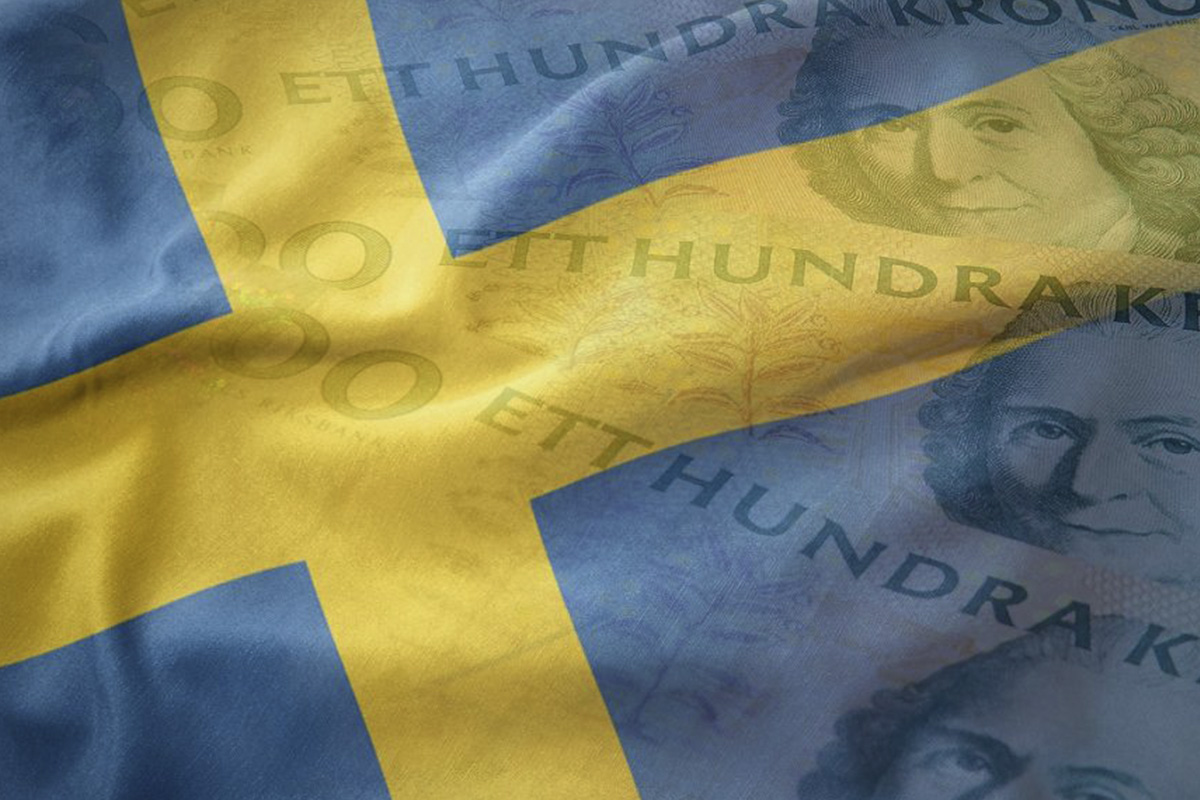
Sweden’s government has today Wednesday proposed an increase in the gambling tax, from 18 percent of GGR to 22 percent of GGR. The reason, according to the government, is that the gambling market should have stabilized since the reregulation in 2019 and that channelization is said to be high.
BOS Secretary General Gustaf Hoffstedt comments:
The announcement from the government is deeply disappointing, above all because it shows that the government does not understand or has taken to heart what kind of market it is set to govern. Even less has the government understood the vulnerable position that market is in.
We were recently able to show that channelization in the Swedish gambling market is 77 percent. Some gambling verticals, including online casino, are as low as 72 percent. The trend is also declining, in other words the channeling decreases over time.
We are already far from the state’s goal of at least 90 percent channelization, and if this tax increase is approved by the Riksdag, we will soon be down to the channelization we had before Sweden reregulated its gambling market in 2019. A reregulation that took place because Sweden had such a low channelization at the time.
Sweden’s government must perform much better than this. There is still time to withdraw the proposal, concludes Gustaf Hoffstedt.
The government’s proposal can be found in Swedish on pages 289-290 here: https://www.regeringen.se/contentassets/e1afccd2ec7e42f6af3b651091df139c/forslag-till-statens-budget-for-2024-finansplan-och-skattefragor-kapitel-1-12- appendices-1-9.pdf
Below a Google translation of the same text:
Increased gaming tax
The government’s assessment: The excise tax on gambling should be increased from 18 to 22 percent of the balance for each tax period.
The upcoming proposal should enter into force on 1 July 2024.
The reasons for the government’s assessment: One of the purposes of today’s gambling regulation is to protect the surplus from gambling activities for the general public by contributing to the financing of government activities. With the exception of gambling that is reserved for public benefit purposes, licensed gambling is taxed according to the Act (2018:1139) on tax on gambling. According to this law, excise duty is levied at 18 percent of the balance for each tax period. The balance is made up of the difference between the total stakes and the total payouts. A taxation period consists of one calendar month.
An increase in the tax on gambling should be well balanced to avoid a major negative impact on the proportion of gambling that takes place at the companies that have a license for gambling in Sweden. From the bill A reregulated gambling market it appears that a tax of just over 20 percent can be considered compatible with an aim to achieve a channelization rate of at least 90 percent (prop. 2017/18:220 p. 258). In that bill, however, a lower tax level was proposed for precautionary reasons. The current tax rate of 18 percent has applied since the Swedish gambling market was reregulated in 2019. The gambling market has since stabilized and channelization has increased significantly. In addition, measures have been taken to exclude unlicensed gambling from the Swedish market, which came into effect 1 July 2023 (prop. 2022/23:33). The reasons for caution when setting the tax level should therefore not be as strong now as during the re-regulation. An increase from 18 to 22 percent is judged to be at a suitable level to strengthen the financing of government activities, without it leading to too great an impact on the companies and the size of the tax base. The excise tax on gambling should therefore be increased from 18 to 22 percent.
The upcoming proposal should enter into force on 1 July 2024. The government intends to return to the Riksdag in the spring of 2024 with a proposal according to the above. The upcoming proposal is estimated to increase tax revenue by SEK 0.27 billion in 2024 (half-year effect) and thereafter by SEK 0.54 billion per year.














Playtech has expanded into Connecticut, marking its entry into the sixth regulated iGaming state, continuing the company’s strong upward trajectory in the US.
Having been granted an Online Gaming Service Provider licence by the Connecticut Department of Consumer Protection, expansion into the state further accelerates Playtech’s U.S. growth, strengthening multi‑state partnerships with licensed operators in the process.
After launching in Delaware late last year, this latest step reflects Playtech’s commitment to scaling in all regulated markets as demand continues to build across the US’ iGaming landscape.
With this launch, players in Connecticut will now have access to Playtech’s portfolio of high-quality award-winning iGaming content, including a combination of bespoke and exclusive titles that have deeply resonated with audiences in other regulated U.S. markets.
Jonathan Doubilet, General Manager, USA at Playtech, said: “We are thrilled to expand our presence into a sixth U.S. state. Connecticut is a well-established iGaming market with a vast player-base that we anticipate will engage strongly with our first-class offering. It’s a source of pride that our most valued partners continue to place trust in us to reach the high standards the U.S. iGaming market demands.”
The post Playtech Enters Connecticut iGaming Market appeared first on Americas iGaming & Sports Betting News.
Asia
GLI Becomes the First Company Accredited by PAGCOR to Test and Certify iGaming Platforms in the Philippines
Gaming Laboratories International (GLI) has been named an Independent Testing Laboratory (ITL) by the Philippine Amusement and Gaming Corporation (PAGCOR). GLI is the first gaming testing company to achieve the accreditation and is now authorised to test and certify iGaming platforms in the Philippines.
GLI will bring its global and unsurpassed expertise to the Philippines, helping to ensure PAGCOR meets its policy and regulatory objectives as set out in its rules. GLI’s presence and its GLI-19 Standard will also help suppliers who wish to successfully and compliantly enter the marketplace.
Submissions will be tested against “GLI Standard Series GLI-19: Standards for Interactive Gaming Systems,” which has been widely accepted and adopted by jurisdictions around the world.
PAGCOR Chairman and CEO Alejandro H. Tengco said: “Regulated gaming markets ensure a safer and more sustainable gaming industry for all to participate in. A regulated market enables compliance to responsible gaming standards and the provision of tax revenue for reinvestment back into the community. PAGCOR now requires all iGaming B2B suppliers operating in the Philippines to be accredited to ensure they comply to the rigorous requirements needed to protect iGaming players. We are pleased to acknowledge GLI as the first testing and game certification provider to be accredited in the Philippines under this new framework. GLI is a global leader in regulatory advisory, iGaming and EGM testing / certification, and data security.”
GLI President and CEO James R. Maida said: “We are grateful to PAGCOR Chairman and CEO Alejandro H. Tengco and to the entire PAGCOR team for the trust they continue to place in GLI. Under the Chairman’s skillful leadership, the market in the Philippines has improved steadily, and we are honored to be the first company to be accredited for iGaming testing and certification, and we look forward to working side- by-side with PAGCOR to meet their policy objectives.”
The post GLI Becomes the First Company Accredited by PAGCOR to Test and Certify iGaming Platforms in the Philippines appeared first on Eastern European Gaming | Global iGaming & Tech Intelligence Hub.

Digitain has successfully obtained both Manufacturer and Importer Licences in Bulgaria, marking a significant milestone in its continued expansion across regulated markets.
This dual licensing strengthens Digitain’s position in the Bulgarian market, enabling the delivery of a broader, fully compliant product portfolio to its partners.
With the Manufacturer Licence, Digitain can provide its in-house developed solutions, fully certified and tailored to local market requirements. The Importer Licence further extends this capability, allowing the distribution of certified third-party products and enhancing the overall flexibility of the offering.
Arshak Muradyan, Group Chief Compliance Officer at Digitain, said: “Securing both licences in Bulgaria is an important step in strengthening our presence in regulated markets. It allows us to deliver both our in-house solutions and a wide range of certified third-party products in full compliance with local requirements. This dual capability ensures that our partners can confidently operate and scale in the Bulgarian market with a reliable and fully compliant product offering.”
By securing both licences, Digitain reinforces its commitment to regulatory excellence and partner-focused growth. Operators targeting Bulgaria can now access a comprehensive suite of compliant, high-quality solutions designed for long-term success.
This milestone reflects Digitain’s strategic focus on global expansion, combining local compliance with scalable, future-ready technology.
The post Digitain Secures Manufacturer and Importer Licences in Bulgaria appeared first on Eastern European Gaming | Global iGaming & Tech Intelligence Hub.

-

 Centurion Winner Grand Chance™6 days ago
New from Inspired: Luck It Up™ and Centurion Winner Grand Chance™ available online & on mobile
-
Blazin' Bonus6 days ago
Booming Games releases Blazin’ Bonus
-
Australasian Hospitality and Gaming Expo7 days ago
IGT Showcases Integrated Gaming, Systems, and FinTech Innovations Designed to Drive Growth at Australasian Hospitality and Gaming Expo 2026
-
Cristiano Blanco CEO of SpinCore Group6 days ago
SpinCore Group Enters Finnish Market via Finnplay Partnership
-
Conferences6 days ago
NOVOMATIC Gaming Colombia to Showcase its Latest Innovations at GAT Cartagena 2026
-
Central Europe7 days ago
GGL Study Says Regulated Online Offerings Make Up the Majority of the Market
-
Alberta market7 days ago
Soft2Bet Evaluates Alberta Market Entry to Strengthen its Canadian Footprint
-
Enjoy7 days ago
ENJOY Unveils Hotfire Diamonds XXL to Elevate an Iconic Franchise