Latest News
EGDF: UNITY’S INSTALL FEES ARE A SIGN OF LOOMING GAME ENGINE MARKET FAILURE

Step by step, video game engines are becoming key gatekeepers of European cultural and creative sectors. Currently, Unity dominates game engine markets, Unreal being its primary challenger. These two engines are not just clear market leaders in the game industry but increasingly vital market actors in film, architecture, and industrial design and simulations. In 2022, Unity reported that globally, 230,000 game developers made and operated over 750,000 games using the Unity Engine and the Unity Gaming Services portfolio of products.
Unity’s new fee structure is going to have a drastic impact on the game industry.
Over the years, the Unity game engine has reached close to unofficial industry-standard status in some game markets. Its well-designed tools and services have lowered the market access barriers in the game industry. Furthermore, it has played a crucial role in removing technological barriers to cross-platform game development. Now, Unity has informed the game dev community that it will move from subscription-based fees to subscription and install-based fees, which will significantly increase the game development costs for most game developers relying on their services. EGDF finds it unfortunate that Unity has significantly damaged its reputation as a reliable and predictable business partner with these sudden and drastic changes in its pricing principles.
Bigger game developer studios have the luxury of being able to develop their own game engines. Consequently, market uncertainty and significantly increased service provider risks caused by Unity’s new fee structure will hit, in particular, SME game developers. It will be much harder for them to build reliable business plans, make informed decisions on game engines, and run a profitable business. Many of these studios struggled to access risk funding before Unity’s announcement, and it has only worsened their situation.
Unity’s decision will have a broader impact on the whole game industry ecosystem. Many professional game education institutions have built their curriculum on the Unity game engine. If Unity’s new pricing model starts a mass exodus from Unity’s engine, it will lead to rapid changes in professional game education itself and place many young industry professionals who have built their career plans on mastering Unity’s tools in a very difficult position.
Although Unity’s decision will cause significant challenges for the industry, EGDF kindly reminds that instead of focusing on blaming individual Unity employees for the changes, it is far more productive to focus on taking measures that increase competition in game engine markets.
Unity’s anti-competitive market behaviour must be carefully monitored, and, if required, the European competition authorities must step in.
Unity is an increasingly dominant market player in the game markets. According to Unity’s own estimate, in general, 63% of all game developers use its game engine. The share can be even higher in some submarkets. Unity estimates that 70% of top mobile games are powered by its engine. Unsurprisingly, Unity’s game engine is now a de facto standard in mobile game markets to the extent that whole formal professional game education degree programmes have been built on training its use. However, Unity’s market dominance is not just based on the quality of its game engine. It is also an outcome of aggressive competition practices and systematic and methodological work of making game developers dependent on Unity services.
How Unity bundes different services together potentially distorts competition in game middleware markets. Over the years, Unity has, step by step, bundled its game engine more and more together with other game development tools under the Unity Gaming Services portfolio. Unity is not just a game engine; it is also a player sign-in and authentication service, a game version control tool, a player engagement service, a game analytics service, a game chat service, a crash reporting tool, a game ad network, game ad mediation tool, an user acquisition service and in-game store building tool. This creates a significant vendor lock risk for game developers using Unity services. It also makes it difficult for many game middleware developers to compete against Unity and, all in all, significantly strengthened Unity’s game engine’s market position compared to its rivals.
Now, Unity is strategically using install fees to deepen the lock-in effect by creating a solid financial incentive to bundle other Unity services even closer to its game engine: “ Qualifying customers may be eligible for credits toward the Unity Runtime Fee based on the adoption of Unity services beyond the Editor, such as Unity Gaming Services or Unity LevelPlay mediation for mobile ad-supported games. This program enables deeper partnership with Unity to succeed across the entire game lifecycle.” This will, of course, drastically impact Unity’s direct competitors.
Unity’s install fees are an excellent example of Unity’s potentially anti-competitive market behaviour. It is clear that if Unity’s pricing model had, in the past, been similar to the now-introduced model, it would likely never have achieved the level of dominance it enjoys today, as more developers would have chosen another alternative in the beginning.
The fact that Unity’s new install fees are only targeted at video games and do not apply to other industries logically leads to a question: Is Unity setting prices below cost level at different market segments, or is Unity charging excessive prices in game markets? Furthermore, does the fact that Unity is now introducing an install fee on top of the licensing fee mean that licensing fees have before been below cost level? Or does the introduction of install fees on top of the licensing fees of their game engine allow them to provide other, lock-in generating, services below cost level?
In the end, Unity has built its dominant position in game markets for years and systematically made game developers more dependent on it. It is a good question if Unity has now crossed the line of abusing its market dominance on weaker trading parties that deeply depend on its services. Game productions can take years, and game developers cannot change their game engine at the last minute, so they are forced to accept all changes in contract terms, no matter how exploitative they are. Unity must know that if they had given more notice, many more developers might have had a realistic chance of abandoning Unity altogether by the time the new pricing came into play.
The new install fees will limit game developers’ freedom to conduct business as it pushes them to implement Unity ad-based business models even in games that otherwise would not have ad-based monetisation. Furthermore, this will create a competitive disadvantage for those game distribution platforms that do not use ad-based monetisation at all (e.g. subscription services and pay-per-download games), as Unity is de facto forcing them to increase their consumer fees compared to channels that allow the use of Unity’s ad-based monetisation tools.
The new install fees will likely lead to less choice for consumers. Install fees will allow Unity to extract value from games that generate a lot of installs through, e.g. virality, but do not necessarily generate money. Install fees will lead to markets where game developers want to limit the downloads and try to avoid installs from the wrong players. This can potentially kill part of the game market. For example, indie developers that have an unfortunate mix of being a success on the number of installs but that are struggling to generate revenue, or hyper-casual game studios based on combining a huge install base with minuscule revenue generated per game.
In the long run, the EU needs to update its regulatory framework to answer the challenges caused by dominant game engines.
Unity’s install fees demonstrate why the EU needs a new regulatory framework for unfair, non-negotiable B2B contract terms. Contract terms Unity has with game developers are non-negotiable. With the new non-negotiable install fee, European game developers have to either withdraw their games from markets, increase consumer prices or renegotiate their contracts with third parties. For example, if a game memory institution makes games available for download on their website, a game developer studio must now ask for a fee for it or ban making European digital cultural heritage available to European citizens. The three-month time frame Unity is providing for all this is not enough.
The Commissions should introduce a specific regulation for non-negotiable B2B contract terms. The regulation should provide sufficient time (e.g. in a minimum, six months) for markets to react to significant changes in non-negotiable terms and conditions that a service provider has communicated to their business users in a plain, clear and understandable manner (e.g. now it is unclear how Unity counts the installs). Furthermore, the Commission should bring much-needed market certainty by banning retroactive pricing and contract changes.
The Commission should include game engines in DMA. While reviewing the recently adopted Digital Markets Act (DMA), the Commission should consider lowering the B2B user thresholds and adding gatekeeper game engines under its scope. This would, for example, ensure that Unity cannot use data it collects through its game engine to gain an unfair competitive advantage for its other services like advertisement services.
The Commission should increase its R&D support for the European game industry. The fact that there is no major competitor for Unity Engine that does not require constant back-end server connection is a market failure in itself. The Unity Game engine is not fully scalable because Unity has built its engine in a way that it calls home every time it is installed to report instals for Unity. Consequently, the Commission should strengthen its efforts to support the emergence of new European game technology and business service providers. In particular, the Commission should increase its support for privacy-friendly open-source alternatives for game engines, like for example Godot or Defold or similar, that do not require constant back-end server connection and thus have no need for scalable revenue-based fees or install fees.











New title adds Fire Spins and Blitz Spins bonuses plus Standard, Super and Ultra Power Play modes at 5x, 10x and 20x stake.
Blueprint Gaming has released a new slot, Wolf Fury Fire Blitz, built around an “evolving Fire Blitz mechanic” and two bonus paths: Fire Spins and Blitz Spins.
The game uses a Fire Blitz logo above the reels as a meter. In the base game and Power Play, the supplier said every Cash and Wolf symbol contributes to the meter, with boosts able to add extra symbols and “guarantees either Fire Spins or Blitz Spins.”
Fire Spins triggers when six or more Cash symbols land in view. Each reel position spins independently to add more Cash or Wolf symbols, with new symbols resetting a three-spin counter and locking in place. Blueprint said the Wolf can land on the centre reel to collect all Cash symbols in view, then collect additional prizes that land for the remainder of the feature.
Blitz Spins activates when a Wolf symbol lands on reel three alongside Cash symbols on two adjacent reels. During the bonus, the Wolf collects every Cash symbol that lands before the reels respin, and additional Wolf symbols can lock in place, with up to three collectors active at once.
The title also includes Blueprint Gaming’s multi-level Power Play, offering Standard, Super or Ultra modes at 5x, 10x or 20x the base stake. In these modes, the company said only Cash and Wolf symbols appear on the reels.
Jo Purvis, Director of Marketing, PR and Events at Blueprint Gaming , said: “Wolf Fury Fire Blitz combines several of our most engaging mechanics into a fast-paced experience that offers players frequent feature opportunities and exciting collection gameplay. The Fire Blitz mechanic creates anticipation throughout every session, while the dual bonus structure ensures plenty of variety.
“The addition of our multi-level Power Play further enhances the experience by giving players greater control over how they engage with the game, reinforcing our commitment to delivering innovative, feature-rich content that performs across regulated markets worldwide.”
The post Blueprint Gaming releases Wolf Fury Fire Blitz slot appeared first on EE Gaming | Global iGaming & Tech Intelligence Hub.

Playson has launched 4 Chili Pots: Hold and Win, a new slot built around Hold and Win and Pots mechanics with two bonus modes and jackpots reaching 10,000x.
The game runs on a 5×3 grid and triggers a Hold and Win Bonus Game with Chili Features when red, orange or green Chili Bonus symbols land, combining with enlarged matching chilis above the reels. The chilli colour determines the feature in play: red triggers a Multi Feature that adds multipliers up to 5x; orange triggers a Mystery Feature that can award Mini, Minor or Major jackpot values or a coin value up to 75x; and green triggers a Collect Feature that gathers the value of all symbols in play, including any attached multipliers.
A golden Super Chili Bonus symbol can trigger a Super Bonus Game on an expanded 5×5 grid, with random Multi, Mystery or Collect features, including combinations. During the round, the active Super Chili Feature lands random Chili Bonus symbols until six are present, which then activates a new feature or enhances the current one.
Playson said jackpots can be triggered in both bonus modes. Filling all 15 cells in the classic bonus awards the Grand Jackpot at 3,000x, while filling all 25 cells in the Super Bonus Game awards the Super Jackpot at 10,000x. Skull-themed symbols can also appear in bonus play and transform into red, orange or green Chili Bonus symbols. The title includes two Buy Bonus levels, allowing players to trigger the Bonus Game or Super Bonus Game with one, two or three Chili Features.
Anton Ivannikov, CPO at Playson, said: “Our fiery new title showcases our continued focus on evolving proven mechanics in fresh and exciting ways. By combining two player-favourite features with layered bonus progression, dynamic Chili Features and a Super Bonus Game offering even greater rewards, we have created a title that delivers excitement throughout every stage of play.
“Complemented by its vibrant Mexican fiesta theme and engaging gameplay, we are confident 4 Chili Pots: Hold and Win will prove to be another valuable addition to our partners’ casino offerings.”
The post Playson releases 4 Chili Pots: Hold and Win with dual bonus modes appeared first on EE Gaming | Global iGaming & Tech Intelligence Hub.

Under the theme “Perspectives,” a total of 43 compliance staff members from the Merkur Group across various countries gathered from 30 June to 1 July to further develop compliance processes in a sustainable manner. Colleagues from Germany, Spain, England, Malta, Australia and the US traveled to the two-day meeting at Benkhausen Castle, the in-house training centre of the Merkur Group. The workshop set the stage with expert presentations on global and digital topics such as cybersecurity, risk management and artificial intelligence. A panel discussion featuring representatives from various international companies within the Merkur Group, as well as a digital quiz, rounded out the programme.
In keeping with its guiding principle, the workshop focused on sharing experiences, fostering global networking and providing impetus for the further development of compliance processes. Because informal exchanges are also key to close cooperation, the evening programme created a relaxed atmosphere and gave participants the opportunity to continue their conversations, make new connections, and further strengthen team spirit across company and national boundaries.
“The ideas and diverse perspectives gained during the workshop will now be incorporated into our day-to-day work and help us to continuously improve collaboration and existing processes,” said Ludwig Beckmann, Chief Compliance Officer of the Merkur Group.
The concluding feedback session also highlighted just how valuable the international exchange is. The term “collaboration” came up particularly often, a clear indication of how highly the participants value working closely together within the international compliance network.
The post Merkur Group Strengthens Global Compliance Strategy appeared first on EE Gaming | Global iGaming & Tech Intelligence Hub.

-

 Compliance Updates6 days ago
Arizona Department of Gaming Issues Cease-and-Desist Orders to Multiple Operators Linked to Underage Gambling and Illegal Activity
-
 Compliance Updates6 days ago
KONAMI GROUP’s Konami Gaming Inc. First to Submit Manufacturer License Application in Japan’s Emerging IR Market
-
Latest News7 days ago
PG Soft appoints Hugo Baungartner as General Manager LatAm
-
Canada7 days ago
Canada’s Safer Gambling Gap: Why Market Success Doesn’t Always Equal Player Safety
-
Latest News7 days ago
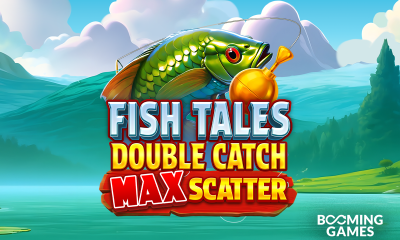
Booming Games launches Fish Tales: Double Catch Max Scatter
-
Latest News7 days ago
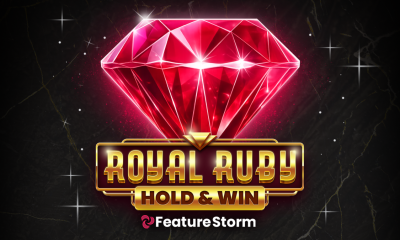
Tom Horn Gaming ships Royal Ruby FeatureStorm slot worldwide on 14 July 2026
-
Latest News7 days ago
BC.GAME names Guillermo Ochoa brand ambassador for Mexico push
-
Latest News7 days ago
PG Soft names Hugo Baungartner as General Manager LatAm