Betfair
Cruzeiro Esporte Clube Join Forces with Betfair

The newly promoted Brazilian Serie A side, Cruzeiro Esporte Clube have landed a new sponsorship agreement with the UK-based operator, Betfair.
As part of the agreement, the betting firm’s logo is incorporated on the chest of the club’s shirt, which is back in Serie A of the Brazilian Championship after a recent promotion after three years.
The agreement covers the men’s team and an essential space for brand awareness on the women’s kits – on the back, at the top.
Gabriel Lima, CEO of the club, said: “This historic partnership is the size of Cruzeiro. It has a lot of strength, a huge potential. The club is going through a very special moment. With serious and professional work, we are recovering the fans’ trust, which is fundamental for us. Closing with Betfair, one of the giants in its segment, is an important step on Cruzeiro’s way back to its well-deserved prominent position in Brazilian football.”
Furthermore, a series of activations aimed directly at the approximately 10 million fans that comprise Naço Azul, including raffles and awards for VIP tickets and official products, exclusive promotions and experiences with Raposa talent, will be held.
Besides that, the operator has assured brand visibility in all Cruzeiro digital media, training epaulettes, interview backdrops, prisms in the stadium, logo on the team bus, and the release of a personalized club legends program.
Kimberley Daly, Managing Director of Betfair International, said: “We are very excited about this partnership, as we will have the opportunity to support Cruzeiro at a special and important moment in its 100+ year history.
“This partnership is a demonstration of Betfair’s commitment and investment in the club’s professional men’s and women’s teams, without losing focus on what is most precious to Cruzeiro: the fans. With Betfair, the game is different, and we put fans at the heart of everything we do to bring them experiences that only Betfair can offer.”
Powered by WPeMatico



Betfair has launched Alan Shearer’s ‘Hot Take Hotline’ ahead of this summer’s World Cup, giving fans a way to leave the former England striker voicemails with their opinions during the tournament.
UK fans can call 0800-707-4073 to submit “hot takes, frustrations and opinions”. Betfair said calls from the UK are free of charge.
According to Betfair, Shearer will respond to selected messages on a weekly basis during the tournament, with content starting next week following England’s warm-up matches. Topics include England’s chances, Scotland’s prospects, team selections, VAR and breakout players.
To promote the launch, Betfair shared an example exchange with Shearer after a fan message asked: “One Premier League title in 18 years, and an eight-game managerial spell that ended in relegation shouldn’t qualify someone as a Premier League all-time great, should it?” Shearer’s reply was: “That’s one Premier League title more than you!”
Betfair spokesperson James Mackie said: “When it comes to England at a World Cup, everyone and their nan has an opinion. At Betfair, we love to celebrate those big, bold takes that make football the beautiful game. So, we’ve launched Shearer’s Hot Take Hotline to give fans the opportunity to put their steaming opinions to an English football legend, and each week Alan will call it how it is.”
The post Betfair launches Alan Shearer ‘Hot Take Hotline’ for World Cup fan voicemails appeared first on Eastern European Gaming | Global iGaming & Tech Intelligence Hub.
Betfair
Flutter Brazil brings Betnacional and Betfair in Copa do Nordeste to promote Responsible Gaming

The semifinal clash of the Copa do Nordeste between Sport Recife and Fortaleza, taking place on May 20 and 27, will feature Flutter Brazil’s brands in a joint activation aimed at reinforcing the commitment to safe entertainment and player protection.
Flutter Brazil, the group that operates Betnacional and Betfair, will promote the “Flutter Brazil Game” during the semifinal ties, with Sport Recife, sponsored by Betnacional, facing Fortaleza, which will feature Betfair’s spot sponsorship for the decisive stage of the regional tournament.
Beyond the on-field competition, the initiative will serve as a platform to amplify messages around Responsible Gaming, balance, and safe entertainment in the betting sector.
The initiative reflects Flutter Brazil’s strategic goals for 2026, focused on brand building, reputation, and the consolidation of a transparent and responsible operation aligned with Brazil’s regulated market framework.
Controlling two of the sector’s leading brands in Brazil, the group recently marked its first year of operations in the country, combining local expertise and regional management with Flutter Entertainment’s global scale and governance standards.
Flutter Brazil emphasizes that responsible entertainment is a non-negotiable pillar and defines betting strictly as a recreational activity, not a source of income.
“The Flutter Brazil ecosystem was built with the purpose of raising standards of integrity, safety, and responsibility in the Brazilian betting environment.
By integrating Betnacional and Betfair sponsorships in a moment of high visibility and regional relevance, we reaffirm that responsible play and balance are not just messages, but part of our operational philosophy and communication DNA,” said Álvaro Garcia, CMO of Flutter Brazil.
Reinforcing its Responsible Gaming agenda and in line with local regulation, Betnacional has developed awareness and player protection initiatives, including the “Play Like a Senior” campaign featuring Vinícius Júnior, focused on safe entertainment practices.
The company also partners with institutions such as IBJR and EBAC, actively contributing to education, prevention, and player support initiatives.
To ensure safety, Flutter Brazil continuously invests in technology, education, and consumer protection. Its platforms offer configurable tools throughout the player journey, allowing users to set deposit limits, loss limits, session time limits, and self-exclusion options.
The Sport Recife vs Fortaleza activation also reinforces how regulatory progress has increased sector maturity in Brazil, highlighting the importance of operators committed to transparency, innovation, technology, and responsibility.
Flutter Brazil is one of the largest betting ecosystems in Brazil, formed by the merger between NSX Brasil (owner of Betnacional) and Flutter Entertainment, a global leader in the sector and owner of Betfair.
With Brazilian-led operations, the company combines advanced technology with deep local market understanding, promoting a safe, transparent, and responsible entertainment experience. Flutter Brazil also maintains a strong partnership with the Brazilian Institute of Responsible Gaming (IBJR).
The post Flutter Brazil brings Betnacional and Betfair in Copa do Nordeste to promote Responsible Gaming appeared first on Americas iGaming & Sports Betting News.
BETBY
The clash between the legislative offensive and technical rigor in the Brazilian betting market

The iGaming market in Brazil is going through one of the most decisive weeks of 2026.
At the center of the agenda is a coordinated movement in the National Congress that seeks the total ban of the activity, in direct contrast with the efforts of the Executive Branch to professionalize oversight and with economic data that refute the narrative of a financial crisis caused by the sector.
While the government bloc intensifies its prohibitionist discourse, the sector responds with statistical evidence and investments in governance, demonstrating an institutional maturity that challenges the current political rhetoric.
The progress of PL 1808/2026 and the risk of informality in Brazil
The Workers’ Party (PT) caucus in the Chamber of Deputies formally introduced Bill 1808/2026, an initiative that seeks to completely ban fixed-odds betting operations in the national territory.
Led by Congressman Pedro Uczai, the proposal gathered 68 signatures and proposes the immediate blocking of websites, applications, and the interruption of financial flows through Anatel and the banking system.
The central argument focuses on protecting public health and combating household indebtedness. However, sources in the sector indicate that the government’s communication strategy has a political-electoral background, aiming for popular appeal in an election year.
The feasibility of a total ban is considered low due to fiscal dependence on targets set by the Ministry of Finance, which relies on revenue from the sector to balance the budget.
“The attempt at a total ban ignores opportunity cost and national security risks,” the editorial analyzes.
“By proposing the closure of the legal market, the legislature does not eliminate demand, but instead transfers it entirely to clandestine operators.
In practice, prohibition is an invitation to strengthen organized crime, removing consumer protection tools and the billions of reais in revenue that the State has already recorded.
The illegal market is the only one that celebrates such a proposal.”
Appointments at SPA-MF: the technical and law enforcement profile in betting oversight
Parallel to the turbulence in Congress, the Ministry of Finance formalized the leadership structure of the Secretariat of Prizes and Betting (SPA).
Daniele Correa Cardoso was appointed as Secretary, bringing her legal expertise and experience in responsible gambling monitoring.
The major development, however, is the appointment of Fabio Augusto Macorin as Deputy Secretary.
Macorin has been a Federal Police officer for 19 years, specializing in cybercrime and electronic banking fraud investigations.
His background at the National Police Academy and in the Cybercrime Repression Service signals that the government’s priority is to build an impenetrable technical barrier against money laundering and non-compliance with regulatory rules.
The presence of a Federal Police official in the deputy leadership sends a direct message that oversight will be carried out with investigative rigor.
“The confirmation of names with technical and investigative profiles at the SPA is a clear message of stability to the market,” the analysis notes.
“The focus of the department is not only revenue collection, but the construction of an integrity environment where real-time monitoring technology will be the main tool against illegality.
The experience of Fabio Macorin in cybercrime raises the compliance standards required from operators, shielding the system against data misuse and financial fraud.”
LCA Consultoria study: data demystifies the role of betting in indebtedness
An unprecedented study released by LCA Consultoria Econômica in Brasília presented evidence that directly challenges the prohibitionist narrative.
The report indicates that spending on betting accounts for only 0.46% of household consumption, a percentage significantly lower than income commitments to other expenses.
The study shows that individual default rates, which reached 5.2% in February 2026, have been rising since 2021, a period before the boom in the betting market.
The determining factor for indebtedness is the expansion of short-term and emergency credit, such as credit cards and overdrafts, whose interest rates disproportionately pressure income.
While betting represents a small fraction of spending, financial charges from debt consume significantly larger portions of Brazilian households’ budgets.
“The figures presented by LCA serve as a necessary counterpoint to the heated rhetoric in Congress,” the weekly summary observes.
“The demonization of betting as the sole cause of default does not hold up under statistical scrutiny.
The average monthly spending of bettors is R$122, representing 3.3% of regular income, an insignificant amount compared to the 30% of income that indebted families allocate to debt servicing. Blaming betting for indebtedness ignores the deeper roots of easy access to expensive credit and the lack of financial education in the country.”
Demographic profile: the distinction between bettors and defaulters
The LCA study also revealed a clear distinction between the betting public and the profile of indebted Brazilians. Currently, Brazil has 81.2 million defaulters registered with Serasa, while the total number of unique CPFs that placed bets is 25.2 million.
It was found that more than 74% of bettors are under 40 years old, while more than 54% of defaulters are over 40.
This demographic divergence suggests that the groups most affected by default do not coincide with the audience of sports betting.
Additionally, betting expenditure is comparable to spending in the alcoholic beverages sector and falls within the leisure category, which historically represents about 8.5% of household income.
These data reinforce that the problem of indebtedness is linked to the poorly planned use of highly expensive credit lines, facilitated by new digital technologies.
“The demographic analysis shows that Brazil’s default problem is not derived from gambling,” the editorial reinforces.
“The group that owes the most in Brazil is older than the group that bets the most.
The political narrative attempts to create a correlation that economic data disproves.
Keeping the market under a regulated framework is the only way to ensure that control tools continue to operate, preventing bettors from migrating to the clandestine market, where there are no credit limits or consumer protections.”

Market expansion: Betfair invests in authority and BETBY reports record growth
On the commercial front, the sector shows remarkable resilience. Betfair announced commentator Mauro Beting and narrator Rômulo Mendonça as its new brand ambassadors.
The strategy focuses on journalistic credibility and data analysis to connect the brand with digital audiences in an authentic way.
Simultaneously, technology provider BETBY reported a 61% growth in Gross Gaming Revenue (GGR) in the first quarter of 2026.
The company reached historical records in March, driven by product development and global expansion.
A 38% increase in the number of active players highlights the strength of engagement in the market and the consolidation of the industry as a solid pillar of the digital economy, even amid legislative uncertainties.
“Investment in authoritative figures and the exponential growth of technological infrastructure show that the sector has already moved beyond the phase of mere curiosity,” the analysis highlights.
“Companies like Betfair and BETBY are focused on delivering long-term value, investing in AI and proprietary trading models.
Strong growth in engagement metrics proves that the market is maturing and that international partners trust the stability of the product and the strength of Brazilian demand.”
Strategy and expansion: JHSF consolidates luxury assets in Uruguay
Despite regulatory turbulence and political debate in the domestic scenario, Brazilian private capital shows strength and long-term vision by seeking stable jurisdictions to consolidate hospitality and entertainment assets.
The JHSF group, a reference in the high-income market and controller of brands such as Fasano, announced the acquisition of Enjoy Punta del Este in Uruguay for approximately R$800 million (US$160 million).
The deal involves the transfer of all shares of Baluma S.A., operator of the complex that is a landmark in the Southern Cone.
With a structure that includes a 4,000 m² casino, 550 slot machines, 75 gaming tables, and a dedicated poker room, the development strengthens JHSF’s portfolio, which already includes shopping centers, luxury hotels, and even the Catarina Executive Airport.
“The acquisition of Enjoy by JHSF is a strategic diversification move that positions Brazilian capital in a mature and highly profitable market,” the weekly summary analyzes.
“By taking over a resort with 292 rooms and a full events infrastructure, the group founded by the Auriemo brothers not only expands its international footprint but also establishes a reserve of value and operational know-how in land-based casinos.
It is proof that Brazilian investors have an appetite for the sector, but require the legal certainty that Uruguay currently offers more consistently than Brazil.”

Innovation and intelligence: SinalOn leads the rise of prediction markets
In the field of technology and data analysis, SinalOn is gaining traction in a segment that already moves more than US$30 billion globally, but was still underexplored in Latin America: prediction markets.
Operating as a true “probability exchange,” SinalOn breaks from the traditional betting model by adopting a peer-to-peer system, where the platform acts only as an infrastructure provider and intermediary.
The company, led by Sandro Santos, aims to transform collective perceptions about future events, from elections to economic indicators, into structured market intelligence.
With a strong compliance foundation, including KYC and AML mechanisms, SinalOn seeks to actively engage with regulators to define its own space, distinct from pure recreational gambling.
“SinalOn raises the level of debate by introducing the concept of forecasting, proving that the sector is plural and essential to the new data economy,” the editorial highlights.
“By focusing on collective intelligence, the platform offers an analytical tool that often outperforms experts in accuracy.
The goal is not only to adapt to regulation but to contribute to its development, showing that Latin America has the potential to become a global hub for prediction markets based on cutting-edge technology and regulatory transparency.”
Responsible gaming: the effectiveness of the government’s self-exclusion platform
The viability and success of a regulated market find their strongest argument in consumer protection data.
The federal government’s self-exclusion platform, integrated into the Gov.br system, recorded nearly 463,000 blocks on authorized betting sites in just four months of operation.
The tool allows citizens to restrict their access to licensed operators to prevent financial harm and protect mental health.
Data from the Secretariat of Prizes and Betting (SPA-MF) indicate that around 40% of users reported loss of control over gambling as the main reason, and the vast majority, 69.86%, opted for an indefinite block.
This massive voluntary adoption shows that the population seeks and uses self-control mechanisms when they are offered transparently and centrally by the State.
“The success of self-exclusion is the definitive argument in favor of regulation,” the summary concludes.
“Nearly half a million records show that Brazilian citizens want protection tools that simply do not exist in the illegal market.
The integrated self-exclusion model proves that regulation is the only way to ensure bettor protection and dignity.
Brazilian capital, exemplified by JHSF, and innovation from SinalOn seek stable jurisdictions, but it is robust internal regulation, focused on responsible gaming, that will ensure these investments and social protections thrive within our borders.”
The post The clash between the legislative offensive and technical rigor in the Brazilian betting market appeared first on Americas iGaming & Sports Betting News.

-

 Affiliate Industry6 days ago
Hub Affiliations Triumphs at the iGB Affiliate Awards 2026: Winner of Programme/Network Campaign of the Year
-
Austria6 days ago
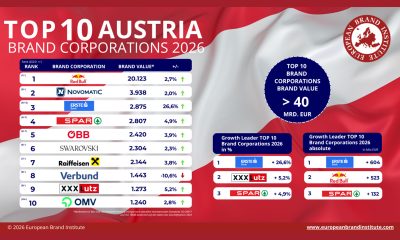
Austrian Brand Value Study: NOVOMATIC Defends Top Ranking
-
Latest News6 days ago
N1 Partners at iGB L!VE 2026: Bringing Together Affiliates, Art and Innovation
-
Amusnet6 days ago
Amusnet Releases its Latest Video Slot “Golden Snake”
-
Africa6 days ago
PopOK Gaming sponsors Botswana’s TT Cup Challenge horse racing event
-
Betsson CEO Pontus Lindwall6 days ago
Gaming in the Nordics launch event sets annual Copenhagen conference from 2027
-
Azerbaijani Parliament6 days ago
Azerbaijan to Impose Tougher Penalties for Illegal Online Gambling
-
Amusnet6 days ago
Weekend Reels | Week 27: Slot Drops & Trends