Latest News
Bud Light NEXT Celebrates Climate Neutral Certification Ahead of Earth Day 2022

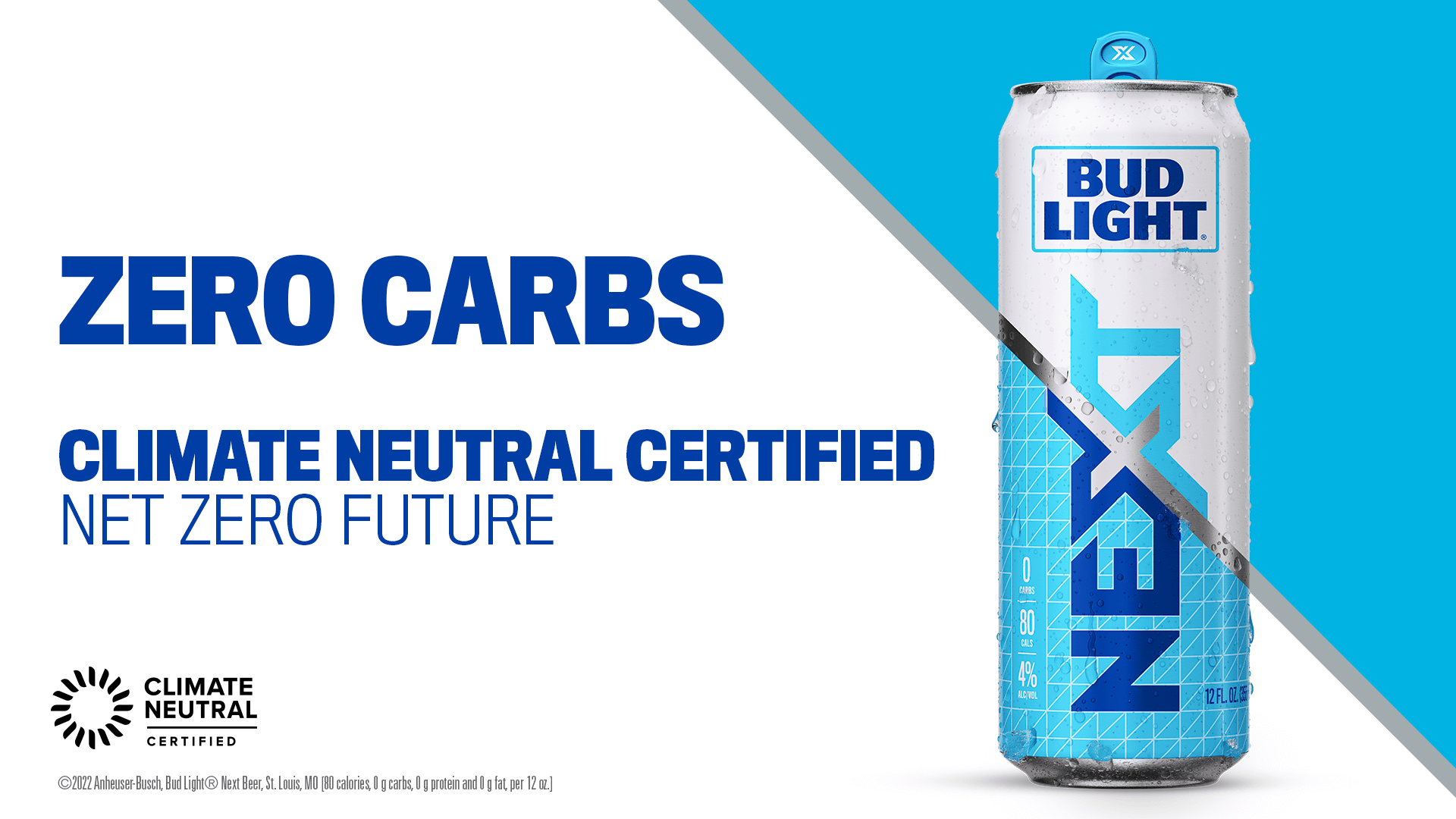
Today, as Earth Day 2022 approaches, Bud Light NEXT is proud to announce it has completed the process to become Climate Neutral Certified. By measuring and offsetting last year’s carbon emissions and implementing reduction plans for future emissions, Bud Light NEXT has met the independent certification standard from Climate Neutral, a nonprofit organization working with brands and consumers to eliminate greenhouse gas emissions. The new designation comes just two months after hitting store shelves as Anheuser-Busch’s first-ever zero carb beer.
Climate Neutral’s certification builds on internationally recognized standards for carbon measurement, neutrality, and reduction. When Climate Neutral certifies a brand such as Bud Light NEXT, it means the brand has chosen to be accountable for the greenhouse gas emissions generated in the production and operations of their goods or services. To showcase its commitment, Bud Light NEXT will proudly feature the Climate Neutral certification on its packaging beginning in June.
“When we launched Bud Light NEXT, we wanted to bring a beer to market that was all about breaking barriers, just like the consumers it was brewed for,” said Andy Goeler, Vice President of Marketing, Bud Light. “We have a huge opportunity with Bud Light NEXT to take bold action that creates a better future for our consumers and the next generations to come, and our Climate Neutral certification is a big step in that journey for us.”
In honor of this milestone, Bud Light will also be working with its leading esports partner – League of Legends Championship Series (LCS) – to offset 100% of the electricity used during the LCS Spring Finals in Houston, TX at NRG Stadium taking place April 23-24 with clean, renewable sources from wind power.
Today’s announcement for Bud Light NEXT builds on recent actions that Bud Light has taken to protect the environment and encourage consumers and partners to do the same.
· During the 2021 NFL Season, Bud Light was the first major beer brand to join the How2Recycle® labeling program to educate and inspire consumers to recycle their beer bottles, cans and packaging.
· Ahead of Super Bowl 56, Bud Light NEXT teamed up with innovative fleet partners Nikola Corporation and BYD Motors to conduct a zero-emissions beer delivery of Bud Light NEXT.
“We’re excited that Bud Light NEXT is joining our movement, as one of hundreds of brands that have earned the Climate Neutral Certified designation,” said Austin Whitman, CEO of Climate Neutral. “Brewers such as Anheuser-Busch, alongside their brands like Bud Light NEXT, have a tremendous reach with their operations and their consumers. Their involvement is a proof point that climate change is now an issue of widespread importance. And their actions show that we all have ways to respond immediately and visibly to it by avoiding, removing, and reducing greenhouse gas emissions.”
With this milestone, Bud Light NEXT is not only Anheuser-Busch’s first-ever zero carb beer but is also positioned to become the company’s first net zero carbon footprint beer. Bud Light NEXT is just one part of the company’s larger ambition to achieve net zero by 2040 through industry-leading sustainability initiatives.
To follow the latest on Bud Light NEXT, visit BudLight.com and follow Bud Light on Facebook at Facebook.com/BudLight, on Twitter at @BudLight, and on Instagram at @BudLight.
Powered by WPeMatico

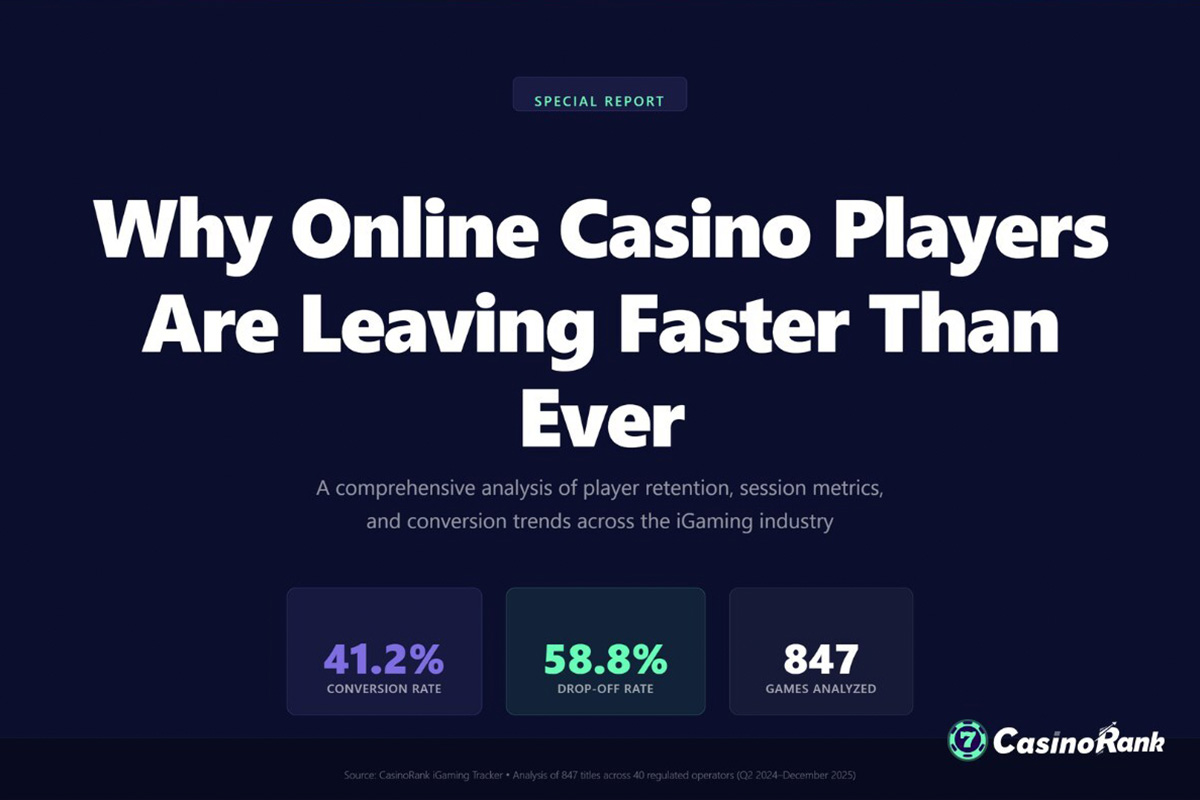
Online casino engagement is breaking down faster than operators anticipated, according to new research by CasinoRank. The analysis tracked player behaviour across 847 slot, crash and live dealer titles over 18 months and shows that while players are logging into casinos more frequently, their willingness to stay and engage is declining. Session frequency rose 23% year over year, while median session duration fell 18%, pointing to a shift towards shorter, faster interactions rather than sustained play.
The research draws on aggregated session data from 40 operators across Europe, Latin America and Asia between Q2 2024 and December 2025. Across markets, a consistent pattern emerged: platforms that introduced additional layers between app open and first gameplay experienced higher early-session abandonment, even when traffic increased. Personalisation layers, lobby restructuring, promotional overlays and navigation changes that delayed the first meaningful interaction were repeatedly linked to players exiting before placing a bet.
Key patterns:
• Players opening casino apps more often but exiting earlier
• Higher abandonment when friction appears before first gameplay
• Steeper retention declines as response times reach double-digit seconds
• A growing share of session losses occurring before gameplay begins.
The findings suggest the window to earn engagement has collapsed to seconds. Mobile-first behaviour has reduced tolerance for slow loading, unclear navigation or delayed gameplay. Retention declines steadily as response times increase, with the sharpest drop once delays extend into double-digit seconds.
Game performance data reflects the same shift. Titles built around immediately understandable mechanics consistently maintain top-ranking visibility longer than feature-heavy games with layered bonus structures or complex progression systems. As engagement windows shorten, complexity is increasingly perceived as friction rather than innovation.
Dylan Thomas, credibility lead at CasinoRank, said the findings point to a structural change rather than a temporary fluctuation. “Engagement is not falling. It is fracturing. Players are returning more often, but committing less time per visit,” Thomas said.
“Platforms now have seconds, not minutes, to earn the first meaningful action.”
The post CasinoRank Data Reveals an Attention Crisis in Online Casino Gaming appeared first on Eastern European Gaming | Global iGaming & Tech Intelligence Hub.
GambleAware
GambleAware Reports Success for Public Health Campaign to Raise Awareness of Gambling Harm and Stigma
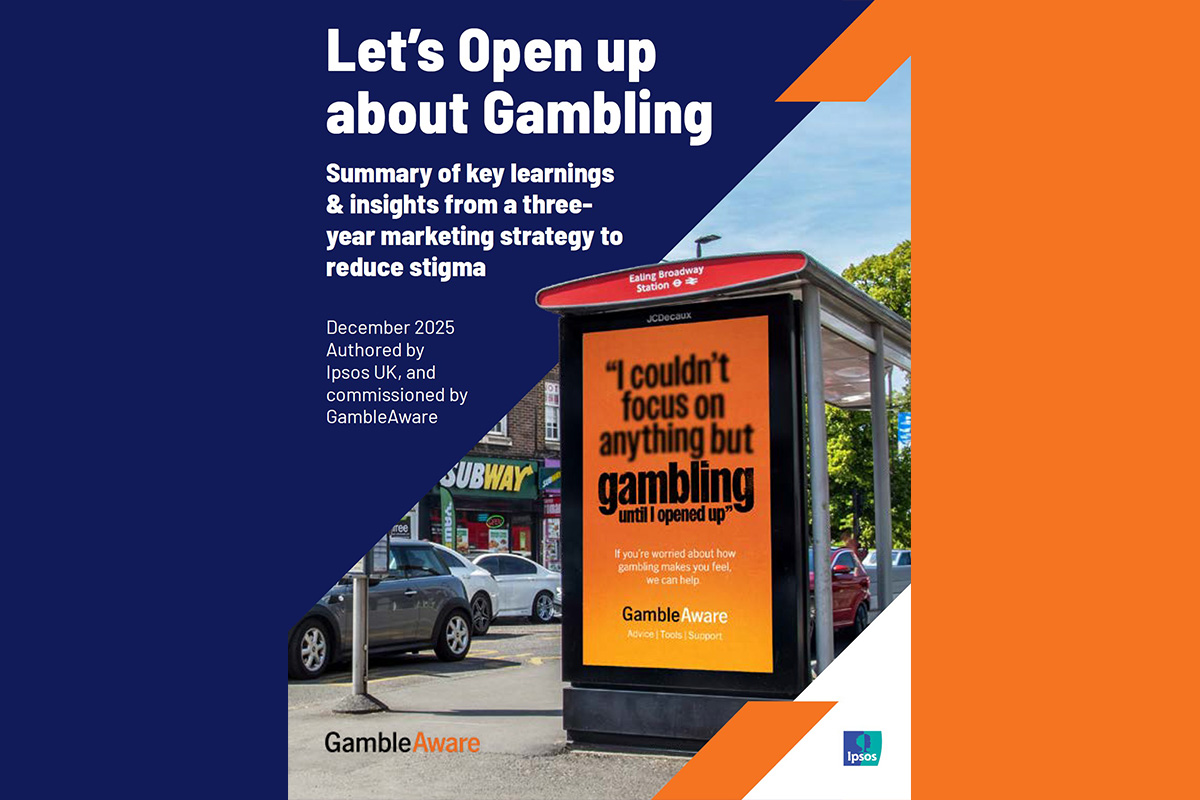
GambleAware has revealed the impact of its groundbreaking three-year marketing campaign to reduce gambling stigma and encourage people to seek support for gambling harms. The charity’s campaign drove significant behaviour change, with over 90% of the target audience reached taking action, including seeking advice and using digital tools for support.
Despite these achievements, GambleAware warns that urgent action is needed to curb gambling advertising, as operators spend up to £2 billion annually – far outweighing the amount spent on public health messaging. The charity is calling for more public health campaigns to reduce gambling harms in 2026 and stronger restrictions to ensure people are aware of the risks.
GambleAware’s campaign, “Let’s Open Up About Gambling”, was the first public health campaign of its kind designed to reduce the stigma people face, which can stop people asking for help when experiencing gambling harm.
The campaign ran across three phases between April 2023 and May 2025, and featured advertising, media campaigns and partnerships with other organisations, with creative assets co-created with individuals with lived experience of gambling harms. The campaign followed a strategy to use the real stories and feelings of real people to ensure its messages truly resonated, and aimed to raise awareness of gambling harm, stigma and the support available for anyone who may be struggling.
The campaign has been independently evaluated by Ipsos, who produced the new report. It found that the campaign led to change, including increasing people’s awareness and understanding of gambling harms. As well as the 90% of the target audience who saw the campaign and said they had taken action as a result, such as searching GambleAware online for more advice, two in five of the target audience also said they had a conversation about gambling as a result of the campaign. The campaign also increased uptake of support and digital tools on GambleAware’s website, such as its Service Finder tool and Self-Assessment tool.
The report also contains learnings and recommendations gained from the campaign, which are being shared by GambleAware to help inspire and inform future campaigns to reduce gambling harms. Recommendations include that future campaigns should be co-created with people who have lived experience, who can share their personal stories to build trust and connection and reduce stigma by showing how anyone can be affected.
GambleAware is calling for similar campaigns to reduce gambling harms to be run in 2026 – following the introduction of the new statutory gambling harms system – any future public health campaigns will be carried out by the new prevention commissioner. GambleAware is also calling for more restrictions on gambling advertising including for health warnings to be put on all gambling advertising and for them to signpost to where people can get help3.
Emma Munro-Faure, GambleAware Director of Marketing, said: “We’re proud that this campaign helped thousands of people to seek support for gambling harms. But stigma remains a major barrier, and with gambling companies spending £2 billion a year on advertising, we need stronger restrictions and clearer signposting to the free help and support available.”
Matt Gainsford from Lucky Generals, the lead creative agency that worked to produce the campaign, said: This was one of the most important briefs we’ve worked on. We’re incredibly proud of the impact the campaign has had, particularly when you look at it in the context of what the gambling industry spend on advertising. However, breaking down stigma is more than a three year job and we hope this is the beginning of a long-term, sustained effort to get millions more across Great Britain to open up about gambling.”
Maxine Ames, Strategic Planning Business Director at Manning Gottlieb, added: “Working on GambleAware’s ‘Let’s Open Up About Gambling’ campaign was one of the most fulfilling and impactful projects I’ve had the privilege of working on. The media strategy we developed was built around three carefully orchestrated phases – Educate, Reassure, and Enable – each designed to meet people where they are in their journey and guide them toward support. What made this campaign so special was how we used behavioural signals and contextual targeting to intercept people at moments of risk, while leveraging trusted environments to model help-seeking behaviour. Seeing our strategic approach achieve 98% reach across our target audience was incredibly rewarding but this wasn’t just about reach and frequency; it was about using our craft to genuinely help people and reduce stigma around gambling harms.
Tracy Madlin, who shared her lived experience of gambling harm as part of GambleAware’s campaign, supporting its installation featuring 85,000 poker chips at Westfield London, said: “Throughout my life I felt stigma on occasions, especially in my teens and later in life due to being female. Being part of the stigma campaign was amazing and I felt so very proud to be part of such an amazing campaign to help prevent gambling harm, the campaign I believe is saving lives and shows there is nothing to be ashamed of.”
The post GambleAware Reports Success for Public Health Campaign to Raise Awareness of Gambling Harm and Stigma appeared first on Eastern European Gaming | Global iGaming & Tech Intelligence Hub.
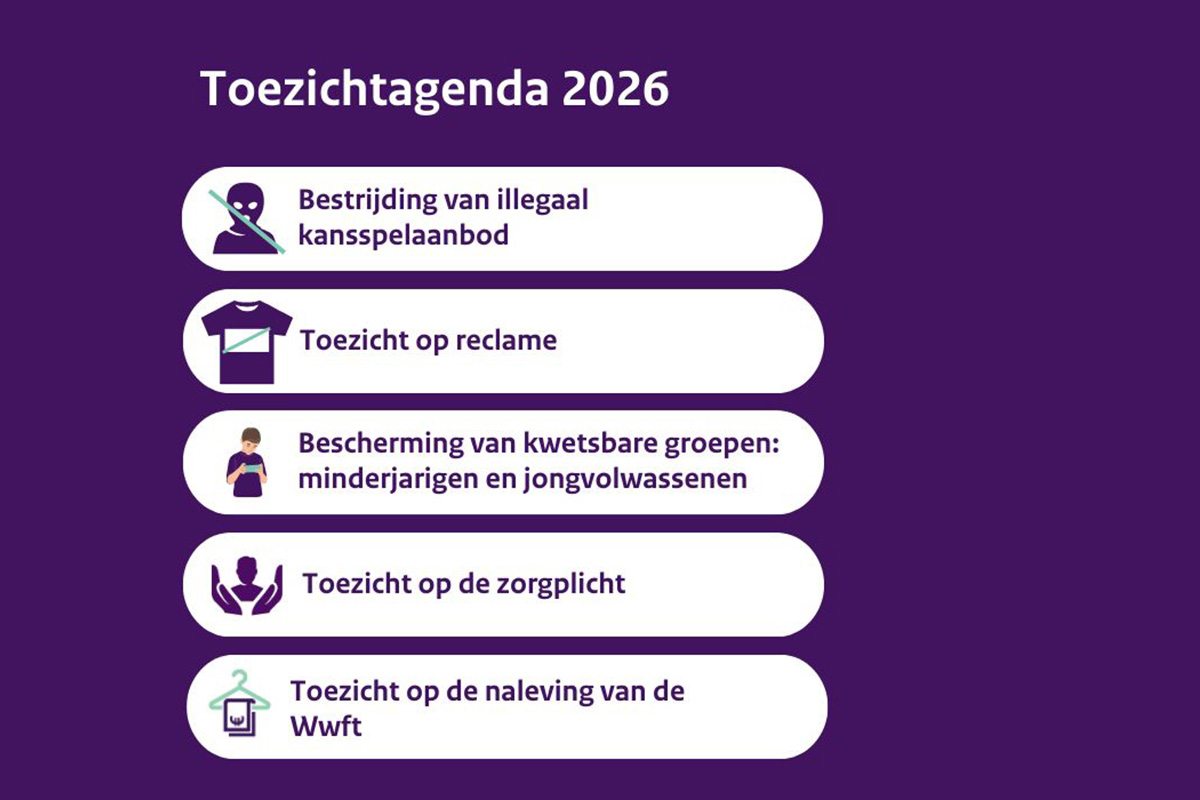
The Dutch Gambling Regulator (KSA) has announced that it will place a greater focus on combating illegality and player protection in its oversight in 2026. The regulator outlined its priorities for 2026 in five key themes.
In 2026, the KSA will pay extra attention to the following topics:
• Combating illegal gambling offers
• Protection of vulnerable groups: minors and young adults
• Supervision of the duty of care
• Supervision of advertising
• Supervision of compliance with the Wwft
Additional capacity is being freed up to combat illegal gambling, primarily to frustrate and disable the infrastructure of illegal parties. This could include closer collaboration with payment service providers, hosting providers and social media companies.
The increased priority on protecting vulnerable groups and enhanced oversight of advertising and duty of care aligns with the Ministry’s renewed vision, which places a greater emphasis on player protection. A separate player protection department has been established for this purpose within the KSA’s new organisational structure, effective from January 2026.
The post Dutch Regulator Outlines 5 Key Supervisory Priorities for 2026 Agenda appeared first on Eastern European Gaming | Global iGaming & Tech Intelligence Hub.

-

 Austria7 days ago
EU Court Ruling on Online Gambling Liability: Players Can Sue Foreign Operators’ Directors Under Their Home Country Law (Case C-77/24 Wunner)
-
Latest News7 days ago
SKIP THE QUEUE WITH THE MIDNITE SHUTTLE: MIDNITE TEAMS UP WITH SNOOKER LEGEND TO OFFER FANS A FREE SHUTTLE SERVICE FROM ALLY PALLY STATION
-
Continent 8 Technologies7 days ago
Continent 8 and CEO Michael Tobin claim number one spot in GamblingIQ’s global ‘Security 10’ rankings
-
CGCC7 days ago
ADVISORY: ILLEGAL GAMBLING OPERATION USING FORGED COMMISSION CREDENTIALS
-
Cash Collect Mechanic7 days ago
Red Papaya Launches Nova Blast Ultra: A Cosmic Slot Adventure via Microgaming
-
Balkans7 days ago
CT Interactive Appoints Martin Dimitrov as its New Commercial Manager
-
Latest News7 days ago
Logifuture’s Simulate plays AFCON final 1,000 times to predict 2026 champions
-
Latest News7 days ago
Week 3/2026 slot games releases