Central Europe
A Balanced Take on Optimal RTP for New Turnover Taxation in Germany


What should be the optimal return to player (RTP)? This is a hotly debated question in the German gambling industry following the changes in the turnover taxation that are scheduled to come into force from 1 July 2021.
While several figures and many theories have been advanced, we found particular LinkedIn post by Robert Lenzhofer, Co-Founder and CEO of Hölle Games, particularly well-balanced and insightful.
We are reproducing the post with minor changes here, with permission from the author. You can find the original post here.
Over to Mr. Lenzhofer now…
I have published a LinkedIn poll recently with the title: “If/when Germany introduces the 5.3% turnover tax, what RTP rate is best suited considering both game-play and effective tax-paid?”
After one week and 120 votes from industry experts, the poll showed the following result:
There are a few ways of looking at this, but I think the key take-away is that the industry this poll represents is fairly evenly split between above 90% RTP and below 90% RTP.
The tax explained
First, to ensure we are on the same page, a quick explanation of the tax proposed:
Currently a 5.3% tax on turnover has been proposed and a draft-legislation does exist. I won’t go into the politics and the thinking behind this, but rather try to analyze the numbers.
A 5.3% tax on every bet being placed on an online slot means an operator can not offer an RTP over 94.7%. At 94.7% RTP, the operator would break even exactly on a bet-level, but obviously would lose money as marketing, employees and general operation have to be financed somehow. Considering financial overhead in any operation, that means the maximum RTP a casino is technically able to offer while avoiding bankruptcy is probably around 93% or more likely at 92%. This is the top ceiling and at the same time too high to be profitable.
Now, there is a bit of uncertainty and I’m also not entirely sure if the number to calculate against is 5.3% or rather 5.033%. The tax is 5.3% on turnover, meaning a 1 EUR bet causes a tax of 5.3 cents, which totals to 1.053 EUR. The tax-portion of 1.053 EUR is less than 5.3%. 100*5.3/(100+5.3) = 5.033 resp. 5.033%. I do calculations here in this document based on 5.3%.
How to balance RTP and profitability
We’ve established above that 93% or 92% is the top ceiling, but where is the bottom?
The table below shows how a Slots-operator will be taxed, calculated into the GGR-equivalent %-age number and cross-referenced with RTP. For reference, many other jurisdictions in Europe offer a GGR-based tax-rate of around 20%. As you can see from the table below, the 5.3% tax-rate on turnover wouldn’t be so bad, if players would accept 80% RTP. At 80% RTP, the GGR-equivalent tax-rate is 26.50% and thus a competitive tax-rate.
The coloring I have done here may be slightly biased, especially in terms of RTP so please take with a grain of salt. But if you roughly accept that the red-area you want to avoid on the RTP and on the GGR-% side, then you end up with an RTP-bandwidth between 84% and 91% to play with.
Further, and again granted you accept the coloring, an operator obviously wants to find an RTP in the green and a GGR-% in the green. Here we arrive at 88% and 89% RTP.
Now, a lot has been written that players will not accept such low RTP’s as say 84%. There are counter-arguments made that in land-based slots the RTP is exactly at that level and actually 88% is on the higher-end in land-based casinos.
On the other hand, for many market-participants the number “9” is a psychological blocker. Players, Affiliates and a couple of Slots-Studios I speak to feel very anxious offering product below 90% as this number still feels somewhat close to the industry-average of 94 to 97%. 89% sounds very different than 90%, although it is “just” 1% in RTP dropped.
Sportsbook vs. Casinos
It will be interesting to watch if Sportsbook or Sports-led brands will choose a differing RTP-rate than Pure-Play Casinos. A Sportsbook can more easily stay on a higher RTP and just pause all short-term expenses (bonus, marketing, etc.) and focus on cross-sell. A pure-play Casino will have to look a lot more closely on bottom-line and in my opinion will have a hard time offering e.g. 90% RTP-Slots as the GGR-equivalent tax-rate is 53%.
Game-Mechanics?
Will there be new Game-Mechanics invented to combat this problem? Looking at the table above again, the second column states how many spins a player on average can make until 1 EUR is spent depending on the RTP-Level. At 95% RTP this is 20 spins. Now, if a Game-Mechanic can be invented that provides a low mathematical RTP while at the same time provides a similar amount of real spins, then this could be a solution to the problem.
Conclusion
The above explanation is in no way complete – there are actually interesting studies which analyze how much an RTP is “felt” by the player and there is probably very good data the land-based industry has to offer.
But, to move away from being neutral, here’s what I personally think: The reality will be that everyone will push the RTP down and experiment with the lowest acceptable RTP as this maximizes their income. As such, come 1st of July, we’ll see a lot of RTP’s experimented with. Imagine you are a pure-play casino and you can provide a Game-Mechanic that feels good to the player and has a nice session length, while staying at or below 40% GGR-equivalent-tax. I believe things start to fall apart financially for an operator at 40% tax-rate. If you own your own media-assets and have good deals with your suppliers and run a tight operation then a 40% tax is possible to do really well in Germany. That means, the average-RTP across the portfolio will have to be around 87-88%. I think you can mix in 91% games into the portfolio just so that is part of the portfolio too, but the majority of revenue of the white-market in Germany will in my opinion come from Slots around 88% RTP. And since some games will be mixed in at 90/91% you can expected some slots to be mixed in at 84/85% rate as well.
Powered by WPeMatico

Barbie Nerz Head of Online Games at Staatliche Toto-Lotto GmbH Baden-Württemberg
Peter & Sons Partners with Staatliche Toto-Lotto GmbH Baden-Württemberg for German Market Entry

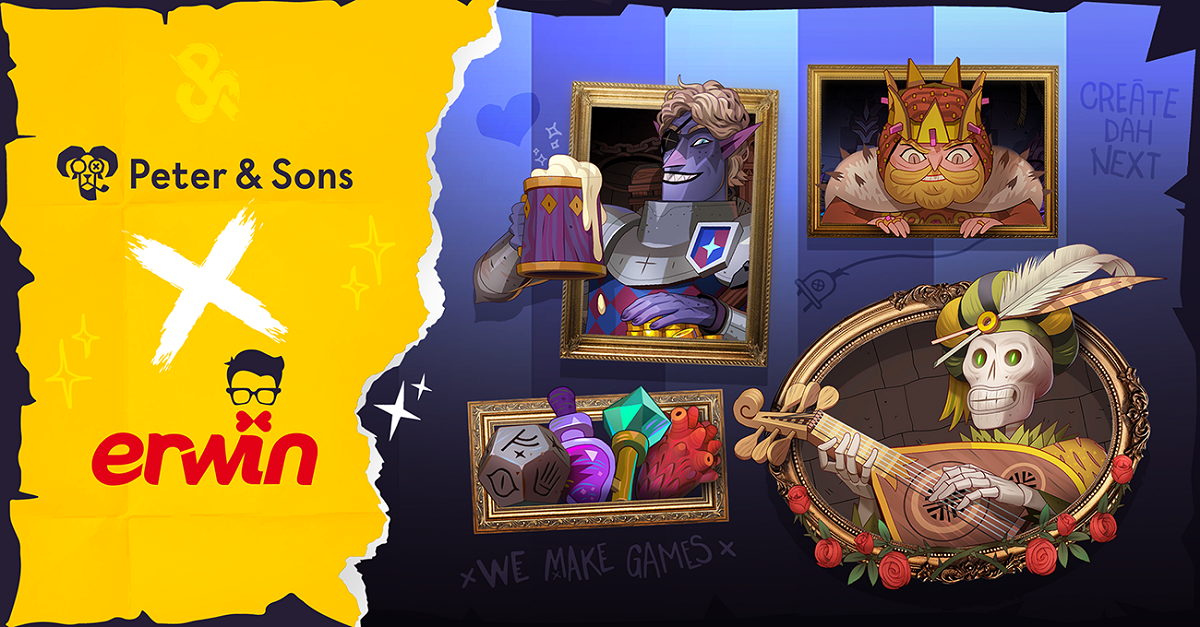
The innovative iGaming studio Peter & Sons, based in Barcelona, has enhanced its presence in Europe by entering a new partnership with erwin, the virtual slot platform of Staatliche Toto-Lotto GmbH Baden-Württemberg, a prominent and well-established gaming operator in Germany.
Established in 1948, Staatliche Toto-Lotto GmbH Baden-Württemberg has earned a solid reputation for dependability, integrity, and creativity in Germany’s regulated gaming industry. The operator is key to the nation’s lottery landscape and is enhancing its digital entertainment services with authorized online gaming products. Since 2023, Staatliche Toto-Lotto GmbH Baden-Württemberg provides virtual slot games at www.lotto-bw.de/erwin. Here, you can explore a diverse range of fun and appealing slots that are refreshed frequently.
Additionally, Staatliche Toto-Lotto GmbH Baden-Württemberg seeks to provide gambling products in its range that cater to the changing requirements of its customers. By doing so, the organization emphasizes trust and safety. Ensuring adherence to measures for the protection of youth and players is consequently a foremost concern.
Famous for its collection of art-focused games, unique characters, and captivating game environments, Peter & Sons has gained global acclaim for advancing the limits of creativity in slot design.
Yann Bautista, Founder and Commercial Director at Peter & Sons, said: “We are delighted to partner with Lotto Baden-Württemberg, an operator that has earned enormous trust within the German gaming community. Germany represents an important regulated market for us, and working with such a respected partner allows us to introduce our games to a broad audience of players who appreciate high-quality entertainment and distinctive design.”
Barbie Nerz, Head of Online Games at Staatliche Toto-Lotto GmbH Baden-Württemberg: “Peter & Sons has developed a reputation for producing visually striking and highly engaging games, and we are excited to welcome their portfolio to our platform. Our goal is always to provide players with diverse, high-quality content, and this partnership represents another step forward in expanding the entertainment experiences we offer.”
The post Peter & Sons Partners with Staatliche Toto-Lotto GmbH Baden-Württemberg for German Market Entry appeared first on Eastern European Gaming | Global iGaming & Tech Intelligence Hub.
Central Europe
Sportradar Extends its Data and Audiovisual Betting Rights Agreement with Deutscher Fussball-Bund
Sportradar Group AG announced a multi-year extension of its data and audiovisual (AV) betting rights agreement with Deutscher Fussball-Bund (DFB), the German Football Association. The rights were originally secured as part of the company’s acquisition of IMG ARENA in 2025.
Under the renewed agreement, Sportradar acquires exclusive data and streaming betting rights for Germany’s prestigious cup competition, DFB-Pokal, worldwide outside of the DACH region, in addition to non-exclusive global media data rights. For the first time in this competition, skeletal data will be introduced to fuel fan engagement products in the same way Sportradar provides for partners including UEFA, Bundesliga and the NBA.
The deal represents the first direct agreement between the parties relating to DFB’s premium cup competition. The new agreement begins at the start of 2026/2027 c and Sportradar will cover all 63 DFB-Pokal matches per season. Sportradar and DFB have previously enjoyed a longstanding partnership including content production and editorial services.
With global Gross Gaming Revenue in soccer betting expected to increase by approximately 50% over the next four years, Sportradar is uniquely positioned to support its clients capture further market share through next generation, hyper-personalized, hyper-immersive experiences.
Sportradar continues to innovate in soccer, combining deep data with proprietary AI technology to create new dynamic betting products such as micro markets and live player markets, which its sportsbook operator clients can leverage to engage customers and generate more revenue.
Moritz Gloeckler, EVP of Rights and Strategic Projects at Sportradar, said: “Our extension of the agreement with DFB is a key addition to our already strong portfolio of global soccer rights. With more than five billion soccer fans worldwide, there’s massive appetite for content. Through partnerships with FIFA, UEFA, AFC, Bundesliga, CONMEBOL and more, Sportradar is well positioned to create the next generation of tech driven products and services for clients to use to engage fans, reach new audiences and open fresh revenue opportunities.”
Kay Dammholz, Director Media Rights at DFB GmbH & Co. KG, said: “With this agreement, we are further advancing the international media rights distribution of the DFB-Pokal. Together with Sportradar, we are ensuring a professional and safe global distribution of our betting streaming rights outside the DACH region, while upholding the highest standards of integrity and unlocking additional commercial potential for our premium cup competition.”
The post Sportradar Extends its Data and Audiovisual Betting Rights Agreement with Deutscher Fussball-Bund appeared first on Eastern European Gaming | Global iGaming & Tech Intelligence Hub.

Wazdan, the results-oriented developer, has further grown its notable European presence through a partnership with Casino Interlaken, a top operator in Switzerland.
The collaboration offers players at Casino Interlaken’s StarVegas.ch online platform access to Wazdan’s dynamic slot collection, showcasing its best-selling Coins and Hot Slot series, which emphasize engaging gameplay mechanics and consistently achieve high retention rates for compliant operator partners throughout Europe.
Inaugurated in 2020 by the renowned land-based Casino Interlaken, StarVegas.ch has emerged as a prominent online provider of engaging slot games, with its collection enhanced by numerous feature-rich titles from top global suppliers.
In addition to Wazdan’s launches, players at StarVegas.ch will be presented with the studio’s engagement-enhancing features, such as Hold the Jackpot, Cash Infinity, Collect to Infinity, Sticky to Infinity and Cash Out, which consistently enhance the slot experience with innovative improvements to gameplay.
Wazdan’s newest partnership strengthens its dedication to collaborating with reputable brands in regulated markets across the globe. Players throughout Switzerland are poised to gain from an enhanced content selection by merging its top-notch portfolio with StarVegas.ch’s standing for outstanding entertainment and technical proficiency.
Radka Bacheva, Head of Sales at Wazdan, said: “StarVegas has built a strong reputation for premium entertainment, making it a fantastic platform for our vast range of titles and engagement tools. Combining the company’s strong market positioning with our rewarding experiences ensures we can deliver measurable growth and rewarding entertainment for players nationwide.”
Mayke Wolf, Chief Operating Officer at StarVegas, said: “As one of the first licensed Swiss online casinos, StarVegas offers a wide selection of games from leading international providers. Players can access the full portfolio via Starvegas.ch as well as through the StarVegas mobile apps, which are among the most popular casino apps in Switzerland. With the addition of Wazdan’s content, StarVegas further expands its portfolio with innovative titles and new gaming highlights. This step underlines StarVegas’ commitment to continuously developing its offering and providing Swiss players with a diverse and high-quality online gaming experience.”
Oliver Grimm, Chief Executive Officer at Casino Interlaken, said: “Casino Interlaken stands for personal service and Swiss quality in the heart of the Alps, values that we carry into the online space with StarVegas through a technologically advanced and trusted platform. By partnering with Wazdan, we are further enhancing our offering with innovative slot content that delivers engaging experiences for players across Switzerland.”
The post Casino Interlaken teams up with Wazdan to bolster Swiss market presence appeared first on Eastern European Gaming | Global iGaming & Tech Intelligence Hub.

-

 Centurion Winner Grand Chance™6 days ago
New from Inspired: Luck It Up™ and Centurion Winner Grand Chance™ available online & on mobile
-
Blazin' Bonus7 days ago
Booming Games releases Blazin’ Bonus
-
Australasian Hospitality and Gaming Expo7 days ago
IGT Showcases Integrated Gaming, Systems, and FinTech Innovations Designed to Drive Growth at Australasian Hospitality and Gaming Expo 2026
-
Cristiano Blanco CEO of SpinCore Group7 days ago
SpinCore Group Enters Finnish Market via Finnplay Partnership
-
Conferences6 days ago
NOVOMATIC Gaming Colombia to Showcase its Latest Innovations at GAT Cartagena 2026
-
Enjoy7 days ago
ENJOY Unveils Hotfire Diamonds XXL to Elevate an Iconic Franchise
-
Aristocrat Gaming7 days ago
Aristocrat Gaming to Participate in Australian Hospitality & Gaming Expo
-
Central Europe7 days ago
GGL Study Says Regulated Online Offerings Make Up the Majority of the Market