Latest News
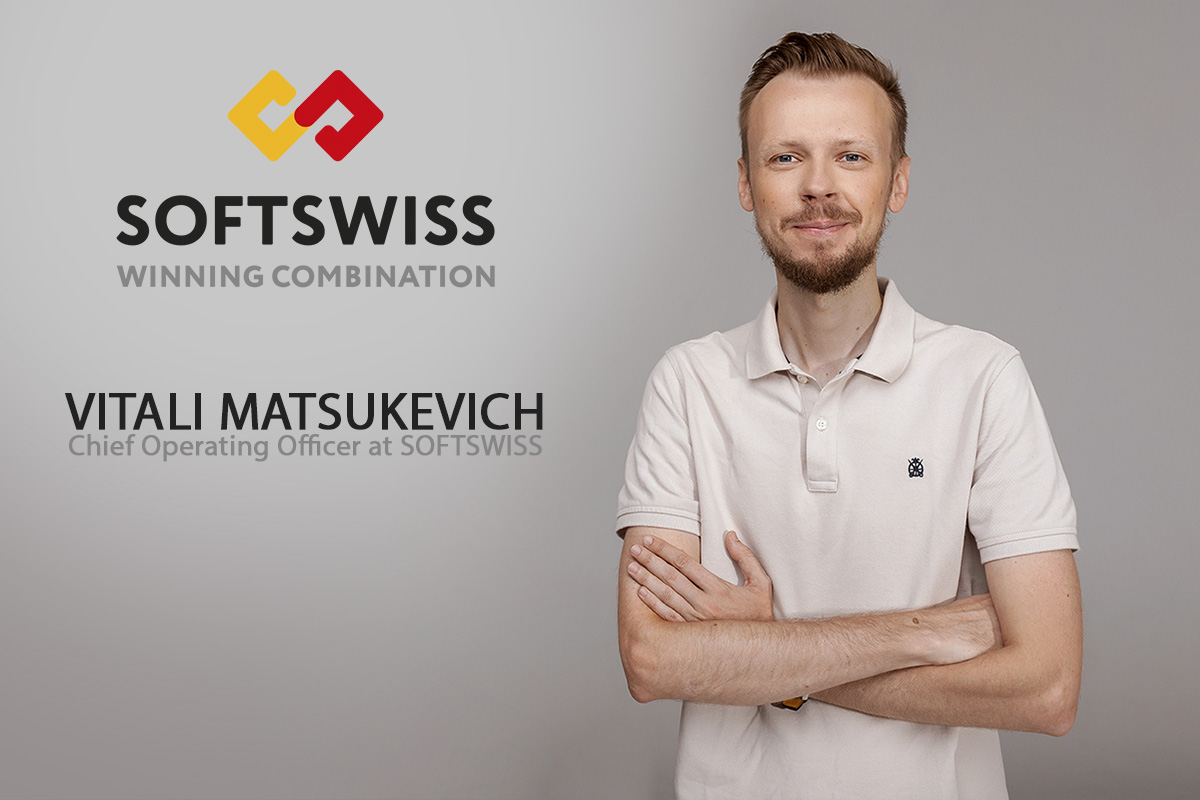
Building an ecosystem for the iGaming business: Exclusive interview with Vitali Matsukevich, Chief Operating Officer at SOFTSWISS

How do you evaluate SOFTSWISS’ interim performance results of 2023?
We have record numbers for most of our products in the first half of 2023. We’ve picked up a good pace, so I think we’ve done quite well in the first half of the year. The strategy we’ve chosen and are following is paying off. We expect that the second half of the year will be even better for us. Reinforcing this idea with some numbers I am proud to note the SOFTSWISS Game Aggregator has achieved a breakthrough milestone by surpassing 10,000,000,000 euro in Total Bets across all projects in July and August.
As planned, we have achieved all-time record-breaking figures across the entire product range.
The SOFTSWISS Anti-fraud Team helped our clients save more than 9.2 million euro during the first half of 2023.
The SOFTSWISS Jackpot Aggragator achieved the significant milestone of 60 partner brands.
The GGR among all Sportsbook clients soared by 769%, while the total turnover rose by 254% year-on-year.
iGaming brands, collaborating with Affilka by SOFTSWISS, harnessed its power to draw in over 10 million new players through affiliates.
Our commitment to progress remains unwavering and we maintain the current growth momentum. Perfection has no bounds, and our team embodies the spirit of relentless pursuit: “Citius, altius, fortius – communiter” like the Olympians.
We have no intention of resting on our laurels. In fact, we are geared towards accelerating our growth even further and with greater vigour.
For the last few years SOFTSWISS has been creating an iGaming ecosystem. Why is this approach important for the company?
SOFTSWISS has been talking about its software ecosystem for quite a while, first and foremost as a ‘one-stop shop’. We provide our clients with a fairly wide range of products.
The Casino Platform empowers clients to oversee player accounts, payment services, game vendors, and access reporting and analytics, providing a complete back office for their online casino brand management. The powerful and proven software platform is a reliable foundation for strengthening and growing business by adding new products.
With our Game Aggregator hub, it is easy and seamless to add a massive portfolio of over 16,000 games through just one API integration.
The Sportsbook, a sports betting software platform, was created for launching a bookmaker business online with over 200 sports.
The Jackpot Aggregator aims to increase operator revenue by strengthening brand competitiveness, acquiring new players and retaining existing ones, and growing their life-time value and bet sum.
The affiliate management and tracking software Affilka by SOFTSWISS, was developed with the needs of both iGaming operators and affiliate partners in mind.
Moreover, we offer Managed Services, a suite of services aimed at helping operators overcome day-to-day operational challenges.
This is the ecosystem that covers essentially all verticals in the iGaming business.
So, this is not a new trend for us. We have been actively engaged in building an ecosystem of cross-integrated products. It’s almost like a Lego just for the iGaming business. Our slogan, ‘Winning Combination, perfectly encapsulates this, emphasising the importance of creating successful product synergies.
This year, we implemented the integration between the Jackpot Aggregator and Sportsbook, and we recently completed the integration of the Jackpot Aggregator and Game Aggregator.
We are constantly pushing the boundaries of innovation and functionality. We definitely make an emphasis on how our products communicate with each other, and how that makes them better.
What are your expectations for the iGaming industry for the rest of the year?
I anticipate a sustained growth in the industry. Things are about to change in terms of legal and compliance, and in terms of working in some jurisdictions like Curacao.
We are definitely very attentive to the LatAm region. The Latin American iGaming market is poised for rapid growth due to growing acceptance of gambling regulation, large population and a growing middle class, as well as its cultural values and, of course, high mobile adoption .
All these factors make this region a prime frontier for both domestic and international operators to explore. This anticipated surge in development holds the potential to reshape the regional gaming landscape and provide lucrative opportunities for industry leaders.
Naturally, we are closely monitoring the cryptocurrency market, which is a big component of our business. However, we do not anticipate any major disruptions or external upheavals. Our expectations align with a steadily expanding market.
What is SOFTSWISS preparing for the SBC Summit Barcelona, 19-21 September? What can visitors expect?
At the core of SOFTSWISS’ imaginative idea for the event is how we view success in the iGaming realm. Taking cues from the renowned Spanish artists, who embody the cultural identity of the event’s host country, SOFTSWISS will portray its pioneering solutions as contemporary cornerstones of the industry.Under the banner ‘Make your business a classic’, our experts invite industry leaders to delve into the revolutionary possibilities offered by our comprehensive suite of solutions.
As always we will have one of the largest booths at the exhibition. The highlight of the booth will be illustrations painted in the style of famous artists, dedicated to each of the SOFTSWISS products. Naturally, we took care to be able to communicate productively with our partners and build a cosy and stylish meeting room at the stand.
Our clients can expect us to be happy to talk to them about our innovations, which we certainly have.
The Game Aggregator’s tournaments features are actively being used by clients.
At the same time, the Jackpot Aggregator is rolling out network jackpots and the time-based jackpot. Be sure to ask the team about the results of the integration with the Game Aggregator.
As always expect us to welcome clients new and old at our stand. And of course, we will be happy to give you a sneak peek of the latest innovations we’ve introduced since the last event.
About SOFTSWISS
SOFTSWISS is an international iGaming company supplying certified software solutions for managing gambling operations. The expert team, which counts 1,500+ employees, is based in Malta, Poland, Georgia, and Belarus. SOFTSWISS holds a number of gaming licences and provides one-stop-shop iGaming software solutions. The company has a vast product portfolio, including the Online Casino Platform, the Game Aggregator with thousands of casino games, the Affilka affiliate platform, the Sportsbook Platform and the Jackpot Aggregator. In 2013 SOFTSWISS was the first in the world to introduce a bitcoin-optimised online casino solution.









Abu Dhabi expat
The UAE Lottery Delivers a Dream Come True: Father Wins AED 30 Million with Family Birthdays

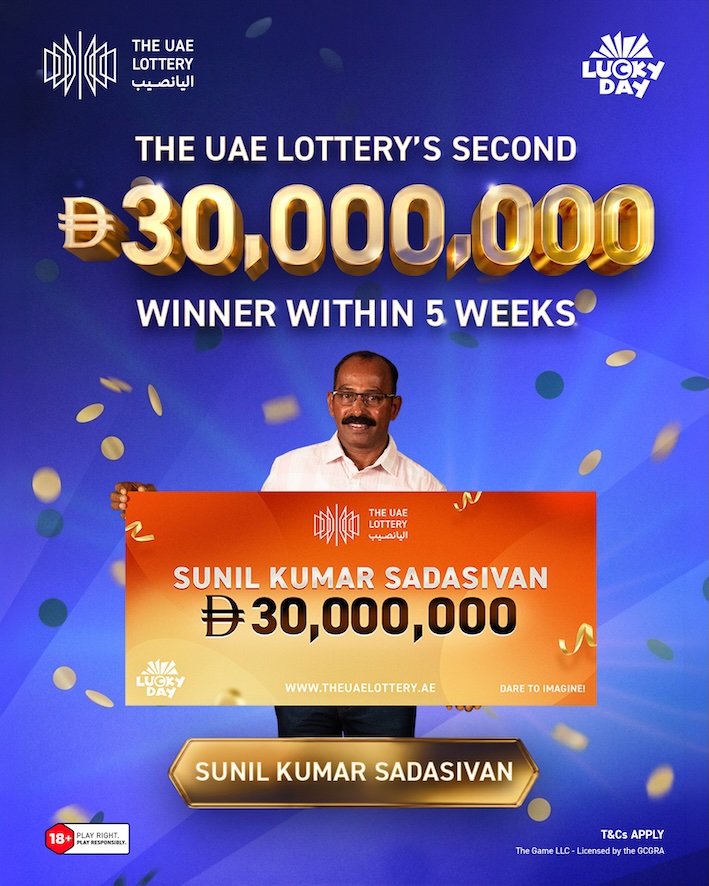
Sunil Kumar Sadasivan, a 52-year-old maintenance technician from Kerala, India, has become the second-ever AED 30 million Grand Prize winner of The UAE Lottery’s Lucky Day Draw, after choosing numbers tied to the three dates that matter most to him: his own birthday, and those of his wife and daughter.
Rather than picking numbers at random, Sunil Kumar decided to let love guide his choice this time. “I thought, why not use the dates that matter most to me? I started with my daughter’s birthday, then added mine, then my wife’s birthday,” he said.
That decision, made on a Wednesday with a friend he’d only recently started playing alongside, delivered the AED 30 million Grand Prize. Their first Wednesday ticket had won a modest AED 100 the week before; encouraged, they tried again, and the second ticket changed everything.
The UAE Lottery’s Lucky Day Draw continues to create such moments for players across the country, with a fresh AED 30 million Grand Prize and AED 5 million Second Prize on offer every Wednesday and Saturday.
The Unexpected Moment
Sunil Kumar discovered the win while unwinding in his room after a work shift. “I checked my phone around 9:45 pm, after the draw. I had only expected a small prize. When I saw the winning numbers, I was in complete shock.”
Struggling to believe what he was seeing, he rushed to show a friend the ticket. Once it sank in that the win was real, the first person he called was his wife. “My wife has no big desires — her wish has always been to live an ordinary life. When we won this amount, she asked, ‘What will we do?’ We come from an ordinary family, so we believe we should do whatever we can for other people,” said Sunil Kumar.
For Sunil Kumar, that single phone call captured exactly why The UAE Lottery continues to resonate with players across the country, not just the chance to win, but the possibility of an entirely different life for the people they love most.
A Father’s Dream Comes True
His daughter, now seven, was born after 12 years of hope and costly treatment that left the family in financial difficulties, making the numbers tied to her birth, deeply personal to this win.”
If my daughter is watching this, I want her to know that her father and mother have lived and waited for her. My biggest dream is to educate my daughter and see her become a doctor one day.” said Sunil Kumar.
For Sunil Kumar, the win is about far more than the prize money; it’s about creating joyful moments for the family he has worked so hard to support. “Once I get the money, first I’ll go and buy a gift for my daughter,” he said, reflecting on the simple but meaningful way he hopes to celebrate this milestone with his family.
A Win with Lasting Impact
With the win behind him, Sunil Kumar now plans to complete the construction of his family home, and take a well-earned step back from work. “I’ve worked since I was young. Now, I’ll take some rest.”
But his plans extend beyond his own household. “There are a few people I know who don’t have homes, and I would like to build houses for them.”
It’s a sentiment that reflects The UAE Lottery’s own commitment to the community, with every draw creating incredible moments not just for winners, but for the people around them. “The UAE Lottery is a trustworthy platform. We can’t be sure when the opportunity comes, so everyone should give it a try,” Sunil Kumar said.
Lucky Day Draws take place every Wednesday and Saturday at 9:30 PM, giving players the chance to win the AED 30 million Grand Prize, the AED 5 million Second Prize, and three guaranteed AED 50,000 Lucky Chance prizes — every draw.
The UAE Lottery remains committed to responsible gaming, ensuring a safe, transparent, and regulated experience for all participants. All games are fully regulated by the General Commercial Gaming Regulatory Authority (GCGRA).
Tickets for upcoming Lucky Day Draws are available at www.theuaelottery.ae
The post The UAE Lottery Delivers a Dream Come True: Father Wins AED 30 Million with Family Birthdays appeared first on EE Gaming | Global iGaming & Tech Intelligence Hub.
ad format launch
PropellerAds Launches Paid Social Traffic: A New Paid Social Traffic Format Goes Live

PropellerAds, a leading advertising technology platform, has officially launched a new ad format, Paid Social Traffic, offering advertisers a new way to reach social users without the need for a social advertising account. The product leverages exclusive supply partners to deliver highly active social audiences into the PropellerAds Self-Serve Platform (SSP), without requiring additional accounts, third-party integrations, or new creatives. Advertisers only need an existing landing page to start running campaigns.
Paid Social Traffic is a new standalone ad format within the PropellerAds platform that enables direct access to users active within social feeds. The traffic is sourced through the platform’s partner ecosystem and is available exclusively within the PropellerAds environment. It also supports a “Custom Collaboration” model for long-term optimization, designed for advertisers with sustained budgets and scaling requirements.
High-Intent Social Audiences and Performance
According to PropellerAds, this traffic type reaches highly engaged social users who are typically in an active browsing and content interaction state, making them more likely to click and convert.
Early tests conducted by partners under matched conditions (same GEO and device) show that Paid Social Traffic delivers conversion rate uplifts of approximately 30–40x compared to traditional display formats, with some tests reaching around 32x higher performance. Results may vary depending on industry, product, and market conditions.
The traffic is currently available across a range of high-performing GEOs, including the Philippines, Brazil, Bangladesh, Thailand, South Africa, Zimbabwe, Congo, Tanzania, Nigeria, Malaysia, and Indonesia, with further expansion planned.
Relationship With Existing Social Traffic inside Onclink Ad Format
Paid Social Traffic and Organic Social Traffic both form part of the PropellerAds Social Traffic ecosystem, but they differ clearly in source and operate in parallel.
Organic Social Traffic refers to traffic coming from blogger and publisher-owned channels within the Onclick ad format, while Paid Social Traffic is a new standalone paid source delivered through the exclusive setups run by PropellerAds partners. The two are not mutually exclusive and can be used together within campaign strategies to optimize overall traffic structure and acquisition efficiency.
Industry Applications and Campaign Setup
The format currently performs strongly in verticals such as gaming, finance, and mobile software, while also being applicable to other verticals depending on platform policy and regional availability.
For gaming and finance advertisers, the format offers a simplified campaign setup process while still adhering to PropellerAds’ standard ad quality and compliance requirements. No social platform advertising account is required, and all campaigns can be launched directly within the platform by selecting Paid Social Traffic during campaign creation.
For press enquiries and additional information, please contact: [email protected]
The post PropellerAds Launches Paid Social Traffic: A New Paid Social Traffic Format Goes Live appeared first on EE Gaming | Global iGaming & Tech Intelligence Hub.
100 Thieves VALORANT
Press Release l Esports World Cup 2026: Three new champions crowned in VALORANT, Apex Legends and Fatal Fury after thrilling opening week
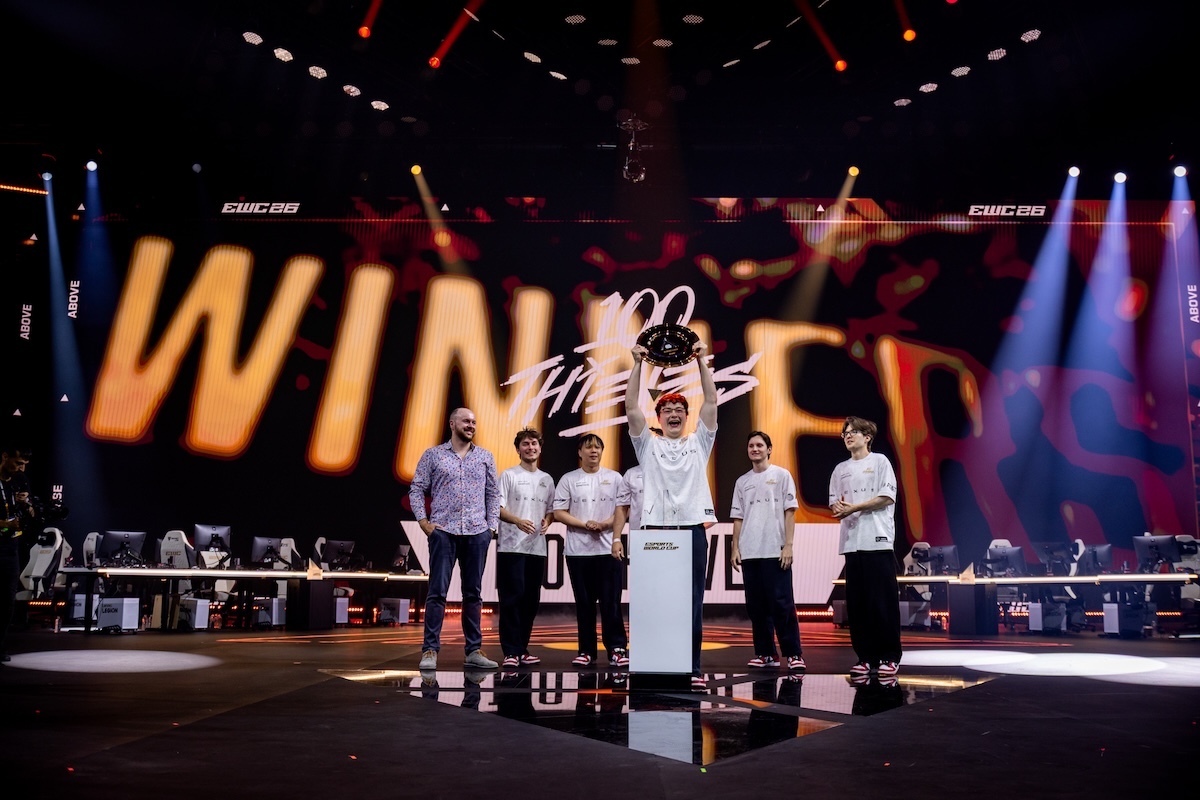
Week 1 of The Esports World Cup (EWC) 2026 is in the books and the first three trophies have been claimed. Fatal Fury: City of the Wolves kicked off the championship proceedings on Saturday, followed by an epic Apex Legends final before VALORANT closed out the week with an incredible all-American clash.
The first trophy of EWC 2026 went to Luis Guadalupe “DarkAngel” Castillo Gomez who claimed a memorable victory in Fatal Fury: City of the Wolves, finally lifting his first major trophy in the game after multiple close calls. DarkAngel placed third at EWC last year, sitting behind two EWC champions, Goichi “GO1” Kishida and Zeng “Xiao Hai” Zhuojun. However, this year the former withdrew from the competition due to health issues, while the latter was knocked out before the top 16, opening the door for DarkAngel to seize his opportunity.
He took down Virtus.Pro’s Kenta “mi2ha4” Ichihara 4-1 in the grand final, and was immediately overcome with emotion having achieved his dream of lifting a trophy. He then became the first player to have his name engraved on the EWC Totem, officially kicking off the 2026 championship race.
“I’m extremely happy and extremely grateful, thank you for my team NAVI, and everyone in Latin America that follows me and supports me,” Luis Guadalupe “DarkAngel” Castillo Gomez said following his triumph. “I’ve learned a lot through every single person who has played with me, from the wins, from the losses. Thank you to everyone who has ever helped me, even though you are not in my team specifically, I have always learned from them, and I’m extremely grateful.”
In Apex Legends, Japanese squad UNLIMIT consisting of Yulariman, Xtsuvi, and Peace, pulled off an incredible heist in the match point finals at the ALGS Year 6 Split 1 Playoffs at 2026 EWC. In the first six games of the final they failed to place above 9th in any match, and were essentially seen as out of contention once other teams started to hit match point.
However, across the final four games, UNLIMIT won three of them, extending the tournament and denying others a shot at the championship. In the dying moments of game 10, they faced off against ZETA DIVISION, another team on match point, with the winner guaranteed to lift the trophy. In the end it was Peace who took down the final ZETA DIVISION players to claim the victory, kicking off emotional celebrations from the team.
Peace was awarded the Sony MVP award for his performance across the tournament. He racked up 39 finishes, 35 assists, and 50 knockouts throughout his journey.
“I thought this was a dream at first, after winning the last game, but the dream came true,” said Peace of UNLIMIT. “I appreciate everyone that supported me, my family, my friends, UNLIMIT staff. I appreciate everyone, thank you very much.”
Closing out the opening week, 100 Thieves took the win in VALORANT at EWC 2026, marking the first time the Club has lifted an international trophy in the game. For veteran Peter “Asuna” Mazuryk, who has been with the Club since he was 17, this moment was a payoff for over five years of grinding as part of the 100 Thieves team. Through good times and bad, multiple rosters and a few close calls, Asuna has stuck with 100 Thieves and after building a hot new roster featuring some exciting rookies for 2026, he has finally lifted his first major trophy.
100 Thieves were undefeated in the competition, taking down the likes of Rex Regum Queon, BBL Esports, MIBR.LOS and Nongshim RedForce. In the final, they defeated local rivals and reigning world champions NRG 3-1, securing the decisive round in overtime.
Matthew “Cryocells” Panganiban was awarded the Sony MVP award for his performance throughout the tournament, capped off by a huge 65 kill/25 assists performance in the finals versus NRG.
“It feels really good, I still feel like I didn’t perform to my own expectations, but it’s been so long that I haven’t won a trophy yet, and I had many doubts throughout my career, but at the end of the day, never stop believing in yourself and the people around you,” said Matthew “Cryocells” Panganiban after receiving his MVP award.
While three champions have already been crowned, the action continues in Dota 2. With the group stage now wrapped up, some teams are preparing to battle for their tournament lives in the survival stage, while others have a few days off to prepare for the playoffs after topping their groups. Team Falcons, PVISION, and Team Yandex have all been top contenders this season, so taking the lead in their groups comes as no surprise. But in Group B, Nigma Galaxy managed to take down some big names to secure a playoff place, despite having a difficult 25/26 season so far.
The battle for the Club Championship has also begun. Clubs must finish in the top eight of at least two titles to qualify for the Club Championship standings, and after Week 1 only a single Club has met that requirement. Hometown favourites Team Vitality are the only Club officially on the Club Championship table with top five finishes in both VALORANT and Fatal Fury: CotW giving them a total of 400 points. However, should the likes of NAVI or 100 Thieves take another victory in Week 2, they would jump up the standings after their opening week success.
To learn more about the Esports World Cup, visit esportsworldcup.com and follow the Esports Foundation on LinkedIn.
The post Press Release l Esports World Cup 2026: Three new champions crowned in VALORANT, Apex Legends and Fatal Fury after thrilling opening week appeared first on EE Gaming | Global iGaming & Tech Intelligence Hub.

-

 Latest News6 days ago
Eeze opens 1,200 sqm Bucharest hub for technical teams
-
Latest News5 days ago
BetMakers Technology Group Selected to Distribute ATG Horse Racing Content Across Australia and New Zealand
-
Latest News6 days ago
Play’n GO strengthens Latin American presence with Betano Colombia launch
-
Latest News6 days ago
Belatra signs cooperation deal to distribute slots via VeliGames
-
Compliance Updates6 days ago
Kasinohai Audit: Most Slots Could Be Affected by Finland’s Draft Gambling Rules
-
Canada7 days ago
SEOBROTHERS’ Aleksandra Drigo flags higher barriers for affiliates in regulated Alberta
-
Compliance Updates6 days ago
Pernambuco court revokes Spribe’s interim relief in Aviator trademark dispute
-
Latest News6 days ago
R. Franco Digital releases fighting game-themed slot Spin Fighters