eSports
How BETBY is enhancing the esports product

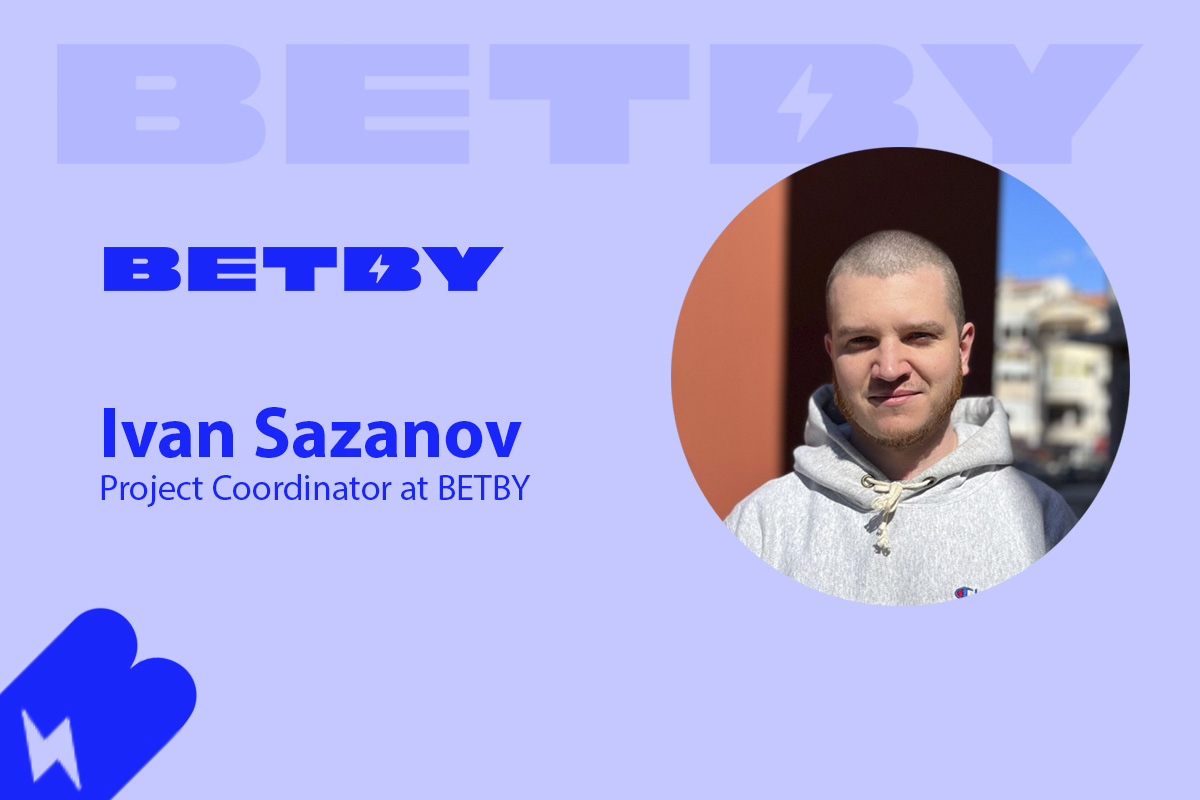
Brands are placing more of an emphasis on enhancing their esports offering within and with the news of a new CS:GO game to continue the popularity of that title, we got the views of Ivan Sazanov, Project Coordinator at BETBY, to find out about the added importance of esports within the brand’s strategy.
How important is the esports offering to your brand and the wider gambling industry?
It is no longer possible for gambling brands to have a competitive sportsbook that does not have an esports offering that sits alongside that.
Moreover, as the popularity of esports increases, brands should capitalise on the popularity and provide content to significantly improve its product portfolio.
Naturally for us, esports is one of the most important elements of the modern sportsbook. BETBY’s fully-fledged product suite satisfies the demand of a diverse esports audience, currently containing about 20 sports, including classics with Starcraft and Warcraft III alongside mobile games like Mobile Legends, Wild Rift, and Arena Of Valor.
But in order for an esports offering to be considered high-quality and attractive to end users, it is no longer enough to cover just the most recognised titles like CS:GO, Dota 2, League Of Legends, FIFA and Overwatch. Aiming to broaden and strengthen esport offer, BETBY created a unique and special product – Betby.Games, a proprietary esports offering.
This unique collection, driven by artificial intelligence (AI), organizes tournaments across popular sports such as Football, Cricket, and Basketball. The game mechanics of well-liked gaming titles in Betby.Games are entirely controlled by AI, eliminating the need for any human interaction to sustain the tournaments. This aspect guarantees the longevity of the collection, making it an invaluable asset to our sportsbook offering.
Has the perception of esports changed?
I think it would be fair to say that esports has turned from a niche activity into a strong and competitive industry in its own right.
You only need to look at the budgets of the biggest esports tournaments, the sizes of the audience, the broadcast coverage garnered and other indicators that continue to grow from year to year.
There is however one important point. Over the years, when esports gained momentum, its audience was constantly replenished with young people. Naturally, that audience grew up with the games, as they entered adulthood.
Having this following has helped the esports audience become more financially reliable and solvent, which has a direct impact on the betting industry.
The time when esports in betting was perceived as something that was not very profitable is over. Experienced online bookmakers understand that the average user registering on their sportsbook will most likely depend on how good the complementary esports content is.
What further developments do you anticipate in esports betting?
The ratio of the number of bets and the total turnover on esports to regular sports will continue to grow. Esports has already become an integral part of the betting industry, but it can and will still develop.
I expect greater technological advancements to make esports more of a professional and sought after form of online betting.
This includes potential agreements with more data operators to enable real-time trading without delay, which is currently a key hindrance to esports becoming a more attractive proposition for players.
Obviously, the breadth of markets for esports events does not yet reach the classic sporting events, even considering the fact that in popular tournaments it is common to bet on ‘Player Props’.
Within the games, there is a huge amount of different information that can be used to generate various unique markets. There is a huge opportunity for the first company that can implement this effectively will make a splash not only in the field of esports betting, but in the entire industry.
CS:GO 2 has generated a great deal of interest in the global community. A new, updated game in this popular series will not only to attract new players and viewers, but also the return of old ones, which will increase demand in the market.
We expect an increase in the number of semi-professional tournaments and teams that are created not for the sake of increasing interest, but with the aim of profiting from dishonest play and ensuring matchups are competitive.
This is happening on a regular basis already, and it will require more attention from both the tournament organisers and the risk management departments of betting companies to curtail irregular activity.
Has having your own in-house product allowed you to stand out in the market, rather than relying on major competitions and tournaments for traffic?
Our competitive advantage is encapsulated with the Betby.Games product that we created during the pandemic.
Despite forecasts that with the return of real sports traffic would begin to decline and the content would lose its relevance, it continues to develop and attract an ever-increasing audience. This in large part is thanks to its flexibility and customer-oriented approach.
Betby.Games has turned from a part of our sportsbook into a stand-alone and in-demand product. By generating a large amount of traffic, it makes a significant contribution to our customers who use the sportsbook in its entirety, and to individual companies outside of BETBY, to which Betby.Games supplies its product as a feed provider.
What is needed to convince operators that a gap can be bridged between traditional sports bettors and esports bettors?
From my perspective, esports has become so firmly integrated alongside sports betting that there is practically no difference between players who bet on CS:GO and Soccer.
The Super Bowl, and the concluding tournament on the Dota 2 circuit, The International, will attract millions of people from all over the world. The audiences of these most popular events will not overlap with each other, and you must be able to find a solution that appeals to both audiences.
If an operator wants to attract a large audience and, moreover, to continue to compete with other betting companies, it must be able to provide users with a high-quality offering for both regular sports and esports to engage players.
The numbers do not lie. In the world of betting, esports already occupies a significant share of all sports. Bookmakers that do not pay enough attention to its esports products are already losing money, and it will only be more difficult for them to compete in the future.










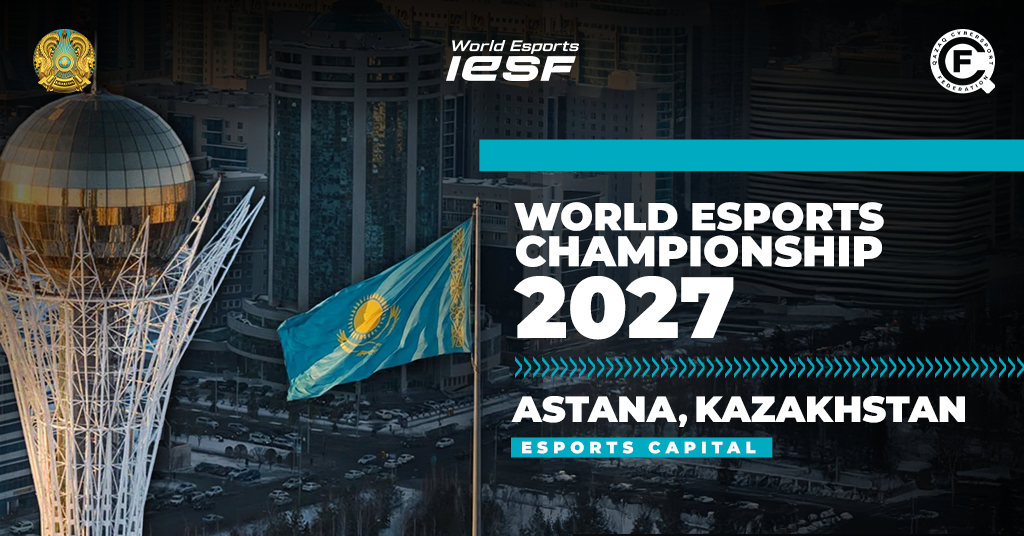
IESF signs host agreement with Kazakhstan’s Ministry of Tourism and Sports and the Qazaq Cybersport Federation in Astana.
Astana has been confirmed as the host city for the IESF World Esports Championship 2027 (WEC27), following a host agreement signing ceremony involving the International Esports Federation (IESF), the Ministry of Tourism and Sports of the Republic of Kazakhstan, and the Qazaq Cybersport Federation.
IESF said the event is expected to draw participation across more than 150 IESF Member Federations through the qualifiers, with national teams competing via IESF-recognized national member structures.
“WEC27 will be more than a championship. It will be a global celebration of nations, athletes, and the future of esports,” said Vlad Marinescu, President of IESF. “For every player, there is no greater honor than competing under their national flag and officially representing their nation on the world stage. That is what makes the World Esports Championship so powerful and so unique. In 2027, Astana will welcome the world and proudly stand as the Esports Capital in the World of Esports, uniting our Member Federations, athletes, fans, and communities. Kazakhstan has shown remarkable vision, ambition, and commitment, and we are confident that WEC27 will deliver an unforgettable championship and a lasting legacy for the global esports family.”
Yerbol Myrzabosynov, Minister of Tourism and Sports of the Republic of Kazakhstan, said: “We are honored that the International Esports Federation has entrusted Kazakhstan with hosting the World Esports Championship 2027. This reflects the confidence in our country’s ability to deliver an event of the highest international standard. Hosting WEC27 reinforces our commitment to advancing esports and creating new opportunities for young people through sport, technology, education, and international cooperation. We look forward to welcoming the World of Esports to Astana and showcasing Kazakhstan as a destination capable of delivering world-class international events.”
Kuanyshbek Yessekeyev, Chairman of the Board of Trustees of the Qazaq Cybersport Federation, added: “We sincerely thank the International Esports Federation for the trust and confidence placed in Kazakhstan to host the World Esports Championship 2027. This is a historic milestone for our esports community and a testament to the progress we have achieved together with our partners. Alongside IESF, the Ministry of Tourism and Sports, and our national stakeholders, we are committed to delivering an outstanding championship for athletes, fans, and the World of Esports. WEC27 will inspire future generations, accelerate the growth of esports in Kazakhstan, and strengthen our country’s position as a leading esports and digital innovation hub.”
IESF said more details, including schedule, qualification pathway, venues, official titles, ticketing, and the event program, will be announced in the coming months via its official channels.
The post Astana to host IESF World Esports Championship 2027 appeared first on EE Gaming | Global iGaming & Tech Intelligence Hub.

Esports and live events operator says it stayed profitable in 2025 and plans 15 arena events across 13 cities in 2026.
BLAST has opened a New York City headquarters in Brooklyn as the company reported record growth and profitability in 2025, including more than $133 million in revenue and over 40% year-over-year growth.
The new U.S. headquarters is located at 45 Main Street in Brooklyn within a shared 55,000-square-foot office space. BLAST said the hub will support partnerships, live events and commercial growth across North America as it expands its U.S. operations.
The North American push is being led by Chief Business Officer Leo Matlock, who has relocated to New York, alongside Steve Rossi, who joined earlier this year as SVP of Brand Partnerships. BLAST said its U.S. team has grown to eight full-time employees.
BLAST said it has staged seven tier-one esports events in North America over the past 16 months, across Austin, Fort Worth, Boston, Raleigh, Los Angeles and Salt Lake City. The company cited “more than $102 million” in economic impact from the 2025 BLAST.tv Austin Major alone, including more than $9 million in hotel expenditures. It also recently announced the Rocket League World Championship will return to Fort Worth in September 2026.
In 2025, BLAST said its broadcasts delivered more than 2 billion live views globally and 300 million hours watched, spanning live events in 22 cities worldwide. The company also said it distributes content via 29 broadcast partners, including SuperSport, France TV and RTBF, reaching audiences in more than 150 territories and 30+ languages.
“Competitive entertainment has become one of the fastest-growing sectors in global media because it combines community, technology and live experiences in entirely new ways,” said Robbie Douek, CEO of BLAST. “The next generation of fans want entertainment that feels participatory, social and global by default. That shift is creating enormous opportunities for brands, publishers, creators and host cities, and we believe BLAST is uniquely positioned to help lead that evolution after a landmark year in 2025.” BLAST said it plans to host 15 arena events across 13 cities and three continents in 2026.
The post BLAST opens New York HQ as 2025 revenue tops $133m on 40%+ growth appeared first on EE Gaming | Global iGaming & Tech Intelligence Hub.

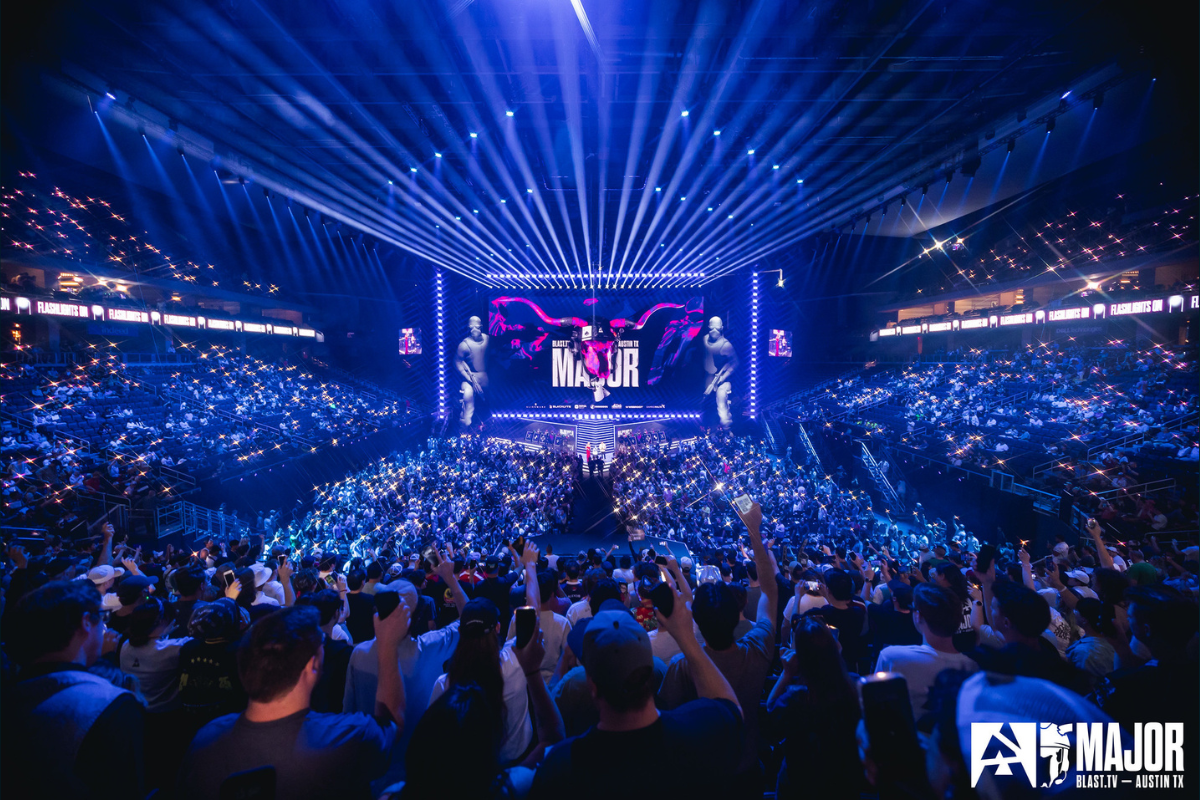
BLAST, the Denmark-founded competitive entertainment and esports events company, reported record growth and continued profitability in 2025 and said it has opened a New York headquarters as it expands across North America.
The company said it delivered more than 40% year-over-year growth and generated more than $133 million in revenue in 2025, while remaining profitable and continuing to invest in global expansion. BLAST said its U.S. headquarters at 45 Main Street in Brooklyn sits within a shared 55,000-square-foot office space and will serve as its central base for partnerships, live events and commercial growth across North America.
The expansion is being led by Chief Business Officer Leo Matlock, who has relocated to New York, and Steve Rossi, who joined earlier this year as SVP of Brand Partnerships. BLAST said its U.S. team has grown to eight full-time employees.
BLAST pointed to recent North American activity, saying it has hosted seven tier-one esports events across Austin, Fort Worth, Boston, Raleigh, Los Angeles and Salt Lake City over the past 16 months. The company said these events have generated economic impact for host destinations, including more than $102 million from the 2025 BLAST.tv Austin Major alone, including more than $9 million in hotel expenditures. BLAST also said the Rocket League World Championship will return to Fort Worth in September 2026.
On content reach, BLAST said its 2025 broadcasts delivered more than 2 billion live views globally and 300 million hours watched across live events in 22 cities, distributed through 29 broadcast partners across online platforms and linear broadcasters. “We’re seeing tremendous momentum globally and all across North America, not just in esports fandom, but in how brands, game publishers, cities and entertainment companies are thinking about gaming culture, engaging competitions and digital-first audiences,” said Leo Matlock, Chief Business Officer at BLAST. The company said it plans to host 15 arena events across 13 cities and three continents in 2026.
The post BLAST reports 40% revenue growth in 2025, opens New York headquarters appeared first on Americas iGaming & Sports Betting News.

-

 Alberta5 days ago
Octoplay secures conditional Alberta iGaming supplier approval from AGLC
-
Canada5 days ago
What Canadian Slot Players Are Really Comparing in 2026: Payout Speed, Interac and RTP Transparency
-
Africa4 days ago
SpringbokCasino ties July free spins to ‘Minions in the Wild’ campaign
-
content-supply5 days ago
Million Games launches Skull King’s Treasure with partner studio Arcane Pixel
-
Africa4 days ago
Booming Games renews Hollywoodbets Durban July activation partnership
-
GGPoker5 days ago
GGPoker opens satellites for WSOP Circuit CDMX México 2026
-
Casino Content5 days ago
SkillOnNet adds ODDSworks casino content across Ontario sites
-
game launches4 days ago
Habanero launches Happy Hatchlings slot with screen-wide Wild transforms