Canada
“We see LatAm as a hugely promising region” – Exclusive interview with Betbazar CEO on LatAm Esports

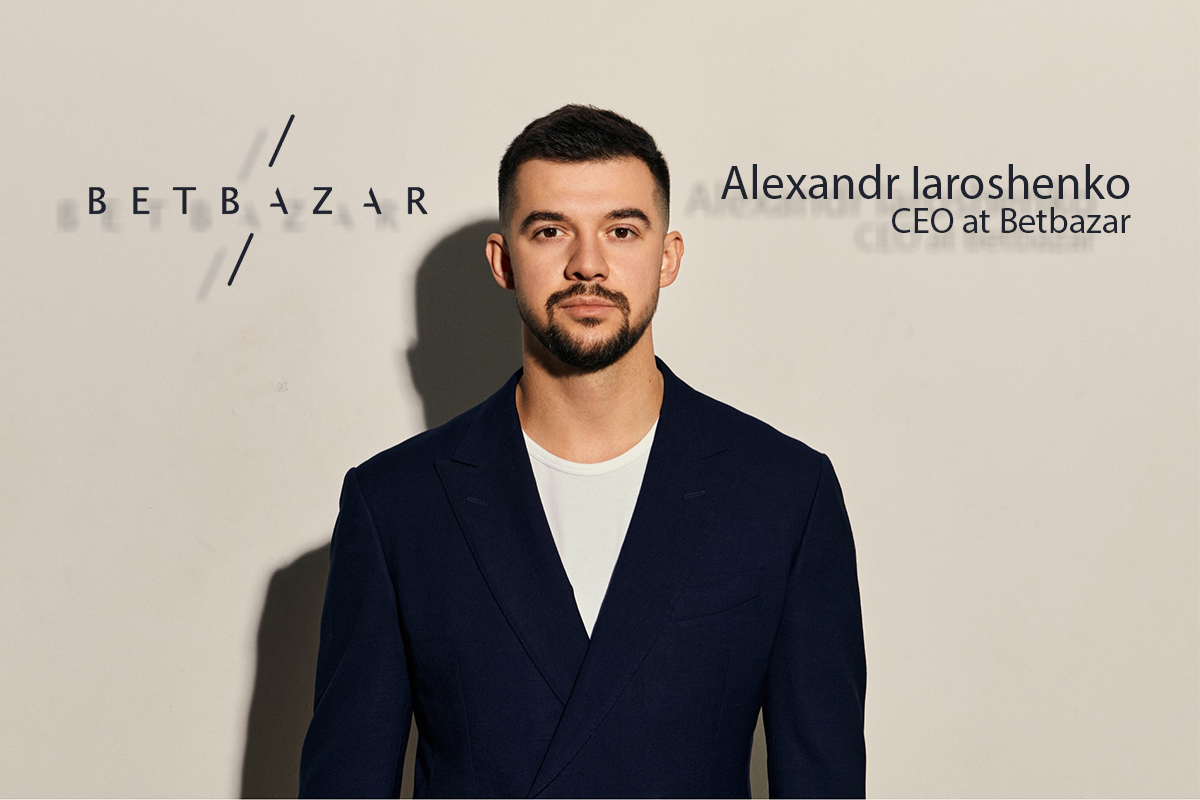
Alexandr Iaroshenko, CEO of Betbazar, gives Gaming Americas his two cents on how a quickly regulating Latin America is proving to be a huge opportunity for Esports – with a hugely diverse player base and a fast-growing interest proving to a key revenue driver.
Looking at the Americas, which markets are of most interest to Betbazar and where do you see the most growth?
We see LatAm as a hugely promising region in the Americas. We are looking very closely at it and are already active there through a number of our tier one partners. It’s no big surprise that Efootball has proven massively popular in many markets there, with Brazil being the most vibrant example of a future market with a huge amount of possible growth.
Indeed, when it comes to major markets, we estimate that 60% of Esports betting in Brazil will be on Efootball – and Argentina, which is already in the most part regulated, has proven very similar. However, in countries like Mexico there is more of a cultural split when it comes to player tastes. Football is still high on the menu, but that number is closer to 30%, with 25% betting on basketball and just as many preferring American football, rather than ‘soccer’.
Colombia is also an excellent market with a great growth trajectory, all though the tech can be limiting – and we still see this as early days as native platforms are proving an issue there, which we ideally need in order to deliver our best services. Only the major brands can do so platforms directly, such as Caliente and Salsa – which does limit scope.
Given the region’s unique segmentation, there is a lot to bear in mind as a result, but we’ve learned quickly. As well as regulation, economic trends and demographics, infrastructure is also key to powering the next decade. But all these things are moving in the right direction across large swathes of the region, spelling out a huge amount of opportunity there.
LatAm has certainly had to weather its fair share of challenges over the last 12 months – how has the market evolved and how do you see Betbazar as being able to make a difference for operators?
A lot of operators in LatAm were really prompt in reacting to the challenges of last year, they took the correct forward-thinking approach and invested in diversifying their portfolios quickly, with Esports being a big part of that.
If there is anything we should have learned about the last 18 months, it is that you never know what is around the corner and with the highly volatile nature of the ongoing situation – covering every base you can to entertain new players is essential. We know what players out there want, especially the new generation – and we’ve proven ourselves as key part of some of the major industry operators’ Esports set-up for some time now.
Looking to what is happening at this moment, audience demand has grown exponentially. LatAm has a huge young population that are far more likely to be tuned into Esports and the numbers have supported that. We’ve got a connected global generation like never before – and they’re very switched onto the Esports community already. Accordingly, we can offer popular games like Counter Strike, for example – which, according to our studies, accounts for almost 70% of bets in LatAm Esports.
It’s not hard to see why this number is so high, the game is very simple to understand. It’s a timeless tale of good guys vs bad guys that even the casual viewer can get their heads around very quickly. Helping operators to capitalise on this is one of our biggest priorities going forward. Betting that is easy to understand and simple to join in is key to retention and engagement in 2021.
How much does the nature of supply, and indeed, product requirements differ in LatAm from the likes of Europe?
The infrastructure of internet service is probably the biggest difference between the two regions, with regards to our offering. Due to the nature of our products – which rely on streaming and data, high quality mobile internet is vital, so that is the most important factor we will be keeping our eye on.
Connectivity can be a challenge. However, cheap, data-strong delivery is in existence already in many parts of the continent, where they are able to stream and bet simultaneously without any issues – we expect this to be the case across the continent soon. That is enough to make us confident about rollout there. We’re seeing tech and devices in LatAm evolve at a rapid pace and catching up with Europe, which means the best content can be integrated to really engage audiences.
However, as already mentioned in terms of B2B, platforms can be an issue as it is a closed ecosystem and still requires development. This can present challenges for integration, but native platforms from tier one operators are, of course, changing that – and the market will follow a natural course of evolution where far more availability comes with time.
Is it a case of offering a set of solutions that are specifically tailored to the market as opposed to a ‘one-size-fits-all’ for global delivery?
Generally speaking, there are two ways to supply Esports products. The first is direct integration with the platform. The odds and video streaming elements are integrated, the product is tested and has proved it’s functionality, the game’s fixtures are matched and from there you’re ready to go.
However, we like to keep things simple for our partners, and a much easier way is what we call ‘iFrame integration’. This is where you have everything on your site, and it appears as a pop-up window. So, all the work happens on our side. Design is included to the service we offer, the only thing that needs to be done by the operator is to connect their wallets and payment integrations. This kind of process solves a lot of pain points as it simply means providing a point of entry than can open the product on the site.
As well as that, it enables us to open another element of commercial communication, which promotes efficiency and scale as we help our partners to scale and manage their sportsbook directly through their sites. This means we, are able to have full clarity on betting activity, and fully support their growth
As well as this, the option for revenue share is available, which also makes the iFrame integration we offer an excellent way of dipping a toe in the water and seeing if the Esports landscape is what your business needs – and whether your audience is already familiar and ready for action.
Betbazar offers a real specialisation across Esports, how popular has this vertical proven in LatAm and what kind of games are proving to be the most popular?
The two main demographics we have seen in Europe and the US are those who joined during the pandemic and those who were interested in Esports beforehand. This has proved to be the same in LatAm. The first group is those who subsequently joined and tend to be drawn to sports simulators.
Such a demographic tends not to be big fans of RNG games including slots and likely shuns virtuals also, despite last year’s hype. The question, once acquired, is how to keep this group engaged going forward. A really important factor is to make it clear to players that the game is happening in realtime and they aren’t watching a recorded one – as live action is what it’s all about. As a result, a stream of the players in-play is important to communicate that sense of here-and-now, as well as the thrill of getting involved in what’s happening at that very moment, creating a real FOMO effect.
The second group are those already interested in the vertical and tend to enjoy the Battle Royale and deathmatch-style games, including Counter-Strike and Fortnite. They are typically under 30 and are used to playing these games and will continue to be interested post-COVID as this is a key part of their entertainment, whether or not there’s a lockdown.
We also have a schedule of the games and the players for each event on our website, so bettors can check ahead of time. Just like you’ll see in the likes of horse racing and US prop-bets, it’s all about the statistics – which is why we’ve emulated that by providing the same historical statistics for Esports players, and it’s proven incredibly popular.
Looking to the next 12 months, how would you forecast LatAm’s continued growth and what do you plan to bring to the table to support that?
The market is clearly opening up. There are plenty of new regions that are going to be regulated in the next year and we’re getting ready to support our partners there.
LatAm has always been treated as an emerging market, but the more it develops, the more regulation we see will ensure the market becomes more mature. This means we can expand our presence with the existing major players there and really start to capitalise on places like Brazil and Argentina.
We’re in close communication with the major local platform providers, so do stay tuned for plenty more from us!
Powered by WPeMatico


CasinoCanada.com, an online casino information portal operated by SEOBROTHERS, has partnered with the IntellectBet online casino. The collaboration focuses on content development, traffic acquisition, and informational coverage of the IntellectBet platform for users in Canada.
Eugene Ravdin, Head of PR at SEOBROTHERS, said: “The partnership with IntellectBet implies the creation of content describing the platform’s offering, its game portfolio, provider network, and payment systems. The collaboration includes traffic acquisition focused on directing users from Canada to the platform.”
The platform provides access to a library of 16,000 games aggregated from more than 85 studios. The portfolio includes slots, live dealer games, and RNG table games, as well as additional categories such as crash and penny games from the likes of Booming Games, InOut, Playson, and BGaming.
The platform supports more than 15 payment methods, including Interac, Bitcoin, and MiFinity. IntellectBet Casino operates in Canada under the Curacao licence and reports around 94,000 active players monthly.
IntellectBet is operated by Casiworx, which also unites other casino brands such as RockstarWin, StakeBro, FreakyBillion, PokerbetCasino, VipCasino, SlotyStake, Slotobit, StakeMania, SlotoRush, Norsewin.
The post CasinoCanada Partners with IntellectBet appeared first on Americas iGaming & Sports Betting News.
Adam Pentecost Chief Revenue Officer at Gaming Corps
Gaming Corps Taps Betty to Boost Content Options for Ontario Players

Gaming Corps, a publicly traded game development firm located in Sweden, has entered into a new distribution deal with Betty, one of the rapidly expanding iGaming operators in Ontario. The agreement enhances Betty’s platform with Gaming Corps’ growing collection of content, increasing options for players in a market where the brand currently provides over 2,800 slot titles.
Thanks to the collaboration, Betty customers will soon enjoy the latest slot releases from Gaming Corps, featuring 3 Easter Pigs, the latest chapter in the well-known 3 Pigs series, which adds a new seasonal element to one of the studio’s most iconic franchises. Players will also gain access to the latest release, Vendetta Fury, from DEGEN Studios, Gaming Corps’ newest RGS partner.
This launch leverages the solid success of the broader 3 Pigs franchise, featuring games like 3 Pigs of Olympus and 3 Pigs of the Caribbean that are already part of Gaming Corps’ collection. These are included with the studio’s wider range of Slots, Plinko, Mine, Crash, and Table games.
Adam Pentecost, Chief Revenue Officer at Gaming Corps, said: “Ontario has become one of the most exciting regulated markets in North America, and Betty has built an impressive reputation by offering players both quality and variety. We’re delighted to partner with such a progressive operator and look forward to showcasing how our latest content can bring something genuinely different to their already rich portfolio.”
Paraskeva Smirnova, Senior Casino Operations Manager at Betty, added: “Betty has built its identity on being a homegrown Ontario brand with a clear focus on what local players want. Working with Gaming Corps allows us to continue that mission, adding content that stands out and gives our players something new to discover alongside the thousands of titles we already host.”
The post Gaming Corps Taps Betty to Boost Content Options for Ontario Players appeared first on Eastern European Gaming | Global iGaming & Tech Intelligence Hub.
Adam Pentecost Chief Revenue Officer at Gaming Corps
Gaming Corps partners with Betty to expand content choice in Ontario
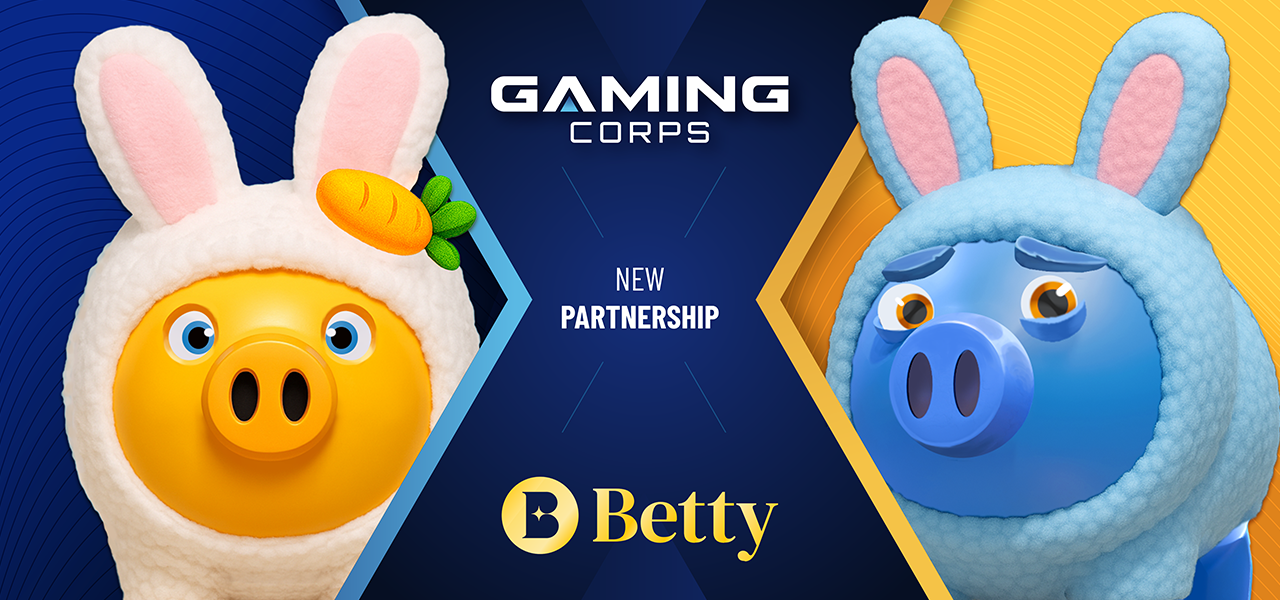
Gaming Corps has signed a new distribution agreement with Betty, one of Ontario’s fastest-growing iGaming operators. The deal adds Gaming Corps’ expanding suite of content to Betty’s platform, strengthening the choice for players in a market where the brand already offers more than 2,800 slot titles.
Through the partnership, Betty customers will soon have access to the latest Gaming Corps slot releases, including 3 Easter Pigs, the newest instalment in the popular 3 Pigs series, which introduces a fresh seasonal twist on one of the studio’s most recognisable franchises. Players will also have access to Gaming Corps’ newest RGS partner, DEGEN Studios’, latest release, Vendetta Fury.
This launch builds on the strong performance of the wider 3 Pigs franchise, with titles such as 3 Pigs of Olympus and 3 Pigs of the Caribbean already established within Gaming Corps’ portfolio. These sit alongside the studio’s broader offering of Slots, Plinko, Mine, Crash and Table games.
Adam Pentecost, Chief Revenue Officer at Gaming Corps, said: “Ontario has become one of the most exciting regulated markets in North America, and Betty has built an impressive reputation by offering players both quality and variety. We’re delighted to partner with such a progressive operator and look forward to showcasing how our latest content can bring something genuinely different to their already rich portfolio.”
Paraskeva Smirnova, Senior Casino Operations Manager at Betty, added: “Betty has built its identity on being a homegrown Ontario brand with a clear focus on what local players want. Working with Gaming Corps allows us to continue that mission, adding content that stands out and gives our players something new to discover alongside the thousands of titles we already host.”
The post Gaming Corps partners with Betty to expand content choice in Ontario appeared first on Americas iGaming & Sports Betting News.

-

 bingo6 days ago
 -
Compliance Updates6 days ago
EGBA Urges EC to Tackle Rising Online Fraud in Gambling Sector
-
Greentube6 days ago
Greentube hauls in big wins with Rumble Riches™ Haulin’ Gold™
-
Baroness Fiona Twycross4 days ago
BGC AGM 2026 Discussed About Surging Illegal Gambling Black Market
-
DEGEN Studios6 days ago
DEGEN Studios ignites a brutal blood feud with Vendetta Fury
-
Adam Pentecost Chief Revenue Officer at Gaming Corps6 days ago
Gaming Corps Taps Betty to Boost Content Options for Ontario Players
-
Bonus Rush5 days ago
RAW iGaming launches BONUS RUSH® – a new family of feature-focused games
-
Big Time Gaming4 days ago
BTG brings iconic board game action to the reels with MONOPOLY MEGAPOTS™