gross gaming revenue
Indian Gaming Revenue Sets New Record of $40.9B in 2022

The National Indian Gaming Commission (NIGC) released Fiscal Year 2022 Gross Gaming Revenue (GGR) numbers totaling $40.9bn, an increase of 4.9% over FY 2021. Chairman E. Sequoyah Simermeyer and Vice Chair Jeannie Hovland made the announcement live from Thackerville, Okla.
Gaming Revenue for FY 2022 is the highest in Indian gaming history. Seven of NIGC’s eight regions showed an increase over FY 2021. The overall FY 2022 GGR increase was $1.9bn, about 5% higher than the historic FY 2021 GGR of $39bn, as operations emerged from the pandemic. It is important to note the year-over-year GGR change by region should not be used as a direct indicator of the local economy in any specific region. Many other factors could have an impact on the GGR at the regional level, such as new gaming operations, expansions or renovations to existing operations, temporary or permanent closures, or changes in a gaming operation’s fiscal year.
This year’s historic revenue reflects the resiliency of many tribal gaming operations, and how tribal gaming continues to rebound and remain strong. Tribal governments and the operations they license continue to explore new and innovative ways to expand and deliver world-class experiences to cultivate sustainable economies.
“Across Indian country, tribes pursue economic sustainability through gaming by relying on the robust regulatory reputation for which Indian gaming is well known, and made better when supported by efficient and effective measures,” said Simermeyer.
Vice Chair Hovland noted this year’s GGR reflects Indian gaming geographic and financial diversity, with 55% of tribal gaming facilities reporting less than $25m in revenues (5% of the total GGR). Indian gaming’s success also often means benefits to surrounding communities and regional economies.
“We have cause to celebrate the opportunity successful Indian gaming operations affords tribes to invest in the future and improve the quality of life for individual Native people, and their families, and their communities,” Hovland said.
The FY 2022 revenues are calculated from the independently audited financial statements of 519 gaming operations owned by 244 federally recognized tribes. Indian gaming operations are located on Indian land in 29 states.












Gaming Compliance International
The Trillion Dollar Problem: Unregulated Online Gambling Reaches $5.9 Trillion in Global Wagering Value
New analysis from Gaming Compliance International reveals that unregulated online gambling has reached $5.9 trillion in global wagering value in 2025, confirming what is widely referred to as the “trillion dollar problem” – in reality, a multi-trillion-dollar global economy. At this level, unregulated online gambling now ranks as the world’s third largest economy, behind only the US and China, while also representing the largest form of cybercrime globally.
Global Marketplaces Dominated by the Unregulated
GCI’s global analysis, summarized in a new report, GCI Online Gaming 2025: Global, shows that the average online gaming marketplace is structurally unbalanced:
• 78% unregulated
• 22% regulated
This reflects the global Gross Gaming Revenue (GGR) market share split, demonstrating that the majority of consumer-generated revenue is flowing outside licensed, taxed, and controlled environments. This is not a marginal issue – the unregulated sector dominates the marketplace.
One Marketplace, Three Sectors
There is one marketplace containing regulated and unregulated industries competing for the same audience, attention, and spend. However, this dual sector consideration is no longer sufficient. A third category – unacknowledged gambling – has now emerged at scale.
These platforms replicate gambling mechanics but fall outside traditional classification. This is the fundamental shift defining online marketplaces from 2025 onwards, reshaping how consumers engage with betting and gaming.
Online marketplaces are now fragmenting into three distinct sectors:
• Regulated – licensed and compliant
• Unregulated – unlicensed but actively targeting and transacting
• Unacknowledged – gambling-like products outside classification
This is not just a regulatory distinction – it is how audiences experience the market.
As these sectors converge, commercial revenue to regulated operators declines, tax losses increase, and consumer risks escalate.
The White Noise Marketplace
The result is what GCI defines as the “White Noise Marketplace,” where everything is visible, accessible, and indistinguishable. The audience does not differentiate between these sectors – they experience one marketplace.
This shift from a two-sector to a three-sector marketplace will define the next phase of global online gaming. Solutions are only found within the MPEO – monitor, police, enforce, optimize – framework, focused on actions that benefit each jurisdiction’s commerce, community, and consumers.
Matt Holt, CEO of GCI, said: “At $5.9 trillion in wagering value, unregulated online gambling is one of the largest economic systems in the world, operating largely outside regulatory oversight. Regulators are not facing a marginal challenge, but a dominant one – the majority of activity is occurring beyond the regulated perimeter. Our role is to provide full transparency across the total marketplace, enabling regulators to act with confidence.”
Ismail Vali, President of GCI, said: “What we are now seeing is a three-sector gaming marketplace in every jurisdiction – regulated, unregulated, and unacknowledged – and it is this third layer that is accelerating consumer confusion, unregulated growth, and regulatory complexity at scale.
“The audience does not distinguish between these sectors. They experience one marketplace, where everything is accessible and everything competes equally. In a world where you can bet on anything, consumers are increasingly betting on everything – this is the gamification of everything.
“If you cannot see the entire marketplace – regulated, unregulated, and unacknowledged – you cannot control it. This is the shift. This is the problem we are helping to solve at GCI.”
The post The Trillion Dollar Problem: Unregulated Online Gambling Reaches $5.9 Trillion in Global Wagering Value appeared first on Americas iGaming & Sports Betting News.
gross gaming revenue
Groupe Partouche Publishes its Consolidated Turnover for the First Quarter of Fiscal Year 2026


Groupe Partouche has published its consolidated turnover for the 1st quarter of fiscal year 2026 (November 2025 to January 2026).
The Gross Gaming Revenue (GGR) totalled €189.0M at 2026 1st quarter compared to €182.9M a year earlier, up by +3.4%.
In France, the 1st quarter 2026 GGR increased by +2.2 % to €166.4M compared to €162.8M a year earlier, driven by all forms of gaming: +0.5 % for slot machines, +3.1 % for non-electronic table games and +11.8 % for electronic forms of gaming.
Abroad, the GGR is up +12.3 % compared to the 2025 1st quarter, at €22.6M, compared to €20.1M in N-1. The GGR of Swiss online games continues to grow reaching €8.1M (+23.6% over one year).
At a constant scope of consolidation, excluding the acquisition of Casino Partouche Cannes 50 Croisette that took place on 28th February 2025 together with the opening of Casino Cotonou (Benin) on 28th January 2025, GGR increased by 1.1 % at €185.0M (compared to €182.9M in 1st quarter 2025).
In total, after levies, Net Gaming Revenue (NGR) increases by +3.2 % to €105.5M in 1st quarter of 2026 (compared to €102.2M in Q1 2025).
The 1st quarter 2026 turnover reached a satisfactory increase of + 3.5 % over the year, reaching €130.8M compared to €126.4M a year earlier. This includes casinos turnover for €122.1M (+3.8 %), hotels for €6.4M (-1.4 %) and other activities for €2.3M (+1.7 %).
Furthermore, the city of Berck-sur-Mer has taken possession of the casino building, in the context of ongoing asset-protection litigation.
At the Annual General Meeting to approve the financial accounts for 2025 fiscal year, to be held on Wednesday 25th March at 10:00 a.m., shareholders will be able to vote on the distribution of a dividend of 12,033,793 € (i.e. €1.25 per share). Said dividend will be paid no later than 31st July 2026.
The post Groupe Partouche Publishes its Consolidated Turnover for the First Quarter of Fiscal Year 2026 appeared first on Eastern European Gaming | Global iGaming & Tech Intelligence Hub.
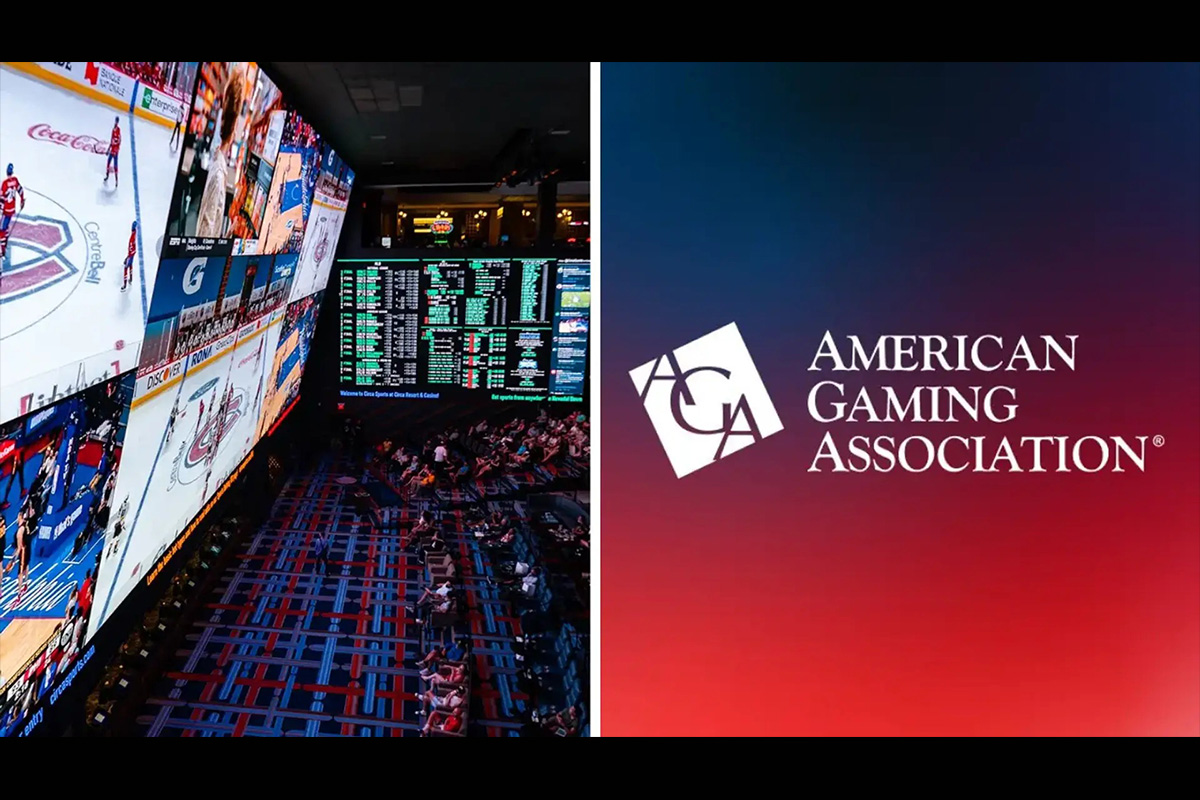
The U.S. commercial gaming industry reached a record high in 2025, generating $78.72 billion in gross gaming revenue (GGR), a 9.2% increase over the previous year, according to the American Gaming Association’s (AGA) Commercial Gaming Revenue Tracker. In 2025, legal, state-regulated gaming generated $18.09 billion in gaming tax revenue, supporting state and local education, infrastructure, and other services across the country, up 15.1% over last year.
“For another year, legal commercial gaming in the United States has delivered exceptional results for consumers, operators, and the communities we serve. These record revenues and tax contributions demonstrate the broad appeal of regulated gaming markets and why strong state oversight remains essential as our industry evolves,” said Bill Miller, President and CEO of the American Gaming Association.
Growth Across the Industry in 2025:
• Traditional Gaming generated $50.94 billion in revenue, up 2.3%, while contributing $11.33 billion in taxes, a 7.2% increase.
• Sports Betting revenue rose to $16.96 billion, a 22.8% increase, on a total handle of $166.94 billion (+11.0%). State-regulated sportsbooks generated $3.71 billion in taxes, up 32.4% year-over-year.
• iGaming reached $10.74 billion in revenue (+27.6%) and delivered $2.59 billion in taxes, a 36.9% increase.
All 38 commercial gaming markets saw annual revenue increases in 2025. These figures reinforce strong consumer enthusiasm for legal, regulated gaming and highlight the expanding economic impact of state-regulated markets.
Protecting State- and Tribal-Regulated Gaming
Industry leaders and lawmakers continue to take a stand against prediction markets offering sports contracts outside state and tribal regulatory frameworks. These platforms operate without state oversight, are not subject to the same consumer protection and responsible gaming standards, and do not contribute tax revenue.
Even with a record state-regulated gaming tax impact in 2025, the AGA estimates that prediction markets offering sports event contracts have diverted more than $500 million in potential sports betting tax revenue to date.
“With 2025 marking another record year, the industry’s performance reinforces a clear principle. Sports betting belongs under state and tribal regulation. That’s how consumers are protected and how communities share in the benefits,” added Miller.
The post U.S. Commercial Gaming Revenue Hits $78.7 Billion in 2025 appeared first on Americas iGaming & Sports Betting News.

-

 10bet5 days ago
Ellis Park Stadium signs five-year naming rights deal with 10bet
-
central asia5 days ago
Groove confirms attendance at SBC Summit Tbilisi 2026
-
Bucharest4 days ago
Eeze opens 1,200 sqm Bucharest hub for technical teams
-
API integration4 days ago
Belatra signs cooperation deal to distribute slots via VeliGames
-
affiliate marketing5 days ago
SEOBROTHERS’ Aleksandra Drigo flags higher barriers for affiliates in regulated Alberta
-
AB Trav och Galopp3 days ago
BetMakers Technology Group Selected to Distribute ATG Horse Racing Content Across Australia and New Zealand
-
Big Bass Blast5 days ago
Pragmatic Play adds Big Bass Blast to Big Bass slot series
-
Compliance Updates5 days ago
KSA Updates Guidelines for Conducting Means Test