Compliance Updates
Euroconsumers calls Nintendo to solve its “Joy-Con Drift” probl


The new version of the Nintendo “Switch” console, the Switch OLED, expected on October 8th 2021, shows an unsolved technical problem with its controllers – an issue commonly called “Joy-Con Drift” – that prevents players from playing the game properly. Nintendo is quite aware of this flaw. Yet it still plans to roll out the new Switch with the old problem. Euroconsumers calls Nintendo to account.
“Joy-Con Drift”
The flaw in the controllers manifests itself after a couple of months, falsely reading input from the controller stick, as if the user has their thumb pressed down on the controller, causing the game character to move without the player even touching the device. This prevents the player from playing the game as intended. This issue is not new: it was already denounced extensively by users of the current Nintendo Switch, IFixit and multiple consumer organisations.
Nintendo’s inaction
This flaw has previously been raised with Nintendo. Firstly in January 2020, Test Achats/Test Aankoop, Euroconsumers’ Belgian national organization, sent a letter of formal notice to Nintendo Europe GmbH calling on the company to repair all the defective products free of charge and to publicly communicate about the defect.
In January 2021, BEUC, the European umbrella group for 46 independent consumer organisations, launched an external alert to the CPC network about a widespread infringement with Union dimension of EU consumer law, related to the premature obsolescence of the Nintendo Switch.
On top of this EU action, two class actions have been launched in the US, and a Canadian firm has filed an application to begin a class action.
Nevertheless, Nintendo has taken no actions to remedy the flaw or alert consumers. It even issues a new Switch OLED with the exact same Joy-Con design, with the exact same inescapable defect. Meanwhile Nintendo keeps on putting a great deal of emphasis on the quality and versatility of the Joy-Con in its advertisements t.
This early obsolescence is not only unfair and harmful to consumers, but also affects the environment, creating a pile of unnecessary and extremely polluting electronic waste.
Euroconsumers’ call on Nintendo
In a letter Euroconsumers has confronted Nintendo with the above, asking them to:
-
Adequately inform consumers of the existence of the “Joy-Con Drift” and its impact on the expected lifespan of the Nintendo controllers on the packaging of the product.
-
Fully respect provisions on the legal product guarantee, without imposing any burden of proof on consumers or charging them with any costs to repair or replace their Switch controllers.
-
Provide clear contact details at Nintendo for consumers to report and resolve Joy-Con problems, and for Euroconsumers and its national organisations to address problems to that regard.
-
Resolve the technical “Joy-Con Drift” flaw and ensure a more sustainable version of the controllers. Euroconsumers, and its national organizations stand ready to deploy decades of technical and testing experience to support finding solutions.
Euroconsumers is available and willing to launch a dialogue with Nintendo in order to establish the best way to satisfy the above requests.
“Nintendo has a duty to its customers to provide functioning devices,” said Marco Scialdone, Head of Litigation and Academic Outreach at Euroconsumers. “To knowingly continue selling these game consoles when they are defective is a breach of EU consumer law. We expect Nintendo to do the right thing and work with us to find a solution for consumers.”
“While on one hand Nintendo pretends to commit to the green transition and serve consumers, its continued distribution of faulty electronic devices shows it’s true lack of genuine commitment,” said Els Bruggeman, Head of Policy and Enforcement at Euroconsumers. “Early obsolescence results in more electronic waste, which is particularly difficult to dispose of. This shows a regrettable lack of respect for both the environment and consumers.”
Powered by WPeMatico


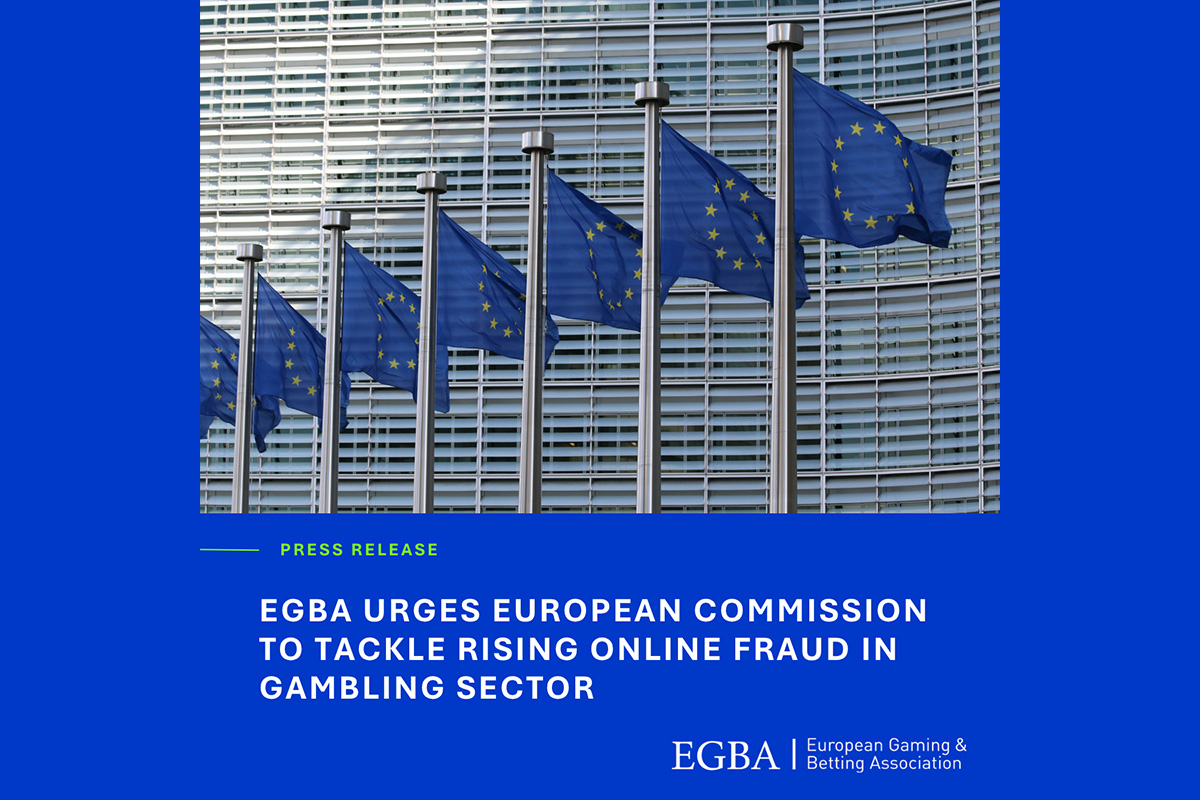
The European Gaming and Betting Association (EGBA) has provided evidence to the European Commission’s recent call for evidence on its upcoming EU Action Plan on Fighting Online Fraud – an initiative to reduce online fraud across different economic sectors in the EU through strengthened coordination and cross-border cooperation. The submission urges coordinated EU action to tackle fraudulent gambling sites and apps that exploit the reputation of legitimate operators.
Supported by documented evidence, the submission highlights how fraudsters systematically impersonate licensed gambling operators to deceive consumers across Europe. The evidence includes examples of fraudulent websites using domain names that mimic or closely resemble legitimate operators, illegal gambling apps distributed through Google Play and Apple App Store, phishing campaigns impersonating licensed brands and social media advertising that drives users towards real-money apps, based outside of the EU, that are disguised as games.
These types of fraud expose players to risks of identity theft, financial loss and unsafe gambling environments where well-established safeguards offered by regulated operators, like self-exclusion, do not exist. EGBA members report that across Europe fraudulent domains and applications frequently reappear shortly after takedown, creating ongoing consumer exposure despite continuous monitoring, takedown notifications and repeated enforcement actions.
Illegal operators now capture an estimated 27% (worth approximately €18 billion) of Europe’s total online gambling market gross gaming revenue in 2025. The submission addresses the risks posed by offshore operators, based outside the EU, who deliberately increase consumer risk by falsely claiming to hold gambling licenses granted by countries in the EU, misrepresenting their regulatory status and disguising gambling products as games. These fraud patterns are closely linked to the rapid expansion of unregulated illegal platforms in Europe that threaten both consumers and legitimate operators.
The Commission’s Action Plan on Fighting Online Fraud is planned for adoption in the second quarter of 2026.
Dr Ekaterina Hartmann, Director of Legal and Regulatory Affairs at EGBA, said: “The evidence we’ve gathered shows how fraudsters are systematically exploiting the trust consumers place in the licensed gambling environment, putting European consumers at risk and allowing the illegal online gambling market to grow. From fake websites and fraudulent apps to phishing campaigns and social media scams, these threats reappear as quickly as they’re taken down. Fragmented national approaches to these types of fraud are not enough – we need coordinated EU-level action to ensure consumers and legitimate operators aren’t left fighting an uphill battle against fraud.”
The post EGBA Urges EC to Tackle Rising Online Fraud in Gambling Sector appeared first on Eastern European Gaming | Global iGaming & Tech Intelligence Hub.


The Pennsylvania Gaming Control Board (Board) at its public monthly meeting approved a consent agreement presented by the Board’s Office of Enforcement Counsel (OEC) resulting in a $100,000 fine to BetMGM.
In its approval of the consent agreement, the Board agreed that BetMGM failed to have sufficient procedures to prevent fraudulent behavior on its BetMGM and Borgata wagering platforms. This includes insufficient Know-Your-Customer (KYC) protocols that allows for the creation, access and use of multiple accounts by individuals using personal identifying information of other individuals and the funding of those accounts using stolen or fraudulently obtained payment devices.
The consent agreement identified four individual fraud rings that:
1. operated for approximately 25 months until January 2024 with 1567 accounts created using personal identifying information of other individuals and $229,580 of combined wagering;
2. operated for approximately 34 months until November 2024 with 34 accounts created using personal identifying information of other individuals and over $14,598 of combined wagering;
3. operated for approximately 29 months until November 2023 with 119 accounts created using personal identifying information of other individuals and $895,092 of combined wagering
4. operated for approximately 19 months until December 2023 with 304 accounts created using personal identifying information of other individuals and $867,910 of combined wagering.
The Board also took actions to place 16 individuals on its various Involuntary Exclusion Lists. Placement on an Involuntary Exclusion List prohibits individuals from either gaming in a casino in Pennsylvania, via an online betting site regulated by the Board, or at a Video Gaming Terminal (VGT) location.
The actions by the Board include placement of four adults on the Involuntary Casino Exclusion list for leaving minors unattended at a casino property while they gambled:
• A male patron who left an 11-year-old in a vehicle in the parking lot at Hollywood Casino York for 52 minutes while he gambled at slot machines and table games;
• A male patron who left a 5-year-old in a vehicle in the parking lot at Rivers Casino Philadelphia for 17 minutes while he gambled at table games and the sportsbook;
• A male patron who left a 9-year-old in the parking lot at Rivers Casino Philadelphia for 1 hour 7 minutes while he gambled at table games and the sportsbook; and,
• A male patron who left two minors, ages 7 and 12, in a vehicle in the parking lot at Parx Casino for 32 minutes while he gambled at slot machines.
Actions such as these to deny statewide gambling privileges serve as a reminder that adults are prohibited from leaving minors unattended in the parking lot or garage, a hotel, or other venues at a casino since it creates a potentially unsafe and dangerous environment for the children. To complement the efforts by casinos to mitigate this issue, the Board created an awareness campaign, “Don’t Gamble with Kids” (DontGamblewithKids.org).
In addition to the four adults listed above, 12 others were placed on either or both of the Involuntary Casino Exclusion and Involuntary Interactive Exclusion Lists for various actions.
These matters, presented by the Board’s Office of Chief Counsel and the OEC, raise the number of individuals now on the Board’s various Involuntary Exclusion Lists to 1515.
The post PA Gaming Control Board Imposes $100,000 Fine on BetMGM appeared first on Americas iGaming & Sports Betting News.

The Swedish government has appointed Peter Knutsson as the Director General of the Swedish Gambling Authority. The appointment will run until 31 August 2032.
Peter Knutsson most recently came from the role of Advertising Ombudsman and will take up his position as Director General on 17 August 2026.
Peter Knutsson took office as Advertising Ombudsman in August 2024, and was previously Head of Unit at the Ministry of Finance. He has over 20 years of experience as a manager and leader and has a background as a lawyer, with solid knowledge of consumer issues and consumer legislation. Peter Knutsson has previously worked for the European Commission and as an advisor to the Swedish Financial Supervisory Authority.
“With the solid experience Peter Knutsson has from, among other things, the Ministry of Finance, consumer affairs and most recently the Advertising Ombudsman, this will be very good for the authority,” said Spelinspektionen’s Chairwoman Madelaine Tunudd.
“I welcome the government’s decision on a new Director General for the Swedish Gambling Authority and will ensure that Peter Knutsson receives a good introduction in my handover as acting Director General,” said Johan Röhr at the Swedish Gambling Authority.
The post Peter Knutsson Becomes New Director General of Swedish Gambling Authority appeared first on Eastern European Gaming | Global iGaming & Tech Intelligence Hub.

-

 Asia6 days ago
GLI Becomes the First Company Accredited by PAGCOR to Test and Certify iGaming Platforms in the Philippines
-
Betnacional5 days ago
Operational Leadership and the Driving Force Behind LatAm’s Largest Event
-
Asia6 days ago
Team India and Türkiye Win Gold at the Global Esports Games Mumbai
-
Compliance Updates6 days ago
Playtech Enters Connecticut iGaming Market
-
Australia5 days ago
NSW: More Than 650 Gaming Machine Exemptions Revoked to Address Gambling Harm
-
Compliance Updates5 days ago
UK Government proposals to undermine the ‘aim to permit’ of the Gambling Act 2005?
-
Andrea Rossi6 days ago
REEVO Goes Live with Betsson in Brazil
-
2026 SPiCE South Asia Awards5 days ago
QTech Games wins Innovation of the Year at the 2026 SPiCE South Asia Awards