Canada
Gold Rush Amusements, Inc. Files Counterclaim Alleging Violation of Illinois’ Anti-Inducement Law

Daniel Fischer, the principal owner of the Dotty’s chain of video gaming cafés in Illinois, who is also involved in bids for new casino licenses in Rockford and Calumet City, paid just $2 million in 2018 to expand his network by purchasing 63 lucrative Stella’s and Shelby’s video gaming establishments, according to a newly disclosed counterclaim filed by Gold Rush Amusements. At the same time, Midwest SRO, LLC, a terminal operator that already serviced Dotty’s establishments, allegedly paid an additional $44.5 million to Stella’s and Shelby’s owners as part of a calculated sham transaction. The filing alleges that Midwest SRO’s payment violated the Illinois Gaming Act because it constituted an improper inducement to replace Gold Rush as the terminal operator in 44 of the Stella’s and Shelby’s locations.
Disclosure statements filed last summer with the Illinois Gaming Board identified Gordon Sondland as holding an interest of five percent or more in Illinois Café and Service Company, LLC (ICSC), Fischer’s company that owns the Dotty’s chain in Illinois. Sondland, an Oregon hotel developer who recently served as President Trump’s Ambassador to the European Union, was a key witness who changed his testimony in the President’s impeachment proceedings.
The newly disclosed court documents resulted from a Cook County judge’s order lifting confidentiality designations that had previously hamstrung Gold Rush Amusements, Inc., and its executive Rick Heidner from knowing and revealing the details of the alleged sham transaction involving ICSC, Midwest SRO, and Laredo Hospitality Ventures, LLC, the parent company of Stella’s and Shelby’s. The ruling allows Gold Rush and Heidner, for the first time, to fully learn and publicly disclose the details of the transaction, including the allegedly improper inducement paid by Midwest SRO, a Gold Rush competitor.
“Gold Rush has compelling evidence that the Transaction was the culmination of a multi-year, concerted effort between and among Midwest SRO, ICSC, and Laredo (and their principals) to replace the Gold Rush Contracts with contracts benefitting Midwest SRO,” Gold Rush alleges in the newly unmasked court document.
Under state law, establishments and terminal operators must equally split 67 percent of a machine’s profits, while the remaining one-third goes to state and local taxes. In fiscal year 2019, Illinois’ 32,000 video gaming terminals yielded nearly $1.6 billion in net revenue.
A nine-page ruling lifting the document’s confidentiality on March 13 by Cook County Circuit Associate Judge Sanjay T. Tailor also favors the public’s right of access to court documents.
“Equity demands that Gold Rush be permitted to publicly make its claims of wrongdoing against the Establishments and Midwest, and their respective principals, just as the Establishments and Midwest have publicly made their claims of wrongdoing against Gold Rush,” Judge Tailor wrote.
The ruling involves Gold Rush’s counterclaims against 44 Stella’s and Shelby’s gaming cafes in which Gold Rush began accumulating agreements to place its video gaming terminals in 2013. Those 44 establishments sued Gold Rush in early 2019 to terminate the contracts. A year later, Gold Rush filed its counterclaims and additional claims against Fischer, the other principals, and the companies that were involved in the November 2018 transaction, which purported to change ownership of all 63 Stella’s and Shelby’s establishments in suburbs surrounding Chicago. Until now, the details of Gold Rush’s allegation that the parties engaged in an improper sham transaction were shielded by a court protective order that allowed the opposing parties to designate key documents relating to the transaction as “attorneys eyes only,” meaning that Gold Rush’s counsel could not even share the documents with their client.
Now fully public, Gold Rush’s counterclaim alleges that Midwest SRO, and its principal, Allyson Estey, paid more than $44.5 million ― or 95.7% of the value of the deal ― to Laredo, the parent company of Stella’s and Shelby’s, and one of its owners, Gary Leff. The filing alleges that Midwest SRO’s payment was part of a conspiracy to oust Gold Rush as the terminal operator and place Midwest SRO’s video gaming terminals in 44 of the establishments.
At the same time, Fischer’s ICSC, which operates Dotty’s in Illinois, paid just $2,000,001 ― or 4.3% of the deal’s overall value ― to purchase Laredo’s actual assets and cafés, which generate substantial revenue from video gaming. Fischer became involved in Dotty’s when he and his former business partner, Marwin Hofer, purchased Dotty’s Oregon establishments from the chain’s founder, Craig Estey, who is Allyson Estey’s father.
Hofer, a South Dakota businessman, was the initial managing member of a South Dakota limited liability company that continues to hold an interest of five percent or more in Fischer’s ICSC, as does a living trust in the name of Hofer’s wife. Hofer was convicted of federal wire fraud in 2017. The offices of Fischer’s ICSC and Allyson Estey’s Midwest SRO are housed in adjacent business suites in suburban Bensenville.
When the designated confidential documents were produced in the litigation last summer, Gold Rush’s attorneys began to unravel the complex sham transaction. The documents revealed that Leff had agreed to be bound by restrictive covenants that did not exist until the day of the transaction, and Midwest SRO purchased those covenants from Laredo for more than $34.6 million. Leff was also allowed to retain unspecified intellectual property valued at $9.85 million. There was no indication of how the restrictive covenants or intellectual property values were calculated. Leff further received a 10 percent interest in Midwest SRO and the right to have his interest redeemed for $9.85 million approximately a year after the transaction. At the same time, Fischer’s ICSC purportedly purchased the Laredo establishments for $1, and paid just $2 million to acquire the outstanding interests in Laredo.
Gold Rush’s complaint names Fischer, Leff, Allyson Estey, and Charity Johns, who was Laredo’s CEO and became CEO of Fischer’s ICSC, as defendants. The counterclaims and complaint allege that those individuals and their companies ― ICSC, Midwest SRO, and Laredo ― conspired for years to evade the legal restrictions separating establishments, on one hand, and terminal operators, on the other hand. After previously failing to accomplish so-called vertical integration, first through legislation and then litigation, Gold Rush’s adversaries allegedly tried a third route ― conspiring in an improper deal in which Midwest SRO paid an improper inducement to be installed as the terminal operator for all of the Laredo establishments, supplanting Gold Rush in the process.
Judge Tailor’s ruling observed that the opposing parties had repeatedly emphasized their disclosure of the transaction details to the Illinois Gaming Board, “as if to suggest they had obtained its blessing.” However, the IGB did not bless or approve the transaction, the judge noted, but rather said only, in an October 2018 letter, that the state’s video gaming act and rules did not allow the IGB to prohibit the transaction.
Gold Rush also claims that its adversaries provided select or mischaracterized information to the IGB to portray Gold Rush as attempting to disrupt the transaction after it was completed, which became the basis of a disciplinary complaint against Gold Rush. At the time, however, Gold Rush’s Heidner did not know the details of the transaction or that Fischer’s ICSC had paid only $2 million for Laredo’s assets and cafés.
Gold Rush’s counterclaims allege breach of contract, tortious interference with contracts and prospective business advantage, and civil conspiracy. Gold Rush seeks unspecified damages for harm to its business and reputation, as well as attorneys’ fees and costs.
SOURCE Gold Rush Amusements, Inc.
Powered by WPeMatico


Bronze card has been claimed during the group stage; silver and gold prizes remain available until 31 July.
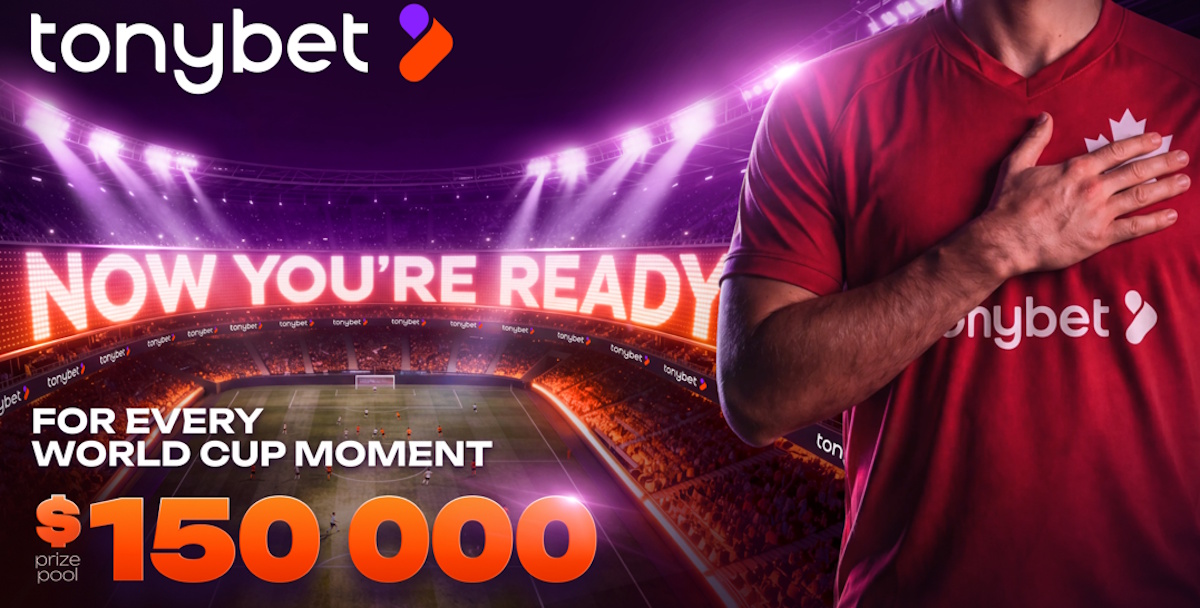
Tonybet said it has paid out its first major prize in its World Cup Card Collection campaign for Canadian customers (excluding Ontario), after a player secured the promotion’s bronze card worth $15,000 CAD.
The operator said the World Cup Card Collection includes 51 cards to collect during the tournament: 48 digital cards tied to participating World Cup nations, plus three unique cards—gold, silver and bronze—linked to a $150,000 CAD total prize fund.
According to Tonybet, the bronze card has been available through the World Cup’s group stage and has now been claimed. The silver card is available during the knockout rounds up to the quarter-finals, while the gold card is held back for the closing semi-finals and final.
Tonybet Head of Product Kiryl Liudvikevich said: “With Canada co-hosting the World Cup for the first time, the tournament has felt closer to home than ever before for Canadians, and it has already delivered a moment most supporters could only dream about with the national team advancing to the knockout stages.
“For one lucky Canada supporter, it has now produced another story that will be worth retelling long after the final whistle has gone – with our lucky winner among the first Tonybet customers to win one of the unique cards in our World Cup Card Collection, taking home a cool $15,000 for managing to get his hands on bronze. Who will end up with silver and gold?”
Tonybet said the same three unique cards are also in circulation across its other markets, with varying outcomes so far. The World Cup Card Collection campaign runs until 31 July, with a $150,000 CAD prize pool for Canada and separate prize pools in other markets.
The post Tonybet pays first $15,000 CAD prize in World Cup Card Collection Canada promo appeared first on EE Gaming | Global iGaming & Tech Intelligence Hub.
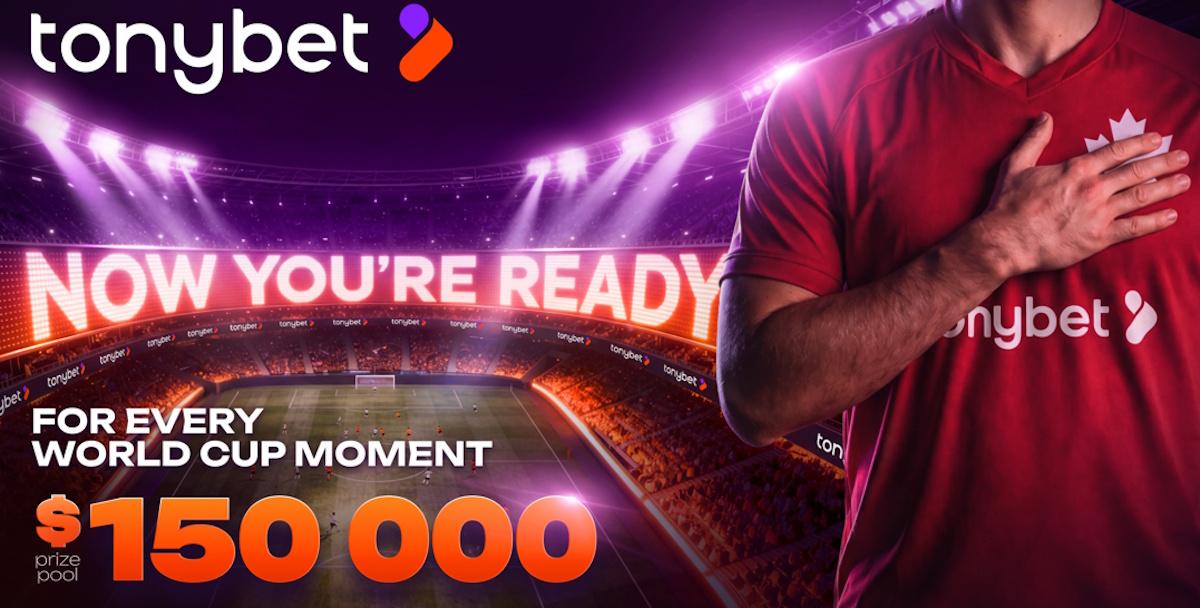
Tonybet’s World Cup Card Collection for Canadian customers has found its first major winner, with one lucky player taking home $15,000 CAD for securing the campaign’s prized bronze card.
There are 51 cards in total to collect during the tournament for Tonybet’s Canadian playerbase (excluding Ontario), including 48 digital cards – one for each participating World Cup nation – and three unique cards available in gold, silver and bronze – with a $150,000 CAD total prize fund on offer.
The three unique cards reward winners with prizes of $100,000 CAD for gold, $35,000 CAD for silver and $15,000 CAD for bronze – and the bronze card has now been discovered by a Tonybet customer, having been on on offer through the World Cup’s group stage.
The silver card comes into play during the knockout rounds up to the quarter-finals, with the gold card held back for the closing semi-finals and final.
Tonybet Head of Product Kiryl Liudvikevich said: “With Canada co-hosting the World Cup for the first time, the tournament has felt closer to home than ever before for Canadians, and it has already delivered a moment most supporters could only dream about with the national team advancing to the knockout stages.
“For one lucky Canada supporter, it has now produced another story that will be worth retelling long after the final whistle has gone – with our lucky winner among the first Tonybet customers to win one of the unique cards in our World Cup Card Collection, taking home a cool $15,000 for managing to get his hands on bronze. Who will end up with silver and gold?”
The same three cards are in circulation across Tonybet’s other markets. In some, a bronze has already been claimed; in others, all three are still waiting to be found.
Tonybet’s World Cup Card Collection runs until 31 July, with a $150,000 CAD prize pool (and separate pools running across its other markets).
The post Tonybet’s World Cup Card Collection campaign lands first $15k Bronze winner appeared first on Americas iGaming & Sports Betting News.
Gaming Corps has launched its casino game portfolio with Ontario Lottery and Gaming Corporation (OLG) in Ontario, bringing a selection of the Swedish studio’s titles to OLG’s digital casino audience.
The rollout includes football-themed games timed to the summer football calendar. Titles going live with OLG include Goals to Glory: Football Fever, Penalty Champion: Goals to Glory, and Goals to Glory: Instant Blitz, part of Gaming Corps’ Instant Blitz series.
OLG is a provincial crown agency that has operated in Ontario since 1975, with responsibilities spanning land-based gaming facilities, province-wide lottery games, internet gaming, bingo, and electronic gaming products at Charitable Gaming Centres.
Graham Greensmith, Chief Commercial Officer at Gaming Corps, said: “Launching with OLG gives Gaming Corps outstanding visibility in one of the most exciting regulated markets in North America. The timing could not be better. As global football moves into focus, we are bringing OLG a fantastic line-up that speaks directly to the moment, while also introducing some of our most recognisable titles, mechanics and characters.”
Ian Shelswell, Director, iCasino Product, Partnerships & Development at OLG, added: “OLG is always looking to bring high-quality content to our players, and Gaming Corps’ portfolio adds further variety to our iCasino offering at an exciting time in the sporting calendar. The combination of football-themed releases, instant win content, recognisable slot franchises and engaging game mechanics makes this a strong addition to our casino catalogue. We are pleased to welcome Gaming Corps to OLG and look forward to developing the partnership.”
The post Gaming Corps goes live with OLG iCasino in Ontario appeared first on EE Gaming | Global iGaming & Tech Intelligence Hub.

-

 Bragg Gaming Group7 days ago
Massive Gaming launches Blitzcrown titles on Superbet Brazil via Bragg Hub
-
Compliance7 days ago
HIPTHER Launches HALLO: The Standard in Compliance Expertise
-
Alex Cuoci7 days ago
Wealthsimple and Kalshi Partner to Bring Prediction Markets to Canada
-
Bonusetu.com6 days ago
Finland Sets Casino Gambling Risk Limits at 2% of Income, 4 Days, 2 Game Types
-
7Games7 days ago
7Games, Betão & R7 Launch FIRST.bet Sportsbook in Brazil
-
Compliance Updates7 days ago
HIPTHER Launches HALLO: The Standard in Compliance Expertise
-
Compliance Updates5 days ago
Dutch Gambling Trade Association Sues Meta Over Illegal Gambling Ads
-
30-0 Kongeserien6 days ago
Kongebonus launches 30-0 Kongeserien Eliteserien fantasy draft game