BetGuard
World’s Third-Largest Gambling Market Has No National Self-Exclusion Register, New CasinoCanada Research Warns

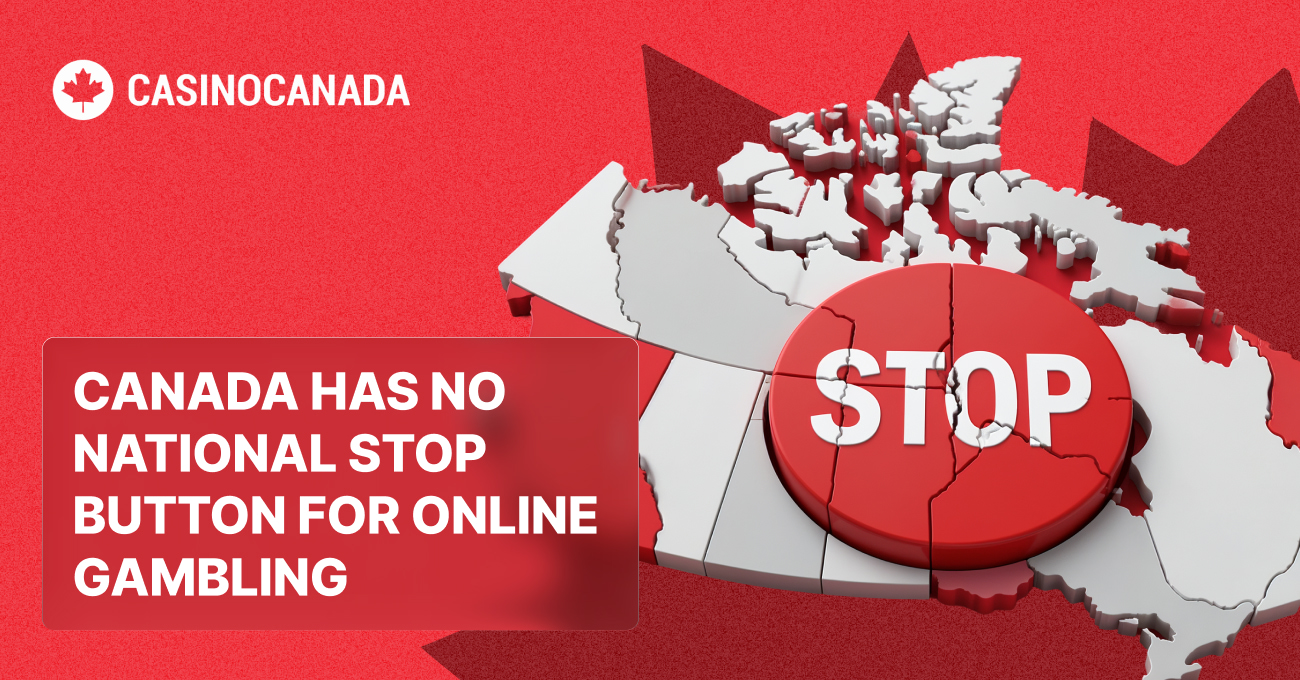
Canada is now the third-largest online gambling market in the world with an estimated CAD 13.15 billion generated in 2025, yet new research from CasinoCanada.com finds it still has no national self-exclusion register and no national licensing framework – meaning a player who self-excludes in one province can continue gambling offshore, or across provincial borders.
Drawing on iGaming Ontario figures, provincial regulatory data, Blask’s 2025 iGaming Landscape Report and peer-reviewed public health research, the analysis traces the gap to a constitutional structure that leaves gambling to the provinces and Ottawa without a national regulator. In effect, there are ten parallel regimes that do not connect to one another.
As a consequence, estimated offshore leakage outside Ontario ranges from 49% in British Columbia to 93% in Saskatchewan, with Alberta and Manitoba at 88%. Offshore platforms also grew 40% year-on-year in 2025 – nearly double the 23% growth of licensed operators.
Most starkly, a January 2026 study in the Canadian Medical Association Journal found gambling-related contacts to Ontario’s ConnexOntario helpline rose an estimated 198% after the market opened in 2022, concentrated almost entirely among boys and men aged between 15 and 44.
Ontario remains a success, with channelisation at 91.1% and its new BetGuard self-exclusion tool drawing more than 500 registrations in its first two weeks. But set against 1.235 million active player accounts, and stopping at the provincial border, it underlines how far the country still has to go.
Eugene Ravdin, Head of PR for CasinoCanada, said: “Record wagers and a near-200% rise in helpline contacts are happening at the same time, which tells you market growth and player protection are not the same thing. The tools that work internationally – GAMSTOP, Spelpaus, BetStop – all cover the whole market under a single registration.
“Canada has nothing like it. A national register wouldn’t just protect players, it would also help licensed operators compete against offshore sites. This is a commercial argument as much as a moral one.”
The full article can be read here: https://casinocanada.com/blog/canadas-safer-gambling-gap-why-market-success-doesnt-always-equal-player-safety/
The post World’s Third-Largest Gambling Market Has No National Self-Exclusion Register, New CasinoCanada Research Warns appeared first on EE Gaming | Global iGaming & Tech Intelligence Hub.












Canada’s online gambling market is the third-largest in the world. It generated approximately CAD 13.15 billion in 2025, growing faster than virtually any other country. By the metrics the industry tends to reach for, it is a success story.
Unfortunately, where many of the metrics that matter for player protection are concerned, the story is different. Unlike several other countries, Canada has no national self-exclusion register and no national licensing framework.
While Ontario is regulated, and there is a lot of excitement around Alberta opening its regulated market this summer, the overwhelming majority of online gambling in the country still happens on unlicensed platforms.
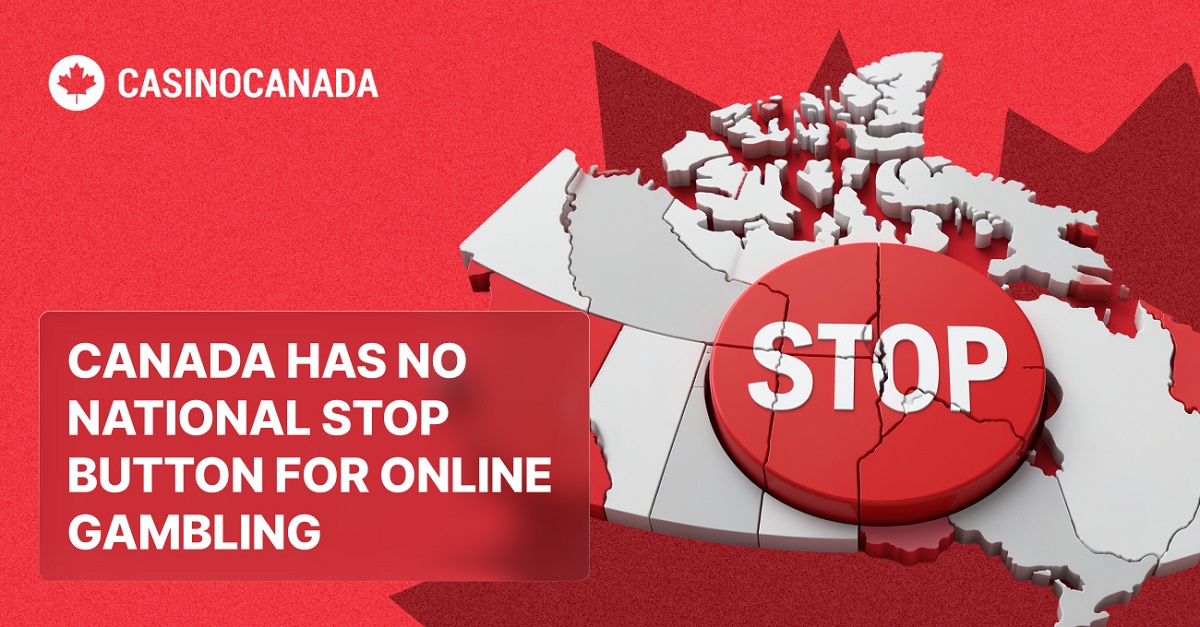
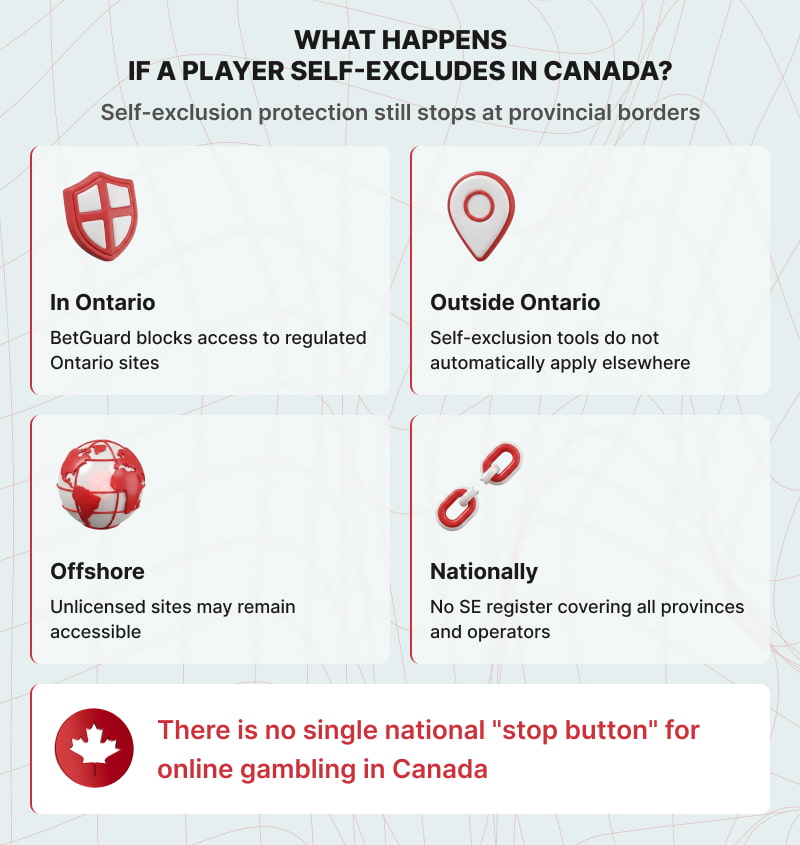
An Ontario or Alberta player who self-excludes still can gamble through offshore sites or outside the province. Canada has no single stop button.
Key Findings
- Canada has no national self-exclusion register, no national licensing framework, and the last national survey predates the legalisation of single-event sports betting.
- Offshore leakage outside Ontario ranges from 49% to 93% by province. The offshore market grew at 40% year-on-year in 2025.
- Ontario has a 91.1% channelisation rate, but 20.2% of players also play on unregulated sites.
- Player awareness of RG tools in Ontario stands at 65.4%, according to iGO’s own Leger survey baseline. No province publishes data on actual tool uptake rates.
- A CMAJ study found gambling helpline contacts in Ontario rose 198% after market privatisation, concentrated almost entirely in men aged 15 to 44.
A Fragmented System
Canada’s gambling framework is a product of its constitution. Sections 91 and 92 of the Constitution Act distribute authority to the provinces, and Section 207 of the Criminal Code permits them to conduct and manage lottery schemes within their own borders. A 1985 federal-provincial agreement completed the transfer, leaving Ottawa without a gambling regulator and the country without national standards of any kind.
The result is ten parallel regimes, all operating at different standards. Ontario operates an open market, and Alberta is building a similar structure. Every other province runs a government monopoly: BCLC’s PlayNow, Loto-Quebec’s Espace-jeux, and the Atlantic Lottery Corporation.
The issue is that there is no connection between these. A responsible gambling tool in one province has no power in another. A self-exclusion registered in Ontario does not block a player from gambling elsewhere.
Changes do not appear to be on the horizon, with no federal legislation on those issues currently before Parliament.
The Offshore Risks
The Blask 2025 USA and Canada iGaming Landscape Report highlights the scale of this problem. Saskatchewan carries an estimated 93% offshore leakage rate. Alberta and Manitoba sit at 88%. Quebec, where Loto-Quebec has operated since 2010, holds only around 17% of a market estimated at CAD 2.3 billion.
Even British Columbia, with years of PlayNow operations behind it, retains approximately 49-51% of its online market, according to Blask’s reports. Offshore platforms grew at 40% year-on-year in 2025, nearly double the 23% growth of domestic licensed operators.
Ontario’s Success and Limits
Ontario deserves genuine credit for its current position, and it is often hailed as an example of a strong regulatory market.
The regulated market generated CAD 82.7 billion in wagers and CAD 2.9 billion in gross gaming revenue in FY2024/25. Channelisation, measured by the share of online gamblers using regulated platforms, reached 83.7% in early 2025 and 91.1% on the most recent IPSOS survey.
However, the Ontario story is often viewed as the national story, and this is not the case. Even within the province, 20.2% of players using regulated platforms also gamble on unregulated sites.
BetGuard, launched in May 2026, finally delivered the centralised self-exclusion system that the market should have had from day one, allowing a player to exclude from all regulated platforms at once.
The early take-up numbers show more than 500 people registered for BetGuard in its first two weeks. That is not a negligible start, and iGaming Ontario has stated it will measure the platform’s success by renewal rates, term lengths selected, and connections to addiction support services.
However, Ontario’s market has 1.235 million active player accounts. The gap between the scale of the regulated market and the early uptake of the tool is wide.
The deeper problem is that BetGuard is province-bound. A player who is excluded in Ontario is not blocked elsewhere.
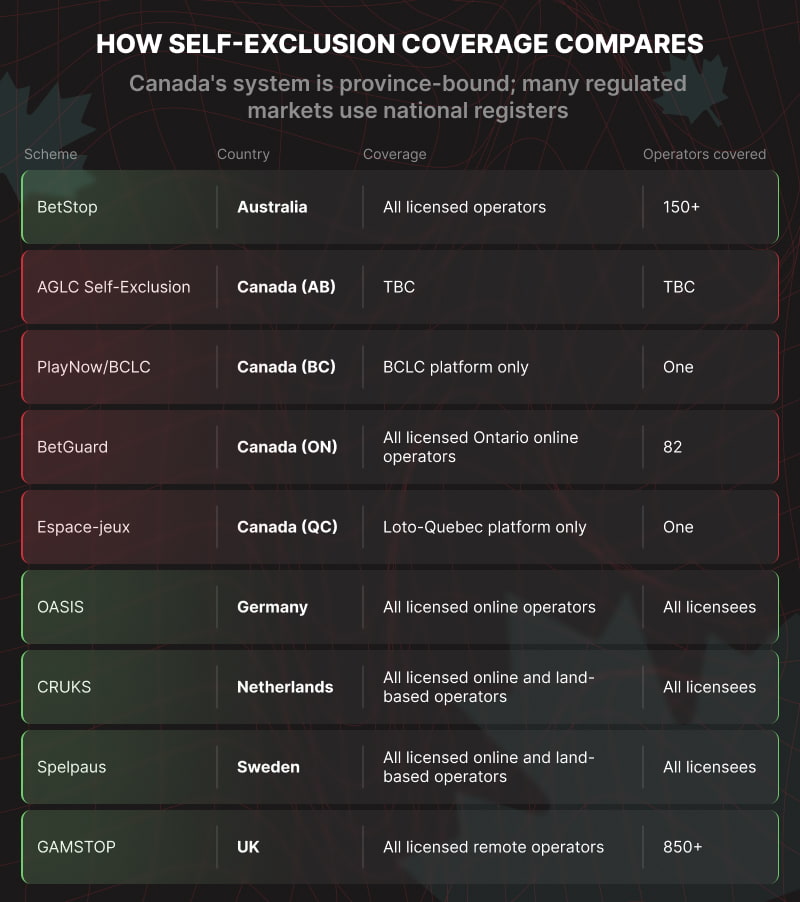
Many other countries have solved this problem. GAMSTOP in the UK covers all licensed remote operators under a single registration. Spelpaus in Sweden does the same across online and land-based channels. BetStop in Australia covers approximately 150 licensed wagering providers with a five-minute sign-up.
Canada has no equivalent, and there is currently no route to making one.
What the Evidence Says
The academic case for nationally coordinated self-exclusion is strong. A comparative review of self-exclusion programmes across multiple jurisdictions found that the reach and enforcement of any scheme vary directly with how completely it covers the market.
A review of BCLC’s voluntary self-exclusion programme found that 97% of participants who gambled while excluded did so at venues not covered by their agreement. The exclusion worked where it applied, but not beyond that.
The tool-uptake literature is equally sobering. Studies analysing voluntary deposit-limit setting across large player populations find uptake rates in the low single digits over three-month periods. Ontario does not publish equivalent figures, but iGO’s own Leger survey in 2024 found that only 65.4% of regulated players were aware of available RG tools.
The gap between knowing a tool exists and using it is consistently wide, and no regulator publishes data on actual tool engagement rates. That absence is itself a significant accountability problem.
Where public health data does exist, it is alarming. British Columbia’s 2025/26 prevalence study found that 35% of past-year online gamblers showed moderate or high-risk behaviour.
The most striking recent evidence comes from a January 2026 CMAJ study analysing contacts with Ontario’s ConnexOntario helpline over thirteen years.
The study found that gambling-related contacts increased from a monthly rate of 13.4 per million before online gambling launched, to 17.0 after PlayOLG’s introduction, to 26.2 following the market opening in April 2022.
The increases occurred almost exclusively in adolescent boys and men aged 15 to 44, with the 15-to-24 age group estimated to have seen contacts rise by 337.8%.
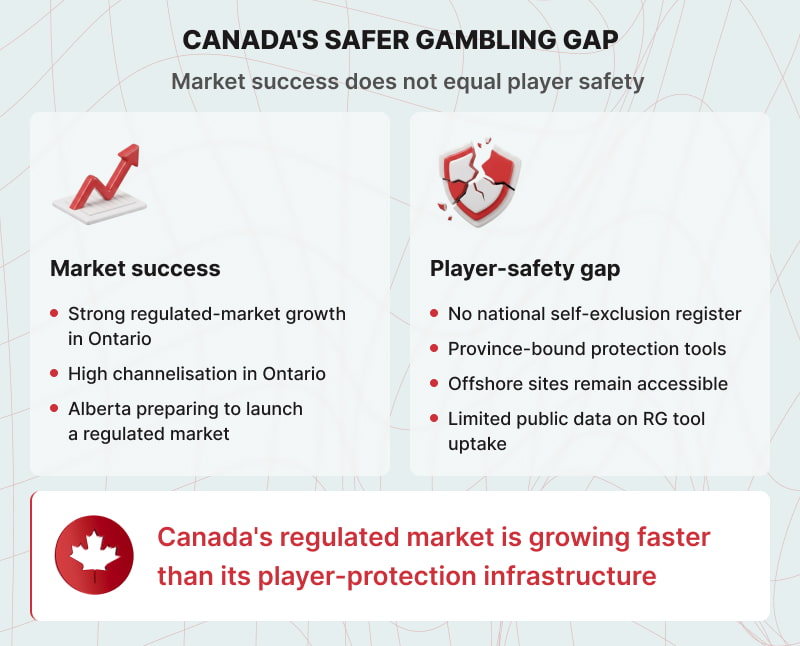
A regulated market that generates record-breaking wagers and a near-200% increase in gambling-related helpline contacts simultaneously is simply demonstrating that market growth and player protection are not the same thing.
The Future
Alberta’s launch will introduce centralised self-exclusion from day one, requiring all registered operators to integrate with AGLC’s self-exclusion programme as a condition of registration.
This is a huge step in the right direction, but, like BetGuard, it will still be province-bound.
The case for a shared register is strong. Licensed operators are also competing with offshore threats. A functioning national self-exclusion infrastructure, combined with the channelisation benefits that a well-regulated market delivers, serves their commercial interests as directly as it serves players’ welfare.
If Canada is going to solve its responsible gambling issues, it needs to admit that the fragmented framework has shortcomings in customer care and stop using Ontario’s success as a stand-in for the country as a whole.
The post Canada’s Safer Gambling Gap: Why Market Success Doesn’t Always Equal Player Safety appeared first on Americas iGaming & Sports Betting News.

The Mill Adventure’s CCO, Bjørnar Heggernes, looks at how operators in North America can adopt a compliance-first, technology-driven approach to turn complex challenges into long-term growth.
North America presents one of the most potentially lucrative, yet structurally complex, opportunities in the global industry. Those looking to enter the region are presented with a highly fragmented map of state-by-state and province-by-province regulations, where crossing a border often means navigating an entirely new set of rules.
Considering Ontario, the regulated market earlier this year reported impressive 26% year-on-year growth, with total sports betting and online casino wagers approaching the $100 billion mark. However, succeeding in a market of that scale requires a grounded, knowledge-based perspective on where the real barriers to entry lie. Market access for an operator is one crucial element, but sustainable growth depends on aligning technology, operations, and compliance into a foundation built to scale efficiently from the start.
At The Mill Adventure, we don’t view our recent GLI-19 certification as a standalone announcement or a surface-level achievement. Instead, we see it as a foundational milestone that underpins our approach to North American expansion.
For operators, the true value of an advanced, certified platform lies in what it enables: the ability to operate across multiple regulated environments under a unified, consistent compliance framework. Moving into a new jurisdiction should not mean a full operational rebuild or adding complex layers on top of each other. When compliance is embedded at the platform level as a core pillar, it becomes easier to adapt at speed and with less risk. Market entry is then a question of readiness, not reinvention.
This core strength and adaptability unlock long-term scalability, allowing operators to execute a broader strategy with the confidence that the foundational technology is compliant from the outset.
From certification to operational readiness
Beyond the technical specifications of GLI-19, the operational essentials that shape launch readiness demand equal focus. Our experience tells us that compliance-first architecture is about meeting the day-to-day challenges, not simply passing an initial audit.
Robust infrastructure must handle complex regulatory reporting requirements and rigorous, ongoing certification and licensing processes. The platform remains the backbone of a compliant offering, supported by the necessary seamless integration of third-party services. In Ontario and other North American jurisdictions, this goes beyond core controls such as session limits and identity checks for KYC, which need to be embedded to meet market requirements. It extends to integrations with player protection systems such as BetGuard, Ontario’s self-exclusion system requiring real-time syncing and seamless verification, geolocation precision, and system traceability when it comes to data storage and audit trails.
As well as compliance, operators also need to consider how platform technology can support a stronger launch and gain maximum impact from day one. This requires platform providers to offer complete readiness in terms of infrastructure, careful coordination with third-party suppliers, and comprehensive go-live planning. Get this process right and operators can reduce friction, allowing them to focus more firmly on growth.
Compliance beyond Ontario
A rigorous approach to operational readiness sets the stage for our upcoming operator launch in Ontario. Building on the supplier license already secured in the province and our recent GLI-19 certification, the launch will put our North American entry strategy into practice in one of the region’s most demanding regulated markets. Successfully deploying our platform will demonstrate how our technology supports the operational and technical realities of compliance across the region.
That said, receiving AGCO approval to provide our full-service player account management platform, achieving the GLI-19 standard and entering Ontario are not the finish line for us. In this sector, compliance is an ongoing evolution rather than a static destination, and our roadmap reflects that reality. GLI-33 certification forms the next natural step in our platform’s continued development. As the convergence of casino and sports betting continues to define the player experience, pursuing GLI-33 is a key part of our ongoing investment in anticipating where regulation is heading, not just responding to it.
The fragmented nature of North America will continue to challenge operators, but it will reward those who build on the right foundation. By prioritizing a technology-driven, compliance-first approach to platform provision, The Mill Adventure is delivering the consistency, stability, and repeatability that operators need to scale sustainably.
The post The blueprint for North American scalability appeared first on Americas iGaming & Sports Betting News.
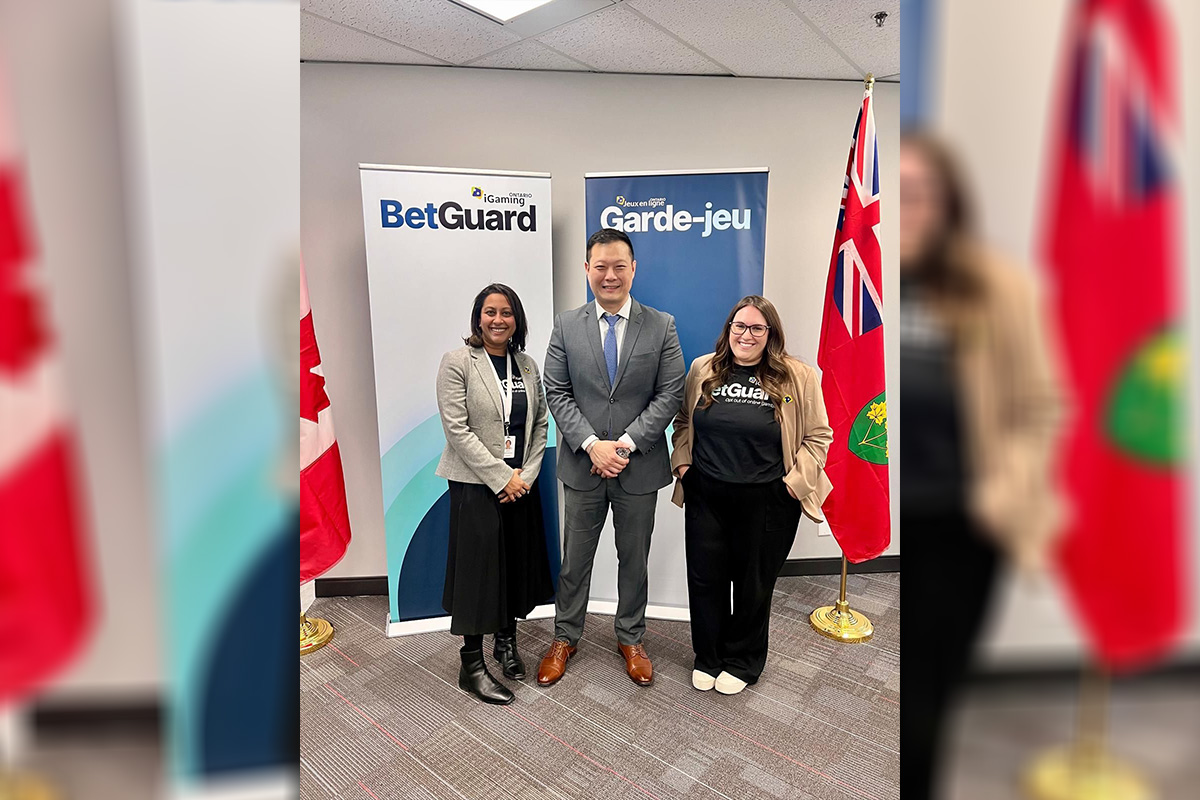
iGaming Ontario has launched BetGuard, a tool that enables individuals aged 19 and older to voluntarily opt out of all Ontario regulated online gaming platforms through one online portal. By opting out through BetGuard.ca, players are prevented from accessing their existing accounts, creating new accounts, or receive marketing communications from any regulated igaming site in Ontario. This launch supports the government’s commitment to protecting players through strong and responsible gaming safeguards.
“BetGuard is designed with one simple principle in mind: if you need take a break from the entire regulated igaming market, you can. Player choice is key to the sustainability of our market, and that includes the choice to opt out,” said iGaming Ontario President and Chief Executive Officer Joseph Hillier.
BetGuard benefits:
• Offers a dedicated website where anyone 19 years of age and older can opt out of online gaming in a few minutes without the need to visit individual igaming websites.
• Incorporates all igaming websites in Ontario’s regulated market, including OLG’s.
• Allows Ontarians to choose to opt out of online gambling for a term of 6 months, 1 year, 5 years or a custom term.
• Informs operators not to send direct marketing to individuals who have opted out.
• Offers a dedicated customer care line.
The launch of BetGuard reflects a shared commitment across government, industry and the responsible gaming community to provide Ontarians with an igaming market that has robust safeguards the unregulated market does not.
Ontario’s open and competitive igaming market has generated $262 million in 2025-26 in revenue that has been re-invested back into the province. The Government of Ontario has also invested over $421 million since 2018 in initiatives such as gambling-related public education and awareness programs, responsible gaming support, campaigns, and research.
The post iGaming Ontario Launches BetGuard Self-exclusion Tool appeared first on Americas iGaming & Sports Betting News.

-

 Bucharest6 days ago
Eeze opens 1,200 sqm Bucharest hub for technical teams
-
AB Trav och Galopp5 days ago
BetMakers Technology Group Selected to Distribute ATG Horse Racing Content Across Australia and New Zealand
-
BETANO6 days ago
Play’n GO strengthens Latin American presence with Betano Colombia launch
-
API integration6 days ago
Belatra signs cooperation deal to distribute slots via VeliGames
-
affiliate marketing7 days ago
SEOBROTHERS’ Aleksandra Drigo flags higher barriers for affiliates in regulated Alberta
-
Aviator6 days ago
Pernambuco court revokes Spribe’s interim relief in Aviator trademark dispute
-
Aino Lahti6 days ago
Kasinohai Audit: Most Slots Could Be Affected by Finland’s Draft Gambling Rules
-
game content6 days ago
R. Franco Digital releases fighting game-themed slot Spin Fighters