Bulgaria
Rethinking growth in European markets


As Europe’s largest iGaming markets mature, suppliers are increasingly turning their attention to smaller, often overlooked jurisdictions across Central and Eastern Europe. Markets such as Slovenia, Bulgaria and Romania may lack the scale of the UK or Italy, but they offer something equally valuable – stable regulatory frameworks, strong land-based heritage and growing online adoption.
In this roundtable discussion, Opher Ben Zvi, Team Leader Sales Operations at Greentube and Robert Civill, Business Development Manager at The Mill Adventure, explore how emerging European markets are evolving, how they compare to more mature jurisdictions, and why a ‘multi-market’ approach is becoming increasingly important for sustainable growth.
What distinguishes an emerging iGaming market in Europe today, and how do these markets differ from more mature jurisdictions in terms of player behaviour, regulation and commercial opportunity?
Opher Ben Zvi – Emerging European iGaming markets are typically defined less by scale and more by structure and trajectory. Markets across Central and Eastern Europe, such as Romania, Bulgaria and Slovenia, often benefit from stable or steadily evolving regulatory frameworks, combined with strong land-based casino heritage. This creates a player base that is already familiar with classic slot formats and trusted brands, which is not always the case in newly regulated regions elsewhere. Compared to more mature jurisdictions like the UK or Italy, player behaviour tends to lean more heavily towards recognisable content, with a slower shift toward highly gamified or experimental mechanics. Commercially, while individual market size may be smaller, barriers to entry are often clearer and competition less saturated. This allows suppliers to build meaningful positions over time, particularly when supported by local partnerships and a well-adapted content strategy.
Robert Civill – The term “emerging market” can be slightly misleading in a European iGaming context. Many of the jurisdictions often grouped into this category are already mature in terms of regulatory system, player behaviour and competitive dynamics, even if they differ economically from Western Europe.
Romania, as an example, is already a well-established, regulated and competitive online market. At the same time, you have markets like Georgia, where we support a licensed operator today and where player behaviour is arguably more advanced than in parts of Western Europe, with strong engagement in loyalty mechanics, leaderboards and promotional formats that, in some cases, are restricted in larger “mature markets”.
The more useful lens is to look at where opportunity is forming, rather than whether a market fits an “emerging” label. Poland has been a topic of debate for years due to the ongoing monopoly of online casino and whether the market will eventually move towards an open licensing structure. In other cases, opportunity exists in much larger markets that are currently constrained, Germany being the obvious example. It’s hardly an “emerging” market, but despite its enormous long-term potential, factors such as turnover tax and strict regulatory limitations continue to impact channelisation and commercial viability for would-be market entrants.
So, the distinction is less about maturity, and more about timing, structure and whether the underlying economics make sense.
Individually, smaller markets may offer limited scale, but collectively they can represent significant value. How important is a multi-market approach across Central and Eastern Europe to building sustainable growth?
Opher Ben Zvi – A multi-market approach is essential when operating across Central and Eastern Europe. While no single market may rival the scale of Europe’s largest jurisdictions, collectively they represent a significant and sustainable growth opportunity. For Greentube, expansion across these smaller is not about short-term gains, but about building a strong regional footprint over time. These markets often share similar characteristics, from player preferences to regulatory structures, allowing suppliers to leverage learnings and efficiencies across multiple jurisdictions. At the same time, diversifying across several regulated markets reduces reliance on any single territory and creates a more balanced, resilient growth model. By establishing a network of operator partnerships, suppliers can unlock a greater value that far exceeds the sum of its individual parts.
Robert Civill – For most operators, launching across multiple jurisdictions simultaneously is neither practical nor necessary. Individual markets can deliver meaningful value on their own, provided the organisation around the brand is lean, market knowledge is applied effectively, and compliance requirements are managed without inflating cost and headcount.
What tends to work better is a phased approach. Operators identify specific markets where there is a credible balance between regulation, competition and commercial potential, and expand selectively from there. In that context, Central and Eastern Europe remains attractive, particularly for operators looking to diversify beyond highly saturated or increasingly expensive core markets.
That is especially relevant for operators in mature jurisdictions such as the UK, where international expansion is moving up the agenda as businesses look for new growth opportunities and greater operational flexibility. That doesn’t automatically translate into a multi-market strategy across Central and Eastern Europe, but it does reinforce the importance of being able to enter and operate in new jurisdictions efficiently when the right opportunity presents itself.
From our perspective, the challenge is enabling that expansion without forcing operators to rebuild their infrastructure every time they plan to enter a new market. A significant part of our role is helping operators navigate differing compliance, reporting and integration requirements while still allowing them to retain control over key parts of their product stack.
To succeed in smaller markets, how do you balance localisation with deploying proven, recognisable content?
Opher Ben Zvi – Success often comes down to striking the right balance between familiarity and localisation. In many Central and Eastern European jurisdictions, players have a long-standing connection to land-based casinos, which means recognisable titles and classic formats continue to perform strongly in the online space. For Greentube, this means leading with proven content, including well-established brands that players already trust, while complementing this with newer titles that introduce additional features and mechanics. Localisation then plays a supporting but important role, whether through language, currency, or tailoring content mixes to reflect regional preferences. Rather than reinventing the portfolio for each market, it is about making informed adjustments based on local insights.
What are the key considerations operators should make when preparing to enter new regulated markets in Europe?
Robert Civill – The main consideration is compliance, or at least it should be. Market entry is only sustainable if technical compliance and reporting are handled properly from day one. Localisation, brand development and product will naturally attract the most attention, and that’s where performance is measured, but none of it matters if the underlying technology is not reliable or fully aligned with regulatory requirements.
Each market introduces its own reporting obligations, tax logic and integration requirements, which need to function consistently in a live, 24/7 environment. That creates a practical dilemma for operators. Some choose to adapt their existing proprietary stack for each market, maintaining full control but taking on the associated complexity and ongoing overhead. Integrating with a platform that is already compliant and locally certified is a strong alternative that allows for a faster route to market and more cost-effective technical compliance maintenance.
We have developed a hybrid approach that allows operators to integrate core proprietary products, such as their sportsbook and front-end, with a market-ready platform responsible for compliance, reporting and local integrations.
For larger operators in particular, avoiding the need to adapt an existing PAM for every new market can remove an enormous amount of complexity. Market-entry projects often involve extensive planning across multiple departments, additional technical and compliance resources, specialist hires and ongoing operational overhead tied specifically to maintaining local regulatory requirements.
It allows operators to enter new regulated markets significantly faster and with far less operational strain, while maintaining continuity across the products and user experience that define the brand. At the same time, it frees up internal resources to focus on areas that actually drive growth, such as marketing, acquisition and retention.
How are smaller or emerging jurisdictions in Europe influencing your overall expansion strategy?
Opher Ben Zvi – Smaller and emerging markets must play an increasingly strategic role in shaping long-term expansion plans. There is growing value in building presence across a wider range of regulated markets with strong fundamentals, and for us, markets like Slovenia forms part of a broader, measured approach to growth across Central and Eastern Europe. These jurisdictions provide opportunities to establish early partnerships, build brand recognition and gain valuable insights into regional player behaviour. Importantly, experience gained in one market can often be applied to others with similar characteristics, creating a more efficient and scalable expansion model.
Robert Civill – Our business development strategy is centred around identifying and engaging operators that have a genuine interest in expansion and are actively exploring entry into new regulated markets.
In order to support that effectively, we put significant investment into technical compliance expertise and market research. The objective is to provide operators with a practical and clearly structured pathway from initial market evaluation and license application, through to certification, launch and ongoing regulated operation.
Our experience supporting a licensed operation in Georgia, together with previously holding a Romanian Class 2 license, has naturally increased our interest in the Balkans and Eastern Europe. Many of these markets continue to offer commercially attractive conditions around taxation, product offerings and player engagement practices, making them increasingly relevant in expansion discussions with operators looking beyond the largest Western European jurisdictions.
At the same time, we continue supporting operators across mature regulated markets, including Sweden, Germany, Denmark, the Netherlands and Portugal, giving expansion-focused operators access to proven market-ready infrastructure across a broad range of European jurisdictions.
Alongside this, securing and activating our Estonian license has naturally increased our focus on the wider Baltics, including Lithuania and Latvia, while Finland represents one of the clearest examples of a genuinely new regulated market opportunity where first-mover advantage may prove significant. We have already supported one of the first license applications there and have several more in progress, reflecting the level of operator interest in entering early and establishing a position from day one.
The post Rethinking growth in European markets appeared first on Eastern European Gaming | Global iGaming & Tech Intelligence Hub.











Balkans
Pasha Hotel & Casino Group and Platinum Casino Launch Pasha Platinum Casino at Grand Hotel Plovdiv in Bulgaria

Pasha Hotel & Casino Group, one of the most recognisable brands in the gaming industry in the Turkish Republic of Northern Cyprus (TRNC), and Platinum Casino – an established name on the Bulgarian market, have entered into a strategic partnership and launched a new premium casino brand in Bulgaria.
The new PASHA PLATINUM CASINO opened its doors at the prestigious Grand Hotel Plovdiv – located in the heart of the country’s second-largest city and one of the fastest-growing destinations in the region.
The PASHA PLATINUM CASINO has introduced its guests and the local fans of gaming an entirely new level of casino experience, combining international casino-resort style, high standards of service and a modern gaming environment.
A Blend of International casino-resort Style and Local Energy
Pasha Hotel & Casino is a brand associated with luxury, atmosphere and memorable experiences, attracting guests from across the Mediterranean region. Platinum Casino, on the other hand, is a well-known name in Bulgaria, with a loyal customer base and a strong market presence.
The combination of Pasha’s gambling concept, luxurious style and international expertise with Platinum Casino’s dynamics and deep understanding of the local market creates a unique project with the ambition to become a leading entertainment in one of the oldest cities in Europe. The city of Plovdiv is a cultural and social hub of international significance, located just 2 hours’ drive from both Turkey and Greece. Grand Hotel Plovdiv, a benchmark symbol of comfort and prestige, provides the ideal setting for the new casino.
PASHA PLATINUM CASINO is the most attractive part of the overall experience offered by the hotel complex – a combination of accommodation, gastronomy and high-end entertainment.
APEX Slot Machines
The casino features a selection of the best performing models of slot machines of Apex Pro Gaming, which have been ranked at the top among the most advanced and preferred gaming solutions in Europe. The installed Apex Pinnacle Slant top machines equipped with Clover Link Elements platform run at impressive, portrait J-curved displays are distinguished by outstanding design and ergonomics, dynamic and thrilling gameplay and a wide variety of games providing immersive features and high-adrenaline progressive jackpot prizes.
The game mix of Clover Link Elements is tailored both to experienced players and to new visitors seeking entertainment and an exciting experience.
The Grand opening of the Casino complex took place on 4 April 2026 in Plovdiv, Bulgaria and gathered thousands of guests for the weekend, who enjoyed the opulent atmosphere and the bespoken hospitality of two of the masters of entertainment in the region.
Sonya Nikolova, Global Sales Manager at APEX, said: “We’re grateful to both Pasha Hotel & Casino Group and Platinum Casino for the trust they have placed in APEX products, and we’re confident in the quality, competitiveness, and creativity behind the Clover Link Elements platform as it continues to evolve.”
Built on a flexible architecture and a distinctive design concept, Clover Link Elements further strengthens APEX’s position as a preferred partner for premium casino operators. APEX is already preparing the newest edition of Clover Link Elements—set to introduce additional titles and unique new features—and looks forward to bringing this next chapter to premium operators across the region.
The post Pasha Hotel & Casino Group and Platinum Casino Launch Pasha Platinum Casino at Grand Hotel Plovdiv in Bulgaria appeared first on Eastern European Gaming | Global iGaming & Tech Intelligence Hub.

Digitain has successfully obtained both Manufacturer and Importer Licences in Bulgaria, marking a significant milestone in its continued expansion across regulated markets.
This dual licensing strengthens Digitain’s position in the Bulgarian market, enabling the delivery of a broader, fully compliant product portfolio to its partners.
With the Manufacturer Licence, Digitain can provide its in-house developed solutions, fully certified and tailored to local market requirements. The Importer Licence further extends this capability, allowing the distribution of certified third-party products and enhancing the overall flexibility of the offering.
Arshak Muradyan, Group Chief Compliance Officer at Digitain, said: “Securing both licences in Bulgaria is an important step in strengthening our presence in regulated markets. It allows us to deliver both our in-house solutions and a wide range of certified third-party products in full compliance with local requirements. This dual capability ensures that our partners can confidently operate and scale in the Bulgarian market with a reliable and fully compliant product offering.”
By securing both licences, Digitain reinforces its commitment to regulatory excellence and partner-focused growth. Operators targeting Bulgaria can now access a comprehensive suite of compliant, high-quality solutions designed for long-term success.
This milestone reflects Digitain’s strategic focus on global expansion, combining local compliance with scalable, future-ready technology.
The post Digitain Secures Manufacturer and Importer Licences in Bulgaria appeared first on Eastern European Gaming | Global iGaming & Tech Intelligence Hub.
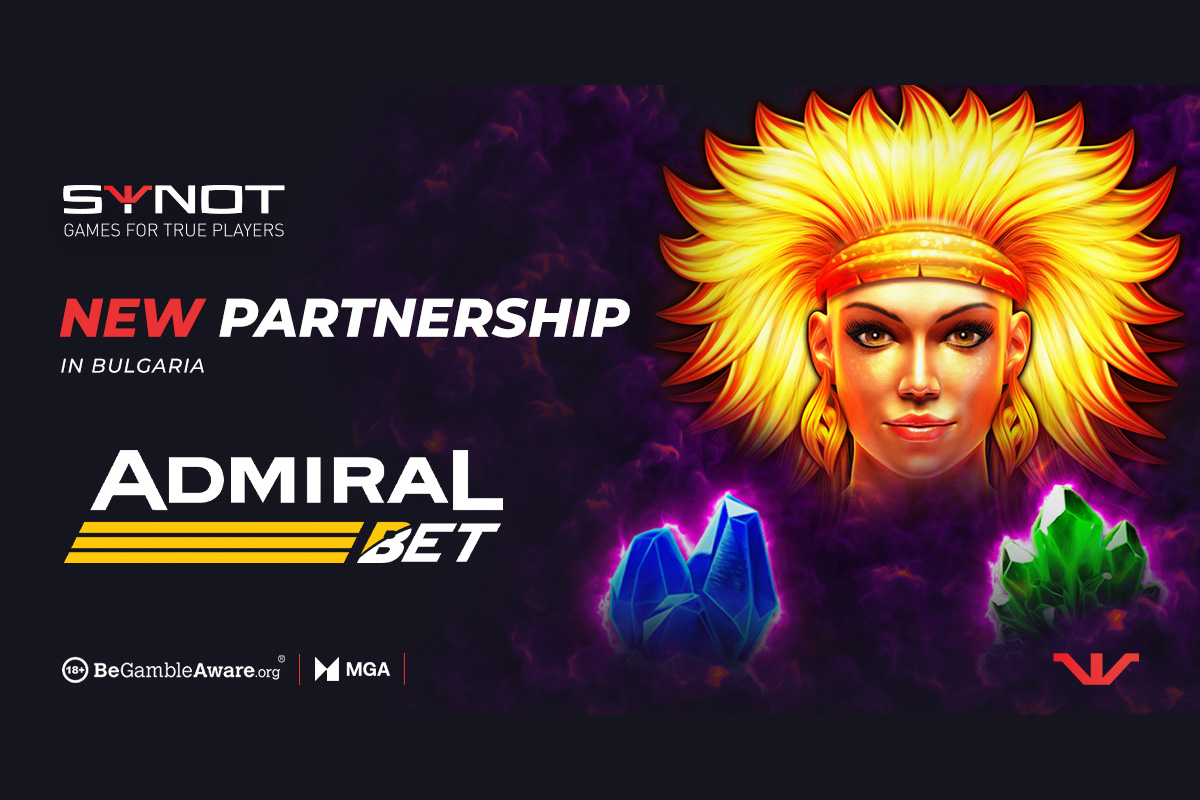
SYNOT Games has announced a strategic partnership with Admiralbet, Bulgaria’s foremost casino operator and market leader.
Under the new agreement, Admiralbet will showcase a selected portfolio of SYNOT Games-developed games. Players can enjoy a diverse selection that includes popular titles such as 40 Coins of Chance and 100 Stunning Fruits. The integration of these games into Admiralbet’s offerings promises to redefine gaming standards and deliver an enhanced entertainment experience.
This partnership is a key part of SYNOT Games’ strategic expansion into the Balkan region, a market known for its discerning players who demand cutting-edge iGaming solutions. This new venture with Admiralbet further emphasizes the company’s dedication to delivering unmatched gaming solutions and retention tools that address the evolving needs of today’s iGaming market.
Martina Krajčí, Chief Commercial Officer at SYNOT Games, said: “This collaboration with Admiralbet not only strengthens our market presence in Bulgaria but also opens the door to a new audience of sophisticated gamers seeking innovative, high-quality entertainment. We are committed to driving excellence in the region by providing state-of-the-art gaming experiences that set new benchmarks in the industry.”
Mr. Beleski, General Manager at Admiralbet, said: “Our collaboration with SYNOT Games represents a strategic enhancement of our casino offering. By integrating their high-quality and engaging titles, we continue our commitment to delivering a superior and diversified gaming experience that meets the expectations of Bulgarian players and reinforces our position as a trusted leader in the market.”
The post SYNOT Games Announces Strategic Partnership with Admiralbet appeared first on Eastern European Gaming | Global iGaming & Tech Intelligence Hub.

-

 Asia6 days ago
EGT Brings High-Impact Asian-Themed Portfolio to SiGMA Asia 2026
-
Africa6 days ago
Gaming Realms expands into three African markets via SportyBet partnership
-
Conference6 days ago
Danish regulator to speak at Gaming in the Nordics launch event
-
Africa6 days ago
Greentube partners with World Sports Betting to expand in South Africa
-
BETER6 days ago
BETER expands US footprint with Illinois approval
-
Argentina6 days ago
Stake continues Latin American expansion with Argentina launch
-
affiliate marketing6 days ago
CasinoCanada partners with LolaJack Casino to expand Canadian visibility
-
Ben Wood CCO at Playson6 days ago
Playson strengthens North American footprint with Caesars Entertainment partnership