Latest News
iGaming in 2026: Emerging Markets, Changing Player Demands, and Winning Strategies

From shifting regulatory pressures and emerging markets to changing player expectations and the looming presence of AI, the iGaming industry will be a very different place at the end of 2026 than at the start.
For this roundtable, we have invited a group of industry professionals to discuss what markets are going to be the big talking points of the year, how player expectations will continue to evolve, and what strategies will best position you for success over the coming 12 months.
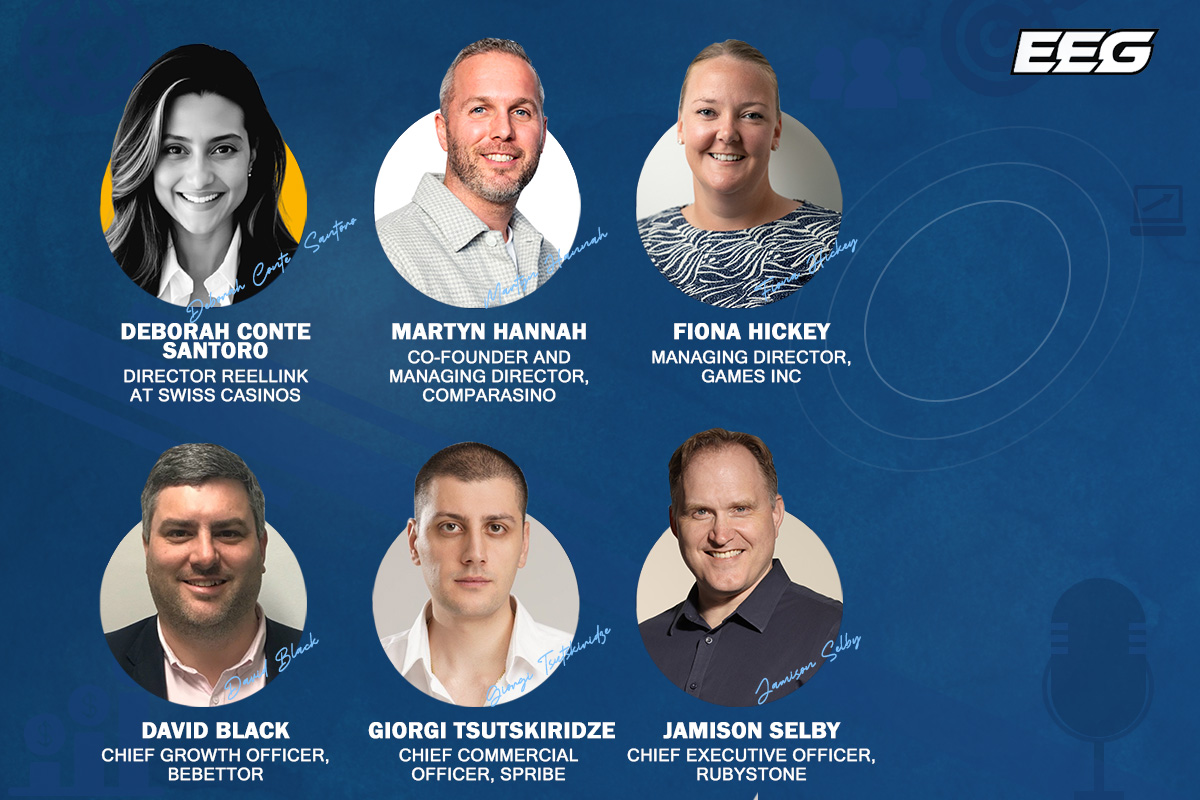
The following have all contributed to this discussion:
- Deborah Conte Santoro: Managing Director, ReelLink at Swiss Casinos
- Martyn Hannah: Co-founder and Managing Director, Comparasino
- Fiona Hickey: Managing Director, Games Inc
- David Black: Chief Growth Officer, beBettor
- Giorgi Tsutskiridze: Chief Commercial Officer, SPRIBE
- Jamison Selby: Chief Executive Officer, Rubystone
Which regions or markets do you expect to offer the most meaningful growth opportunities in 2026, and what makes them attractive?
Fiona Hickey: The markets everyone will talk about in 2026, Finland, Alberta, New Zealand, and the UAE, are attractive, but let’s be honest: once regulation lands, revenues drop. Taxes rise, RG tightens, marketing gets capped, and the commercial upside isn’t nearly as big as the headlines suggest. Great for stability, not great for margins.
The real growth, the uncomfortable kind nobody puts in a press release, will still come from unregulated and grey markets. Latin America, outside tightly regulated pockets, large parts of Africa, and India’s semi-regulated landscape will deliver higher yields and faster scaling simply because they’re less restricted, and operators aren’t drowning in 40% duties and endless compliance cycles.
So the honest picture is this: regulated markets offer credibility and long-term sustainability for large organisations, but unregulated markets offer commercial returns, and for many, this is hard to ignore.
David Black: Growth in that sense is limited to the total addressable market and associated market-share strategies. So the question deserves an answer around growth that moves the needle. The game changer always comes from innovation. It would be great to see the opening of new regulated markets as a means of driving growth. Still, both this and corporate consolidation, whilst always sound, appear to be relegated to second and third place, respectively.
First place, this year is how and when operators will introduce new edge-type technologies which enhance an entertaining and profitable player experience. It feels like we are in another phase of product innovation, which is very exciting. This will inevitably cycle to M&A in the coming years, but for now, it is all about innovation.
Jamison Selby: The most interesting growth in 2026 won’t come from the regions people usually name at conferences. The U.S., LATAM, and parts of APAC will all continue to expand, but the real upside is in how those markets are evolving, not simply their geography.
In the United States, the traditional regulatory map of betting has become an increasingly narrow lens. The real story is happening in parallel markets (sweepstakes, skill gaming, and prediction platforms) operating under entirely different regulatory structures. These categories scale faster than licensed products because they aren’t boxed in by state-by-state fragmentation. They offer national reach, healthier margins, and a player demographic much closer to mainstream digital entertainment. That’s where the opportunity is shifting.
LATAM remains attractive, but not in a monolithic way. Brazil will draw the headlines as formal regulation takes shape, yet Mexico and Colombia often present cleaner, more immediately scalable conditions. What unifies the region isn’t regulatory uniformity; it’s a young, mobile-native audience that treats interactive entertainment as a daily habit rather than an occasional activity. That dynamic alone makes LATAM a sustained growth engine. APAC, similarly, is not a single story. India’s scale, particularly within skill-based formats, creates an environment where even modest regulatory clarity can unlock enormous upside.
But the markets likely to shape the industry’s direction in 2026 aren’t defined by geography at all. They’re defined by the regulatory lanes that allow new product categories to emerge. Prediction markets, skill-based ecosystems, and hybrid entertainment formats are absorbing demand that once belonged exclusively to gambling. They’re doing so with lower acquisition costs, fewer structural constraints, and far more room for product innovation. That combination doesn’t just produce growth. It produces the kind of explosive scaling that reshapes industries.
The common thread across all these markets is simple. The operators with flexible product architectures, those capable of moving between regulatory frameworks rather than being confined by them, will capture the most meaningful share of that growth.
What changes in 2026 do you expect in player behaviour, product formats, and entertainment consumption that operators must prepare for?
Deborah Conte Santoro: Operators must prepare for several things:
Players see gaming as broader entertainment. Expect blended formats that mix casino, sports, live shows, social gaming, streaming and influencer-driven experiences.
Seamless, omni-channel continuity. Players expect the same favourites and progression across mobile and the casino floor, with no perceptible boundary. Technologies like ReelLink will be essential to deliver identical content and unified loyalty across channels.
Younger players demand modern UX. Instant load times, mobile-first design, social features, community tools and rewarding progression systems will be table stakes. They’ll favour experiences that feel fresh, discoverable and shareable.
New formats rise. Multiplayer, skill elements, live game shows, AR/VR lounges and metaverse-style interactions will gain traction for engagement and retention. Higher expectations on payments and onboarding. Instant KYC, fast payouts, local rails and compliant crypto options will dramatically impact conversion and LTV. Operators must treat content, data, and payments as a single, cohesive product experience, online and on the floor.
Martyn Hannah: Instead of looking at what’s going to change, I think it’s just as important, if not more so, to consider what’s going to stay the same. No matter what laws, regulations and tax requirements come into force, consumers are still going to want to play online slot and casino games. The question is where. Will players drift to the black market in search of bigger bonuses and higher RTPs, or will they favour licensed brands they trust?
Some players will knowingly turn to black-market sites, while others will stick with licensed brands they consider safe and reputable. But there’s a large cohort of players in the middle that don’t know the difference between the two, with many unknowingly playing at offshore sites. These are your swing voters, and with the right education and messaging, I believe many will swing towards licensed online casinos.
This, combined with effective enforcement action against unlicensed operators and the comparison sites promoting them, will stunt black market growth, improve channelisation to licensed brands and better protect players.
Jamison Selby: Players don’t want gambling. They want entertainment with stakes. This distinction will define 2026. The convergence everyone talks about isn’t casino-meets-sports. It’s gambling-meets-everything-else.
Traditional gambling’s biggest competitor isn’t another operator. It’s every other form of digital entertainment. When players can bet on their Fortnite matches, predict which TikTok trend will explode next, or wager on reality TV outcomes in real-time, is spinning a slot still fun?
We see a rising cohort of players who spend less time in single-session environments and more time in continuous, ambient ecosystems where their progression, status, and social capital persist over time and across products. Operators still building for the traditional “gambling consumer” are targeting a segment that’s rapidly ageing out. Operators that treat their platforms as entertainment networks rather than isolated casinos will win the battle.
The next generation doesn’t see boundaries between gaming, trading, betting, and socialising. It’s all just having skin in the game.
What strategic capabilities, across compliance, marketing, payments, or responsible gaming, will separate the winners from the rest in 2026?
Fiona Hickey: If I actually knew the secret formula for winning 2026, I’d already be on a yacht off my private island with a very smug LinkedIn bio, pretending my days were long and tough, so no, I don’t have the magic answer, but here are a few things I think are key;
All business operators and suppliers alike need a compliance team that understands the rules and the intent. People who can read between the lines keep you competitive and avoid the trap of over-compliance.
Instant payouts aren’t a nice-to-have; they are essential. Offshore sites pay in minutes; regulated operators need to stop pretending players won’t notice the difference.
Regulated ecosystems are crowded, slower, more restricted and, yes, getting duller. Players chasing excitement will drift elsewhere. Operators who ignore that are simply handing them over. If you are arrogant enough to think your brand is important to players and they won’t go elsewhere, you are in trouble.
Giorgi Tsutskiridze: The companies that succeed will be those that combine strong regulatory discipline with the ability to move quickly. Compliance can’t be an afterthought; it needs to be built into every part of the business, supported by real-time tools and responsible gaming systems that actually help players. Marketing will shift toward community and storytelling, not just performance-driven numbers. And payments have to be smooth and localised, no friction, no confusion. Ultimately, the winners will be the brands that can scale globally but still feel local, personal, and trustworthy to every player they reach.
Jamison Selby: The winners of 2026 and beyond won’t be the best gambling operators. They’ll be the best platform and ecosystem builders who happen to offer gambling.
Three capabilities will matter above all else:
Community building over customer acquisition: Traditional CAC and LTV metrics are being hammered by increasing competition and lower revenues. Winners will build ecosystems where players recruit players, where the product is the marketing. Pure product-community fit wins.
Regulatory-inspired innovation: Those who master building within existing regulatory boxes have a path. Those who use the regulations as a map to seek new verticals have a path. Those who are slow to adapt face a painful decline.
Multi-vertical brand elasticity: The ability to stretch a single brand across different regulatory structures and product categories. Traditional betting where it’s licensed, sweepstakes where it’s legal, same with prediction markets, skill gaming, and social casino. Same brand equity, different regulatory wrappers. Winners won’t be solely defined by their licensing but by their ability to meet players wherever regulations allow, in whatever form works.
The post iGaming in 2026: Emerging Markets, Changing Player Demands, and Winning Strategies appeared first on Eastern European Gaming | Global iGaming & Tech Intelligence Hub.











GR8_TECH has partnered with Setanta Bet, a locally licensed online betting operator in Georgia and part of the wider Setanta Sports ecosystem. The collaboration marks another important step in GR8_TECH’s expansion across regulated markets, with Setanta Bet successfully launching the GREAT_SPORTSBOOK iFrame solution.
By joining the Champions Club—GR8_TECH’s exclusive network of ambitious operators powered by high-performance technology—Setanta Bet gains access to a sportsbook solution designed to accelerate growth, enhance player engagement, and maximize operational efficiency.
“We are delighted to welcome Setanta Bet as a partner of GR8_TECH and a proud addition to our Champions Club,” said Vardan Hakobyan, Head of Sales at GR8_TECH. “The brand has successfully created a strong connection between sports content, player engagement, and entertainment. With GREAT_SPORTSBOOK iFrame, Setanta Bet can further enhance its betting offering while preserving its unique brand identity and delivering a richer, more engaging experience for its players.”
“Setanta Bet was launched on the foundation of the region’s largest and most successful sports media, representing the most vital part of Setanta as a major brand,” said Tamar Badashvili, CEO at Setanta Bet. “It is the ideal synergy between sports media and the betting business, a model already successfully proven by leading global brands. We launched our sportsbook in partnership with GR8_TECH because their regional experience, along with their platform’s features and functionality, perfectly matched our requirements. We believe this collaboration will be mutually beneficial; not only will Setanta Bet succeed, but our vast operational experience in the industry will provide valuable feedback to help further develop the GR8_TECH platform.”
GREAT_SPORTSBOOK iFrame provides Setanta Bet with a scalable, high-performance sportsbook solution designed for rapid deployment and local-market adaptability. The solution delivers more than 180,000 monthly events across 50+ sports and esports disciplines, supported by 24/7 live betting coverage, AI-powered recommendations, embedded CRM capabilities, and extensive customization options.
The solution also includes a comprehensive suite of engagement and revenue optimization tools, including cashout, multi-bets, odds personalization, margin personalization, geo-targeted content, customizable widgets, and a fully mobile-first experience designed to meet the expectations of modern players.
Get in touch with GR8_TECH to learn how the GREAT_SPORTSBOOK iFrame can help launch, upgrade, or scale your iGaming business.
GR8_TECH. Platform for Champions
GR8_TECH is an award-winning provider, delivering high-performance sportsbook and iGaming solutions that empower operators to lead and win in competitive markets. GR8_TECH’s comprehensive portfolio includes the GREAT_TURNKEY and GREAT_CRYPTO TURNKEY solutions, GREAT_SPORTSBOOK, and GREAT_CASINO AGGREGATION.
With a geo-specific approach to solutions, a focus on practical innovations, and an operator-first mindset, GR8_TECH helps its clients achieve measurable results in their target markets quickly and efficiently. Trusted by top operators worldwide, GR8_TECH has over 100 successful cases and earned multiple recognitions, including the title of Platform Provider of the Year by SBC Awards 2025.
The post Setanta Bet Joins GR8_TECH’s Champions Club with GREAT_SPORTSBOOK iFrame appeared first on EE Gaming | Global iGaming & Tech Intelligence Hub.
NuxGame has been named Casino Platform of the Year at the inaugural iGaming News Awards, the first edition of the awards programme run by industry publication iGaming News.
The Casino Platform of the Year category recognises the platform technology operators use to build and run their casino businesses — the core system behind day-to-day operation rather than any single feature or campaign. It is a meaningful marker for a B2B provider since it points to the technology operators actually rely on. Winning the category in the programme’s first year adds another point of industry acknowledgement for the NuxGame online casino software.
The award caps a strong year for the platform, one shaped by steady work on the product itself. NuxGame added new player-engagement tools such as Achievements, Spin Wheel, and Rakeback, expanded its game aggregator with thousands more titles, and opened up new markets by launching its Sweepstakes and Telegram products and gaining a Class II B2B licence in Romania.
The category win follows other recent recognition for the platform, such as Best Platform Provider at the 2025 SiGMA Eurasia Awards and Best Innovation in iGaming Technology at the 2025 European iGaming Excellence Awards. Together they create a steady awards record for the technology behind the company’s casino offering rather than for a single product or campaign.
“A casino platform is the part of the business an operator depends on every day, so this is the recognition that means the most to us,” said Daniel Heywood, CEO at NuxGame. “We’ve spent years keeping the platform stable, straightforward to scale, and simple to run day to day. And we work just as hard on the support quality behind it. Seeing that commitment recognised by the iGaming News Awards is a proud moment for the whole team.”
NuxGame says its direction for 2026 is to keep the platform dependable and easy to run. The company will also keep expanding the ecosystem around the platform so operators can add proven, pre-integrated partners as they scale rather than vetting and connecting each one on their own. The company reads the win as confirmation that the fundamentals it has invested in remain important for operators — and as a reason to keep strengthening them.
About NuxGame
NuxGame is a B2B iGaming software platform provider that has been helping online casino and sportsbook operators launch and grow their projects for more than 7 years. Founded in 2018, the company now supports more than 100 operators worldwide. What began as a platform provider only has developed into a unified ecosystem. Alongside its own flexible casino platform, turnkey casino and sportsbook solutions, sweepstakes-ready infrastructure, game aggregation and API integrations, NuxGame connects operators to a vetted network of proven partners, spanning CRM, payments, orchestration, aggregation, and traffic. All of it is backed by 24/7 support.
The post NuxGame Wins Casino Platform of the Year at the iGaming News Awards appeared first on EE Gaming | Global iGaming & Tech Intelligence Hub.

GR8_TECH has partnered with Setanta Bet, a locally licensed online betting operator in Georgia and part of the wider Setanta Sports ecosystem. The collaboration marks another important step in GR8_TECH’s expansion across regulated markets, with Setanta Bet successfully launching the GREAT_SPORTSBOOK iFrame solution.
By joining the Champions Club—GR8_TECH’s exclusive network of ambitious operators powered by high-performance technology—Setanta Bet gains access to a sportsbook solution designed to accelerate growth, enhance player engagement, and maximize operational efficiency.
“We are delighted to welcome Setanta Bet as a partner of GR8_TECH and a proud addition to our Champions Club,” said Vardan Hakobyan, Head of Sales at GR8_TECH. “The brand has successfully created a strong connection between sports content, player engagement, and entertainment. With GREAT_SPORTSBOOK iFrame, Setanta Bet can further enhance its betting offering while preserving its unique brand identity and delivering a richer, more engaging experience for its players.”
“Setanta Bet was launched on the foundation of the region’s largest and most successful sports media, representing the most vital part of Setanta as a major brand,” said Tamar Badashvili, CEO at Setanta Bet. “It is the ideal synergy between sports media and the betting business, a model already successfully proven by leading global brands. We launched our sportsbook in partnership with GR8_TECH because their regional experience, along with their platform’s features and functionality, perfectly matched our requirements. We believe this collaboration will be mutually beneficial; not only will Setanta Bet succeed, but our vast operational experience in the industry will provide valuable feedback to help further develop the GR8_TECH platform.”
GREAT_SPORTSBOOK iFrame provides Setanta Bet with a scalable, high-performance sportsbook solution designed for rapid deployment and local-market adaptability. The solution delivers more than 180,000 monthly events across 50+ sports and esports disciplines, supported by 24/7 live betting coverage, AI-powered recommendations, embedded CRM capabilities, and extensive customization options.
The solution also includes a comprehensive suite of engagement and revenue optimization tools, including cashout, multi-bets, odds personalization, margin personalization, geo-targeted content, customizable widgets, and a fully mobile-first experience designed to meet the expectations of modern players.
Get in touch with GR8_TECH to learn how the GREAT_SPORTSBOOK iFrame can help launch, upgrade, or scale your iGaming business.
GR8_TECH. Platform for Champions
GR8_TECH is an award-winning provider, delivering high-performance sportsbook and iGaming solutions that empower operators to lead and win in competitive markets. GR8_TECH’s comprehensive portfolio includes the GREAT_TURNKEY and GREAT_CRYPTO TURNKEY solutions, GREAT_SPORTSBOOK, and GREAT_CASINO AGGREGATION.
With a geo-specific approach to solutions, a focus on practical innovations, and an operator-first mindset, GR8_TECH helps its clients achieve measurable results in their target markets quickly and efficiently. Trusted by top operators worldwide, GR8_TECH has over 100 successful cases and earned multiple recognitions, including the title of Platform Provider of the Year by SBC Awards 2025.
The post Setanta Bet Joins GR8_TECH’s Champions Club with GREAT_SPORTSBOOK iFrame appeared first on Americas iGaming & Sports Betting News.

-

 Latest News6 days ago
BetMakers Technology Group Selected to Distribute ATG Horse Racing Content Across Australia and New Zealand
-
Latest News7 days ago
Belatra signs cooperation deal to distribute slots via VeliGames
-
Compliance Updates7 days ago
Pernambuco court revokes Spribe’s interim relief in Aviator trademark dispute
-
Compliance Updates6 days ago
ACMA Warns MMA Fighter Jamie Mullarkey for Breaches of Online Gambling Laws
-
 Compliance Updates4 days ago
Arizona Department of Gaming Issues Cease-and-Desist Orders to Multiple Operators Linked to Underage Gambling and Illegal Activity
-
Canada6 days ago
Gaming Corps expands Entain partnership with major Canadian rollout
-
Latest News6 days ago
DEGEN Studios unleashes the Plague City chase
-
Latest News5 days ago
PG Soft appoints Hugo Baungartner as General Manager LatAm