Chile
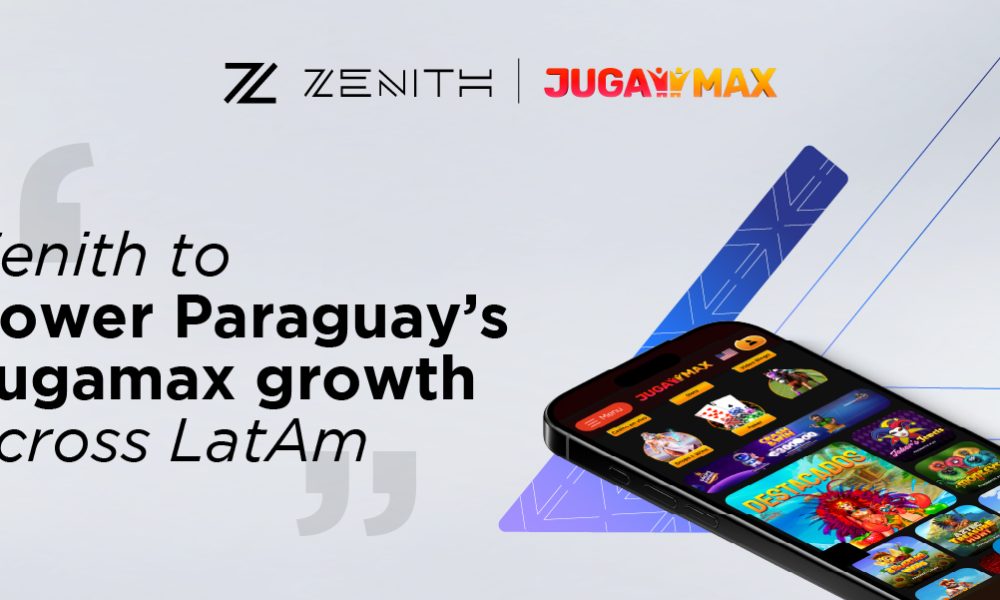
Zenith partners with Paraguay’s Jugamax to expand ONEAPI Game Aggregation across LatAm

New partnership to see Asia’s leading aggregator expand with operator across Paraguay, Chile and Mexico
Zenith, Asia’s premier iGaming platform provider, has today announced a new partnership with Jugamax, one of Paraguay’s leading operator brands.
Through this new partnership, Zenith will deliver an expanded gaming experience to Jugamax’s players across LatAm via ONEAPI, its award-winning game aggregation platform.
Zenith’s latest deal is expected to be the first of many in LatAm with 2025, with Asia’s leading aggregator already delivering its services to 500 global operators and over 50 million players.
This collaboration will provide Jugamax with seamless access to more than 10,000 top-quality game titles from 150 studios across the operator’s key markets including Chile, Mexico and Paraguay.
Through Zenith’s single, easy-to-integrate solution, Jugamax can now tap into a world-class library of slots, live casino and instant games, each designed to drive both engagement and retention – empowering Jugamax to scale rapidly as it continues its expansion across LatAm.
Jugamax’s integration with ONEAPI will also enable the operator to benefit from faster onboarding, dedicated technical support and access to exclusive rates for leading studios.
This partnership reflects Zenith’s ongoing commitment to providing operators with scalable, efficient and high-performing solutions tailored to the unique intricacies of markets across the LatAm region.
Commenting on the new partnership, Karina Moral, Senior Business Development Manager at Zenith, said: “Partnering with Jugamax marks an exciting step in Zenith’s expansion across LatAm. Their local expertise combined with our powerful aggregation platform will create new opportunities for growth, innovation, and player engagement in Paraguay, Chile and México.
“We already have a global reputation as an award-winning Asia aggregator and we have big plans to expand across LatAm in 2025 and beyond, with a tailored suite of product designed for the exact needs of local players.”b
The post Zenith partners with Paraguay’s Jugamax to expand ONEAPI Game Aggregation across LatAm appeared first on Gaming and Gambling Industry in the Americas.














Looking beyond Brazil, which LatAm market stands out most right now, and what makes it attractive?
Liam Hoofe, Content Strategist at GameOn
Based on our research for GO Intel, I think Chile is the market to watch out for the most. The size of the opportunity is potentially massive, with the Chilean Senate’s own figures estimating that more than 5 million Chileans are already gambling online.
The demand is definitely there, and broader discussions about a regulatory framework are underway. Our estimates in GO Intel also put channelisation rates at 80% if enforcement and regulation ran smoothly.
The proposed ‘cooling-off’ period for operators already active there is also quite a unique approach, and it will benefit those who approach the market with the right foundations in place.
Of course, as we’ve seen with Brazil, there will no doubt be a lot of public debate around the market, and the tax structure could be complex, but of the three we researched, this one still stands out the most.
Paulina Hovar, Lead Sales Manager LATAM at BGaming
Right now, Mexico and Argentina stand out the most to me.
Mexico has been showing steady growth for a while now. It’s already a fairly mature market with strong operator presence, but there’s still plenty of room to scale. At the same time, one of the main things to watch is the tax situation and how regulation may develop in the future, since that could impact profitability and market dynamics.
Argentina is interesting for a different reason. The market is regulated at the provincial level, so it’s much more decentralized. That creates opportunities because entry can be more flexible, but it also means you need to understand the local landscape and choose partners and regions carefully.
Ramiro Atucha, Board Advisor to Kiron Interactive
Mexico stands out. The size of the market alone makes it attractive, and the current regulation is already acceptable enough for public companies to feel comfortable operating there. It’s also moving toward a more formal framework, so there’s still margin to grow. Beyond Mexico, I’d point to Chile, certain provinces in Argentina, and Colombia. All three have their own dynamics, but they’re markets you can’t ignore right now.
When entering markets that are still evolving from a regulatory perspective, what’s the right balance between moving early and waiting for clarity?
Liam Hoofe, Content Strategist at GameOn
That’s the million-dollar question, and it’s one I’m not sure there is a 100% correct answer to. For me, it’s about building relationships, ensuring you have the right infrastructure in place, and understanding a market before you invest.
Operators and studios that just enter with no understanding of the culture and of the way the regulatory landscape could adapt are putting themselves at risk of failing.
Trying to remain one step ahead of regulation and working alongside the regulators to help the market mature is always going to be a much better approach than just waiting for regulation to come into place and being reactive.
Paulina Hovar, Lead Sales Manager LATAM at BGaming
It depends on how mature the market is.
If the regulatory framework is already clear and established, then the best approach is to operate fully within the licensed model from day one.
But in markets that are still in a gray or transitional stage, where operators are already active, it can make sense to take a more gradual approach. That could mean building partnerships, adapting the product to local needs, and preparing for future regulation before fully committing.
You also have to be very careful about legal and reputational risks. Every market is different, so timing and level of involvement should be assessed on a case-by-case basis.
Ramiro Atucha, Board Advisor to Kiron Interactive
As early as possible, as long as it isn’t illegal or forbidden. That’s the right moment to enter and transition through the regulatory process. Brazil is the clearest example. Sports betting was legalized in 2018, but the full regulatory framework only came in late 2023, with licensed operations starting in 2025. The operators that used those years to attract players, test the market and build name recognition without breaking the law made a real difference. By the time regulation arrived, they were already established.
As markets like Chile, Peru, and Uruguay develop, what will separate the brands that succeed from those that struggle?
Liam Hoofe, Content Strategist at GameOn
The biggest differentiator for me is localisation, and by that, I mean real localisation, not just translating a game into Spanish and calling it a day. This means actually creating products and promotions that speak to local audiences. LatAm is not just some big monolithic market with a one-size-fits-all solution – brands that succeed there are the ones that understand this. The ones who know that a player in Chile is not the same as one in Uruguay or Brazil are going to be the big winners.
On top of that, working closely with regulators and showing genuine concern for players’ well-being in these markets will make a huge difference. It’s not enough anymore to just display simple responsible gambling tools; players want to see it in your actions, and it’s obvious to them which brands really care and which are just ticking boxes.
And finally, local partnerships. Some of the most successful companies we work with are those that really integrate themselves and find local partners that offer genuine insight into communities, and can be leveraged to build trust. This can be achieved in a number of different ways, whether it’s through working with local content creators and influencers or getting involved with local charities and events.
Paulina Hovar, Lead Sales Manager LATAM at BGaming
As markets like Chile, Peru, and Uruguay continue to develop, the following three factors will set successful brands apart from the rest.
First, strong local partnerships. Without people on the ground and a real understanding of how each market works, it’s very difficult to build a sustainable position.
Second, product adaptation. Translation alone is never enough. Companies need proper localization that reflects user behavior, cultural differences, and local audience preferences.
And third, regulatory readiness. The companies that invest early in certification, compliance, and building the right processes will have a major advantage later on. It’s expensive and takes time, but in regulated markets, long-term preparation usually makes the difference between short-term growth and lasting success.
Ramiro Atucha, Board Advisor to Kiron Interactive
Brands that bring international experience and proven competitiveness from other markets, combined with genuine local understanding, will get the best of both worlds. The international background gives you credibility and product depth. The local presence gives you a product that’s actually adapted to how players in that country behave. Neither side works on its own. In Chile, Peru, and Uruguay, the operators who get this combination right are the ones who’ll separate from the pack.
The post LatAm: Beyond Brazil – Chile, Uruguay and Peru’s Regulatory Trajectories appeared first on Americas iGaming & Sports Betting News.

Brazil stands out for crash-game visibility, while Argentina fragments across 15 providers, according to Blask’s review of five markets.
Blask has published new data on casino lobby distribution across five Latin American markets—Mexico, Brazil, Argentina, Chile and Peru—finding a shared baseline of Pragmatic Play dominance but sharply different secondary content patterns by country.
Across all five markets, Pragmatic Play “consistently dominates the top 30 most-distributed titles,” accounting for up to 16 positions in each country, Blask said. Beyond that layer, Blask argues there is “no single playbook” for how operators and aggregators build lobbies.
Brazil is the clearest outlier for mechanics, with crash-style titles such as Aviator and JetX appearing in the top 30, while similar formats are “largely absent” in the other markets analyzed. Blask also points to Brazil as the only country where Pocket Games Soft holds a meaningful distribution share, driven by its Fortune series.
Mexico shows the opposite pattern: the highest concentration of Pragmatic Play titles and a thinner secondary layer. Blask flagged Endorphina as an example of a provider appearing in Mexico’s top 30 but not elsewhere in its dataset.
Argentina is described as the most fragmented market, with 15 different providers represented in the top 30—more than any other country in the analysis—and broader visibility for live and table content. Chile “closely mirrors Mexico” structurally, Blask said, but includes a single non-Pragmatic title with near-ubiquitous placement across operator lobbies. Peru, meanwhile, spreads remaining top-30 positions across 12 providers, including studios not seen in the other markets and “legacy European brands such as Novomatic.”
Blask’s conclusion is that operators should not assume a winning lobby mix in one country will translate regionally. “Beyond the dominant layer, performance is defined not by regional trends, but by local player behavior and demand signals,” the company said.
The post Blask data shows LATAM casino lobbies diverge beyond Pragmatic Play’s baseline appeared first on Eastern European Gaming | Global iGaming & Tech Intelligence Hub.
Casino lobbies across Latin America may look similar at first glance — but a deeper look reveals they operate on entirely different logic. According to new data from Blask, all five major region players (Mexico, Brazil, Argentina, Chile and Peru) share one common layer: Pragmatic Play consistently dominates the top 30 most-distributed titles, accounting for up to 16 positions in each market. But everything beyond that baseline tells a different story.
Crash games cluster in Brazil but not elsewhere
Brazil is the only market where crash-style mechanics achieve consistent visibility at the lobby level. Titles like Aviator and JetX both rank among the top 30, while similar formats are largely absent in the other four markets. At the same time, Brazil is the only country where a second provider, Pocket Games Soft, secures a meaningful share of distribution, driven entirely by its Fortune series. This dual pattern suggests a highly specific local demand profile rather than a regional trend.
Mexico runs on a tighter playbook
While Brazil expands, Mexico narrows. The market shows the highest concentration of Pragmatic Play titles and one of the most limited secondary layers. At the same time, it introduces isolated signals that don’t scale regionally such as the presence of Endorphina, which appears in the Mexican top 30 but nowhere else in the dataset.
Argentina breaks the pattern entirely
Argentina stands apart as the most fragmented market in the region. Its top 30 includes 15 different providers which is more than any other country analyzed. Unlike neighboring markets, where a handful of suppliers dominate, Argentina distributes visibility across a wide range of studios, particularly in live and table segments. The result is a lobby structure that resists standardization.
Chile shows how a single game can outperform the system
Chile closely mirrors Mexico in overall structure but with one key exception. A single non-Pragmatic title achieves near-ubiquitous placement across operator lobbies, becoming one of the strongest outliers in the entire dataset.This suggests that even in highly concentrated markets, individual titles can break through if they match local demand precisely.
Peru stretches the long tail further than anyone else
Peru takes the opposite approach to Mexico. While maintaining the same Pragmatic baseline, it distributes the remaining positions across 12 different providers, many of which do not appear in any other LATAM market analyzed. This includes both niche studios and legacy European brands such as Novomatic, pointing to a mix of underserved demand segments and alternative content sourcing strategies.
One region, no single playbook
The key takeaway from the analysis is simple: LATAM is not a unified market when it comes to content distribution. The same providers appear everywhere but the way their games are positioned, combined, and supplemented varies dramatically from country to country. For operators, this means that copying a successful lobby structure from one market to another is unlikely to work. Beyond the dominant layer, performance is defined not by regional trends, but by local player behavior and demand signals.
The post Same providers, different games: Blask uncovers hidden patterns in LATAM casino lobbies appeared first on Americas iGaming & Sports Betting News.

-

 10bet6 days ago
Ellis Park Stadium signs five-year naming rights deal with 10bet
-
Bucharest5 days ago
Eeze opens 1,200 sqm Bucharest hub for technical teams
-
central asia6 days ago
Groove confirms attendance at SBC Summit Tbilisi 2026
-
API integration5 days ago
Belatra signs cooperation deal to distribute slots via VeliGames
-
AB Trav och Galopp4 days ago
BetMakers Technology Group Selected to Distribute ATG Horse Racing Content Across Australia and New Zealand
-
affiliate marketing6 days ago
SEOBROTHERS’ Aleksandra Drigo flags higher barriers for affiliates in regulated Alberta
-
Aviator5 days ago
Pernambuco court revokes Spribe’s interim relief in Aviator trademark dispute
-
game content5 days ago
R. Franco Digital releases fighting game-themed slot Spin Fighters