EvenBet Gaming
EvenBet Gaming Launches Innovative Poker Solutions with JugaMax in Paraguay

EvenBet Gaming has announced the launch of its advanced poker solutions in partnership with JugaMax, one of the largest and most respected casino operators in Paraguay. This strategic collaboration marks EvenBet’s debut in the Paraguayan iGaming market, solidifying the company’s expansion within Latin America.
The newly established partnership enables the integration of EvenBet Gaming’s poker offering on the JugaMax platform. Players will now have access to an engaging range of cash games, Sit & Go and Spins tournaments, providing opportunities for both novice and seasoned poker enthusiasts.
The collaboration with JugaMax comes at a pivotal time for the Paraguayan iGaming market, which has witnessed significant growth due to recent regulatory advancements and increasing player demand. In 2023, online casino revenues in the country rose by 14.2%, surpassing USD 23 million, with an average annual revenue per user (ARPU) of over USD 1500. Market projections indicate nearly 30% growth over the next three years, highlighting substantial opportunities for operators and suppliers.
By joining forces, EvenBet Gaming and JugaMax are poised to leverage this growth trajectory and cater to the evolving preferences of the region’s player base. This partnership not only broadens EvenBet’s presence in the Latin American market but also enriches JugaMax’s portfolio with cutting-edge poker solutions.
Manuel Jiménez, Head of LatAm Sales at EvenBet Gaming, said: “We are thrilled to partner with JugaMax and bring our innovative poker solutions to the burgeoning Paraguayan market. With JugaMax’s reputation as a leading operator, coupled with our advanced gaming technology, we are confident that this partnership will transform the online poker landscape in the country and expand our footprint in Latin America.”
Pablo Bergesio, President of JugaMax,said: “The integration of EvenBet’s poker solutions significantly enriches our offering, helping us to attract a wider audience of poker players across Latin America who appreciate exciting and innovative content. With the iGaming market in Paraguay showing promising growth, the partnership is set to play a significant role in our future success in the region, solidifying our position as a leading operator.”
This collaboration underscores EvenBet Gaming’s commitment to delivering exceptional gaming solutions and reinforces its position as a leading provider in the Latin American market.











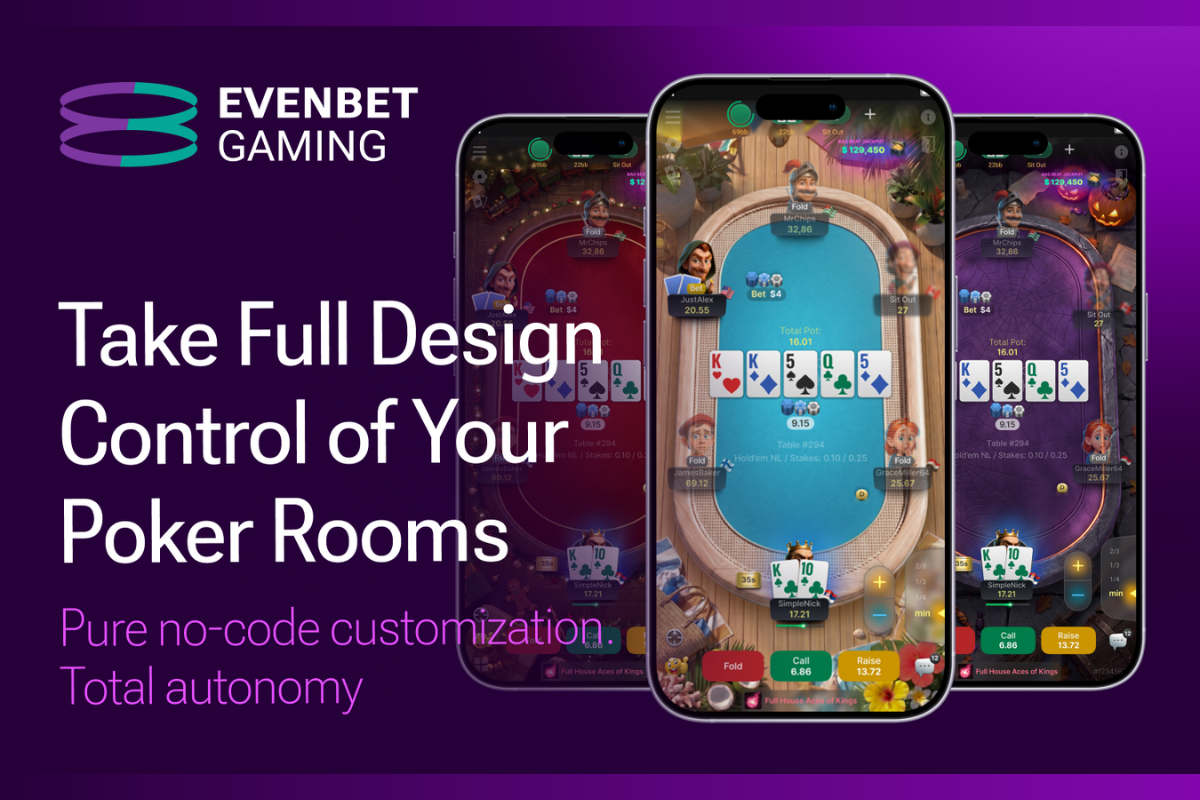
EvenBet Gaming has introduced “Table Collections”, a new no-code feature it says gives iGaming operators direct control over the visual design of online poker tables and tournaments. The company announced the release on 29th June 2026 and said the functionality is already live for existing clients.
According to EvenBet, Table Collections allows teams to create, edit and deploy themed environments and branded campaigns through the back office, without requiring developer support. The company said clients are currently using the tool for World Cup-themed campaigns, and positioned it as a way to prepare seasonal promotions such as Halloween, Christmas and New Year.
The feature supports changes to table backgrounds and environments, borders and felt, table logos and other branding elements, and layouts optimised for different devices and screen sizes. EvenBet said Table Collections can be applied across an entire skin, for specific game or tournament types, or down to individual tables and events.
Alexander Tamplon, CTO at EvenBet Gaming, said: “We didn’t just want to offer another customisation tool. We wanted to completely eliminate the operational bottlenecks that operators traditionally face by giving them the power to manage their designs independently. Poker operators are increasingly looking for ways to create unique experiences that strengthen their brand identity and help campaigns stand out in a competitive market.
“Table Collections gives them complete control over the visual environment of their poker product without relying on development resources. Whether it’s a seasonal promotion, a sponsored tournament or a VIP experience, our partners can now bring their own design concepts to life in a matter of minutes.”
The post EvenBet launches no-code “Table Collections” for poker table design control appeared first on EE Gaming | Global iGaming & Tech Intelligence Hub.
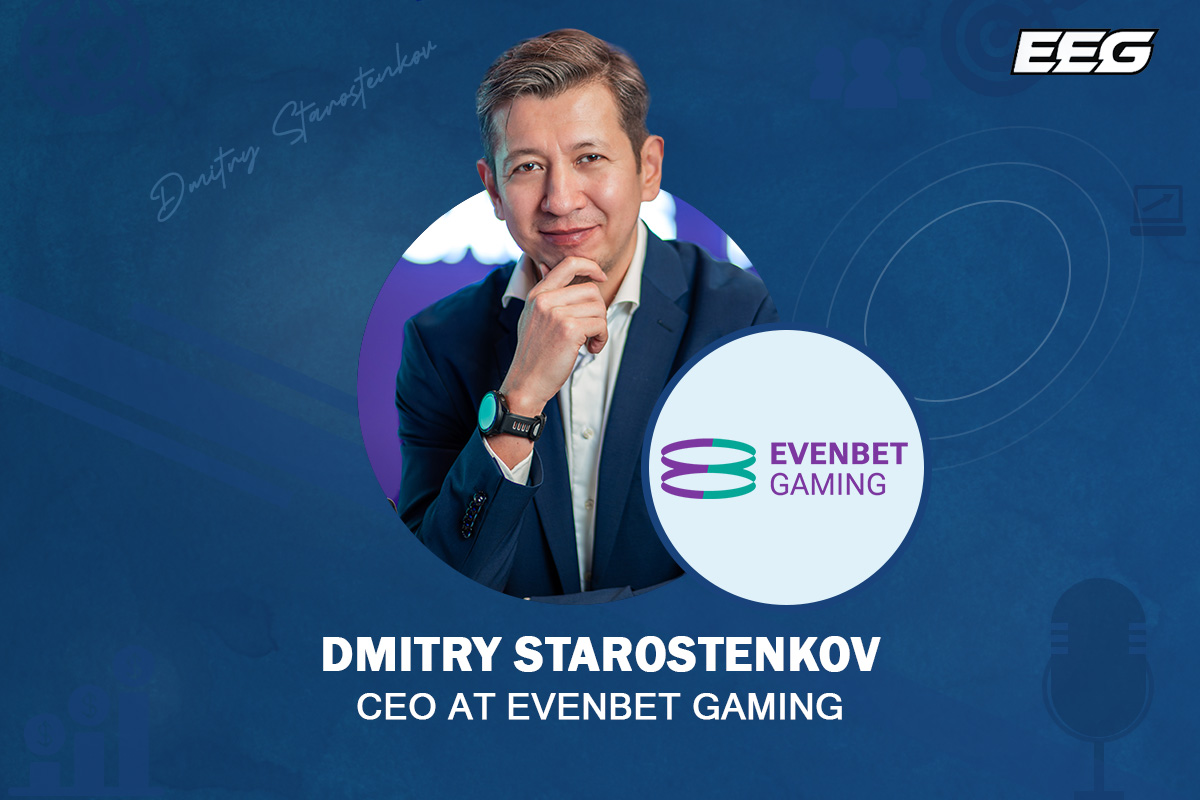
EvenBet Gaming’s CEO, Dmitry Starostenkov, speaks to EEGaming about the company’s expansion into the casino vertical, what drove the decision, what it took to build, and what it means for operators looking to grow beyond a single product.
EvenBet has spent more than two decades building its reputation in poker. What told you the time was right to move into casino?
We kept having the same conversation with partners who trusted our poker infrastructure, asking whether we could support them on the casino side too. For a long time, our answer was to point them elsewhere but, with competition intensifying, that became harder to justify.
But there’s a wider shift happening too. Operators are under real pressure to extract more value from their existing player base. Acquisition costs are rising, regulated markets are tightening, and the days of building a sustainable business on a single vertical are gone. Operators who are growing have found more ways to extend player value across their full product offering, and that requires purpose-built infrastructure.
We have the technical foundation and understand the player behaviour. The question became when to make the move, and how to do it in a way that was genuinely an improvement on what was already out there.
Moving from the single poker vertical into a full casino platform is a significant undertaking. Where did the product challenges actually lie?
The single player account sounds simple until you’re actually building it. Shared balance, unified player profile, seamless movement between poker and casino all create complexity that compounds quickly. The other challenge was scope. A game aggregator covering 15,000 titles across 230-plus providers has the potential to create real infrastructure problems. We had to build something that could handle that scale without becoming unwieldy for operators to use. And we didn’t want to compromise the poker product to get there either – that was non-negotiable. Everything had to work as one system, not two products stapled together.
How does cross-vertical conversion work, and why does that matter so much to operators right now?
The friction in moving a player between verticals has always been the drop-off point. Separate logins, separate wallets and separate experiences are all different reasons for a player to disengage. When that’s removed, the conversion happens more naturally.
What makes the difference is having product mechanics that actively pull players across. One Click Poker removes the traditional lobby entirely, which has historically been the biggest barrier for casino players who find poker intimidating or unfamiliar. Spins Poker goes further by taking player-versus-player gameplay and wrapping it in slot-style mechanics, so the experience feels native to a casino player from the first session.
In the other direction, casino rewards sitting inside the poker environment give poker players a natural reason to explore. It becomes a two-way pipeline rather than a one-way push, and operators can see that working in the data. That’s what cross-vertical conversion looks like when the product architecture supports it properly.
What does EvenBet Gaming now offer an operator that they genuinely can’t get elsewhere?
Most casino platforms don’t come with a serious poker product attached, and most poker providers don’t have a credible casino offering. We’re in a fairly unique position in that we can genuinely deliver both, and the integration between the two is real and not just a partnership held together by an API. In terms of who this is for, it’s operators who want to grow. Whether that’s a new entrant who needs a clean, fast route to market, or an established operator who has a casino product but knows they’re missing a revenue stream without poker. We’re positioned to offer that market entry and scalability, without compromising quality.
The post Behind EvenBet Gaming’s strategic evolution into casino appeared first on EE Gaming | Global iGaming & Tech Intelligence Hub.
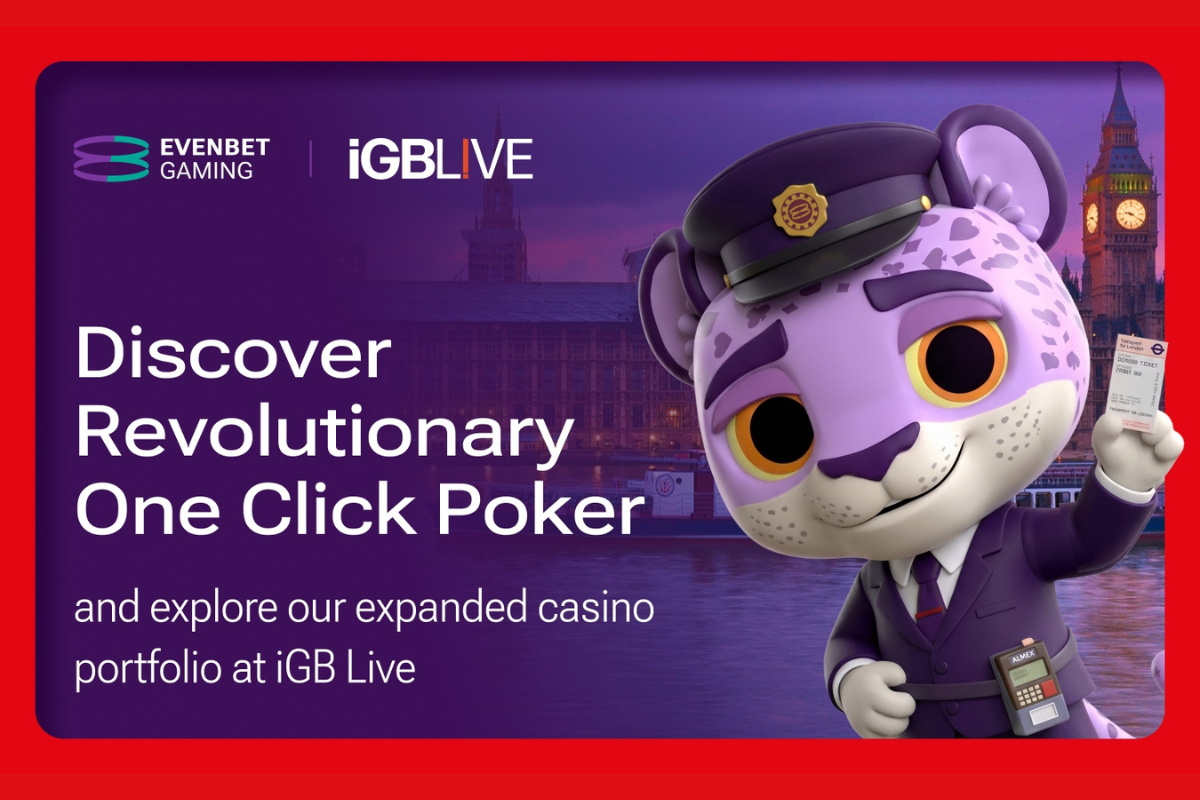
EvenBet Gaming will exhibit at iGB Live 2026 in London on 1-2 July at Excel, using the show to demo its One Click Poker product and an expanded casino vertical portfolio. The company will be located at stand N40.
The supplier is positioning One Click Poker as a simplified poker entry point designed for casino operators. EvenBet said the format removes traditional poker lobbies, tournaments and longer onboarding flows, allowing players to join live cash tables “within a single click” while keeping a player-versus-player structure.
EvenBet said One Click Poker is designed to reduce operational complexity for casino-led brands, including simplified management tools and lower fraud risk due to the absence of tournaments. The company also said operators can share liquidity across networked cash tables from day one.
Alongside poker, EvenBet will also present its turnkey casino platform, which it said includes more than 15,000 online casino games from over 230 providers. The platform also includes a bonus and promotional toolkit, payment infrastructure, KYC tools, a revenue share affiliate module and external CPA service integrations.
Dmitry Starostenkov, CEO at EvenBet Gaming, said: “Poker holds immense retention power, but it has long remained an isolated product due to its perceived complexity for casual players.
“With One Click Poker, we are removing that barrier. By combining it with our expanded casino portfolio, we are giving operators a complete, multi-vertical toolset that embeds dynamic gameplay right into the heart of their offering. We invite all partners to visit Stand N40 at iGB Live in London to see firsthand how our solutions can maximize their platform’s potential.”
The post EvenBet brings One Click Poker and expanded casino platform to iGB Live 2026 appeared first on EE Gaming | Global iGaming & Tech Intelligence Hub.

-

 10bet6 days ago
Ellis Park Stadium signs five-year naming rights deal with 10bet
-
central asia6 days ago
Groove confirms attendance at SBC Summit Tbilisi 2026
-
Bucharest5 days ago
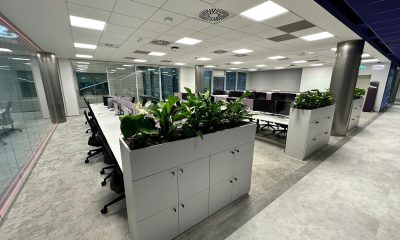
Eeze opens 1,200 sqm Bucharest hub for technical teams
-
API integration5 days ago
Belatra signs cooperation deal to distribute slots via VeliGames
-
AB Trav och Galopp4 days ago
BetMakers Technology Group Selected to Distribute ATG Horse Racing Content Across Australia and New Zealand
-
Aviator5 days ago
Pernambuco court revokes Spribe’s interim relief in Aviator trademark dispute
-
game content5 days ago
R. Franco Digital releases fighting game-themed slot Spin Fighters
-
affiliate marketing5 days ago
SEOBROTHERS’ Aleksandra Drigo flags higher barriers for affiliates in regulated Alberta