eSports
Odds on: Unlocking the potential of AI for esports betting


Jordan Peltier, Chief Data Officer at PandaScore, says that humans and machines must work together if businesses are to maximise the potential of AI when it comes to esports betting odds.
Artificial intelligence has been one of the most discussed industry topics over the past 12 months and it’s easy to see why. AI can be transformative for operators, suppliers and bettors, and while there are concerns around adversarial AI, when used in the right way, it’s a game-changer.
At PandaScore, AI plays a crucial role in the odds we deliver esports betting operators. This is because it is incredibly effective at handling complex, high-dimensional and unstructured data and finding patterns within it – these patterns are needed to predict the outcome of events.
This, of course, is the foundation needed for determining the odds for each market that we offer. But the power of AI goes beyond this.
It can adapt dynamically to new data which is just not possible with old statistical models like parametric distributions as they struggle to capture the non-linear relationship between variables so require additional manual engineering which takes time and resource.
But does this mean the AI machine is taking over from human trading teams? Absolutely not.
Leveraging the capabilities of AI and combining it with specialist human traders is the optimal approach because you have models that can capture the complexity of esports supported by human traders with a deep understanding of each discipline.
Odds should always be based on true probabilities and while there have been significant breakthroughs in AI – I’m talking about transformer-based models such as Large Language Models – it is still prone to making errors, especially when it comes to forecasting.
Let me explain by way of percentages. AI alone can get you 90% of the way to determining the true probability of an outcome but you need the human specialist trader to get you the final 10% of the way to perfection. And perfection is a must when it comes to odds.
Ultimately, this is what allows operators to offer high-value odds to their customers while ensuring a strong and stable margin from their esportsbook. What’s more, it only takes one small error for sharp, savvy bettors to exploit a mistake and that’s not what operators expect from their data partners.
It must be remembered that AI models are only as good as the data they feed from and still require training. Human traders help in this regard, providing a layer of security for core actions like settlement and odds checking when the model goes off market.
In some instances, the trader will have access to data the model doesn’t see of wasn’t trained on – things like a last-minute change to the player roster.
This is why our human traders are responsible for picking the tournament and market coverage that will most appeal to our operator partners, and our traders are on hand 24/7/365 to support operators in their efforts to offer a top esports betting experience to their players.
The training of AI models is crucial and again sees our trading and data science teams work together during the entire lifecycle of each AI model we build from designing the model to testing and interacting with models in production to ensure they are performing.
This is a virtuous cycle with our data scientists training the most optimal models that prove to be the easiest for our traders to manipulate. Traders also give a ton of deep and detailed feedback which our data scientists can use to improve the models.
The idea here is that the trading team has little input once the model is rolled out and often only make one input per match with the AI model then calculating all of the odds and markets. This ultimate is what powers our BetBuilder and PropBet products.
Having specialist traders for each esports discipline is also important. Each video game is like its own sport and while there are some similarities between some titles, the differences have an impact on the markets and odds offered and that’s exactly why specialist traders are a must.
Take shooter-round based game like CS2 and Valorant and MOBA games like Dota2 and LoL. With the former, there’s a lot of repetition in the gameplay which takes place round after round. This means betting markets are focus on rounds and kills for teams and players.
With MOBA games, there are objectives within the game that have a direct influence on who wins the match – things like kills, towers, nashors, inhibitors and dragons. This is complex – and doesn’t exist in traditional sports betting – and is why pricing teams must master in-game dynamics.
Again, this is something that AI can’t do on its own right now.
AI is a key pillar of our business, and we are incredibly proud of how we have used it in collaboration with our data scientists and traders to create models that deliver top odds for our operator partners and their players.
But working with AI is all about staying ahead of the game and our work is never done. This is why we continue to test, iterate, innovate and do all we can top perfect our models. This would not be possible without our incredible team which stands as a testament as to how machines and humans can work together in harmony.
The post Odds on: Unlocking the potential of AI for esports betting appeared first on European Gaming Industry News.








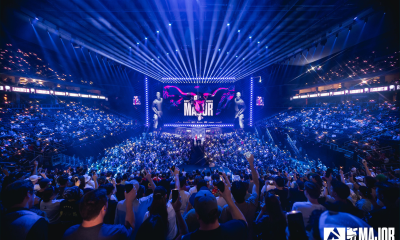



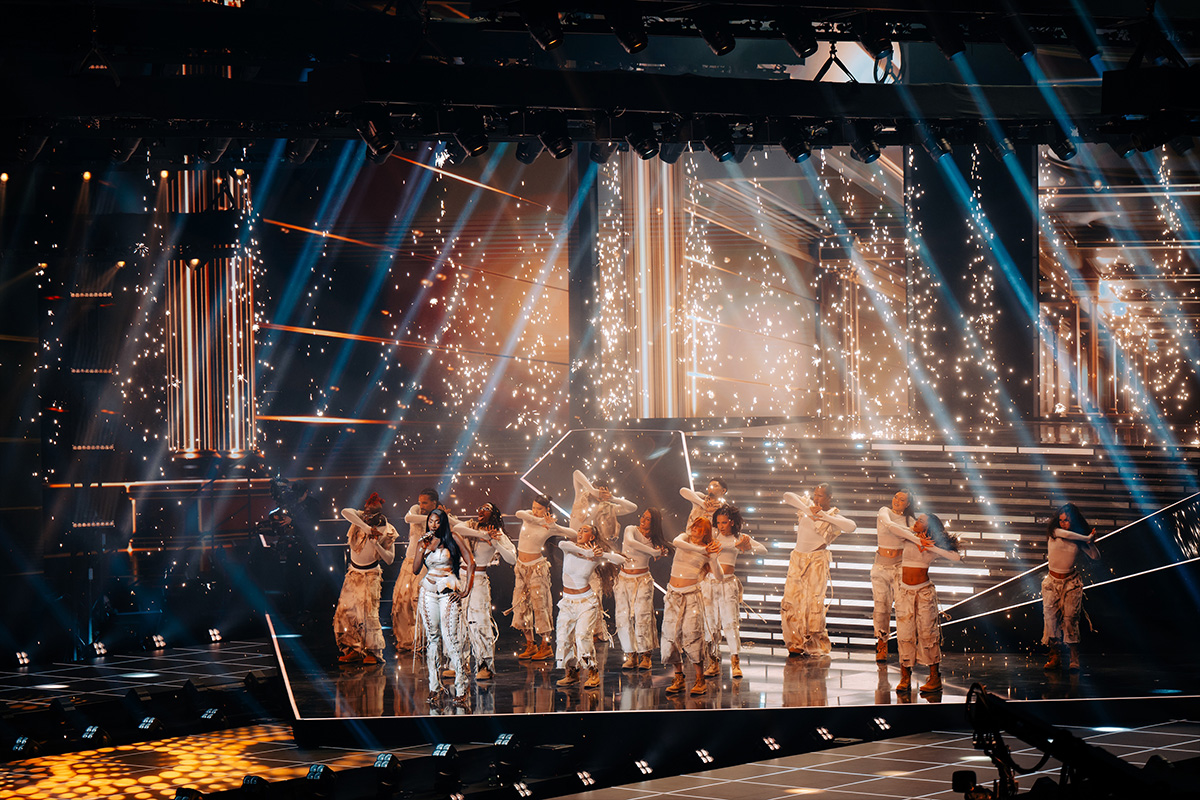
The Esports World Cup 2026 officially kicked off in Paris, France, with a grand Opening Ceremony at La Seine Musicale, welcoming the world’s best players, leading esports Clubs, publishers, partners, creators and fans to the first international edition of the world’s largest esports and gaming event.
Combining music, cinematic storytelling, competition and Parisian culture, the ceremony marked the beginning of seven weeks of competition that will bring together more than 2,000 players, 200 clubs, and representatives from over 100 countries competing across 25 tournaments in 24 games for a record-breaking $75 million prize pool.
From the first moments of the show, the ceremony celebrated the journey that brings players to the Esports World Cup 2026 while introducing Paris as the host city for a new chapter in the competition’s history. Live performances from Aya Nakamura, Theodora, DJ Snake and Mosimann were woven throughout a production that combined orchestral music, dance, augmented reality, large-scale stage design and cinematic visuals to connect esports with the culture of its host city.
One of the defining moments of the evening saw the Esports World Cup Club Championship trophy revealed before representatives from the world’s leading esports Clubs took to the stage, signalling the start of the race to become the world’s best.
The evening opened with an esports-focused pre-show hosted by Doigby before transitioning into the Opening Ceremony, which was designed for both the live audience at La Seine Musicale and millions watching around the world. DJ Snake closed the global broadcast before continuing with an extended live performance, followed by a closing set from Mosimann for the audience in Paris.
“The Opening Ceremony is our welcome to the world – that our historic event is open,” said Mike McCabe, Deputy CEO and Chief Operating Officer at the Esports Foundation. “As we bring EWC 2026 to Paris for the first time, we wanted to celebrate the city through artists who have helped shape music and culture in France today. Aya Nakamura, DJ Snake, and Theodora each represent something different, but together they reflect the creativity and influence that make Paris such a special place to host this event.”
Known for building a sizable global following through her distinctive combination of R&B, Afrobeats, zouk, and contemporary French pop, Aya Nakamura showcased to the crowd a stunning performance that embodied the wide-reaching spirit of the Esports World Cup.
As France’s top export artist and a dominant force on the global music scene, multi-platinum superstar Aya Nakamura boasts over 9 billion streams and countless charts. She delivered a stunning performance of her global hit “Copines” that perfectly embodied the wide-reaching spirit of the Esports World Cup.
Emerging from the Paris underground electronic scene to working with the biggest names in music such as Justin Bieber, Lady Gaga, and Pitbull, DJ Snake has evolved to become one of the pioneers of modern global record production.
France’s rising star Theodora, or ‘Miss Kitoko’ now, has emerged as one of the country’s breakout artists of a new generation. With millions of streams on her music, she blends rap, pop, and club music with the sensibilities of an always-online generation, harnessing a digital-native and fearless ambition that shines through her performances.
DJ, record producer, and live artist Mosimann is one of the hottest names in electronic music right now, and the Swiss-born French national delivered a thrilling closing set for the live crowd in Paris. His viral Dream Track series has seen over 280 million views worldwide and has evolved into a string of official releases and his own Dream Tour. With a debut residency in Ibiza this summer, along with sets at Tomorrowland later this month in Belgium, Mosimann brought an electrifying finish to the Opening Ceremony.
Throughout the ceremony, audiences also heard the EWC 2026 Orchestral Anthem, created in collaboration with 2WEI Music and Hollywood Scoring. Written as the musical identity of this year’s tournament, the anthem accompanies the journey of players and fans throughout the competition, from qualification to championship, and features throughout the Opening Ceremony and tournament broadcast.
With the opening ceremony now complete, the world’s attention now turns to the competition at the heart of the EWC. Fixtures featuring the world’s best players in the biggest competitive titles will unfold daily across multiple arenas throughout the French capital. Clubs compete for the ultimate prize in all of esports: the Esports World Cup Club Championship.
The post Esports World Cup Takes Over Paris For 2026 with Star-Studded Opening Ceremony appeared first on EE Gaming | Global iGaming & Tech Intelligence Hub.
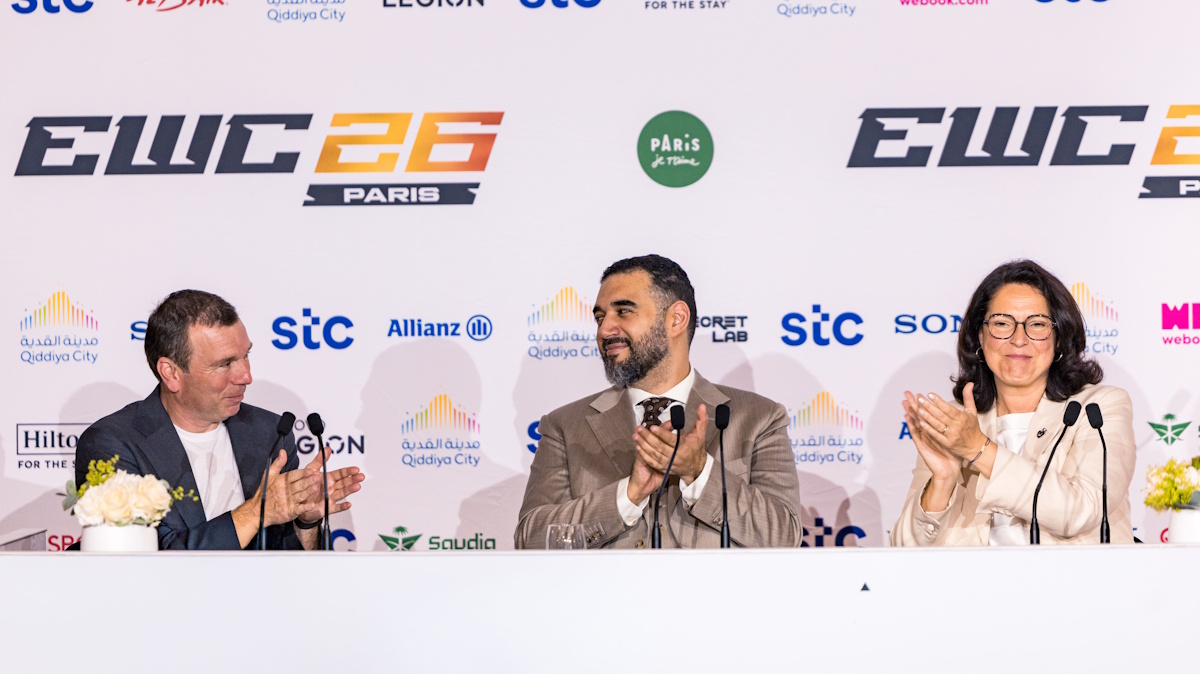
Seven-week event runs through August 23 with 2,000 players, 200 clubs and 25 tournaments across 24 games at Paris Expo Porte de Versailles.
The Esports Foundation has opened the Esports World Cup 2026 in Paris, marking the first international edition of the event. The tournament runs through August 23 at Paris Expo Porte de Versailles and will feature more than 2,000 players and 200 esports Clubs from over 100 countries competing across 25 tournaments in 24 games for a $75 million prize pool.
Organisers said the Paris finals follow the largest “Road to EWC” qualification programme to date, with more than 1.5 million players participating across 330 qualifying events spanning tournaments, publisher leagues and international circuits.
The opening press conference took place at the Hôtel de Ville with opening remarks by Emmanuel Grégoire, the Mayor of the City of Paris.
Ralf Reichert, CEO of the Esports Foundation, said: “Competitive gaming has always had great players, great games and unforgettable champions. The Esports World Cup brings them together in one defining annual stage. For seven weeks in Paris, every title crowns its own winner, but every result also contributes to a bigger race: the Club Championship. That is what makes EWC different. It rewards not only individual brilliance, but the depth, consistency and ambition of an entire Club.”
The Esports Foundation said Cristiano Ronaldo and Magnus Carlsen return as Esports World Cup Global Ambassadors. The event’s Club Championship will distribute $30 million of the overall prize pool, including $7 million for the winning Club, with Team Falcons aiming to defend its title after wins in 2024 and 2025.
On distribution, the organiser said EWC 2026 will be available in 160 countries via more than 100 broadcast and OTT partners, with more than 7,000 hours of live programming planned and coverage in over 40 languages. The Esports Foundation also said it expects up to 5,000 official co-streamers via its Creator Program, which it described as up 42% year-on-year.
The post Esports World Cup 2026 opens in Paris with $75m prize pool appeared first on EE Gaming | Global iGaming & Tech Intelligence Hub.
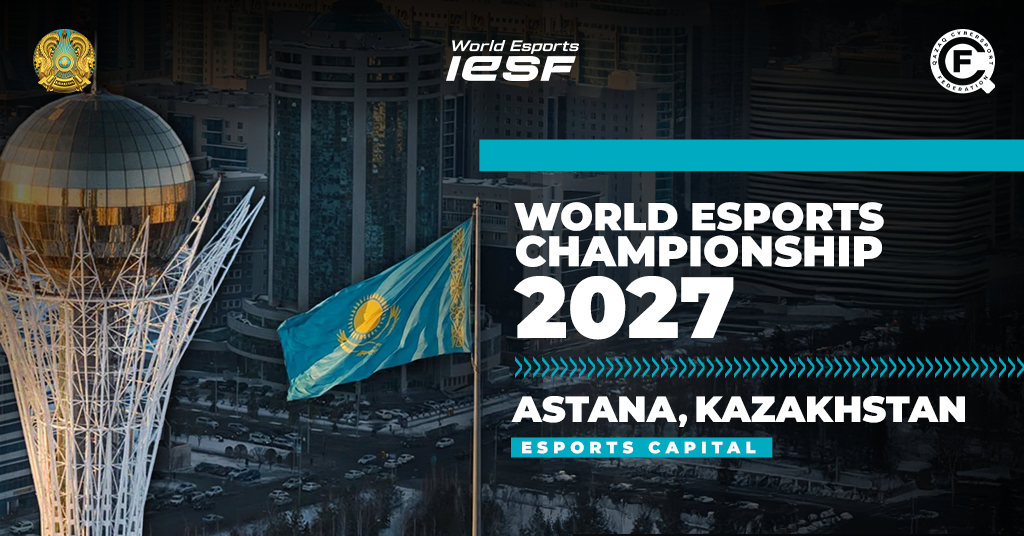
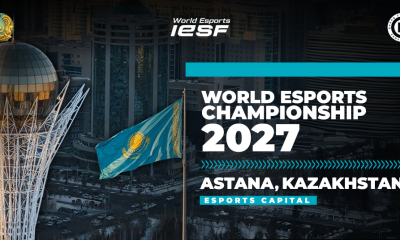
IESF signs host agreement with Kazakhstan’s Ministry of Tourism and Sports and the Qazaq Cybersport Federation in Astana.
Astana has been confirmed as the host city for the IESF World Esports Championship 2027 (WEC27), following a host agreement signing ceremony involving the International Esports Federation (IESF), the Ministry of Tourism and Sports of the Republic of Kazakhstan, and the Qazaq Cybersport Federation.
IESF said the event is expected to draw participation across more than 150 IESF Member Federations through the qualifiers, with national teams competing via IESF-recognized national member structures.
“WEC27 will be more than a championship. It will be a global celebration of nations, athletes, and the future of esports,” said Vlad Marinescu, President of IESF. “For every player, there is no greater honor than competing under their national flag and officially representing their nation on the world stage. That is what makes the World Esports Championship so powerful and so unique. In 2027, Astana will welcome the world and proudly stand as the Esports Capital in the World of Esports, uniting our Member Federations, athletes, fans, and communities. Kazakhstan has shown remarkable vision, ambition, and commitment, and we are confident that WEC27 will deliver an unforgettable championship and a lasting legacy for the global esports family.”
Yerbol Myrzabosynov, Minister of Tourism and Sports of the Republic of Kazakhstan, said: “We are honored that the International Esports Federation has entrusted Kazakhstan with hosting the World Esports Championship 2027. This reflects the confidence in our country’s ability to deliver an event of the highest international standard. Hosting WEC27 reinforces our commitment to advancing esports and creating new opportunities for young people through sport, technology, education, and international cooperation. We look forward to welcoming the World of Esports to Astana and showcasing Kazakhstan as a destination capable of delivering world-class international events.”
Kuanyshbek Yessekeyev, Chairman of the Board of Trustees of the Qazaq Cybersport Federation, added: “We sincerely thank the International Esports Federation for the trust and confidence placed in Kazakhstan to host the World Esports Championship 2027. This is a historic milestone for our esports community and a testament to the progress we have achieved together with our partners. Alongside IESF, the Ministry of Tourism and Sports, and our national stakeholders, we are committed to delivering an outstanding championship for athletes, fans, and the World of Esports. WEC27 will inspire future generations, accelerate the growth of esports in Kazakhstan, and strengthen our country’s position as a leading esports and digital innovation hub.”
IESF said more details, including schedule, qualification pathway, venues, official titles, ticketing, and the event program, will be announced in the coming months via its official channels.
The post Astana to host IESF World Esports Championship 2027 appeared first on EE Gaming | Global iGaming & Tech Intelligence Hub.

-

 10bet5 days ago
Ellis Park Stadium signs five-year naming rights deal with 10bet
-
central asia5 days ago
Groove confirms attendance at SBC Summit Tbilisi 2026
-
Bucharest4 days ago
Eeze opens 1,200 sqm Bucharest hub for technical teams
-
API integration4 days ago
Belatra signs cooperation deal to distribute slots via VeliGames
-
AB Trav och Galopp3 days ago
BetMakers Technology Group Selected to Distribute ATG Horse Racing Content Across Australia and New Zealand
-
affiliate marketing5 days ago
SEOBROTHERS’ Aleksandra Drigo flags higher barriers for affiliates in regulated Alberta
-
Big Bass Blast5 days ago
Pragmatic Play adds Big Bass Blast to Big Bass slot series
-
BETANO4 days ago
Play’n GO strengthens Latin American presence with Betano Colombia launch