Compliance Updates
BGC Supports UK Government’s Proposed 1% Gambling Levy

The Betting and Gaming Council (BGC) has announced its support for the UK government’s proposed 1% gambling levy.
A spokesperson for the BGC said: “BGC members pledged £100m over four years to fund Research, Education and Treatment (RET) services to help prevent gambling-related harm and tackle problem gambling, which is paid through a unique voluntary levy scheme. They have gone further and will have donated £110m by March 2024, helping to protect the vital work of third sector RET providers.
“This current voluntary levy funds an independent network of charities which treats around 85 per cent of all problem gamblers receiving treatment in Great Britain. RET donations only go to charities accredited by the Gambling Commission and BGC members have no say on how the funding is spent.
“The BGC supports a new mandatory levy – indeed we proposed this to the Government ahead of the White Paper. Our industry has been the majority funder of RET for over 20 years. However, we believe it should apply to all operators including the National Lottery, without affecting good causes, who are not immune to having problem gamblers gamble with their products like scratch cards and instant win games.
“It must also be applied on a sliding scale, with smaller percentage contributions from land-based operators, including independent betting shops on our high streets that have struggled to recover after the pandemic and incur disproportionately higher fixed costs.
“There must also be adequate oversight to ensure levy funds are only distributed to charities and organisations delivering genuine RET services to ensure long-term, sustainable funding – including protecting existing third sector providers who are already doing vital work and who may now be at risk.”











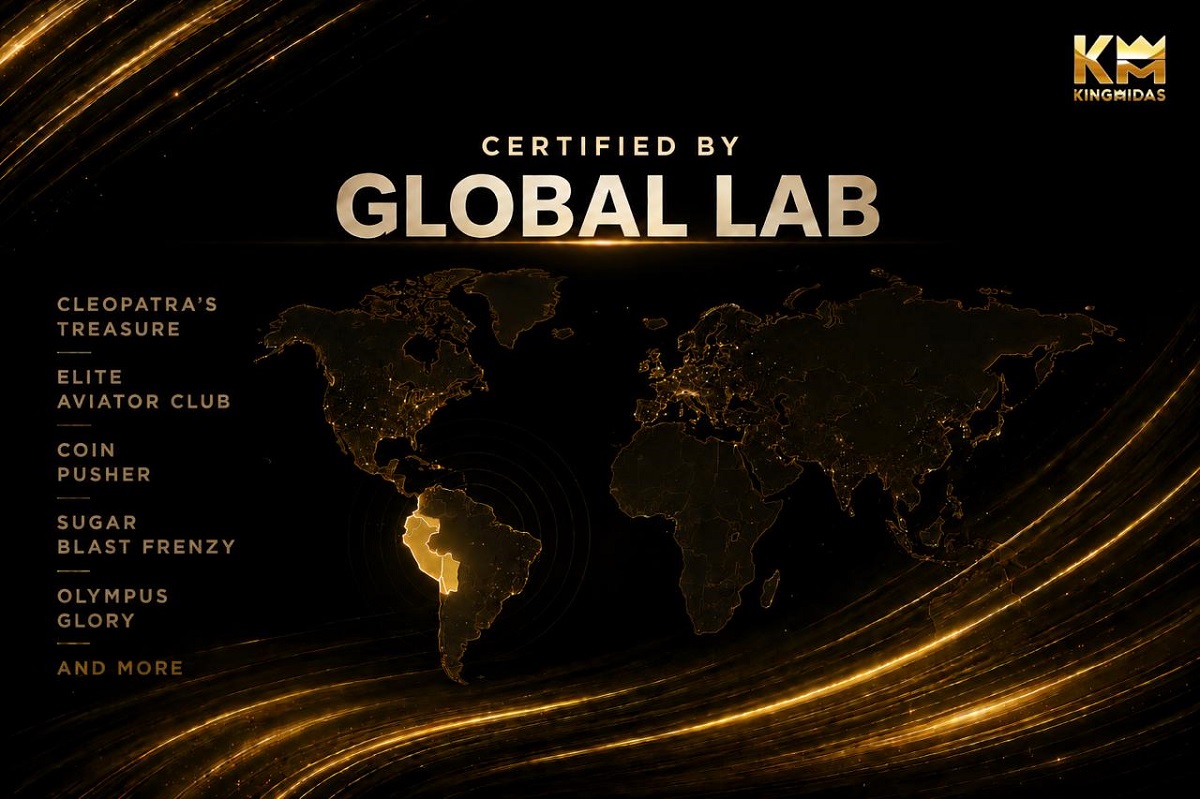
KingMidas Games, a leading iGaming provider, announced that 24 of its game titles have successfully obtained certification for Peru, marking a significant milestone in the brand’s global expansion strategy and its ongoing commitment to technical excellence.
The certification, formally titled “Certificate of Compliance for gaming programs, game modalities and/or components related to remote gaming and/or sports betting”, has been issued following systematic testing conducted by Global Lab. As part of this process, KingMidas Games has also secured Random Number Generator (RNG) and security certifications, ensuring that its games comply with regulatory technical standards.
Further reinforcing the credibility of this achievement, the Ministry of Foreign Trade and Tourism of Peru (MINCETUR) has officially registered and approved the certified games for operation in the country, solidifying Peru as a key market in KingMidas Games’ Latin American growth strategy.
As part of its broader compliance roadmap, KingMidas Games is actively working with multiple accredited testing laboratories to secure additional certifications across key jurisdictions. This multi-lab approach enables the brand to accelerate speed to market while maintaining the highest standards of quality, performance, and regulatory compliance across its portfolio.
This milestone represents a pivotal step in KingMidas Games’ mission to expand its global footprint and deliver premium, localised gaming experiences to players worldwide. With Peru emerging as one of the fastest-growing iGaming markets in Latin America, KingMidas Games is well-positioned to support operators seeking differentiated and high-performance content tailored to local audiences.
Sean Auret, Global Head at KingMidas Games, said: “Achieving certification in Peru is a significant milestone for KingMidas Games and a testament to the high standards we uphold across our portfolio. We have undergone extensive testing and compliance processes to ensure our games meet the regulatory benchmarks, and we are proud to bring our next-generation experiences to Peru. Our ambition is to continue expanding across key global markets such as Latin America, delivering innovative and high-quality content that empowers operators and supercharges the player experience across the region.”
With a growing portfolio of cutting-edge titles and a strong focus on compliance, KingMidas Games continues to position itself as a trusted partner for operators looking to unlock new opportunities in Peru.
The post KingMidas Games Secures Peru Certification appeared first on Americas iGaming & Sports Betting News.

BETER has received approval from the Illinois Gaming Board to add its exclusive Setka Cup table tennis product to the state’s Sports Wagering catalog, expanding its regulated US footprint into Illinois.
The approval allows licensed Illinois operators to offer Setka Cup content, including live data and live streams, according to the company. BETER said the content is already available to Illinois bettors via bet365, and that additional operator launches are planned.
Illinois is the eighth US state where BETER’s exclusive content is available, the company said, following Florida, New Jersey, Colorado, Arizona, Indiana, Iowa, and North Carolina.
Gal Ehrlich, CEO of BETER, said: “Entering Illinois is another significant step in our US expansion and reinforces BETER’s position as a leading provider of fast-betting content in the world’s most exciting sports wagering market.
“Demand for high-velocity, 24/7 content continues to accelerate across the US, and we’re proud to be at the forefront of that shift. With eight states now under our belt, we have clear momentum and a long-term vision that goes well beyond individual state launches.”
Valeriia Tarchynska, Chief Legal Officer at BETER, added: “Securing approval from the Illinois Gaming Board is a testament to the rigorous regulatory work our team undertakes in every jurisdiction we enter. Each US state has its own framework and requirements, and our commitment to full alignment with those standards is non-negotiable.
“The US remains a strategically vital market for BETER, and we continue to work actively to secure approvals in additional key states. We are building real scale in this market, with much more to come.”
The post BETER wins Illinois approval to distribute Setka Cup betting content appeared first on Eastern European Gaming | Global iGaming & Tech Intelligence Hub.
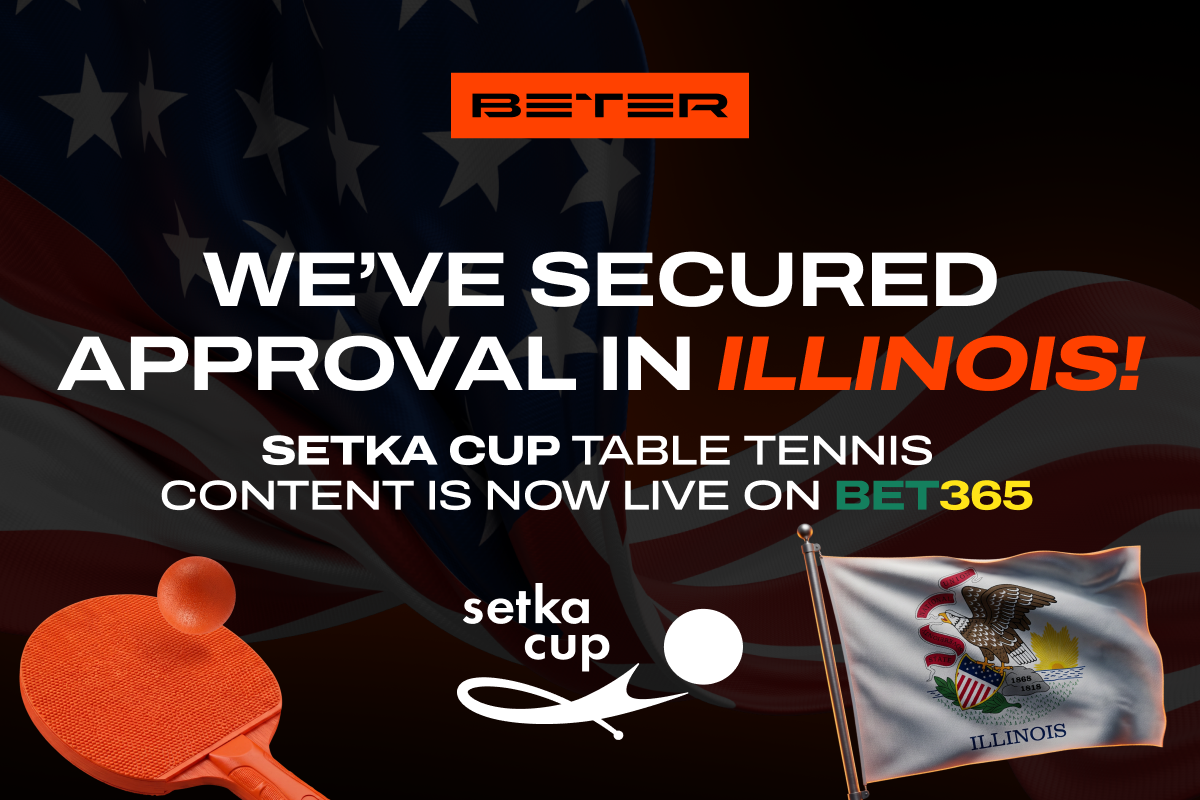
BETER, the award-winning provider of live streams, live data, and odds for esports and sports, has expanded its US presence after its exclusive Setka Cup table tennis content was added to the Sports Wagering catalog in the State of Illinois.
The approval was granted by the Illinois Gaming Board, the regulatory and law enforcement agency responsible for overseeing all licensed casino gambling, video gaming, and sports wagering in the state, and it allows BETER to provide licensed operators in Illinois with its Setka Cup content, including live data and live streams, for the first time.
Illinois marks the eighth US state in which BETER’s exclusive content is now available, following successful launches in Florida, New Jersey, Colorado, Arizona, Indiana, Iowa, and North Carolina.
The content is already available for local bettors via bet365, a long-standing partner of BETER, with additional operator launches planned in the near future.
BETER exclusively delivers 24/7 live streaming, real-time data, and hyper-accurate odds for more than 700,000 fast-paced esports and sports events annually to operators worldwide, offering up to 50 markets per event and an average operator margin of 7.5%+.
Its esports portfolio includes the ESportsBattle product featuring eFootball, eBasketball, eHockey, and eTennis. Its sports portfolio features the Setka Cup table tennis content and the BSKT Cup basketball league.
All of BETER’s exclusive content is underpinned by its Integrity team, ensuring strict adherence to fair play standards through 24/7 monitoring and close collaboration with key sports integrity bodies, including IBIA and ESIC, as well as sports federations.
BETER will also exhibit at SBC Summit Americas for the first time at Stand 813 from June 9–11, marking a major milestone in the company’s expansion across the United States.
Gal Ehrlich, CEO of BETER, said: “Entering Illinois is another significant step in our US expansion and reinforces BETER’s position as a leading provider of fast-betting content in the world’s most exciting sports wagering market.
“Demand for high-velocity, 24/7 content continues to accelerate across the US, and we’re proud to be at the forefront of that shift. With eight states now under our belt, we have clear momentum and a long-term vision that goes well beyond individual state launches.”
Valeriia Tarchynska, Chief Legal Officer at BETER, added: “Securing approval from the Illinois Gaming Board is a testament to the rigorous regulatory work our team undertakes in every jurisdiction we enter. Each US state has its own framework and requirements, and our commitment to full alignment with those standards is non-negotiable.
“The US remains a strategically vital market for BETER, and we continue to work actively to secure approvals in additional key states. We are building real scale in this market, with much more to come.”
The post BETER expands US footprint with Illinois approval appeared first on Americas iGaming & Sports Betting News.

-

 Brasil6 days ago
Para Sportradar, Copa do Mundo 2026 deve redefinir estratégias de aquisição e engajamento nas apostas esportivas
-
Blueprint Gaming7 days ago
Blueprint Gaming announces The Goonies Quest for Treasure 3 slot
-
Booming Games7 days ago
Booming Games launches Way of the Wolf: Hold and Win Extreme 10,000 slot
-
Coljuegos7 days ago
Coljuegos Authorizes MrYoker as Colombia’s Newest iGaming Operator
-
Africa7 days ago
Bede Gaming’s Latest Sunbet Expansion Delivers iGaming Platform to Namibia
-
Amusnet7 days ago
Monte Casino Sofia Elevates its Premium Gaming Floor with Amusnet’s Type S32
-
Granny’s Wild7 days ago
Play’n GO Releases its Latest Video Slot Granny’s Wild
-
Belatra6 days ago
Weekend Reels | Week 22: Slot Drops & Trends