Compliance Updates
Sweden’s government proposes increased gambling tax

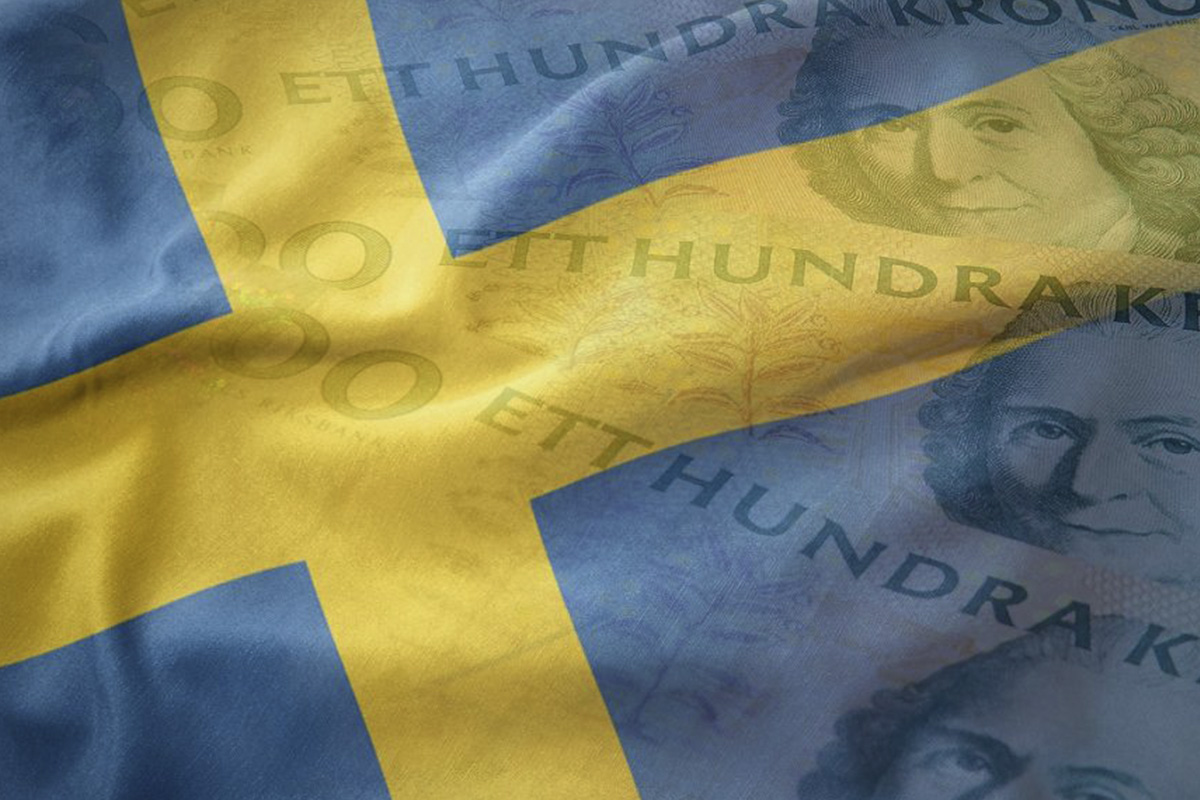
Sweden’s government has today Wednesday proposed an increase in the gambling tax, from 18 percent of GGR to 22 percent of GGR. The reason, according to the government, is that the gambling market should have stabilized since the reregulation in 2019 and that channelization is said to be high.
BOS Secretary General Gustaf Hoffstedt comments:
The announcement from the government is deeply disappointing, above all because it shows that the government does not understand or has taken to heart what kind of market it is set to govern. Even less has the government understood the vulnerable position that market is in.
We were recently able to show that channelization in the Swedish gambling market is 77 percent. Some gambling verticals, including online casino, are as low as 72 percent. The trend is also declining, in other words the channeling decreases over time.
We are already far from the state’s goal of at least 90 percent channelization, and if this tax increase is approved by the Riksdag, we will soon be down to the channelization we had before Sweden reregulated its gambling market in 2019. A reregulation that took place because Sweden had such a low channelization at the time.
Sweden’s government must perform much better than this. There is still time to withdraw the proposal, concludes Gustaf Hoffstedt.
The government’s proposal can be found in Swedish on pages 289-290 here: https://www.regeringen.se/contentassets/e1afccd2ec7e42f6af3b651091df139c/forslag-till-statens-budget-for-2024-finansplan-och-skattefragor-kapitel-1-12- appendices-1-9.pdf
Below a Google translation of the same text:
Increased gaming tax
The government’s assessment: The excise tax on gambling should be increased from 18 to 22 percent of the balance for each tax period.
The upcoming proposal should enter into force on 1 July 2024.
The reasons for the government’s assessment: One of the purposes of today’s gambling regulation is to protect the surplus from gambling activities for the general public by contributing to the financing of government activities. With the exception of gambling that is reserved for public benefit purposes, licensed gambling is taxed according to the Act (2018:1139) on tax on gambling. According to this law, excise duty is levied at 18 percent of the balance for each tax period. The balance is made up of the difference between the total stakes and the total payouts. A taxation period consists of one calendar month.
An increase in the tax on gambling should be well balanced to avoid a major negative impact on the proportion of gambling that takes place at the companies that have a license for gambling in Sweden. From the bill A reregulated gambling market it appears that a tax of just over 20 percent can be considered compatible with an aim to achieve a channelization rate of at least 90 percent (prop. 2017/18:220 p. 258). In that bill, however, a lower tax level was proposed for precautionary reasons. The current tax rate of 18 percent has applied since the Swedish gambling market was reregulated in 2019. The gambling market has since stabilized and channelization has increased significantly. In addition, measures have been taken to exclude unlicensed gambling from the Swedish market, which came into effect 1 July 2023 (prop. 2022/23:33). The reasons for caution when setting the tax level should therefore not be as strong now as during the re-regulation. An increase from 18 to 22 percent is judged to be at a suitable level to strengthen the financing of government activities, without it leading to too great an impact on the companies and the size of the tax base. The excise tax on gambling should therefore be increased from 18 to 22 percent.
The upcoming proposal should enter into force on 1 July 2024. The government intends to return to the Riksdag in the spring of 2024 with a proposal according to the above. The upcoming proposal is estimated to increase tax revenue by SEK 0.27 billion in 2024 (half-year effect) and thereafter by SEK 0.54 billion per year.











Erika Spiteri Bailey, the Senior Executive of Business Intelligence & Data Analytics at the Malta Gaming Authority (MGA), has been officially appointed as the Co-Chair of the InfoStat Working Group within the Gambling Regulators European Forum (GREF).
Erika Spiteri Bailey will serve in this role alongside Anssi Airas, representing the National Police Board of Finland.
GREF is a forum for European gaming regulators, facilitating the exchange of views and the development of approaches to common regulatory challenges. Within this framework, the InfoStat Working Group provides a platform for regulators to collaborate and exchange insights on the use of data in support of effective policy development and decision‑making across jurisdictions.
In her role as Co-Chair, Erika Spiteri Bailey will contribute to shaping the group’s work programme and fostering cooperation among members, with a focus on strengthening data‑driven regulatory approaches.
The post MGA Representative Appointed Co-Chair of GREF InfoStat Working Group appeared first on Eastern European Gaming | Global iGaming & Tech Intelligence Hub.

The Pennsylvania Gaming Control Board (Board) at its public monthly meeting approved four consent agreements presented by the Board’s Office of Enforcement Counsel (OEC) resulting in fines totaling $180,000 against:
Greenwood Gaming and Entertainment, two separate fines totaling $80,000:
A $40,000 fine for three instances of permitting underage individuals to access the gaming floor and play slot machines or table games;
A $40,000 fine for permitting the employment of five unlicensed individuals who had access to iGaming account holders’ personal identifying information through its betParx platform.
Additional fines were levied against:
Wind Creek Bethlehem LLC received a $50,000 fine for failure to follow Know Your Customer (KYC) guidelines that resulted in fraudulent withdrawals from iGaming accounts of more than over $92,000; and,
Fantasy Contest Operator YFS Sub LLC, a subsidiary of Yahoo Fantasy Sports, a $50,000 fine for failure to notify and gain proper approval of the Board for a change of control of its license.
The Board also took actions to place 8 individuals on its various Involuntary Exclusion Lists. Placement on an Involuntary Exclusion List prohibits individuals from either gaming in a casino in Pennsylvania, via an online betting site regulated by the Board, or at a Video Gaming Terminal (VGT) location. These matters, presented by the Board’s Office of Chief Counsel and the OEC, set the number of individuals now on the Board’s various Involuntary Exclusion Lists to 1463.
The Gaming Control Board is scheduled to meet next at 10:00 a.m. on Wednesday, June 17, 2026 in the Board’s Public Hearing Room located on the second floor of the Strawberry Square Complex in Harrisburg.
The post PA Gaming Control Board Levies Fines Totaling $180,000 appeared first on Americas iGaming & Sports Betting News.
The Swedish gaming giant confirms its entry into another regulated market, with its industry-leading portfolio of games set to launch in Alberta.
Play’n GO, one of the world’s leading casino entertainment providers, has been granted a licence to supply online gaming content in the Canadian province of Alberta, marking another milestone in the company’s expansion across regulated North American markets.
The licence, awarded by the Alberta Gaming, Liquor & Cannabis Commission (AGLC), allows the company to offer its portfolio of premium online casino titles to licensed operators in the province ahead of Alberta’s planned market launch later this year.
Alberta represents an important new regulated opportunity within Canada, complementing Play’n GO’s established presence in Ontario and Quebec, while reinforcing the company’s commitment to operating exclusively in regulated jurisdictions.
Magnus Olsson said: “Being granted a licence in Alberta is another important step in our North American growth journey and further strengthens our presence in Canada.
“Regulated markets are the foundation of our business, and Alberta represents an exciting opportunity to expand our footprint in a jurisdiction that shares our commitment to high standards, player protection and long-term sustainability.”
The Alberta licence forms part of Play’n GO’s broader strategy of expanding through regulated markets, working closely with licensed operators to deliver compliant, high-quality gaming content focused on innovation, responsibility, and long-term commercial value.
As part of its market entry preparations, the company has aligned its technology and game portfolio with Alberta’s regulatory standards and requirements, with an initial batch of titles already undergoing certification to ensure launch readiness.
About Play’n GO
With more than 20 years of experience in mobile-first gaming, Play’n GO is a global leader in casino entertainment and the creator of some of the industry’s most iconic online titles, including Rich Wilde and the Book of Dead, Reactoonz, and Moon Princess.
A pioneer in the sector, Play’n GO was among the first to recognize the potential of mobile gaming, developing casino content for mobile devices as early as 2005, before the smartphone era.
Today, the company offers a portfolio of more than 450 premium titles, available to regulated operators across over 35 jurisdictions.
Play’n GO is strongly committed to a fully regulated, sustainable gaming industry built around entertainment, safety, and long-term collaboration.
The company works closely with operators, regulators, and research institutions to promote responsible gaming standards across all markets in which it operates.
With a deep understanding of both operators’ and players’ needs, Play’n GO focuses on creating high-quality, enduring content designed for long-term engagement.
In addition to game development, the company also provides backend services and solutions that support operators in delivering a seamless gaming experience.
Beyond gaming, Play’n GO has expanded into complementary entertainment verticals with Play’n GO Music and Play’n GO Shop, and is also a proud partner of the TGR Haas F1 Team.
For more information, please visit www.playngo.com
The post Play’n GO granted Alberta iGaming licence, expanding Canadian market footprint appeared first on Americas iGaming & Sports Betting News.

-

 iGaming industry5 days ago
Pragmatic Play Releases its Latest Slot Game “The Big Dog House”
-
Aphrodite Legends of Olympus™5 days ago
Inspired Expands Portfolio with Three New iGaming Slots: THE GREAT EGGSCAPE™, APHRODITE LEGENDS OF OLYMPUS™, GOLD FEVER MINE ALL MINE™
-
betting market5 days ago
BiS Brasília brings together experts and authorities to discuss the future of Brazil’s betting market
-
Altenar6 days ago
Philippine Sportsbook ArenaPlus Selects Altenar as Technology Provider
-
Canada7 days ago
St8 extends Wazdan content distribution into Ontario
-
Aviator Studio6 days ago
Aviator Studio marks another major win in São Paulo court
-
Balkans7 days ago
CT Interactive Launches Diamond Tree Jackpot on Efbet in Bulgaria
-
Aviator Studio6 days ago
Aviator Studio Achieves Major Legal Victory in São Paulo