Latest News
Sportradar Reports Strong Growth In First Quarter 2022


Overall revenue increased 31%; U.S. revenue increased 124% year over year
Company reiterated annual outlook for fiscal 2022 projecting strong annual revenue growth of 18% to 25%
Sportradar Group AG, the leading global technology company enabling next generation engagement in sports, and the number one provider of business-to-business solutions to the global sports betting industry, today announced financial results for its first quarter ended March 31, 2022.
First Quarter 2022 Highlights
- Revenue in the first quarter of 2022 increased 31% to €167.9 million ($186.4 million)1 compared with the first quarter of 2021, driven by strong growth across all business segments. In particular, the U.S. segment revenue grew by 124% to €25.7 million ($28.5 million) compared with the first quarter of 2021.
- Adjusted EBITDA2 in the first quarter of 2022 decreased 5% to €26.7 million ($29.6 million)1 compared with the first quarter of 2021 primarily due to higher costs associated with being a public company as well as reversal of certain temporary COVID-19 related cost savings versus the first quarter of 2021.
- Adjusted EBITDA margin2 was 16% in the first quarter of 2022, compared with 22% over the prior year period.
- Adjusted Free Cash Flow2 in the first quarter of 2022 increased by 100% to €12.9 million, compared with the prior year period. The resulting free cash flow conversion2 was 48% in the quarter.
- Strong Net Retention Rate2, based on the last twelve months, increased to 121% at the end of the first quarter of 2022 compared with 107% the same period in 2021 highlighting the continued success of the Company’s cross-sell and upsell strategy across its global customer base.
- Cash and cash equivalents totaled €715.5 million as of March 31, 2022. Total liquidity available for use at March 31, 2022, including undrawn credit facilities was €825.5 million.
- The Company reiterated its previously provided annual outlook for full-year 2022 for revenue and Adjusted EBITDA2. Please see the “Annual Financial Outlook” section of this press release for further details.
| Key Financial Measures | Q1 | Q1 | Change | |
| In millions, in Euros € | 2022 | 2021 | % | |
| Revenue | 167.9 | 128.5 | 31% | |
| Adjusted EBITDA2 | 26.7 | 28.2 | (5%) | |
| Adjusted EBITDA margin2 | 16% | 22% | – | |
| Adjusted Free Cash Flow2 | 12.9 | 6.5 | 100% | |
| Free Cash Flow Conversion2 | 48% | 23% | – |
____________
1 For the convenience of the reader, we have translated Euros amounts in the tables below at the noon buying rate of the Federal Reserve Bank of New York on March 31, 2022, which was €1.00 to $1.11.
2 Non-IFRS financial measure; see “Non-IFRS Financial Measures and Operating Metrics” and accompanying tables for further explanations and reconciliations of non-IFRS measures to IFRS measures.
Carsten Koerl, Chief Executive Officer of Sportradar said: “Our fiscal 2022 is off to a fast start, with core, high-margin betting products driving growth around the world. Our U.S. business continues its tremendous growth story as more states legalize and sports betting becomes live, mainstream entertainment. As the market leader, our technology and data-driven insights continue to transform the converging media, entertainment and sports industries and fuel our consistent and long-term profitable growth story.”
Segment Information
RoW Betting
- Segment revenue in the first quarter of 2022 increased by 25% to €86.7 million compared with the first quarter of 2021. This growth was driven primarily by increased sales of our higher value-add offerings including Managed Betting Services (MBS) which increased 51% to €26.4 million and Live Data/ Odds Services, which increased 16% to €46.8 million. MBS growth is attributable to increased turnover3 and Live Data/ Odds Services grew as a result of upselling content to existing customers. MBS includes Managed Trading Services (MTS) and Managed Platform Services (MPS). Additionally, increased content sales from the Synergy acquisition contributed to the growth.
- Segment Adjusted EBITDA2 in the first quarter of 2022 increased by 13% to €44.6 million compared with the first quarter of 2021. Segment Adjusted EBITDA margin2 decreased to 51% from 57% in the first quarter of 2021 driven by temporary savings in sport rights and scouting costs in the prior year related to the COVID-19 pandemic as well as acquisition of new sport rights.
RoW Audiovisual (AV)
- Segment revenue increased in the first quarter of 2022 by 17% to €45.9 million compared with the first quarter of 2021. This growth was primarily a result of increased content from Tennis Australia and the National Hockey League (NHL) as well as upselling content from the Synergy acquisition.
- Segment Adjusted EBITDA2 in the first quarter of 2022 was flat at €8.9 million compared with the first quarter of 2021. Segment Adjusted EBITDA margin2 decreased to 19% from 23% compared with the first quarter of 2021 primarily due to higher sports rights costs driven by the easing of the COVID-19 pandemic versus prior year, and acquisition of new sports rights.
United States
- Segment revenue in the first quarter of 2022 increased by 124% to €25.7 million compared with the first quarter of 2021. This growth was driven by increased sales of U.S. Betting services primarily as a result of new states legalizing betting. We also experienced growth from increased sales to media companies and a positive impact from the acquisition of Synergy Sports.
- Segment Adjusted EBITDA2 in the first quarter of 2022 was (€6.4) million compared with the first quarter of 2021 of (€3.6) million, primarily due to increased investment in the Company’s league and team solutions focused business. Segment Adjusted EBITDA margin2 improved to (25%) from (32%) compared with the first quarter of 2021 reflecting an improvement in the U.S. segment operating leverage.
____________
2 Non-IFRS financial measure; see “Non-IFRS Financial Measures and Operating Metrics” and accompanying tables for further explanations and reconciliations of non-IFRS measures to IFRS measures.
3 Turnover is the total amount of stakes placed and accepted in betting.
Costs and Expenses
- Personnel expenses in the first quarter of 2022 increased by €13.7 million to €52.3 million compared with the first quarter of 2021 primarily resulting from additional hires in the Company’s product and technology organizations across high and low-cost locations. Employee headcount increased by 620 to 3,075 full time employees at the end of the first quarter of 2022 compared with the first quarter of 2021.
- Other Operating expenses in the first quarter of 2022 increased by €5.0 million to €19.5 million compared with the first quarter of 2021 mainly driven by higher costs associated with being a public company, and the reversal of temporary COVID-19 related cost savings versus the prior year.
- Total Sport rights costs in the first quarter of 2022 increased by €13.1 million to €54.0 million compared with the first quarter of 2021, primarily resulting from new rights for 2022 for ICC, UEFA, ATP and a normalized schedule in sports such as NBA, NHL and MLB, as COVID-19 pandemic restrictions eased.
Recent Business Highlights
- In April 2022, Sportradar acquired Vaix, a pioneer in developing AI solutions for the iGaming Industry. Vaix’s innovative AI technology allows betting and gaming operators to gain a personalized view of their customers, which provides a more targeted, player-friendly experience. Sportradar has partnered with Vaix previously and incorporated its technology into its Managed Trading Services (MTS) offering. Sportradar’s MTS solution is a sophisticated trading, risk, live odds and liability management offering that helps betting operators boost margins and profits, while increasing efficiency and managing risk.
- Sportradar was awarded a supplier registration for online/mobile wagering in Ontario. With this registration for online/mobile wagering from the Alcohol and Gaming Commission of Ontario, Sportradar now holds over 36 licenses in North America across states, territories, tribes, and Canada. Additionally, Sportradar Integrity Services and the Canadian Hockey League announced a multi-year education and bet monitoring services agreement. This new relationship increases Sportradar Integrity Services’ portfolio of ice hockey partners to nine different leagues and federations around the world and strengthens its leadership position across North American sports leagues.
- The Company continued to strengthen its U.S. leadership by appointing former Fiserv executive Michael Gandolfo as Group Head, Regional Sales. Gandolfo led Fiserv’s Large Financial Institution Sales and Service Team, responsible for over 300 top financial institutional clients.
- Norwegian state gaming operator, Norsk Tipping, will deploy Sportradar’s internet-based Self-Service Betting Terminal (iSSBT) into 245 retail outlets across Norway to support the gaming operator’s growth. iSSBT is deployed in over 500 retail outlets, enabling Norsk Tipping to establish a mobile-first and online digital strategy, along with a retail presence.
- Sportradar continued to advance its mission to detect, investigate and prevent betting-related match-fixing, doping and other threats to the integrity of sport by announcing a multi-year integrity partnership with NASCAR, an expansion of a previous agreement to provide bet monitoring and reporting with its Universal Fraud Detection System (UFDS), launching a Sportradar Integrity Exchange, a network that enables bookmakers to report suspicious betting activity and extended its work with the Austrian Federal Criminal Police on anti-doping.
- The Company also announced that it will act as an advisor to Bowl Season on the sports betting space in a responsible manner, with a focus on educating the organization’s membership on the rapidly evolving world of sports betting, as well as the opportunity to expand the scope to include Sportradar’s Integrity Services.
Annual Financial Outlook
Sportradar is reiterating its outlook for fiscal 2022 provided on March 30, 2022 as follows:
- Revenue is expected to be in the range of €665.0 million to €700.0 million ($738.2 million to $777.0 million)1, representing growth of 18% to 25% over fiscal 2021.
- Adjusted EBITDA2 is expected to be in the range of €123.0 million to €133.0 million ($136.5 million to $147.6 million)1, representing growth of 21% to 30% over fiscal 2021.
- Adjusted EBITDA margin2 is expected to be in the range of 18.5% to 19.0%, an improvement over the prior year.4
____________
1 For the convenience of the reader, we have translated Euros amounts in the tables below at the noon buying rate of the Federal Reserve Bank of New York on March 31, 2022, which was €1.00 to $1.11.
2 Non-IFRS financial measure; see “Non-IFRS Financial Measures and Operating Metrics” and accompanying tables for further explanations and reconciliations of non-IFRS measures to IFRS measures.
Powered by WPeMatico


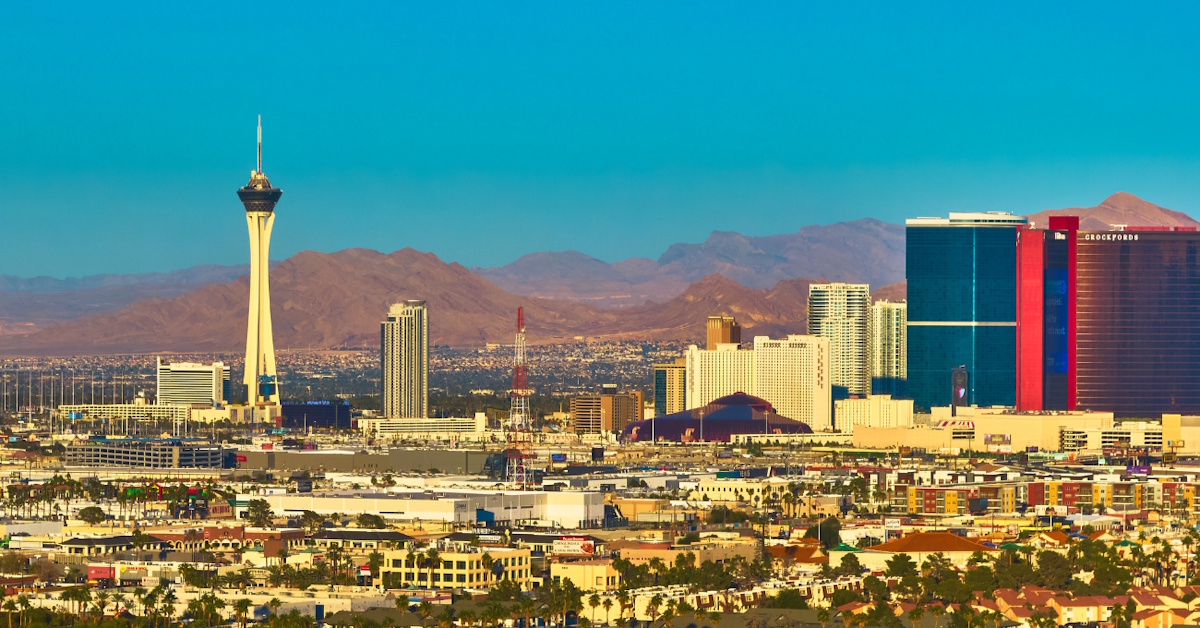
Resort fees are up 194% and Nevada’s live poker table count is down 38% since 2011, based on UNLV and Gaming Commission data cited in the report.
The cost of a one-night visit to the Las Vegas Strip has more than doubled since 2014, according to a new “Las Vegas Inflation Index” published by Ignition Casino. The report estimates a typical one-night “basket” of expenses at $667.85 in 2026 versus $319.09 in 2014, a 109.3% increase.
Ignition Casino’s basket includes the Strip average for a blackjack minimum bet, weekend one-night hotel stay, resort fee, domestic beer, bottle of water, dinner (entrée and drink), a show ticket and valet parking. In the company’s breakdown, resort fees show the steepest jump, rising from $19.43 to $48.49 (+194.5%). Other increases cited include blackjack minimum bets from $50.00 to $112.17 (+124.3%), show tickets from $82.86 to $175.91 (+112.3%), water from $3.00 to $7.00 (+133.3%), and valet parking moving from free to $40.
For poker, the report argues higher trip costs are landing alongside a smaller live product. Citing UNLV’s Center for Gaming Research and Nevada Gaming Commission Quarterly Reports, it says Nevada’s live poker table count fell from 957 in 2011 to 595 by end-2025, a 38% decline. On the Strip, the report puts active poker rooms at eight today—Aria, Bellagio, Caesars Palace, Horseshoe, Mandalay Bay, MGM Grand, The Venetian and Wynn—down from approximately 17 in the late 2000s.
The company also points to higher rake caps compared with 2014. It states Aria’s rake is “10% of the pot up to a maximum cap of $7 per hand,” Bellagio’s cap is $6, and the remaining Strip rooms are at $5, versus a 2014 Strip average cap of $4. Using an assumed 30 raked hands per hour, the report estimates that a $2 higher cap at cap-reaching tables equates to “an extra $60 per hour” going to the house, or $300 over a five-hour session.
At blackjack, Ignition Casino ties higher table minimums to shorter expected playtime for fixed budgets. It estimates a $500 bankroll would last about 2 hours and 22 minutes at the 2014 average minimum bet, versus about 28 minutes at the 2026 average minimum, using an approach it attributes to “casino risk analysts and quantitative mathematicians” and assuming 70 hands per hour and a blackjack standard deviation of 1.15.
The post Ignition Casino: One-night Las Vegas Strip spend hits $668, up 109% since 2014 appeared first on EE Gaming | Global iGaming & Tech Intelligence Hub.

Deal starts with the 2026 PMCO Western Europe Wildcard and adds a JanickaGaming ambassador program.
G2 and PUBG MOBILE Esports have announced a partnership aimed at growing the PUBG MOBILE esports ecosystem in Western Europe, the companies said on June 15, 2026 in Berlin.
The partnership begins with the 2026 PUBG MOBILE Club Open (PMCO) Western Europe Wildcard, with registration open now. G2’s in-house media and production unit, 62, will support tournament operations and community activations, spanning creator campaigns, media buying, and event management.
The first major activation under the agreement will be the 2026 PUBG MOBILE Global Open (PMGO) Western Europe Finals, scheduled for 11–13 September, with registration opening today, according to the announcement.
The companies are also launching an ambassador program for the region, naming German PUBG MOBILE content creator JanickaGaming as the Western Europe ambassador. PUBG MOBILE said she will stream PUBG MOBILE weekly and cover esports topics and tournaments alongside her existing social content.
“PUBG MOBILE has built something really special over the years. It’s one of the biggest games in the world and one of the most impressive esports ecosystems,” said Alban Dechelotte, CEO of G2.
Shaowei Chen, Head of Western Europe Publishing at PUBG MOBILE, added: “Western Europe represents one of the most promising growth frontiers for PUBG MOBILE esports, and G2 stands as a great strategic partner to drive this expansion.”
The post G2 partners with PUBG MOBILE Esports to scale Western Europe competition appeared first on EE Gaming | Global iGaming & Tech Intelligence Hub.
Gambling in the USA
Las Vegas Inflation Index: Cost of visiting Sin City for one night has more than doubled in the last 12 years

-
- An average spend for one night on the Las Vegas Strip now reaches nearly $670, compared to $319 in 2014.
- Resort fees have seen a 194% rise in that period – the steepest increase of all.
- Nevada’s live poker table count has fallen by 38% since 2011 – from 957 tables to 595 – while the number of active Strip poker rooms has halved.
- Strip poker rooms are taking an average of $300 more per five-hour session compared to 2014.
- With a $500 blackjack budget, you will bust nearly two hours quicker on average in 2026 compared to 2014.
The average cost for a one-night stay in Las Vegas has risen by almost 109% in the last 12 years, as revealed by research from Ignition Casino.
Based on the average cost of a basket of a typical visitor’s stay – hotel, food, drinks, entertainment and parking – guests are spending nearly $350 more per night in 2026 than they were in 2014.
That basket includes the average minimum blackjack bet, a one-night hotel stay, resort fee, a domestic beer, bottle of water, dinner (entrée and drink), a show ticket and valet parking. All recorded prices are Strip averages in 2014 and 2026.
The steepest single increase is resort fees: the add-ons charged on top of base room rates averaged $19.43 on the Strip in 2014 and have risen to $48.49 today – a 194.5% jump. Almost every other line item has at least doubled, with blackjack minimum bets up 124%, water up 133%, show tickets up 112% and valet parking going from free to $40.
Feature (On Strip)
2014
2026
% Increase
Blackjack minimum bet $50.00
$112.17
+124.3%
Average resort fee/night $19.43
$48.49
+194.5%
Weekend one-night hotel stay $125.80
$207.28
+64.8%
Domestic beer $6.00
$10.00
+66.7%
Bottle of water $3.00
$7.00
+133.3%
Dinner (entrée + drink) $32.00
$67.00
+109.4%
Show ticket $82.86
$175.91
+112.3%
Valet parking $0.00
$40.00
N/A
TOTAL $319.09
$667.85
+109.3%
But rising prices are only half the story. For poker players specifically, the cost of a Las Vegas trip has increased at the same time as the product itself has quietly contracted – fewer rooms, fewer tables, and higher costs per hand once you sit down.
Fewer tables, higher rake: Las Vegas poker’s shrinkflation squeeze
Las Vegas remains the live poker capital of the world – but the infrastructure supporting that reputation has been quietly hollowed out, and the players who remain are paying significantly more for a shrinking product.
According to data compiled by UNLV’s Center for Gaming Research from Nevada Gaming Commission Quarterly Reports, the state’s live poker table count stood at 957 tables in 2011. By end-2025, that figure had fallen to 595 – a reduction of 38% over 14 years, with no return to pre-2016 levels in sight.
The decline is structural and predates COVID. From 957 tables in 2011, Nevada’s count fell steadily to 587 by 2018 as casinos converted poker floor space to higher-margin baccarat. The pandemic accelerated the attrition – tables collapsed to just 413 in 2020 – and the recovery has been incomplete. Today’s total of 595 remains roughly 38% below its 2011 level.
On the Strip specifically, the picture is even starker. From approximately 17 active poker rooms in the late 2000s, just eight remain today: Aria, Bellagio, Caesars Palace, Horseshoe, Mandalay Bay, MGM Grand, The Venetian and Wynn. For Texas Hold’em and Omaha players, this consolidation means less table availability and less competition between rooms – and with fewer operators competing for players, there has been little pressure to keep rake in check.
Metric
2011
2025/26
Change
Nevada poker tables (statewide) 957
595
–38%
Active Strip poker rooms ~17
8
–53%
Average rake cap per hand $4
$5–$7
↑ significantly
Are Las Vegas poker rooms still good value amid rising costs?
The rake compounds the shrinkflation picture. Of the eight active Strip rooms, Aria charges a rake of 10% of the pot up to a maximum cap of $7 per hand, Bellagio’s cap is $6, and the remaining rooms sit at $5. In 2014, the Strip average was 10% up to a $4 cap.
Considering a fast dealer pushes out 30 raked hands per hour, an extra $2 in rake per hand – at rooms where the cap is reached – means an extra $60 per hour going to the house. Over a five-hour session, that is $300 less in players’ stacks compared to 2014.
Factor in the broader 109.3% price hike across the average Las Vegas stay and there is a serious debate to be had over value for money. Players are paying more to stay, more to eat, more to park – and then paying more rake across fewer available tables once they sit down.
The same squeeze is visible at the blackjack tables, where minimum bet increases have made a given budget go significantly less far than it did 12 years ago – offering a precise illustration of what the broader cost increases mean in practice.
You will bust two hours earlier in Las Vegas today compared to 2014 with a $500 blackjack budget
The blackjack minimum bet increase tells a sharp story about what rising costs mean in practice. Based on the average Strip minimum in 2014, a $500 budget would last approximately two hours and 22 minutes before a player would be expected to bust against the house. Taking into account the 124% increase in average minimum bet since then, that same $500 would now be expected to last just 28 minutes.
This is calculated using a methodology applied by casino risk analysts and quantitative mathematicians, factoring in betting units, the standard deviation of blackjack (1.15, accounting for doubling down, splitting and natural blackjack payouts), and an average table speed of 70 hands per hour. Full methodology is set out in the appendix below.
Las Vegas blackjack average time to bust (hr:min)
Budget
2014 (hr:min)
2026 (hr:min)
$100
0:06
N/A
$200
0:23
0:04
$300
0:51
0:10
$500
2:22
0:28
$1,000
9:29
1:53
Shrinkflation is usually associated with a chocolate bar that got smaller without the price changing. In Las Vegas, the same principle has played out across an entire recreational economy — only here, the price went up too. Fewer poker rooms, higher rake, steeper minimum bets and a resort bill that has more than doubled: the product has contracted while the cost of accessing it has soared.
Appendix: Blackjack time-to-bust methodology
The following explains how estimated survival times for a given blackjack budget are calculated, using the $500 at a $50 table example (median survival: 2 hours 22 minutes in 2014).
Step 1: Normalisation. Currency is standardised into Betting Units. $500 / $50 minimum bet = 10 units.
Step 2: Volatility Index. Standard deviation is defined. A simple coin-flip game has a standard deviation of 1.0; blackjack, with doubling down, splitting and 3:2 naturals, carries an accepted standard deviation of 1.15.
Step 3: Absorbing Barrier Formula. Median hands to bust is calculated as: n ≈ 1.66 × (betting units)².
Step 4: Executing the calculation. For 10 units: 10² = 100 × 1.66 = 166 hands to bust.
Step 5: Translating to casino time. 166 hands / 70 hands per hour = 2.37 hours = 2 hours and 22 minutes. The same formula applied to a $112.17 minimum bet ($500 / $112.17 = ~4.46 units; 4.46² × 1.66 = ~33 hands; 33 / 70 = 0.47 hours = approximately 28 minutes.
The post Las Vegas Inflation Index: Cost of visiting Sin City for one night has more than doubled in the last 12 years appeared first on Americas iGaming & Sports Betting News.

-

 Latest News6 days ago
N1 Partners x RAZE Case: ROI+ in Canada within 3 Days
-
Africa7 days ago
WorldGaming Enters into Partnership with African iGaming Alliance
-
Canada7 days ago
St8 cements Ontario content offering through latest partnership with RubyPlay
-
Canada6 days ago
N1 Partners x RAZE Case: ROI+ in Canada within 3 Days
-
Balkans6 days ago
EGT Digital signs sponsorship deal with CSKA Sofia
-
Genius Sports4 days ago
LIGA MX and Polymarket Announce Sponsorship Agreement for the US Territory with Official Data and Integrity Collaboration from Genius Sports
-
Booming Games5 days ago
Booming Games launches Ronaldinho’s Streetball Bonanza slot
-
BMM Testlabs7 days ago
BMM Innovation Group confirms Perú Gaming Show presence in Lima