Latest News
National Gambling Support Network helps over 110,000 people as self-referrals increase by 50% since April 2023

New data released today reveals how many people have been supported by the National Gambling Support Network (NGSN) since its launch in 2023, with data also showing an increase in self-referrals by over 50% in year two. Waiting times for a first assessment are also shown to be offered after an average of just two days.
Since April 2023, the NGSN has supported over 110,000 people over the two years since launch. This is based on the number of individuals who accessed services including the National Gambling Helpline, regional providers, primary care and residential services. These fall into three tiers of support (Tiers 2-4) including assessments, brief interventions, extended brief interventions (EBI), treatment sessions, reviews and aftercare.
The impact of a region-first approach, which is designed to deliver local support and services for people, and access to providers with knowledge and understanding of the local community, can be seen through more individuals accessing support directly from their local provider, with self-referrals into the system increasing by over 50% since launch.
Brief Interventions (BI), which involve short-term strategies aimed at addressing gambling harms through time-limited conversations, allow early engagement and support before challenges escalate, and offer advice and signposting to further help if required. Increasing early support has been central to the NGSN and as a result, these have seen a significant rise in the second year of the Network, having nearly doubled with a 93% increase, from 11,000 to over 21,000 people receiving a meaningful intervention.
Person-centered support means that people are also accessing the service that works for them and around their personal lives and circumstances, such as peer support, group work and 1:1 therapy. The average waiting time for a first assessment is now an average of two days across the network.
Through increases in outreach and engagement activity and improvements to tools such as the GambleAware service finder to enhance awareness of support available amongst frontline professionals and the public, individuals are more likely to engage with local support services directly.
Since the launch of the GambleAware service finder website in July 2024, we have seen an estimated 21,000 people directed to NGSN provider referral options, which includes links to email addresses, phone numbers, self-referral forms and websites.
Those with the most severe cases of gambling harm will often require Tier 4 treatment, which is the most specialised and intensive level of care within the NGSN, where a person stays at a residential treatment centre.
Jackie Menzies, from Southport, is one person who has benefited from the support of the NGSN and its tier 4 care. Jackie started gambling when he was 20, and after realising that the effects of gambling harms were having an impact on his mental health and wellbeing, he was directed to support from Cheryl Williams at NGSN provider, Adferiad, with the service he received described as “lifesaving.”
Jackie, now 38, said: “I owe Cheryl and the team at Adferiad my life.
“From the moment I was introduced to them, I was contacted, informed, and treated with respect and understanding for both myself and my addiction. I was guided and informed of what options might be available to me and how I might be able to get help.
“I had treatment at their Parkland Place Centre and from the empowering attitudes of the staff, I have enrolled in a Level 3 counselling course at my local college, and I’m looking to the future to be able to help people who are suffering from addictions like I am to grow and be able to find peace and happiness again.”
Anna Hargrave, Deputy Chief Executive at GambleAware, says: “The second year of the National Gambling Support Network presented an opportunity to take the learnings from year one and focus on how we can best support those affected by gambling harms.
“We’ve seen an increase in the number of people being supported and importantly, an increase in brief interventions and self-referrals, which means we can support people earlier and reduce the potential for further harm.
“The expertise within the Network is unrivalled and providers play a key role in helping people across the country, whether that be at the start of their journey, or supporting them at the end. We look forward to working with the future commissioners and the NGSN with the integration of the network into the future system to ensure providers can continue offering their crucial services.”
Significant work has gone into improving the support and care individuals receive, with the NGSN delivering a range of successful interventions, from increased prevention activities and community-based early interventions to continued development on expanding more efficient pathways into structured treatment. In so doing, this has ensured and enabled more people to access support and achieve strong outcomes, through a no wrong door system to reducing the impact of gambling harms.
Joy Allen, Police & Crime Commissioner for Durham and vocal advocate for prevention of gambling harms, said: “Gambling, like any addiction, has the power to completely control the lives of those affected and those closest to them. It can negatively impact individuals financially, emotionally, socially and in terms of their mental wellbeing.
“We need to think of gambling-addiction in the same way in which we think of and support those with Drugs and Alcohol addiction. It is an illness that can lead people to commit crime to feed their addiction and those in its thrall need rehabilitation, not censure. It can certainly lead to abject misery. It is estimated that there are nearly 500 gambling related suicides a year in England highlighting the urgent need to encourage more people to seek help. In 2023 around 5% of the North East population aged over 16 was classified as an ‘at risk’ gambler, often spending more than they afford and chasing losses leading to financial strain, anxiety and stress.
“In response, and in line with the priorities I’ve placed on tackling gambling harm, Durham Constabulary has signed the National Gambling Charter which commits the Constabulary to providing specialist training for its officers so that they can identify those at risk and signpost them towards support. I urge other organisations to do the same. Collectively we can, and will, do more.”
The National Gambling Support Network is available for anyone who is experiencing harm from gambling and wants support for it, including people who are affected by someone else’s gambling. All services are free and confidential.
The post National Gambling Support Network helps over 110,000 people as self-referrals increase by 50% since April 2023 appeared first on European Gaming Industry News.













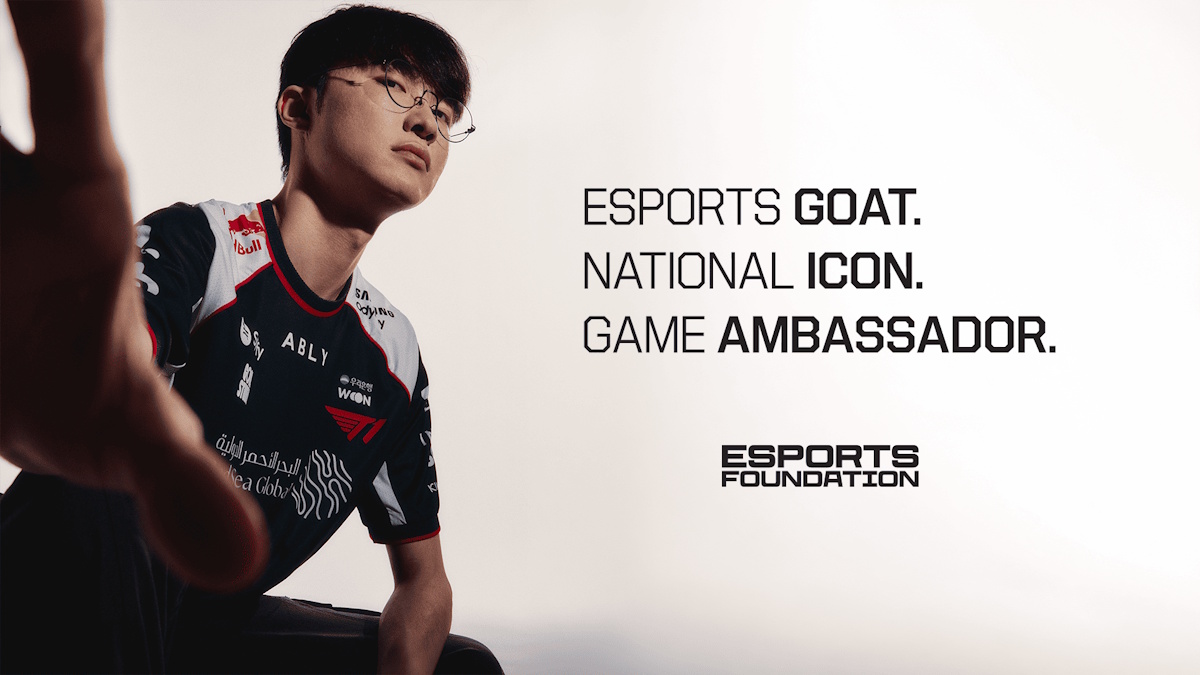
Lee “Faker” Sang-hyeok joins Cristiano Ronaldo and Magnus Carlsen in the Esports Foundation’s Ambassador Program.
The Esports Foundation (EF) has appointed Lee “Faker” Sang-hyeok as a Game Ambassador for the Esports World Cup (EWC) and Esports Nations Cup (ENC) through 2028, the organization said on July 15, 2026 in a statement issued from Riyadh and Paris.
EF said Faker joins Cristiano Ronaldo, listed as the Foundation’s Global Ambassador, and Magnus Carlsen as part of the Esports Foundation Ambassador Program. The Foundation said Faker will represent “the perspective of esports players” across its international events, athlete initiatives, media engagements and leadership forums.
“You can’t talk about esports without mentioning Faker. He is the defining athlete of competitive gaming: a champion whose excellence, discipline and longevity have inspired an entire generation,” said Ralf Reichert, Chief Executive Officer of the Esports Foundation. “As our Game Ambassador, Faker represents something fundamental to the Ambassador Program: esports creates its own global sporting icons. Across EWC, ENC and NGSC, he will help ensure that the players who built this sport have a voice in shaping where it goes next.”
Faker said: “Competition has shaped my life, and I am proud to join the Esports Foundation as Game Ambassador. I want to continue competing for the biggest titles with T1 while representing the players and fans who have helped esports grow worldwide. Through the Esports World Cup, Esports Nations Cup and the Foundation’s wider platforms, I hope to inspire the next generation to pursue excellence, remain resilient and believe in how far competitive gaming can take them. There is still much more to achieve.”
EF highlighted Faker’s competitive record, describing him as a six-time League of Legends World Champion, EWC 2024 winner, two-time MSI champion and ten-time domestic champion with T1. The Foundation also said Faker became the first esports athlete to receive the Blue Dragon Medal in 2026, describing it as the Republic of Korea’s highest sporting honor awarded by President Lee Jae-myung.
The post Esports Foundation names Faker Game Ambassador for EWC and ENC through 2028 appeared first on EE Gaming | Global iGaming & Tech Intelligence Hub.

Midnite has agreed a partnership with Middlesbrough FC that will see the UK bookmaker become the club’s principal partner and front-of-shirt sponsor for the 2026/27 campaign, which Middlesbrough describes as its landmark 150th season.
The companies announced the deal alongside a fan activation at Riverside Stadium on Thursday, July 9, branded “This Season’s On Us”. The initiative offered supporters prizes including 2026/27 season tickets, 2026/27 shirts, match tickets, or a £25 club shop voucher, with fans required to answer Middlesbrough trivia and complete a football challenge.
Middlesbrough former players Craig Hignett and David Wheater attended the event, and, according to the company, took bonus attempts on behalf of participants who missed out.
Andrew Mook, Midnite’s Head of Brand Marketing, said:
“Middlesbrough have a storied history and we’re delighted to announce this partnership during such a monumental year with the club celebrating their 150th anniversary.
“It was great to see so many Middlesbrough fans at the “This Season’s On Us” activation, we hope they enjoyed taking part and meeting club legends, with David Wheater hitting top bins on several occasions and allowing fans to win big with season tickets.
“We can’t wait to get to Riverside Stadium in August to kick-off a new season and we’re excited to say that we have plenty of new and captivating campaigns planned.”
Lee Fryett, Middlesbrough FC Chief Commercial Officer, added:
“We’re delighted to welcome Midnite as our new Principal Partner.
“We’re looking forward to working closely with Midnite to develop engaging campaigns, content and unique experiences that bring our fans even closer to the club.
“We’re confident this partnership will provide real value for our supporters while supporting our ambitions both on and off the pitch.”
The post Midnite signs as Middlesbrough FC principal partner for 2026/27 season appeared first on EE Gaming | Global iGaming & Tech Intelligence Hub.

ThrillTech has been awarded a Gaming-Related Supplier licence by the Alcohol and Gaming Commission of Ontario (AGCO), clearing the company to launch in Ontario’s regulated market.
The licence allows ThrillTech to deploy its opt-in side bet jackpots technology with regulated online casino, sports betting and lottery operators across the province.
Benjamin Bradtke, Co-Founder of ThrillTech, said: “Securing our AGCO licence is a major step in our mission to transform how jackpots are delivered at scale across regulated markets. This latest certification is testament to our robust technology and trusted compliance frameworks, allowing us to continue our global growth trajectory. We are thrilled to bring our proven, compliant jackpot technology to Ontario, empowering locally licensed operators to uplift revenue without cannibalising existing spend.”
The company said its “ThrillPots” mechanics sit as an independent, player-funded side bet and do not alter the underlying game’s return-to-player mathematics.
ThrillTech said the Ontario approval enables its existing multinational partners that also operate in the province to launch its side bet jackpots locally, while it also holds talks with potential new operator partners. The company lists its regulated footprint as including the United Kingdom, Sweden, the Netherlands, Romania, Malta, Gibraltar, Brazil and Peru.
The post ThrillTech secures AGCO supplier licence for Ontario launch appeared first on EE Gaming | Global iGaming & Tech Intelligence Hub.

-

 Compliance Updates5 days ago
Arizona Department of Gaming Issues Cease-and-Desist Orders to Multiple Operators Linked to Underage Gambling and Illegal Activity
-
 Latest News7 days ago
ELA Games releases Flames Fruits Frenzy Hold and Win slot
-
Compliance Updates6 days ago
KONAMI GROUP’s Konami Gaming Inc. First to Submit Manufacturer License Application in Japan’s Emerging IR Market
-
Latest News7 days ago
PG Soft appoints Hugo Baungartner as General Manager LatAm
-
Canada7 days ago
Canada’s Safer Gambling Gap: Why Market Success Doesn’t Always Equal Player Safety
-
Latest News7 days ago
Tom Horn Gaming ships Royal Ruby FeatureStorm slot worldwide on 14 July 2026
-
Latest News7 days ago
Booming Games launches Fish Tales: Double Catch Max Scatter
-
Latest News7 days ago
BC.GAME names Guillermo Ochoa brand ambassador for Mexico push