Latest News
First casual-gaming-like eInstants in Brazilian market – Fennica Gaming Launches its eInstant Games in Brazil with LottoCap


Fennica Gaming, a leading provider of online gaming solutions and the subsidiary of Finnish National Lottery Veikkaus, has announced the launch of its eInstant games in Brazil in partnership with the country’s top digital operator, LottoCap. The games are marking a new milestone in Fennica Gaming’s expansion into the Brazilian market. This also represents a milestone for the Brazilian market and LottoCap, as these casual-gaming-like eInstants are the first of their kind in Brazil.
The journey began at an industry event, where LottoCap’s Felipe Camara and Jorge Luiz de Arruda Ribeiro heard Fennica Gaming’s Joni Hovi give a talk about new innovative eInstants. Immediately afterwards, they visited Fennica Gaming’s colleagues, and discussions began.
– We had a very good start with the discussions and tried to gather a lot of information for LottoCap on how the eInstants work and what kind of player group might be interested in the games. These kinds of games would be totally new in the Brazilian market, and LottoCap was interested in introducing them to its players. Pretty soon, we started talking about technical integrations and came to the point where a clear path was shown for collaboration. LottoCap is a very agile and professional company with clear visions about the future, explains Joni Hovi happily about the start of the cooperation.
– We are operating with Brazilian Aplicap and providing the digital games portfolio. We are always eager to offer the Brazilian players something new and saw a chance with Fennica Gaming’s innovative portfolio. The proceeds go to good causes, and we are sure these games will find their interested audience. We are very happy about the collaboration with the Fennicans as they work with very high standards, explains Felipe Camara, Head of Product and Marketing from LottoCap.
– It’s always a pleasure to work with an agile, forward-leaning company with good personal connections. I could even say it has been fun to work with LottoCap and its colleagues. Now that we have launched our casual-gaming-like entertaining eInstants with LottoCap for their players, we are very excited to see how our game portfolio succeeds in a market that has never seen these kinds of games before. We are continuing the collaboration and working together to optimize the games for LottoCap’s players, says Jussi Ronkainen, Product Portfolio Manager from Fennica Gaming
– The integration process is always thrilling. Every single regulation has its own special features, and that is an exciting professional challenge for us. The customer might have special wishes, like when buying a car with additional equipment. We, of course, always want to fulfil the customer’s requirements. We have been very happy to work with such a professional technical partner as LottoCap, so the delivery was running very smoothly. Now we just wish the best of luck for the games in Brazil, concludes Tung Hoang, Technical Product Manager of Fennica Gaming.











New title adds Fire Spins and Blitz Spins bonuses plus Standard, Super and Ultra Power Play modes at 5x, 10x and 20x stake.
Blueprint Gaming has released a new slot, Wolf Fury Fire Blitz, built around an “evolving Fire Blitz mechanic” and two bonus paths: Fire Spins and Blitz Spins.
The game uses a Fire Blitz logo above the reels as a meter. In the base game and Power Play, the supplier said every Cash and Wolf symbol contributes to the meter, with boosts able to add extra symbols and “guarantees either Fire Spins or Blitz Spins.”
Fire Spins triggers when six or more Cash symbols land in view. Each reel position spins independently to add more Cash or Wolf symbols, with new symbols resetting a three-spin counter and locking in place. Blueprint said the Wolf can land on the centre reel to collect all Cash symbols in view, then collect additional prizes that land for the remainder of the feature.
Blitz Spins activates when a Wolf symbol lands on reel three alongside Cash symbols on two adjacent reels. During the bonus, the Wolf collects every Cash symbol that lands before the reels respin, and additional Wolf symbols can lock in place, with up to three collectors active at once.
The title also includes Blueprint Gaming’s multi-level Power Play, offering Standard, Super or Ultra modes at 5x, 10x or 20x the base stake. In these modes, the company said only Cash and Wolf symbols appear on the reels.
Jo Purvis, Director of Marketing, PR and Events at Blueprint Gaming , said: “Wolf Fury Fire Blitz combines several of our most engaging mechanics into a fast-paced experience that offers players frequent feature opportunities and exciting collection gameplay. The Fire Blitz mechanic creates anticipation throughout every session, while the dual bonus structure ensures plenty of variety.
“The addition of our multi-level Power Play further enhances the experience by giving players greater control over how they engage with the game, reinforcing our commitment to delivering innovative, feature-rich content that performs across regulated markets worldwide.”
The post Blueprint Gaming releases Wolf Fury Fire Blitz slot appeared first on EE Gaming | Global iGaming & Tech Intelligence Hub.

Playson has launched 4 Chili Pots: Hold and Win, a new slot built around Hold and Win and Pots mechanics with two bonus modes and jackpots reaching 10,000x.
The game runs on a 5×3 grid and triggers a Hold and Win Bonus Game with Chili Features when red, orange or green Chili Bonus symbols land, combining with enlarged matching chilis above the reels. The chilli colour determines the feature in play: red triggers a Multi Feature that adds multipliers up to 5x; orange triggers a Mystery Feature that can award Mini, Minor or Major jackpot values or a coin value up to 75x; and green triggers a Collect Feature that gathers the value of all symbols in play, including any attached multipliers.
A golden Super Chili Bonus symbol can trigger a Super Bonus Game on an expanded 5×5 grid, with random Multi, Mystery or Collect features, including combinations. During the round, the active Super Chili Feature lands random Chili Bonus symbols until six are present, which then activates a new feature or enhances the current one.
Playson said jackpots can be triggered in both bonus modes. Filling all 15 cells in the classic bonus awards the Grand Jackpot at 3,000x, while filling all 25 cells in the Super Bonus Game awards the Super Jackpot at 10,000x. Skull-themed symbols can also appear in bonus play and transform into red, orange or green Chili Bonus symbols. The title includes two Buy Bonus levels, allowing players to trigger the Bonus Game or Super Bonus Game with one, two or three Chili Features.
Anton Ivannikov, CPO at Playson, said: “Our fiery new title showcases our continued focus on evolving proven mechanics in fresh and exciting ways. By combining two player-favourite features with layered bonus progression, dynamic Chili Features and a Super Bonus Game offering even greater rewards, we have created a title that delivers excitement throughout every stage of play.
“Complemented by its vibrant Mexican fiesta theme and engaging gameplay, we are confident 4 Chili Pots: Hold and Win will prove to be another valuable addition to our partners’ casino offerings.”
The post Playson releases 4 Chili Pots: Hold and Win with dual bonus modes appeared first on EE Gaming | Global iGaming & Tech Intelligence Hub.
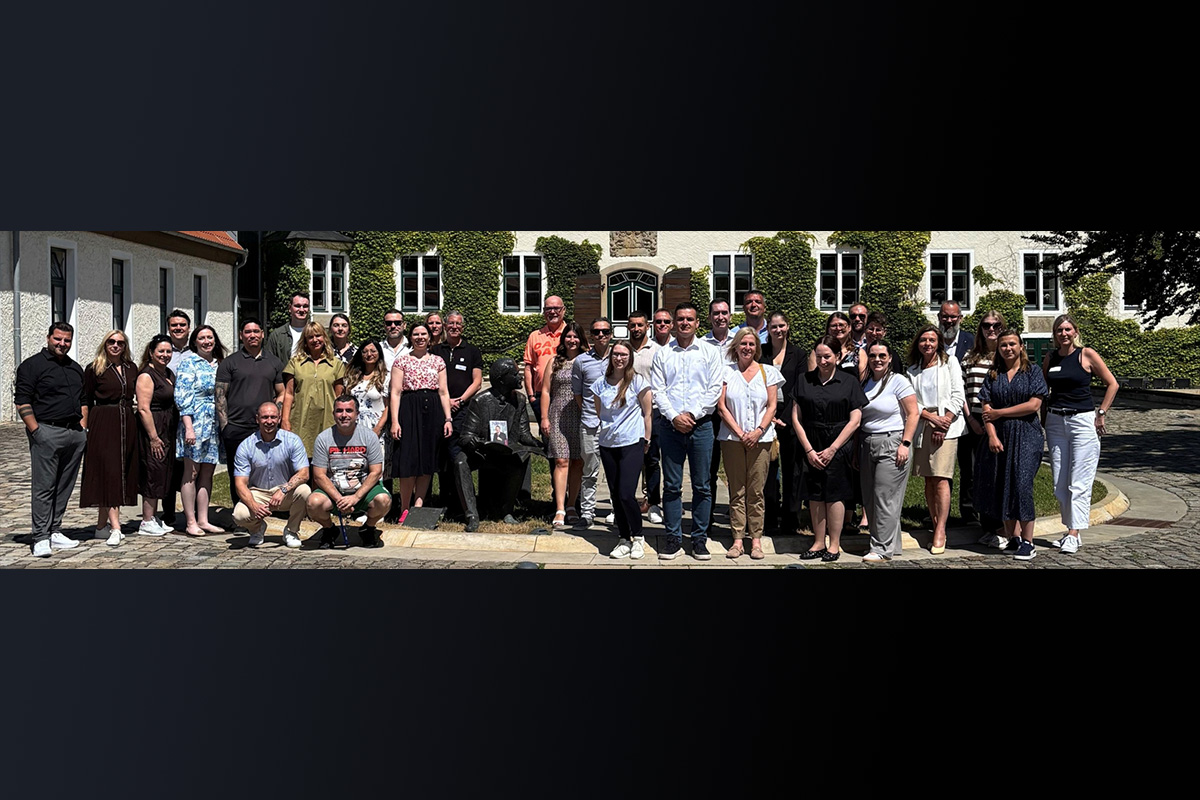
Under the theme “Perspectives,” a total of 43 compliance staff members from the Merkur Group across various countries gathered from 30 June to 1 July to further develop compliance processes in a sustainable manner. Colleagues from Germany, Spain, England, Malta, Australia and the US traveled to the two-day meeting at Benkhausen Castle, the in-house training centre of the Merkur Group. The workshop set the stage with expert presentations on global and digital topics such as cybersecurity, risk management and artificial intelligence. A panel discussion featuring representatives from various international companies within the Merkur Group, as well as a digital quiz, rounded out the programme.
In keeping with its guiding principle, the workshop focused on sharing experiences, fostering global networking and providing impetus for the further development of compliance processes. Because informal exchanges are also key to close cooperation, the evening programme created a relaxed atmosphere and gave participants the opportunity to continue their conversations, make new connections, and further strengthen team spirit across company and national boundaries.
“The ideas and diverse perspectives gained during the workshop will now be incorporated into our day-to-day work and help us to continuously improve collaboration and existing processes,” said Ludwig Beckmann, Chief Compliance Officer of the Merkur Group.
The concluding feedback session also highlighted just how valuable the international exchange is. The term “collaboration” came up particularly often, a clear indication of how highly the participants value working closely together within the international compliance network.
The post Merkur Group Strengthens Global Compliance Strategy appeared first on EE Gaming | Global iGaming & Tech Intelligence Hub.

-

 Compliance Updates6 days ago
Arizona Department of Gaming Issues Cease-and-Desist Orders to Multiple Operators Linked to Underage Gambling and Illegal Activity
-
 Compliance Updates6 days ago
KONAMI GROUP’s Konami Gaming Inc. First to Submit Manufacturer License Application in Japan’s Emerging IR Market
-
Latest News7 days ago
PG Soft appoints Hugo Baungartner as General Manager LatAm
-
Canada7 days ago
Canada’s Safer Gambling Gap: Why Market Success Doesn’t Always Equal Player Safety
-
Latest News7 days ago
Booming Games launches Fish Tales: Double Catch Max Scatter
-
Latest News7 days ago
Tom Horn Gaming ships Royal Ruby FeatureStorm slot worldwide on 14 July 2026
-
Latest News7 days ago
BC.GAME names Guillermo Ochoa brand ambassador for Mexico push
-
Latest News7 days ago
PG Soft names Hugo Baungartner as General Manager LatAm