Gambling in the USA
United States In-Game Advertising Market Competition Forecast & Opportunities, 2028


The “United States In-Game Advertising Market Competition Forecast & Opportunities, 2028” report has been added to ResearchAndMarkets.com’s offering.
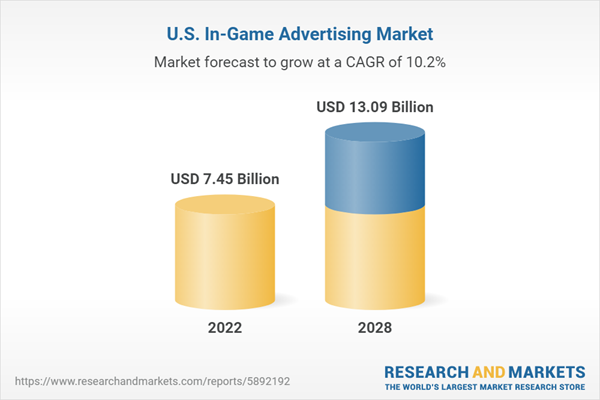
The United States in-game advertising market has experienced rapid growth and is projected to reach a value of $13.09 billion by 2028 from $7.45 billion in 2022, growing at a CAGR of 10.2% fueled by various factors such as the increasing popularity of esports among gaming audiences and the integration of native and non-disruptive ad formats.
United States In-Game Advertising Market Scope
In-game advertising includes a wide range of formats and strategies. One of the most common methods is integrating static or dynamic ads into the game environment. These formats can be billboards, posters, or even virtual product placements within the game. Such layouts are carefully designed to blend seamlessly with the game’s aesthetics, ensuring they don’t break the player’s immersion.
The growing interest in social and mobile games is expected to positively impact the expansion of the in-game advertising market share. Advertisements can be integrated into desktop and mobile games through in-game advertising through advertisements, clip art, billboards, and background screens.
United States In-Game Advertising Market Overview
United States in-game advertising market share will benefit from growing social and mobile gaming. Ads, cutscenes, billboards, and background graphics can be used to add ads to desktop and mobile games. Since these ads are not intrusive, players can experience the game smoothly. In-game ads are expected to have a stronger audiovisual impact and leave viewers with a positive and lasting product impression.
United States in-game advertising is driven by several factors, including lower ad costs, increased reach and ROI, fast integration, and clear ad setup in social games. In addition, the inclusion of trusted gaming payment methods will reduce fraud, which may drive the market during the forecast period. Market growth is fueled by a growing selection of free-to-play smartphone games that monetize through in-game ads.
Increasing time and the cost to develop new games and shorter product life cycles are expected to impede market growth. The growing reluctance of video game companies as a result of declining advertising revenues is expected to challenge the growth of the in-game advertising market. In addition, market growth can be hindered by the need to limit poorly designed advertisements with low consumer impact. The increase in irrelevant and intrusive advertisements related to online and social gaming is expected to adversely affect the United States in-game advertising market growth.
United States In-Game Advertising Market Drivers
The United States in-game advertising market is driven by various key factors such as the rising popularity of console gaming and esports. The game has come to become an accepted form of distraction, which draws a wide and diverse audience.
The United States in-game advertising market growth is likely to be boosted by the rising availability of high-speed internet connections and the significant increase in the number of smartphone users in the country. Additionally, a surging number of gamers in the country is expected to contribute to the expansion of the United States in-game advertising market during the forecast period.
In addition, the adoption of various gambling payment mechanisms will reduce fraud, which may increase the expansion of the United States in-game advertising market during the forecast period. In-game advertising is growing portions of free-to-play mobile games and is expected to boost industry growth. This service can earn extra money for game creators, which helps in the expansion of the industry.
The surging popularity of online and mobile games drives the expansion of the United States in-game advertising market during the forecast period. Game advertisers are using in-game advertisements to reach their target audience as more people are using online and mobile games for their entertainment.
United States In-Game Advertising Market Trends
A major trend in the United States in-game advertising market is the integration of native and non-disruptive ad formats which drives the industry’s growth during the forecast period. Advertisers are moving away from intrusive and disruptive ad placements that can negatively impact the gaming experience. Instead, they implement strategies to seamlessly incorporate advertising into the game environment, such as in-game billboards, product placements, and branded virtual products. This approach allows advertisers to capture players’ attention without causing significant disruption, improving both user experience and advertising effectiveness.
Additionally, the rise in influencer marketing collaborations fuels the growth of the United States in-game advertising market during the forecast period. Influencers and creators in the gaming community have gained significant influence and followers, making them valuable partners for advertisers. Brands are increasingly partnering with gaming influencers to promote their products or services through sponsored gameplay, branded content, or product reviews. This collaboration helps advertisers leverage the trust and loyalty built by influencers, which increases brand visibility and engagement with their target audience.
Furthermore, there is more emphasis on metrics and measurement in the United States in-game advertising market which drives the industry’s growth during the forecast period.
United States In-Game Advertising Market Challenges
A major challenge in the United States in-game advertising market is increasing competition among companies for the consumer’s attention in games may hinder the growth of the market during the forecast period.
Additionally, the difficulty of companies in targeting the right audience impedes the United States in-game advertising market expansion during the forecast period. Advertisers must ensure that their ads reach the targeted demographic of the gaming community. However, targeting a precise audience can be difficult due to the diversity and segmentation of the gaming market. Different types, platforms, and gaming habits require tailored approaches that can be difficult to achieve effectively.
Furthermore, the issue of advertisement intrusiveness may hinder the growth of the United States in-game advertisement market during the forecast period. The intrusiveness of advertisements is a major concern of the companies. It is very important to balance the integration of ads into games without compromising the user experience. Intrusive ads that interfere with gameplay or with immersion can cause players to react negatively and may create lack of interest for the game.
United States In-Game Advertising Market Opportunities
The United States in-game advertising market provides various opportunities to the companies to have a competitive edge in the market. Esports has grown significantly in the United States, with widespread recognition of professional games and attracting millions of viewers. This phenomenon offers advertisers a great opportunity to target their brand to popular eSports events, teams, or individual players. In-game advertising can take the form of sponsorship, branded content, or product placement within games, allowing companies to gain exposure and build brand loyalty among the passionate sports community.
The advantage of in-game advertising is that it offers different advertising options for brands to reach their target audience and increase engagement. While in-game and in-field billboards are frequently explored by many developers and publishers, they represent only a fraction of the ad formats available. There are 3 formats of in-game advertising: static ads, dynamic ads, and advergaming. Each format offers several different options to help businesses build and maintain brand awareness without disrupting the users’ experience.
Furthermore, robust infrastructure and technological upgradation provide opportunities to companies in the United States in-game advertising market. Advertisers are able to monetize in-game advertising due to the availability of high-speed internet connections and the rising penetration of streaming platforms in the country.
Key Attributes:
| Report Attribute | Details |
| No. of Pages | 77 |
| Forecast Period | 2022 – 2028 |
| Estimated Market Value (USD) in 2022 | $7.45 Billion |
| Forecasted Market Value (USD) by 2028 | $13.09 Billion |
| Compound Annual Growth Rate | 10.2% |
| Regions Covered | United States |
Competitive Landscape
Company Profiles: Detailed analysis of the major companies present in the United States in-game advertising market.
- Activision Blizzard, Inc.
- AppsFlyer Inc.
- Frameplay Corporation
- Pubfinity LLC
- Super League Gaming, Inc.
- Motive Interactive, Inc.
- MediaSpike, Inc.
- Electronic Arts Inc.
- Playwire LLC
- Bidstack Group PLC
Market Dynamics
Drivers
- Proliferation of mobile devices
- Increasing internet penetration
- Rising gaming audience
Market Trends & Developments
- Rising popularity of esports
- Growing influencer marketing collaborations
- Increasing popularity of console gaming
- Integration of native and non-disruptive ad format
- Growing popularity of video games
Challenges
- Increasing competition
- Difficulty in targeting the right audience
Impact of COVID-19 on United States In-Game Advertising Market
- Impact Assessment Model
- Key Segments Impacted
- Key Regions Impacted
Report Scope:
United States In-Game Advertising Market, By Type:
- Static Ads
- Dynamic Ads
- Advergaming
United States In-Game Advertising Market, By Platform:
- Smartphone/Tablet
- PC/Laptop
For more information about this report visit https://www.researchandmarkets.com/r/x022xb













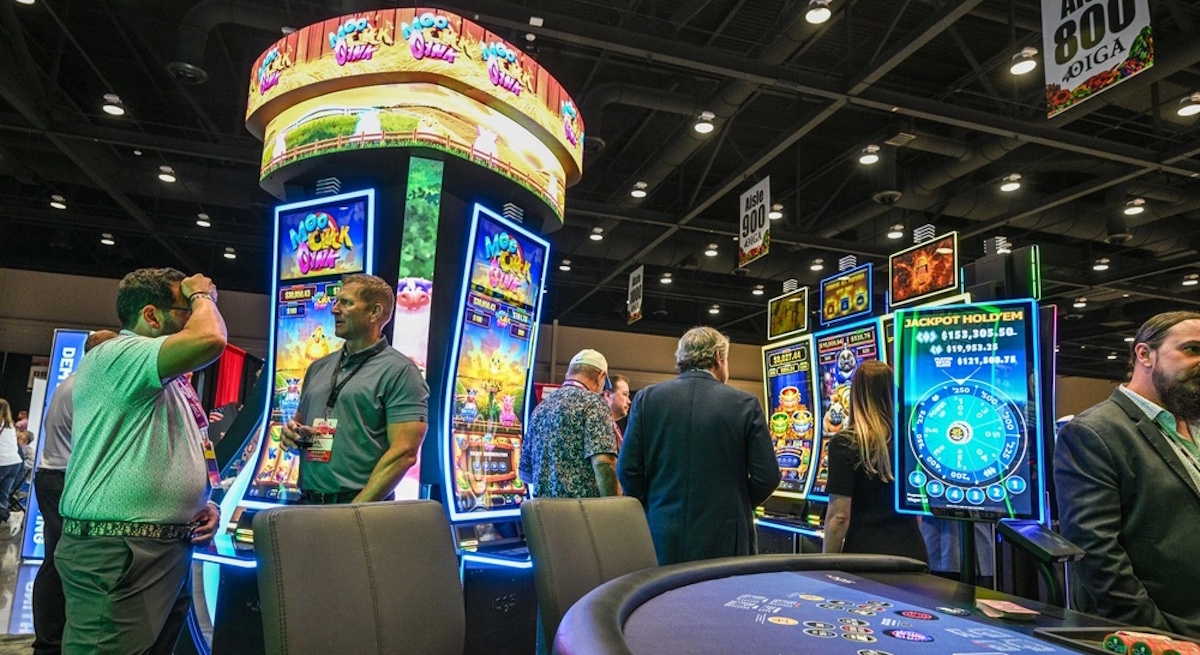
AGS today announced it will be attending the 2026 Oklahoma Indian Gaming Association (OIGA) Conference and Trade Show, taking place July 20-22 at the Oklahoma City Convention Center.
With deep seated roots in Oklahoma, where AGS was founded and where its primary warehouse and production facility is located, AGS is eager to return to OIGA with a continued commitment to serving the needs of tribal operators.
”Oklahoma is not just another dot on the map for us. It’s where we started and where we learned how to be a true gaming supplier,” said David Lopez, CEO and President of AGS. “You can’t fake it in Oklahoma. Tribal customers know the games, they know the math, they know service, and they know who shows up every time. That has been great for AGS, because it forced us to get better. It made us more disciplined while keeping us honest. We’ve grown a lot since then – Class III, tables, interactive, offices all over the place – but our history in Oklahoma and Class II is not something we moved on from. It’s part of the AGS engine.”
The Company’s product showcase will include the large-format, specialty cabinet Spectra SL75+ . Designed to support the entire Spectra game library, including premium titles when leased, Spectra SL75+ gives operators added flexibility to mix and match content to fit their unique casino floor.
The cabinet acts as the perfect canvas to highlight five new titles including Rakin’ Bacon! Fu Zhu Bao Bao and Rakin’ Bacon! 5 Prosperity Pots, Cash Carriage Looter, Da Da Luo Boom, and Frightful Fortunes Popping Pumpkins.
AGS’ high-performing mechanical stepper cabinet Revel® – available in both Class II and Class III – is redefining the category by blending traditional mechanical gameplay with video-inspired features, creating an engaging experience for all player types. The latest Revel portfolio includes Crystal Reels® and Royal Reels®, available in both Class II and Class III. Expanding the lineup, Jackpot Legends – a new cash-on-reels title featuring an exciting Jackpot Bonus Wheel – and So Hot Cash®, which delivers classic stepper gameplay and can be linked to the So Hot Grand progressive, are set to debut in Class III later this year, with Class II launches following in 2027.
On the table side, AGS’ award-winning progressive platform Bonus Spin Xtreme® (BSX) has been hugely successful in turning small side bets into massive jackpots throughout the tribal casino market. Linking all table games – from the pit to the poker room – BSX has been elemental in allowing operators to offer the flexibility at the tables to make these life-changing wins become more common.
AGS’ participation in OIGA reflects the Company’s history in Oklahoma and its longstanding commitment to the tribal gaming community. More than a trade show presence, OIGA is an opportunity for AGS to reconnect with valued partners, strengthen relationships, and reaffirm its respect for the Oklahoma Tribes that have played such an important role in the Company’s growth.
Attendees are invited to visit AGS at booth 732 throughout the show.
For more information, visit newsroom.playags.com.
©2026 AGS LLC. All® notices signify marks registered in the United States. All notices signify trademarks which are currently not registered on any country-wide basis. Products referenced herein are sold by AGS LLC or its affiliates.
The post AGS Reflects on Their Class II Roots at OIGA 2026 appeared first on Americas iGaming & Sports Betting News.
Gambling in the USA
UpUp Casino Opens to U.S. Players with Premium Games Free, Faster Redemptions, and a Player-first Rewards Program
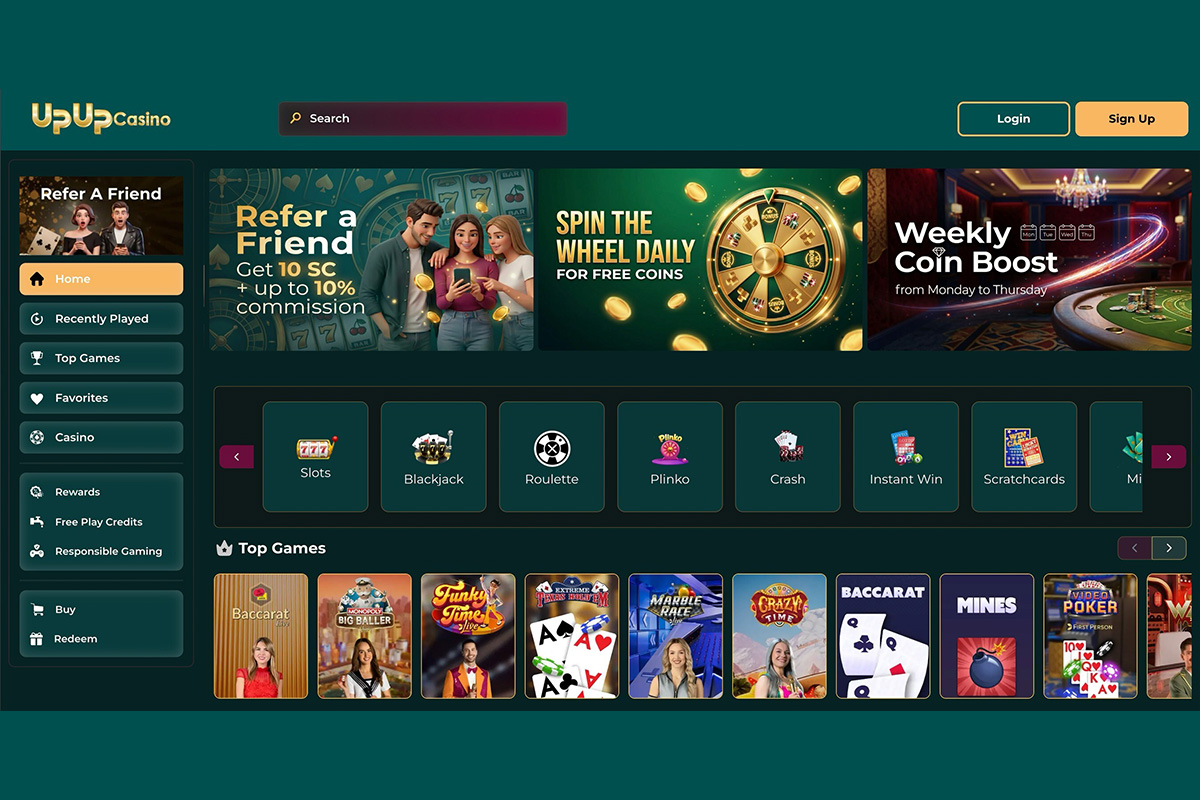
UpUp Casino, a free-to-play social sweepstakes platform built on player-first principles, officially launched in the US at upupcasino.com. The platform debuts with a premium game library, independently audited systems, and a legally compliant sweepstakes model that never requires a purchase or deposit to play or redeem real cash prizes.
UpUp Casino features a diverse collection of social and live games from globally recognised studios that power leading international iGaming brands — premium titles that are traditionally paid-to-play, now available free within the UpUp Casino sweepstakes experience. The platform operates using two virtual currencies: Gold Coins (GC) for entertainment gameplay and Sweep Coins (SC), which can be redeemed for real cash prizes.
Built around a player-first rewards experience, UpUp Casino offers every new player a welcome gift upon signup, alongside a wide range of ongoing promotions and benefits. Players can enjoy daily rewards, weekly bonuses, coin package bonuses, limited-time coin boosts, refer-a-friend incentives, and more. The platform’s VIP program further enhances the experience with boosted promotions, priority support, and exclusive tier-based rewards.
All eligible SC balances can be redeemed for real cash prizes through a redemption process designed for speed, security, and low minimum thresholds — ensuring rewards remain accessible to players.
UpUp Casino has been independently audited for security and fair-play integrity prior to launch and operates in compliance with U.S. sweepstakes promotional regulations. Player accounts are protected through industry-standard encryption, identity verification systems, and dedicated 24/7 customer support staffed by real people.
“Players deserve more — premium games without paywalls, faster redemptions, better rewards, and support from real people who genuinely care. We built UpUp Casino around those principles. This is what a modern player-first sweepstakes casino should look like,” said Angelina Upton, Founder of UpUp Casino.
The post UpUp Casino Opens to U.S. Players with Premium Games Free, Faster Redemptions, and a Player-first Rewards Program appeared first on Americas iGaming & Sports Betting News.

The meteoric rise of prediction markets in the United States has sparked intense discussions among industry experts, legal scholars, and operators alike. Driven by high-profile political cycles and cultural events, these platforms have evolved from niche academic experiments into massive financial ecosystems.
But as the volume of activity surges, so does regulatory scrutiny. Understanding the current state of prediction markets, the complex regulatory landscape, and what this shifting paradigm means for the broader future of gambling and sports betting in America is essential for any industry stakeholder.
Understanding Prediction Markets
Prediction markets are specialized platforms that enable users to buy and sell shares based on the outcomes of future events. These events span a massive spectrum, including:
- Political Elections: Predicting presidential race outcomes, congressional majorities, or policy decisions.
- Macroeconomic Indicators: Betting on federal interest rate hikes, inflation numbers, or jobs reports.
- Pop Culture & Sports: Forecasting award show winners, box office performance, or championship outcomes.
Unlike traditional sportsbooks that rely on oddsmakers setting a fixed price, prediction markets operate like a stock exchange. They aggregate information, sentiment, and capital from a diverse pool of participants. This “wisdom of the crowd” often results in highly accurate, real-time forecasting. However, because these platforms blur the lines between financial derivatives and traditional wagering, their legal environment remains incredibly complex and highly contentious.
The Regulatory Battleground
The legal framework for prediction markets in the U.S. is currently in a state of flux, characterized by competing jurisdictions and conflicting viewpoints between federal oversight bodies and state regulators.
US Prediction Markets Hierarchy
- Federal Regulation (CFTC): Pushes for uniform federal rules, viewing events as commodities/derivatives.
- State Regulation (IL, NJ, etc.): Aims to protect local consumer bases and secure state tax revenue.
1. Federal vs. State Regulation
The Commodity Futures Trading Commission (CFTC) views event contracts as derivatives, asserting its role as the critical authority tasked with establishing a uniform, nationwide regulatory framework. However, individual states like New Jersey and Illinois are also aggressively asserting their authority. This dual-layered pressure creates friction, potential legal conflicts, and compliance confusion for platform operators.
2. Taxation Concerns
States have grown accustomed to capturing substantial tax revenue from legalized sports betting and iGaming. As users migrate toward prediction platforms—some of which operate in gray areas or outside traditional state frameworks—local regulators worry about losing out on vital tax income. This financial anxiety is fueling a legislative push for stricter, localized state oversight.
3. Market Integrity and Security
With any high-stakes betting or trading operation, the integrity of the underlying market is paramount. Regulators and critics frequently raise concerns regarding:
- Insider Trading: Participants leveraging non-public information to profit off specific policy or corporate outcomes.
- Market Manipulation: Well-capitalized individuals or “whales” artificially moving the price of a contract to influence public perception or swing a market.
- Oversight Mechanisms: The urgent need for robust, real-time surveillance tools to detect and mitigate fraudulent trading activity.
Expert Insights on the Shifting Landscape
During our recent panel discussion, industry leaders shared their frontline perspectives on how these market forces are colliding.
The Current State of Affairs
Experts agree that the current legal landscape is chaotic but uniquely ripe with opportunity. As gaming attorney Jeremy Kleiman noted during the meetup:
“The legal landscape right now is a mess.”
Yet, history shows that this exact brand of regulatory uncertainty often leaves the door wide open for innovative, agile market solutions to emerge and establish a foothold before formal guardrails are built.
The Role of Technology and Emerging Platforms
Advancements in trading technology are rapidly reshaping user expectations. Regulated platforms like Kalshi and decentralized alternatives like Polymarkets are experiencing massive surges in popularity. This growth is particularly prominent among younger, tech-savvy users who gravitate toward their sleek user-friendly interfaces, low-friction trading structures, and the transparent nature of order books over traditional sportsbook vigs.
Political Dynamics
The future of the industry is deeply intertwined with Washington politics. Strategic advisor Bill Pascrell III emphasized the significance of political dynamics in shaping upcoming legislation. The White House’s backing of the CFTC’s regulatory push is a massive factor that could dictate the trajectory, speed, and severity of prediction market legislation over the next few years.
Looking Ahead: What Shapes the Future?
As the conversation surrounding event wagering matures, three core factors will dictate which operators thrive and how the broader market stabilizes:
- Increased Regulatory Clarity: While the current friction is difficult to navigate, clear and predictable rules from federal and state authorities will ultimately benefit the market by unlocking institutional investment and corporate innovation.
- Consumer Demand for Transparency: Modern users expect deep transparency. Platforms that prioritize clear contract rules, predictable settlement guidelines, and proactive user education will easily gain a competitive edge over opaque competitors.
- The Power of Data Analytics: Data utilization will be the ultimate differentiator. Operators that successfully leverage advanced data analytics to improve market liquidity, enhance user experiences, and ensure secure outcomes will lead the next generation of wagering.
Conclusion
The U.S. prediction market landscape is at a historic turning point. As regulations mature and consumer preferences shift away from passive betting toward active, knowledge-based trading, the industry must remain incredibly agile. For operators, investors, and participants alike, staying informed on these fast-moving regulatory and technological shifts is no longer optional—it is the only way to successfully navigate this complex, high-reward frontier.
Watch the latest iGaming Exchange: Europe & Americas – Virtual Meetup below
Frequently Asked Questions
What exactly are prediction markets?
Prediction markets are exchange-style platforms where users buy and sell shares on the outcome of future real-world events. The market price reflects the crowd’s real-time probability assessment of that event occurring.
How are prediction markets currently regulated in the U.S.?
Regulation is highly fragmented. The federal CFTC treats these markets as commodity or derivatives exchanges, while various state gaming commissions attempt to regulate or restrict them under local sports betting and gambling laws.
Will prediction markets replace traditional sports betting?
Rather than completely replacing sportsbooks, prediction markets are expanding the pie. They offer a highly dynamic, peer-to-peer alternative that appeals to financial traders and policy enthusiasts, forcing traditional betting operators to innovate their technology and payout structures.
The post The US Prediction Markets Landscape: Navigating Opportunities and Challenges appeared first on Americas iGaming & Sports Betting News.

-

 Compliance Updates5 days ago
Arizona Department of Gaming Issues Cease-and-Desist Orders to Multiple Operators Linked to Underage Gambling and Illegal Activity
-
 Latest News7 days ago
ELA Games releases Flames Fruits Frenzy Hold and Win slot
-
Latest News7 days ago
PG Soft appoints Hugo Baungartner as General Manager LatAm
-
Compliance Updates6 days ago
KONAMI GROUP’s Konami Gaming Inc. First to Submit Manufacturer License Application in Japan’s Emerging IR Market
-
Canada7 days ago
Canada’s Safer Gambling Gap: Why Market Success Doesn’t Always Equal Player Safety
-
Latest News7 days ago
Tom Horn Gaming ships Royal Ruby FeatureStorm slot worldwide on 14 July 2026
-
Latest News7 days ago
Booming Games launches Fish Tales: Double Catch Max Scatter
-
Latest News7 days ago
BC.GAME names Guillermo Ochoa brand ambassador for Mexico push