Latest News
Global Betting on Super Bowl Set To Reach $20B This Year – Online Sportsbook and Casino Cloudbet Estimates $500M could Be Bet in Cryptocurrency

When the Chiefs and Eagles face off in the Supe Bowl this Sunday in the United States, sportsbooks around the world will be taking bets on everything from the outcome of the game to the time it takes country star Chris Stapleton to sing the National Anthem. Cloudbet, an online casino and sportsbook specializing in betting with cryptocurrency, estimates that by the time the game is over, those bets will add up to upwards of 20 billion US dollars in total value.
“Several states across America have legalized sports betting over the past few years, pushing trade groups there to estimate at least $16B in US turnover alone for the 2023 Super Bowl”, said a Cloudbet spokesperson. “We see the US market making up about two-thirds of Super Bowl betting, meaning at least $20B in worldwide turnover is entirely possible”.
Of that $20B, Cloudbet sees a potential for $500M or more to be bet in cryptocurrency. “We’re watching two trends happening across crypto that predict a big Super Bowl bet total for crypto this year”, the spokesperson said. “First, there is the general, growing adoption of cryptocurrency as part of corporate and personal portfolios around the world. And second, record user growth on our own platform last year points to a growing appetite for crypto adopters to not only bet on crypto, but to bet with crypto as well”.
Gambling advertising during sports events has also impacted growth, according to Cloudbet. “We don’t currently pay for broadcast advertising or sponsorship during sports, because we prefer to put that money into attracting users through better odds. But the truth is those ads work, and organic traffic to our site continues to rise as more and more people search for where they can bet on sports online, and where they can use crypto to place bets as well”.
With at least 100M global viewers tuning into the Super Bowl this year, some sportsbook advertisers are expected to spend heavily on ads during the game. That will mean a lot of interested sports fans searching “where to bet online” on Sunday. If even a relatively small percentage of those create new accounts and stick with betting into next season, the 2024 global totals could be much, much higher.
Powered by WPeMatico


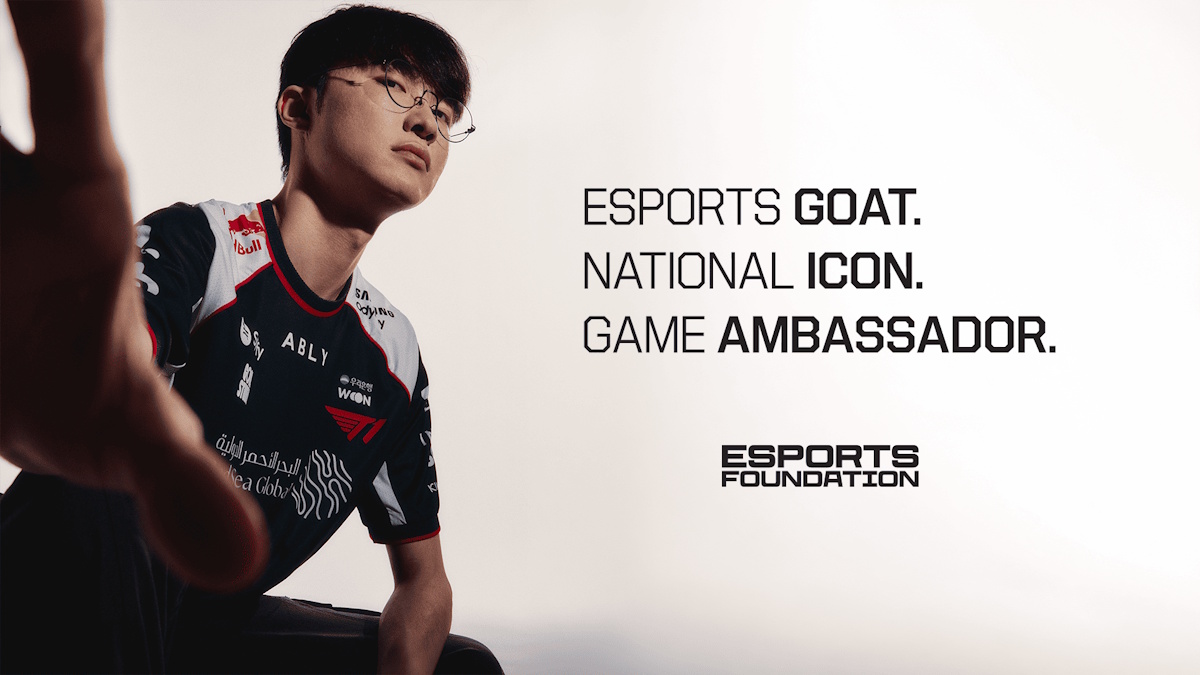
Lee “Faker” Sang-hyeok joins Cristiano Ronaldo and Magnus Carlsen in the Esports Foundation’s Ambassador Program.
The Esports Foundation (EF) has appointed Lee “Faker” Sang-hyeok as a Game Ambassador for the Esports World Cup (EWC) and Esports Nations Cup (ENC) through 2028, the organization said on July 15, 2026 in a statement issued from Riyadh and Paris.
EF said Faker joins Cristiano Ronaldo, listed as the Foundation’s Global Ambassador, and Magnus Carlsen as part of the Esports Foundation Ambassador Program. The Foundation said Faker will represent “the perspective of esports players” across its international events, athlete initiatives, media engagements and leadership forums.
“You can’t talk about esports without mentioning Faker. He is the defining athlete of competitive gaming: a champion whose excellence, discipline and longevity have inspired an entire generation,” said Ralf Reichert, Chief Executive Officer of the Esports Foundation. “As our Game Ambassador, Faker represents something fundamental to the Ambassador Program: esports creates its own global sporting icons. Across EWC, ENC and NGSC, he will help ensure that the players who built this sport have a voice in shaping where it goes next.”
Faker said: “Competition has shaped my life, and I am proud to join the Esports Foundation as Game Ambassador. I want to continue competing for the biggest titles with T1 while representing the players and fans who have helped esports grow worldwide. Through the Esports World Cup, Esports Nations Cup and the Foundation’s wider platforms, I hope to inspire the next generation to pursue excellence, remain resilient and believe in how far competitive gaming can take them. There is still much more to achieve.”
EF highlighted Faker’s competitive record, describing him as a six-time League of Legends World Champion, EWC 2024 winner, two-time MSI champion and ten-time domestic champion with T1. The Foundation also said Faker became the first esports athlete to receive the Blue Dragon Medal in 2026, describing it as the Republic of Korea’s highest sporting honor awarded by President Lee Jae-myung.
The post Esports Foundation names Faker Game Ambassador for EWC and ENC through 2028 appeared first on EE Gaming | Global iGaming & Tech Intelligence Hub.

Midnite has agreed a partnership with Middlesbrough FC that will see the UK bookmaker become the club’s principal partner and front-of-shirt sponsor for the 2026/27 campaign, which Middlesbrough describes as its landmark 150th season.
The companies announced the deal alongside a fan activation at Riverside Stadium on Thursday, July 9, branded “This Season’s On Us”. The initiative offered supporters prizes including 2026/27 season tickets, 2026/27 shirts, match tickets, or a £25 club shop voucher, with fans required to answer Middlesbrough trivia and complete a football challenge.
Middlesbrough former players Craig Hignett and David Wheater attended the event, and, according to the company, took bonus attempts on behalf of participants who missed out.
Andrew Mook, Midnite’s Head of Brand Marketing, said:
“Middlesbrough have a storied history and we’re delighted to announce this partnership during such a monumental year with the club celebrating their 150th anniversary.
“It was great to see so many Middlesbrough fans at the “This Season’s On Us” activation, we hope they enjoyed taking part and meeting club legends, with David Wheater hitting top bins on several occasions and allowing fans to win big with season tickets.
“We can’t wait to get to Riverside Stadium in August to kick-off a new season and we’re excited to say that we have plenty of new and captivating campaigns planned.”
Lee Fryett, Middlesbrough FC Chief Commercial Officer, added:
“We’re delighted to welcome Midnite as our new Principal Partner.
“We’re looking forward to working closely with Midnite to develop engaging campaigns, content and unique experiences that bring our fans even closer to the club.
“We’re confident this partnership will provide real value for our supporters while supporting our ambitions both on and off the pitch.”
The post Midnite signs as Middlesbrough FC principal partner for 2026/27 season appeared first on EE Gaming | Global iGaming & Tech Intelligence Hub.

ThrillTech has been awarded a Gaming-Related Supplier licence by the Alcohol and Gaming Commission of Ontario (AGCO), clearing the company to launch in Ontario’s regulated market.
The licence allows ThrillTech to deploy its opt-in side bet jackpots technology with regulated online casino, sports betting and lottery operators across the province.
Benjamin Bradtke, Co-Founder of ThrillTech, said: “Securing our AGCO licence is a major step in our mission to transform how jackpots are delivered at scale across regulated markets. This latest certification is testament to our robust technology and trusted compliance frameworks, allowing us to continue our global growth trajectory. We are thrilled to bring our proven, compliant jackpot technology to Ontario, empowering locally licensed operators to uplift revenue without cannibalising existing spend.”
The company said its “ThrillPots” mechanics sit as an independent, player-funded side bet and do not alter the underlying game’s return-to-player mathematics.
ThrillTech said the Ontario approval enables its existing multinational partners that also operate in the province to launch its side bet jackpots locally, while it also holds talks with potential new operator partners. The company lists its regulated footprint as including the United Kingdom, Sweden, the Netherlands, Romania, Malta, Gibraltar, Brazil and Peru.
The post ThrillTech secures AGCO supplier licence for Ontario launch appeared first on EE Gaming | Global iGaming & Tech Intelligence Hub.

-

 Compliance Updates5 days ago
Arizona Department of Gaming Issues Cease-and-Desist Orders to Multiple Operators Linked to Underage Gambling and Illegal Activity
-
 Latest News7 days ago
ELA Games releases Flames Fruits Frenzy Hold and Win slot
-
Latest News7 days ago
PG Soft appoints Hugo Baungartner as General Manager LatAm
-
Compliance Updates6 days ago
KONAMI GROUP’s Konami Gaming Inc. First to Submit Manufacturer License Application in Japan’s Emerging IR Market
-
Canada7 days ago
Canada’s Safer Gambling Gap: Why Market Success Doesn’t Always Equal Player Safety
-
Latest News7 days ago
Booming Games launches Fish Tales: Double Catch Max Scatter
-
Latest News7 days ago
Tom Horn Gaming ships Royal Ruby FeatureStorm slot worldwide on 14 July 2026
-
Latest News7 days ago
BC.GAME names Guillermo Ochoa brand ambassador for Mexico push