Latest News
Deep Industry Survey: 86% Clients Highly Satisfied with the SOFTSWISS Casino Platform

Transparent cooperation, top service level, simple and quick communication and variety of game providers are the most crucial characteristics for choosing an iGaming provider in 2022. These are the insights discovered during a deep client research held for SOFTSWISS, a leading innovative tech company for iGaming.
The survey was conducted by the marketing research leader Kantar Ukraine on behalf of SOFTSWISS to gain a deeper knowledge of the iGaming industry, figure out the most significant criteria for сhosing a casino platform provider, and gauge the level of client satisfaction with the SOFTSWISS Casino Platform compared to competitor products.
The business research covering the period from July to October 2022 is a continuation of the last year’s similar undertaking.
WINNING IGAMING PROVIDER PORTRAIT
The respondents point out that in 2022 the most important characteristics of an iGaming partner are the following:
- Transparent cooperation
- Services and products that meet the needs of your company
- Support in income generation activities
‘Provider is truly your financial partner today’ has climbed up the importance charts. This time, 93% of operators voted for the importance of this criterion against 63% in 2021.
The survey results demonstrate that ‘Prompt resolution of tech issues and response’ and ‘Flexibility when discussing the terms of cooperation’ remained unshakable.
As for the personal touch aspects impacting the decision-making process, SOFTSWISS clients highlighted:
- Provides top service level
- Simple and quick communication with managers
The last year’s medium priority ‘Attentive attitude to each client’ criterion moved to the higher priority section.
Same as in 2021, the lowest priority is still given to such attributes as an iGaming leader status, positive effect of cooperation on the operator image, and provider influence on the entertainment and gambling industry development.
According to the research, every second client has been working with SOFTSWISS for more than 3 years, and the company is generally described as a long-term partner with expertise in the entertainment industry and deep understanding of the market.
Vitali Matsukevich, Chief Operating Officer at SOFTSWISS, comments on the survey results: “The shift in operator preferences towards flexibility in cooperation, business profitability, and high-quality communication demonstrates that a high-end software offering is not enough to be No.1 iGaming provider. Operators require more high-touch engagement and strategic interaction in partnership. That’s what we are focused on. The SOFTSWISS team appreciates all operators for choosing us as a business partner. In 2023, we’ll continue to give our clients the confidence, security and reliability they need to grow their business.”
CLIENT OPINION: СASINO PLATFORM CHARACTERISTICS
Another part of the survey was dedicated to exploring top priority features for choosing an online casino platform – the core product for launching an iGaming project. Respondents noted the following crucial characteristics:
- Variety of game providers
- Flexibility of bonus settings
- Player reporting
- Support for various payment system
- Promo activity settings
The ‘Payment systems management’ and ‘Supported currencies’ criteria remained equally important for operators this year. However, respondents gave more prominence to financial reporting and licensing, mainly due to the growing number of regulated markets. Since this trend is expected to grow even stronger in the future, licensing will also continue to gain its score as it carries significant competitive advantages for industry players.
Placed at the lower end of the scale, game descriptions appear to be less important for operators in 2022.
SOFTSWISS VS IGAMING MARKET DEMANDS
In assessing their satisfaction with the SOFTSWISS Casino Platform, operators highlighted its technical and functional benefits. 86% of the respondents gave positive feedback of 7-10 points, while 14% of operators stayed below 7. In total, the platform scored 7.6 points out of 10, which is 0.2 points above the 2021 result.
According to the survey, clients choose the SOFTSWISS Casino Platform for its expanded roster of game providers, licences, and supported currencies.
Analysing the survey results Darya Avtukhovich, Head of SOFTSWISS Casino Platform, summarises: “To date, the team behind the SOFTSWISS Casino Platform has launched almost 400 successful projects, which makes this product the biggest and most meaningful offering in the company’s portfolio. Since 2021, the number of highly satisfied operators has increased. It’s a strong drive for the team to develop new breakthrough product updates and raise the satisfaction level to new heights.”
Speaking of the service support level, SOFTSWISS has outperformed its competitors by 1.6 points on a 10-point scale. Gaining 0.4 points year-on-year, this figure is an important performance indicator for SOFTSWISS as the team aims to deliver the best-in-class client service.
Clients emphasise that one of the most significant SOFTSWISS advantages compared to competitors is simple and quick communication with business account managers.
KEY TAKEAWAYS
The results of the survey show that client priorities in choosing a business partner and casino platform products are changing following general business and industry trends. Considerably more prominence is now given to trust-based and quick communication, flexibility in partnership as well as unwavering commitment to top service level. As for product expectations, operators seek diversity in game portfolios, gamification tools and features, availability of various payment systems, and deep analytics in finance and customer behaviour.
Summarising the SOFTSWISS results, the increase of the overall client satisfaction score is the most important measure of consistent growth across major performance characteristics. Partnership with SOFTSWISS is associated with confidence, security and reliability.
“In order to strengthen the SOFTSWISS brand position as a leading tech company for iGaming, we need to foresee tomorrow’s market needs and requirements. Client surveys form the basis for achieving this goal. The results of the 2022 survey show that operator expectations are changing rapidly. We are proud that this year we’ve managed to meet client expectations, and increased their satisfaction level. Doing deep marketing research is becoming our annual tradition and we’ll continue to share industry insights with the market in the future”, comments Valentina Bagniya, Chief Marketing Officer at SOFTSWISS.
About SOFTSWISS
SOFTSWISS is an international iGaming company supplying certified software solutions for managing gambling operations. The expert team, which counts 1,500+ employees, is based in Malta, Poland, Georgia, and Belarus. SOFTSWISS holds a number of gaming licences and provides one-stop-shop iGaming software solutions. The company has a vast product portfolio, including the Online Casino Platform, the Game Aggregator with thousands of casino games, the Affilka affiliate platform, the Sportsbook Platform and the Jackpot Aggregator. In 2013, SOFTSWISS was the first in the world to introduce a bitcoin-optimised online casino solution.
Powered by WPeMatico


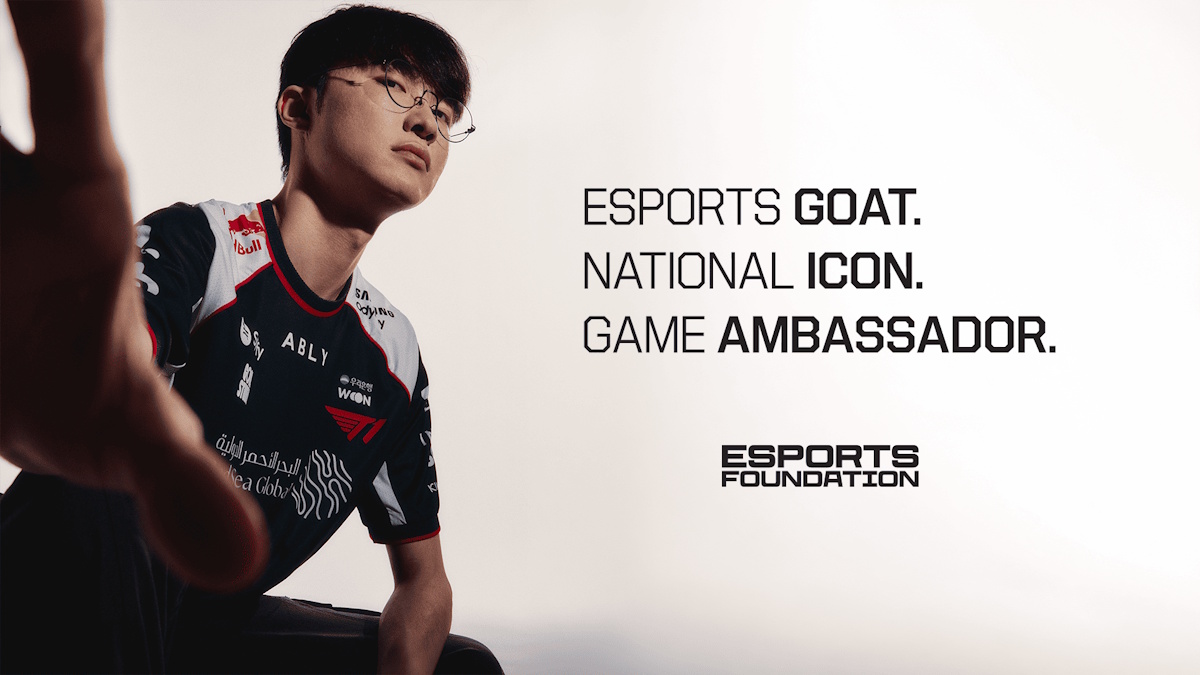
Lee “Faker” Sang-hyeok joins Cristiano Ronaldo and Magnus Carlsen in the Esports Foundation’s Ambassador Program.
The Esports Foundation (EF) has appointed Lee “Faker” Sang-hyeok as a Game Ambassador for the Esports World Cup (EWC) and Esports Nations Cup (ENC) through 2028, the organization said on July 15, 2026 in a statement issued from Riyadh and Paris.
EF said Faker joins Cristiano Ronaldo, listed as the Foundation’s Global Ambassador, and Magnus Carlsen as part of the Esports Foundation Ambassador Program. The Foundation said Faker will represent “the perspective of esports players” across its international events, athlete initiatives, media engagements and leadership forums.
“You can’t talk about esports without mentioning Faker. He is the defining athlete of competitive gaming: a champion whose excellence, discipline and longevity have inspired an entire generation,” said Ralf Reichert, Chief Executive Officer of the Esports Foundation. “As our Game Ambassador, Faker represents something fundamental to the Ambassador Program: esports creates its own global sporting icons. Across EWC, ENC and NGSC, he will help ensure that the players who built this sport have a voice in shaping where it goes next.”
Faker said: “Competition has shaped my life, and I am proud to join the Esports Foundation as Game Ambassador. I want to continue competing for the biggest titles with T1 while representing the players and fans who have helped esports grow worldwide. Through the Esports World Cup, Esports Nations Cup and the Foundation’s wider platforms, I hope to inspire the next generation to pursue excellence, remain resilient and believe in how far competitive gaming can take them. There is still much more to achieve.”
EF highlighted Faker’s competitive record, describing him as a six-time League of Legends World Champion, EWC 2024 winner, two-time MSI champion and ten-time domestic champion with T1. The Foundation also said Faker became the first esports athlete to receive the Blue Dragon Medal in 2026, describing it as the Republic of Korea’s highest sporting honor awarded by President Lee Jae-myung.
The post Esports Foundation names Faker Game Ambassador for EWC and ENC through 2028 appeared first on EE Gaming | Global iGaming & Tech Intelligence Hub.

Midnite has agreed a partnership with Middlesbrough FC that will see the UK bookmaker become the club’s principal partner and front-of-shirt sponsor for the 2026/27 campaign, which Middlesbrough describes as its landmark 150th season.
The companies announced the deal alongside a fan activation at Riverside Stadium on Thursday, July 9, branded “This Season’s On Us”. The initiative offered supporters prizes including 2026/27 season tickets, 2026/27 shirts, match tickets, or a £25 club shop voucher, with fans required to answer Middlesbrough trivia and complete a football challenge.
Middlesbrough former players Craig Hignett and David Wheater attended the event, and, according to the company, took bonus attempts on behalf of participants who missed out.
Andrew Mook, Midnite’s Head of Brand Marketing, said:
“Middlesbrough have a storied history and we’re delighted to announce this partnership during such a monumental year with the club celebrating their 150th anniversary.
“It was great to see so many Middlesbrough fans at the “This Season’s On Us” activation, we hope they enjoyed taking part and meeting club legends, with David Wheater hitting top bins on several occasions and allowing fans to win big with season tickets.
“We can’t wait to get to Riverside Stadium in August to kick-off a new season and we’re excited to say that we have plenty of new and captivating campaigns planned.”
Lee Fryett, Middlesbrough FC Chief Commercial Officer, added:
“We’re delighted to welcome Midnite as our new Principal Partner.
“We’re looking forward to working closely with Midnite to develop engaging campaigns, content and unique experiences that bring our fans even closer to the club.
“We’re confident this partnership will provide real value for our supporters while supporting our ambitions both on and off the pitch.”
The post Midnite signs as Middlesbrough FC principal partner for 2026/27 season appeared first on EE Gaming | Global iGaming & Tech Intelligence Hub.

ThrillTech has been awarded a Gaming-Related Supplier licence by the Alcohol and Gaming Commission of Ontario (AGCO), clearing the company to launch in Ontario’s regulated market.
The licence allows ThrillTech to deploy its opt-in side bet jackpots technology with regulated online casino, sports betting and lottery operators across the province.
Benjamin Bradtke, Co-Founder of ThrillTech, said: “Securing our AGCO licence is a major step in our mission to transform how jackpots are delivered at scale across regulated markets. This latest certification is testament to our robust technology and trusted compliance frameworks, allowing us to continue our global growth trajectory. We are thrilled to bring our proven, compliant jackpot technology to Ontario, empowering locally licensed operators to uplift revenue without cannibalising existing spend.”
The company said its “ThrillPots” mechanics sit as an independent, player-funded side bet and do not alter the underlying game’s return-to-player mathematics.
ThrillTech said the Ontario approval enables its existing multinational partners that also operate in the province to launch its side bet jackpots locally, while it also holds talks with potential new operator partners. The company lists its regulated footprint as including the United Kingdom, Sweden, the Netherlands, Romania, Malta, Gibraltar, Brazil and Peru.
The post ThrillTech secures AGCO supplier licence for Ontario launch appeared first on EE Gaming | Global iGaming & Tech Intelligence Hub.

-

 Compliance Updates5 days ago
Arizona Department of Gaming Issues Cease-and-Desist Orders to Multiple Operators Linked to Underage Gambling and Illegal Activity
-
 Latest News7 days ago
ELA Games releases Flames Fruits Frenzy Hold and Win slot
-
Compliance Updates6 days ago
KONAMI GROUP’s Konami Gaming Inc. First to Submit Manufacturer License Application in Japan’s Emerging IR Market
-
Latest News7 days ago
PG Soft appoints Hugo Baungartner as General Manager LatAm
-
Canada7 days ago
Canada’s Safer Gambling Gap: Why Market Success Doesn’t Always Equal Player Safety
-
Latest News7 days ago
Tom Horn Gaming ships Royal Ruby FeatureStorm slot worldwide on 14 July 2026
-
Latest News7 days ago
Booming Games launches Fish Tales: Double Catch Max Scatter
-
Latest News7 days ago
BC.GAME names Guillermo Ochoa brand ambassador for Mexico push