Latest News
Stride launches challenger platform to drive participation in horse racing ownership and wider fan engagement in the sport


Backed and developed by SportCaller founders, new syndication platform for racing outlines next-gen features and streamlined admin & comms from one responsive digital hub
Stride, the next-generation horse racing platform that truly democratises Flat racehorse syndication and deepens the ownership experience, has been launched to bring new levels in value and engagement for key stakeholders who represent the lifeblood of the sport.
Stride plans to become the premier racing communications platform that both centralises and optimises communications between syndicate owners and their respective horses, trainers, stable support staff, jockeys and racecourses. Its aim is to support, illuminate and enrich the experience of owning a thoroughbred on the journey from the purchase ring to the winner’s enclosure.
The Stride team brings together a host of familiar faces and heavy hitters from the domains of sport, racing, betting and fan-engagement technology for a clearer take on fractional ownership that delivers increased engagement against the backdrop of a progressively homogenised digital-management landscape for horse racing.
Cillian Barry and Eugene Cosgrove, founders of SportCaller – the market-leading free-to-play sports games supplier whose cornerstone clients and games were horse racing-focussed – take the reins as Chairman and Head of Product respectively, while veteran COO Donal Browne has been recruited to steward day-to-day business operations for a venture whose horses will initially be placed with Group 1-winning trainer Joseph O’Brien, whose talented string is housed at picturesque Piltown in County Kilkenny, Ireland.
However, Stride’s CEO and prime mover is former Munster and Leicester rugby star Johne Murphy, who has proven his equine and syndicate management muscle in recent years with the formation of both Rugby & Racing and Thoroughbred Racing Syndicates, the latter also attached to the O’Brien yard, whose successful track record for buying and selling equine talent and exploiting a primed bloodstock market created a dream foundation on which to build Stride’s subsequent flagship brand.
As an eloquent case in point, the business sold five of the six horses which were bought to race on the Flat in 2021 for close to seven figures, giving backers a 27% return on their investment. Stride is also part of the Techstars Sports Accelerator, a global network that assists entrepreneurial ventures in succeeding over the long-term. Founded in 2006, Techstars has now invested in more than 3,000 companies and today has a market cap of $75 billion.
Murphy continues in his multi-faceted role, also acting as Stride’s spokesperson and a passionate rudder for both thoroughbred and syndicate recruitment.
Murphy commented: “Stride is more than a responsive platform for buying and selling shares in elite-level racehorses. It’s also a way for racing to reconnect, engage and retain its most vital stakeholders: passionate owners who support the sport through times good and bad. Our fractional ownership model readily articulates the merits over micro-ownership and its associated cautionary tales, and also enables our members to choose a portfolio of racehorses that elevates enjoyment and mitigates downside at a challenging economic time across most sectors. Investors can now research, buy, manage and watch their stable of syndicated thoroughbreds at a fraction traditional ownership spends, with zero hidden costs or clawbacks. The price you pay for your share in the syndicate is the sole fee you’ll ever be asked for.
“But our unique Stride platform and its underpinning technology is also here to help owners seamlessly experience racehorse ownership at the click of a button, wherever their busy lives take them on the map. That can mean anything from what you’d expect in the simple joys of sharing the risk with friends and enjoying the raceday thrills and spills; to what you might not in the form of enhanced stable-engagement tools, or regular re-evaluations for profitable resale opportunities. No-one’s got a keener eye for acquiring and training top-class talent than Joseph, so we can’t wait to see how our first syndicated fare over the 2023 season ahead.”
“Stable visits and racecourse privileges are par for the course, alongside the clubbable craic with your family, mates and members. But it’s a long time between drinks in racing! And in racehorse ownership there should be so much more to enjoy, evaluate and benefit from experientially and analytically. Stride is the fluctuating portfolio you won’t want to put down – and the one your friends and colleagues actually want to hear about!”
Cillian Barry, Stride Chairman, added: “Having seen what Johne and Joseph achieved with their first round of syndicates, it’s a thrill to combine their passion and equine acumen for Stride with our own technical know-how around proprietary technology platforms and improved engagement. Eugene and I are already enjoying getting back to our shared first love of racing – remember, SportCaller was initially named RaceCaller!
“Stride’s next-generation informational and experiential platform already includes an array of management, administration and engagement features whose quality and variety set it apart from its rivals who have to date benefitted from a niche sector which has been slow to adopt transformative technology and the latest techniques in social engagement. We naturally aim to build on that over the coming 12 months, fostering a best-in-breed intuitive digital hub, whose array of audiovisual, editorial and data outputs will take members closer to the action than ever before. Whether your horse is fighting out a high-octane finish at the track or enjoying a well-deserved roll in the hay with the stable cat, we’ll capture and communicate it all.”
Stride’s unique operating model:
Stride purchases unraced yearlings and two-year-old breeze up horses in a price bracket from €25,000 – €150,000. This means Stride horses cover every maiden option in Ireland, facilitating multiple runners and accompanying racecourse engagements throughout the season, and granting syndicate members multiple selling points over the year. Stride typically sell shares in syndicates of between 2-6 horses. These syndicates are comprised of horses throughout the aforementioned price range. The intention is to sell within 12 months of purchase and profits returned to owners. While there are no fixed amounts for syndicate investment, a 5% investment in one syndicate would usually range from €5,000 to €50,000. The price you pay for your share in the syndicate is the only fee members pay.
The Stride platform’s features and tools include but are not limited to:
- Website, social media feeds & mobile app-centralised comms (soon to debut in the App Store)
- Syndicate management & updates (direct from both trainer and work riders)
- Yard tours and live stable-cams
- Profile pieces (from top trainers and jockeys to key stable staff)
- Gallops videos
- Racecourse workouts
- Equine interest videos (your horse, its education, its stablemates, unpacking their unique characters and idiosyncrasies)
- Equine welfare (tracking and ensuring your horse’s wellbeing)
- Easy-access group chat interaction and networking with other syndicate members
- Race preview and reviews
- Ratings, timings, form and results
- Early entries, declarations and race-shape criteria
- Up-to-the-second betting data and odds
- Live low-latency raceday streaming
- Breeding prospects / resale opportunities
Powered by WPeMatico



eGaming Integrity has been named Independent Online Gambling Assurance Provider of the Year 2026 at the UK Enterprise Awards, organised by SME News. The company is based in the Isle of Man and works with operators in regulated online gambling markets.
According to the company, the award recognises its assurance work aimed at helping gambling operators evaluate whether their compliance processes are prepared for regulated market requirements, as regulatory expectations increase around compliance standards and customer protection.
eGaming Integrity said its internal audit reviews assess how gambling businesses operate in practice, including whether procedures and controls meet standards expected by regulators. The company added that the process is designed to help operators identify where controls are effective and where improvements may be needed before issues emerge.
Emma Shilling, Director at eGaming Integrity, said,
“This award recognises the reason eGaming Integrity was created. Responsible operators want to know where they stand before problems appear, and independent assurance provides that outside perspective.
“Our team has seen regulation from both sides, which helps us understand where processes can break down and how operators can make practical improvements.”
Speaking on the accomplishments of the 2026 winners, Laura O’Carroll, Awards Manager, said,
“The announcement of our UK Enterprise Awards is perhaps one of our most anticipated milestones every year, and the 2026 launch is no different. We are truly pleased to deliver our digital magazine and winners list, showcasing such excellence, to our readers again this year. Atop this, to our winners, and from our team to yours, we wish you all a sincere congratulations on your success in this year’s programme.”
The post eGaming Integrity wins SME News UK Enterprise Award for gambling assurance appeared first on EE Gaming | Global iGaming & Tech Intelligence Hub.
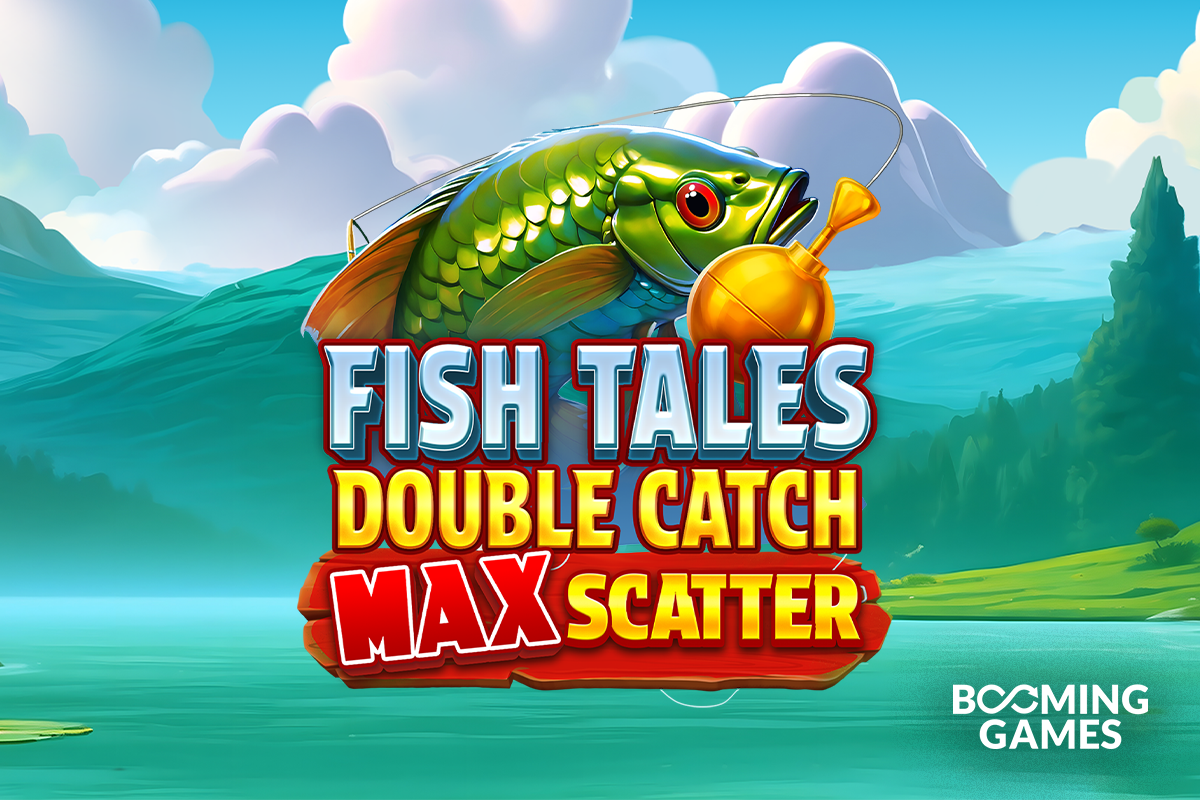
Booming Games has launched Tasty Bonanza Max Scatter, a new online slot released on 16 July 2026 from the supplier’s Malta base. The title is the second game in its Max Scatter series and uses a 6×4 grid with Scatter Pays, cascading wins and a stated maximum win potential of 15,000x.
The game pays when eight or more of the same symbol land. Winning symbols are removed and remaining symbols cascade down, with new symbols dropping in until no further wins are formed.
Free Spins are triggered by landing four or more Scatter symbols, including Scatters and Max Scatters, awarding 10 Free Spins. During the bonus, Random Multipliers can appear with values from 2x to 100x and remain active until the cascade sequence ends, after which multiplier values are combined and applied to the total win. Three or more Scatter symbols during Free Spins add five additional spins, while the feature ends if the max win is awarded.
Booming Games also includes Bonus Buy options priced at 100x the bet amount and a “Super Buy Bonus” at 500x, which the company says offers multipliers from 15x to 100x. A BOOST+ option increases the bet by 25% and increases the chance of triggering bonus features.
Craig Asling, Director of Games at Booming Games, said: “Tasty Bonanza Max Scatter is a great example of how we’re innovating within one of our top performing franchises. By adding exciting new Max Scatter mechanics to one of our most popular slots, we are confident the game will appeal to players looking for top-quality entertainment and high-stakes gameplay.”
The post Booming Games launches Tasty Bonanza Max Scatter slot appeared first on EE Gaming | Global iGaming & Tech Intelligence Hub.

Gaming Realms has launched its Slingo portfolio in Switzerland with Swiss4Win.ch, the online casino brand of Casinò Lugano, on 16th July 2026.
The supplier said the agreement is its second operator launch in the Swiss market and extends distribution of its content library through Playtech’s platform.
Swiss4Win.ch players now have access to a selection of titles including Slingo Sweet Bonanza, Slingo Xxxtreme and Slingo Gold Cash.
Mariachiara Lagravinese, Regional Account Manager at Gaming Realms, said: “Building on our recent debut in Switzerland, this partnership with Swiss4Win.ch will see us reach an even greater audience in the country where our unique content has been popular with local players.
“Switzerland represents an attractive market for us and this launch with a reputable local operator sees us strengthen our foothold in the region.”
Paolo Sanvido, CEO of Casinò Lugano, said: “We’re committed to offering our players a diverse portfolio of premium gaming content, and Gaming Realms’ Slingo titles bring something truly unique to our casino lobby. We’re excited to introduce these games to our customers and further strengthen our entertainment offering with engaging and innovative experiences.”
The post Gaming Realms launches Slingo games with Swiss4Win in Switzerland appeared first on EE Gaming | Global iGaming & Tech Intelligence Hub.

-

 Compliance Updates6 days ago
Arizona Department of Gaming Issues Cease-and-Desist Orders to Multiple Operators Linked to Underage Gambling and Illegal Activity
-
 Compliance Updates6 days ago
KONAMI GROUP’s Konami Gaming Inc. First to Submit Manufacturer License Application in Japan’s Emerging IR Market
-
Latest News7 days ago
PG Soft appoints Hugo Baungartner as General Manager LatAm
-
Canada7 days ago
Canada’s Safer Gambling Gap: Why Market Success Doesn’t Always Equal Player Safety
-
Latest News7 days ago
Tom Horn Gaming ships Royal Ruby FeatureStorm slot worldwide on 14 July 2026
-
Latest News7 days ago
Booming Games launches Fish Tales: Double Catch Max Scatter
-
Latest News7 days ago
BC.GAME names Guillermo Ochoa brand ambassador for Mexico push
-
Latest News7 days ago
PG Soft names Hugo Baungartner as General Manager LatAm