Latest News
GambleAware invests £2.5m into gambling harms prevention education programme across England and Wales


Following a competitive tender, GambleAware is awarding £2.5m to GamCare, YGAM and partners, and Adferiad Recovery to expand The Gambling Education Hub Service across England and Wales as part of its commitment to help reduce gambling harms among young people
The Gambling Education Hub (The Hub) is a gambling education programme which includes toolkits, training and peer-based theatre performances, is aimed at professionals and volunteers who work with young people and families and at young people, parents and carers themselves.
The expansion follows an independent evaluation[1] of the GambleAware commissioned Scottish Gambling Education Hub (The Hub) by IFF Research, which reveals success of its early intervention and prevention methods leading to dramatic improvements in gambling harms awareness and understanding
The Hub, which is primarily for practitioners, educators and youth workers, uses early intervention and prevention methods to reduce gambling harms among children and young people, working holistically within local communities, to promote a safer environment – especially for those most at risk
GambleAware has today announced the expansion of its Gambling Education Hubs across England and Wales, following a successful pilot in Scotland. The Hubs, which help prevent gambling harms among young people through early intervention and education, resulted in 92% of practitioners from the Scottish Hub saying they felt confident in identifying the signs of gambling harm, compared to just 35% pre-training. The Hubs also resulted in more than eight in ten young people from the Scottish Hub saying they were more aware of the consequences of gambling and 84% felt confident about where to turn to for support if needed.
This investment from GambleAware comes at a critical period, with the Hubs designed to reach all communities across the nations by engaging at a local level in a way that central Government sometimes cannot. Young people are increasingly exposed to easily accessible gambling through the growth of online gaming and social media. GambleAware research published in 2020 showed that 94% of 11-17-year-olds in Great Britain had been exposed to gambling adverts in the last month, seeing six adverts on average[2]. This data directly led to recent caps and restrictions imposed on industry advertisers to further curb their appeal to children and youths.
The Scottish Hub delivered gambling education to almost 3,000 professionals and volunteers working with young people, as well as young people themselves, parents, and carers. GambleAware partnered with Scotland’s national youthwork organisation Fast Forward[3] to deliver the locally focused prevention programme. An independent evaluation of this project by IFF Research found that the Hub:
- improved knowledge and awareness of youth gambling harms and gambling education among practitioners, and
- reached over 15,800 young people resulting in increased awareness of the consequences of gambling and confidence in asking for support.
Building on this success, GambleAware has today announced the award of a £2.5m grant to expand the Hub Service to both England and Wales. Following a competitive tender process, the grant has been won by GamCare, in partnership with YGAM, ARA, Aquarius, Beacon, Breakeven and Neca to carry out the work in England, and by Adferiad Recovery, which will carry out the work in Wales.
Anna Hemmings, Chief Executive of GamCare, said: “We are delighted to be receiving this grant to deliver gambling education hubs across England. We work in collaboration with a number of organisations who bring unparalleled experience of working with young people around these issues, including; Young Gamers and Gamblers Education Trust (YGAM), Addiction Recovery Agency (ARA), Aquarius, Beacon, Breakeven and Neca, to deliver Education Hubs across England.
Both GamCare and our partners passionately believe that information on the risks associated with gambling and gaming should be a key part of young people’s education, gaining parity with other risky behaviours such as drugs and alcohol.
We are looking forward to building on the successes of our work with young people, their parents and professionals in a new programme aimed at increasing visibility of both local and national education and support, and to working with GambleAware and our partners towards our shared aspiration of reducing gambling-related harms for young people.”
Leon Marsh, Director of Hospital & Residential Services at Adferiad Recovery said: “We look forward to working with GambleAware on this great initiative to help reduce gambling-related harm caused to young people and to provide comprehensive training, education and resources to key stakeholders to reduce the risks associated with gambling addiction. We were delighted to hear that we had been selected to be the providers of Wales’s Gambling Education Hub and are looking forward to replicating the success of the project currently being undertaken in Scotland. Our extensive knowledge and experience in young people services puts us in a good position to be able to effectively deliver this project in Wales, and we are excited to be able to offer young people this valuable service.”
GamCare, together with YGAM and other partners, brings over nine years’ experience delivering services for thousands of young people, including relevant skills, local knowledge, and stakeholder networks. Meanwhile, Adferiad Recovery is an industry leader in the fields of addiction, mental health, and young people’s services. Each organisation is best placed to carry out the expansion of the Hub Service in their own region. The new Hubs will also reflect differences in curriculums, languages, regions, need and demand, and political and other contexts, specific to each nation.
Zoë Osmond, CEO at GambleAware, said: “At a time when young people are increasingly exposed to gambling, the delivery of local focused programs for gambling education and prevention of harms has never been more important. We hope to see the positive short-term impacts from the Scottish Education Hub’s activities replicated in our newly commissioned English and Welsh Education Hubs, and we are excited to have awarded this grant to these two highly experienced organisations.
“As the lead commissioner working to prevent gambling harms, GambleAware is committed to working with local organisations and stakeholders to fund and establish tailored, best-practice prevention programmes. With young people in the UK now growing up being widely exposed to gambling marketing and advertising, these projects represent a meaningful step towards delivering a society where all children and young people are protected from the risks of gambling related harms.”
The Hubs across all nations will incorporate input from people with lived experience of gambling harms in the development of training content, service delivery, and any supporting tools or resources. GambleAware expects that equality, diversity and inclusion policy and procedures to be at the heart of the service design, provision, and day to day operations.
Powered by WPeMatico



Company plans to roll out SOCCERBET with LALIGA archive footage on its own platform in Italian retail after the World Cup.
Highlight Games Limited said its proprietary platform has passed Italy’s ADM collaudo process, the technical certification required for gaming platforms. The company announced the approval on 14 July 2026 from London.
Following the conclusion of the World Cup, Highlight said it will launch its Spanish SOCCERBET product featuring archive LALIGA footage on its own platform across Italian retail channels. The company added that operators will transfer to Highlight’s platform over the months that follow.
The supplier said the certification allows it to deliver its content via its own “zero-cost streaming technology” in Italy and gives it control over its product roadmap in what it called its most important market.
Steven Holmes, CEO, Highlight Games said: ‘This is a huge moment for Highlight as we bring our video-based technology stack to the Italian market and join a select few who are able to offer an officially ADM certified platform. Italy is where SOCCERBET has proven itself time and again and passing the ADM collaudo means we can now deliver that content on our own platform, with our zero-cost streaming solution, exactly as it was designed to be experienced.
‘Owning the technology end to end means we control our own roadmap, resulting in faster launches, smoother integrations for our operator partners and a richer experience for players. Our products consistently perform at the top of the market wherever they are live, and with our platform now officially certified in Italy, we have everything in place to build on that momentum.’
The post Highlight Games’ platform clears Italy’s ADM collaudo certification appeared first on EE Gaming | Global iGaming & Tech Intelligence Hub.
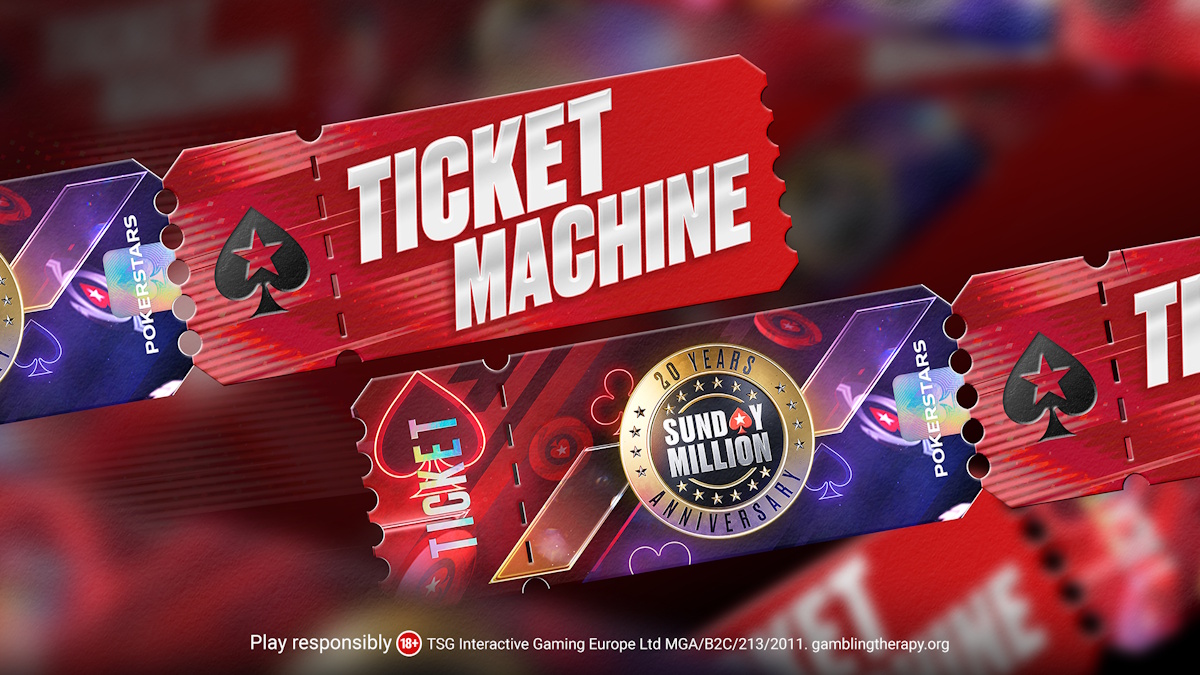
The 10-week phased event runs Daily Heats through September 6, with raffles awarding more than $100,000 in $109 tickets each week.
PokerStars is allocating more than $800,000 worth of $109 Daily Heat (Phase 1) tickets through its “Ticket Machine” promotion ahead of the Sunday Million 20th Anniversary Finals (Phase 2) on Sunday, September 6.
The Sunday Million 20th Anniversary is being run as a 10-week phased tournament, with Daily Heats running now through September 6. Players who advance from a $109 Daily Heat carry their stack into the Finals, with PokerStars noting that only one stack may be carried through to Phase 2.
To enter the Ticket Machine, players must opt in to the “Ticket Machine” ICE Challenge and complete weekly poker challenges. Each completed challenge adds entries to a Saturday raffle, with PokerStars saying more than $100,000 in $109 Daily Heat tickets will be awarded each week. Players can complete each challenge up to four times, for a maximum of 24 raffle entries per week.
PokerStars said that, after the first two weeks of Daily Heats, 270 players from more than 40 countries have already qualified for the Finals, including 50 who qualified into Phase 1 via satellites. Brazil and Ukraine lead the qualifiers list with 33 players each, according to the operator.
The operator has set a $5 million guarantee for the Sunday Million 20th Anniversary. Additional qualification routes include satellites starting at $0.55, special edition Spin & Go’s from $0.75, and “Wildcard Wins”, described by PokerStars as a new leaderboard promotion running until July 19. PokerStars also said players redeeming a $530 Bronze Pass will receive “25% extra value in the bundle” for a limited time, including an additional $109 Sunday Million 20th Anniversary ticket and $23.50 in tournament tickets.
The post PokerStars puts $800,000 in Sunday Million Anniversary tickets into Ticket Machine appeared first on EE Gaming | Global iGaming & Tech Intelligence Hub.

Kickoff Roulette Ronaldinho launches with a Gold Number mechanic and English/Portuguese language support.
CreedRoomz has named former football star Ronaldinho as brand ambassador for its new live casino game show, Kickoff Roulette Ronaldinho. The supplier said the title is now available for integration by B2B partners.
The company positions the product as a roulette-led live game show built around a football theme, running from a virtual studio. According to CreedRoomz, the game includes a “Gold Number Mechanic” where randomized lucky numbers can add multipliers from x50 to x700.
When asked about the crossover between football and casino entertainment, Ronaldinho said: “The fact that football is a global passion also helps, so I believe everyone will like “Kickoff Roulette Ronaldinho” for that reason.. and for the innovation of everything that is happening.”
CreedRoomz said the game is available in English and Portuguese, framing Portuguese language support as relevant for operators targeting Brazil and other Portuguese-speaking audiences. Armen Mnaskanian, Head of Sales Department at Creedroomz, said: “Bringing Ronaldinho into the CreedRoomz family represents a massive leap forward for live casino entertainment. Football and iGaming both thrive on passion and excitement. By fusing Ronaldinho’s legendary star power with powerhouse monetization mechanics, we are giving our partners the ultimate competitive edge and a next-generation casino offering.”
The post CreedRoomz signs Ronaldinho to front new Kickoff Roulette live game show appeared first on EE Gaming | Global iGaming & Tech Intelligence Hub.

-

 Latest News7 days ago
Eeze opens 1,200 sqm Bucharest hub for technical teams
-
Latest News7 days ago
Play’n GO strengthens Latin American presence with Betano Colombia launch
-
Latest News6 days ago
BetMakers Technology Group Selected to Distribute ATG Horse Racing Content Across Australia and New Zealand
-
Latest News7 days ago
Belatra signs cooperation deal to distribute slots via VeliGames
-
Compliance Updates7 days ago
Kasinohai Audit: Most Slots Could Be Affected by Finland’s Draft Gambling Rules
-
Compliance Updates7 days ago
Pernambuco court revokes Spribe’s interim relief in Aviator trademark dispute
-
Latest News7 days ago
R. Franco Digital releases fighting game-themed slot Spin Fighters
-
Compliance Updates6 days ago
ACMA Warns MMA Fighter Jamie Mullarkey for Breaches of Online Gambling Laws