Latest News
Overwolf Raises $52.5M To Unlock Modding For Game Developers and Publishers with The Launch of CurseForge Core, a UGC as a Service Platform

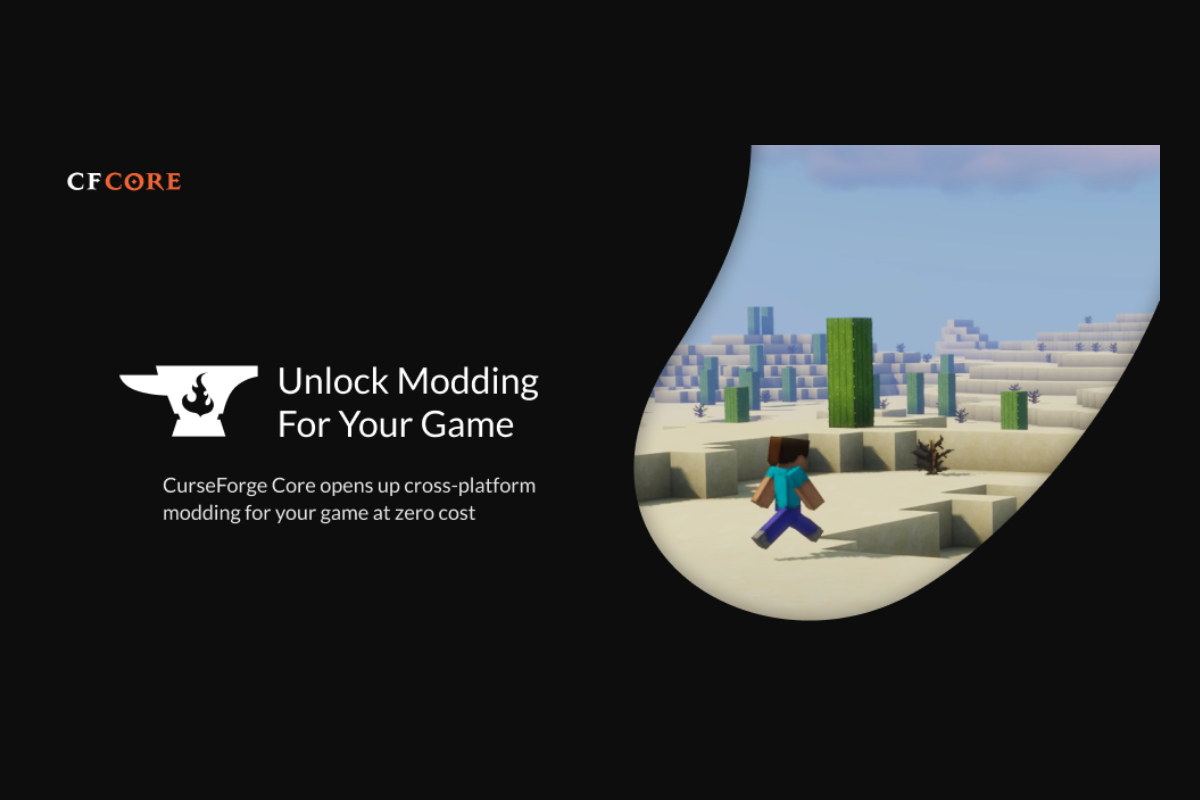
Overwolf, the all-in-one platform that enables creators to build, distribute, and monetize in-game apps and mods, today announced a $52.5 million Series C round and the launch of CurseForge Core, a User Generated Content (UGC) as a service platform. CurseForge Core provides an SDK for game developers that integrates into the game itself and functions as a gateway for users to discover and install mods in-game, across all platforms and storefronts. The round was co-led by Griffin Gaming Partners and Insight Partners with participation from investors including Ubisoft, Warner Music Group, Meg Whitman, Gen.G Co-Founder, Kevin Chou, and existing investors Marker, Intel Capital, Liberty Technology Venture Capital, and Atreides Management. The funding will be used to boost development firepower dedicated to creating services for creators. It will further be used to create more opportunities and vehicles to invest in, and with, the in-game creator community.
In 2020, as part of its commitment to empower in-game creators, Overwolf acquired CurseForge from Twitch, the biggest repository of mods for video games including top titles like World of Warcraft and Minecraft. CurseForge and Overwolf have supported creator communities for over 15 years with a combined platform that includes over 30,000 creators, 90,000 mods and add-ons, and 18 million monthly users. Overwolf has experienced 300% growth in the last year as the market for content around games rises.
“We are at a new user-generated content inflection point, and the strong growth of gaming lies largely in the hands of “in-game creators,” a term we coined to categorize this new generation of in-game app creators and mod authors. The more content and customizability a game has, the more likely a gamer will keep experiencing its content and by that extending the longevity of the game and generating more value for game developers and publishers in the long run,” commented Uri Marchand, Overwolf CEO and Co-Founder. “By offering CurseForge Core, we are accelerating the community-created content movement by enabling publishers to easily integrate mods safely and seamlessly into their existing and new games. With the backing of the most notable investors in the space, we are confident that the Overwolf platform will lay the groundwork for a new era of AAA game creation.”
Overwolf believes in a future in which the community can participate with the game developer in creating new, moderated, and safe game experiences. This benefits game developers, as game development costs continue to rise, adding community firepower can be critical. With CurseForge Core, Overwolf manages content moderation, UGC-related live ops, and creator payment, enabling game developers and studios to access community-created content easily without incurring additional costs. CurseForge Core offers the following benefits:
Cross-Platform Modding — Integrate Overwolf’s open-source SDKs and plugins to let players discover and install mods in-game, across all platforms and storefronts.
Full Analytics Dashboard — Get a full modding usage dashboard to learn which mods are popular. Gather insights on what content players find enjoyable, which genres are trending, and much more.
Safe and Secure Moderation — Each mod submitted is scanned for viruses or inappropriate content. Defined policies and guidelines on what is permitted are enforced by Overwolf, and only authorized content is published.
Creator Relations and Payment — CurseForge supports creators with Author Rewards Program, fund investments, developer contests, and hackathons.
“Similar to how developers use Unity to build a game, we see Overwolf as the framework for everything UGC related to games. Overwolf allows for one of the only means of monetization for the thousands of creators, in turn, this translates to increased engagement for the publishers and more content for gamers. Services like Overwolf set the stage for the industry to see a new generation of user-generated content and we are excited to invest in the leading company moving this space forward,” commented Nick Tuosto, Co-Founder of Griffin Gaming Partners and Managing Director at LionTree.
“We’ve been following UGC in gaming for many years and believe Overwolf has established itself as a leader in this category,” said Teddie Wardi, Managing Director at Insight Partners. “AAA game studios will want to allow creators to build and express themselves, and Overwolf is positioned as the platform to make this possible by ensuring that creators are recognized for their contributions, and easily integrating creations into games. Overwolf has proved themselves to be strong champions of the creator community and we look forward to helping them scale up in 2021.”
“Overwolf is developing the holy grail of frameworks for UGC for both publishers and in-game creators. Enabling all major publishers like us, to allow the creation of mods in a safe, secure, authorized, and profitable manner; is a game changer for all creators and IP holders,” said Oscar Navarro, Head of Corporate Development for Ubisoft.
To learn more about how CurseForge Core can support AAA developers and game studios, please visit https://link.overwolf.com/cfcore.
Powered by WPeMatico



Eighth Harmony edition runs July 8–9 and spotlights ADI Predictstreet collaboration ahead of the FIFA World Cup Final.
BetConstruct AI held its Harmony Predictstreet event on July 8–9, 2026 in Yerevan, Armenia, bringing together more than 300 guests for two days of networking and company updates.
The eighth edition introduced the “Predictstreet” branding to reflect BetConstruct AI’s strategic collaboration with ADI Predictstreet, described in the release as “FIFA’s Official Prediction Market Partner.” BetConstruct AI said the partnership includes integrating ADI Predictstreet’s prediction market solutions and official match streaming rights into its platform, timed for “the most important commercial moment in the four-year sports calendar, with the FIFA World Cup Final just days away.”
Day 1 was hosted at Garni Temple for an evening reception, including a live performance by the Armenian National Philharmonic Orchestra, a mapping show and music from DJ Leblanc.
Day 2 began at SoftConstruct headquarters with an office tour and networking session, before moving to Dvin Music Hall for the Harmony Predictstreet Gala Dinner. BetConstruct AI said founders and executive leadership presented updates on Eventbook, the ADI Predictstreet partnership, Betting Mate, The Last Battle Universe, Betbuilder & Powerbank, Softgates, and “the latest updates driving Vivaro.me and Open Stake forward.”
The company positioned the event as a forum for discussing future direction across its ecosystem, and confirmed plans to continue the series with a ninth edition.
The post BetConstruct AI hosts Harmony Predictstreet event in Yerevan appeared first on EE Gaming | Global iGaming & Tech Intelligence Hub.
ESPN Networks
THE 57th ANNUAL WORLD SERIES OF POKER® CONCLUDES AN EXTRAORDINARY SUMMER OF GLOBAL ENGAGEMENT AND ELITE COMPETITION


This summer’s event also saw huge growth in reach and engagement across WSOP’s social media channels, with over 378 million views
With 51 days of thrilling, high-stakes competition in the bag, the 57th annual World Series of Poker (WSOP®) at Paris Las Vegas and Horseshoe Las Vegas officially concluded its summer tournament schedule on July 15, 2026. Featuring a massive slate of 100 live gold bracelet events, this year’s festival once again demonstrated the unparalleled scale, passion, and global community of live tournament poker.
“The 57th annual World Series of Poker proved that Las Vegas remains the undisputed epicenter of the poker universe,” said Ty Stewart, Chief Executive Officer of the WSOP. “The energy inside Horseshoe and Paris Las Vegas was nothing short of electric. What is truly remarkable this year is how our community expanded far beyond the physical walls of the casino floor. Through our newly redesigned final table arena, extensive linear broadcast schedule, and unprecedented digital engagement, we brought the drama, excitement, and glory of winning a WSOP gold bracelet to millions of new fans worldwide. We are incredibly proud of this summer’s success and cannot wait to witness the Final Nine battle for the World Championship on ESPN next month.”
Redefining the Live Experience on Poker’s Biggest Stage
Throughout the summer, the Las Vegas Strip was the focal point of the poker world as players from around the globe competed for poker’s ultimate prize: a WSOP gold bracelet and a place in poker history.
Key milestones from the summer tournament action include:
- Colossal Main Event Field: The legendary $10,000 No-Limit Hold’em World Championship (the ‘Main Event’) attracted a massive field of 9,208 entrants, creating a colossal prize pool and proving the enduring allure of the world’s premier freezeout tournament
- The New Final Table Arena: WSOP officially unveiled a completely redesigned, state-of-the-art Final Table Arena and broadcast environment. The new stage integrates advanced lighting and large-scale digital displays to elevate the presentation of poker’s most prestigious final tables
- Historic Broadcast Expansion: Live coverage of the Main Event returned to ESPN alongside a new multi-year broadcast agreement with Warner Bros. Discovery to distribute coverage across HBO Max, Eurosport, and TNT Sports globally
- The “Final Nine”: The final nine players survived a grueling field to punch their ticket to the historic Main Event Final Table. They will return to Las Vegas from August 3 to 5, 2026, to play down to a champion live on ESPN
- Summer of Superstars: This year’s event saw an unprecedented number of bracelets won by poker luminaries with impressive records in the game’s history books; Daniel Negreanu won his eight WSOP bracelet by taking down Event #76 $100,000 High Roller Pot-Limit Omaha for over $2.2M, while reigning WSOP Main Event champion Michael ‘The Grinder’ Mizrachi further burnished his reputation by winning Event #70 $10,000 Pot-Limit Omaha Championship, claiming his ninth WSOP bracelet and a $1.35M prize. The poker world’s undisputed power couple Kristen and Alex Foxen also made history by each claiming a WSOP bracelet in 2026, taking down Event #19 $25,000 High Roller No-Limit Hold’em and Event #44 $10,000 Super Turbo Bounty No-Limit Hold’em, respectively
- Seamless Player Experience: The WSOP Live mobile app continued to enhance the playing experience, streamlining registration, virtually eliminating cage lines, and providing real-time seat alerts to thousands of players throughout the summer
WSOP 2026 By The Numbers
- 251,899 entries – a new record for the total number of entries in a single WSOP series
- $469,975,059 – total 2026 WSOP gold events prize amount
- 35,157 places paid
- 22,811 entries to Event #63 $1,000 Mystery Millions No-Limit Hold’em – the biggest field in the 2026 series, the largest Mystery Millions event, and the largest $1,000 event in live tournament poker history
- 1,368 entries to Event #68 $1,000 Ladies No-Limit Hold’em Championship – the largest Ladies event in live tournament poker history
- 11,933 entries to Event #18 $1,500 Monster Stack No-Limit Hold’em – the largest Monster Stack event in live tournament poker history
- 4,764 entries to Event #87 $1,000 Mystery Bounty Pot-Limit Omaha – the largest Pot-Limit Omaha event in live tournament poker history
- 12,560 entries to Event #72 $1,000 Mini Main Event – the largest Mini Main event in live tournament poker history
- 41 – The number of $1M+ prizes won across the 2026 series
- 57 events exceeded $2+ million prize pools – equalling last year’s record
- 8 events exceeded $10+ million prize pools
- 149 – number of countries represented in the WSOP 2026 playing field
- Top Ten Countries by WSOP 2026 participants: 1 – United States, 2 – Canada, 3 – France, 4 – Great Britain, 5 – Japan, 6 – China, 7 – Israel, 8 – Germany, 9 – Brazil, 10 – Mexico
- 111 – number of countries represented in the WSOP Main Event 2026 playing field, a new record
- Oldest Player – Merle Vangieson, born June 28, 1931
- Youngest Player – Easton Jorgensen, born July 13, 2005
Worldwide Broadcasts Drive Growth Of Game
With thrilling WSOP action broadcast exclusively on ESPN Networks, Eurosport, TNT Sports, Abema Japan, Groupe M6 in France, and other media partners, poker fans had more opportunities than ever to follow their heroes, new and old, at the felt in 2026.
Comprehensive linear and digital coverage, available in more than 300 million homes across 70+ countries, ensured that countless big moments – from calculated bluffs to cunning value bets – were analyzed and enjoyed by enthusiasts on every continent.
Edited WSOP broadcasts will air from July 21, allowing a worldwide audience to catch up on all the summer’s action.
Explosive Digital Reach: WSOP’s Social Media Footprint
A highlight of the 57th annual WSOP was its unprecedented digital growth. While fans packed the physical tournament rooms, millions more watched the action unfold online. Across all major platforms, WSOP social media channels generated an astronomical 378.3 million total views during the 100-bracelet series, adding 222,828 total new followers across its digital ecosystem.
WSOP 2026 Social Media Performance
|
Platform |
Total Views/Impressions |
New Audience Growth |
|
YouTube |
38.7 million views |
103,128 new subscribers |
|
|
125 million views |
54,450 new followers |
|
|
127 million views |
56,800 new followers |
|
X |
36.6 million impressions |
8,450 new followers |
Looking Ahead: A True Global Season
While the Main Event action in Las Vegas has paused until the Final Table resumes in August, the WSOP excitement continues year-round. This year marks the formal rollout of the ambitious, revamped $1 Million Global Player of the Year (POY) race. The new global leaderboard unifies the brand’s three flagship festival pillars: WSOP Europe (which completed its historic run in Prague earlier this spring), the Las Vegas summer series, and the upcoming WSOP Paradise winter festival.
The global POY winner will be crowned at the conclusion of WSOP Paradise, hosted at Baha Mar resort in The Bahamas from December 1 to 17, 2026. In the meantime, the WSOP Circuit (WSOP-C) continues its action-packed year, including a special concurrent Circuit run in Las Vegas from July 14 to 25, 2026.
Players should follow @WSOP on X (formerly Twitter) and Instagram or check WSOP.com for more news and updates on WSOP events.
The post THE 57th ANNUAL WORLD SERIES OF POKER® CONCLUDES AN EXTRAORDINARY SUMMER OF GLOBAL ENGAGEMENT AND ELITE COMPETITION appeared first on Americas iGaming & Sports Betting News.

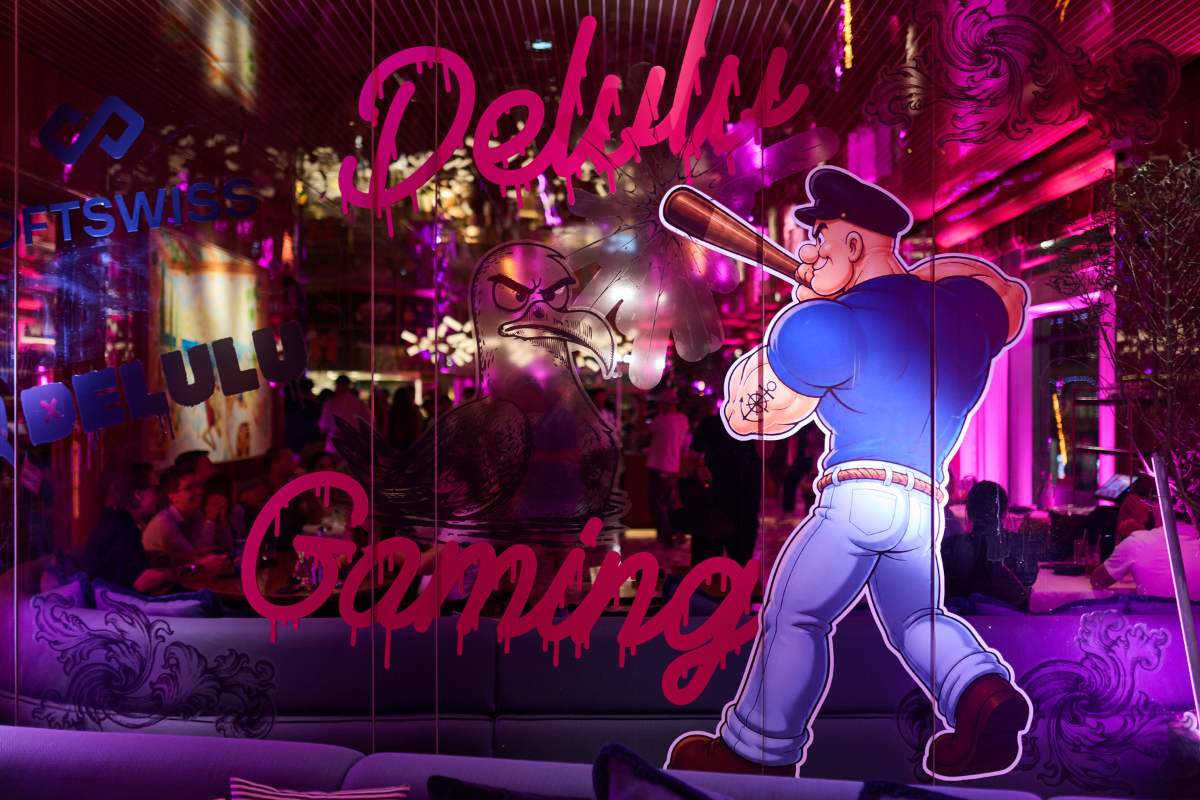
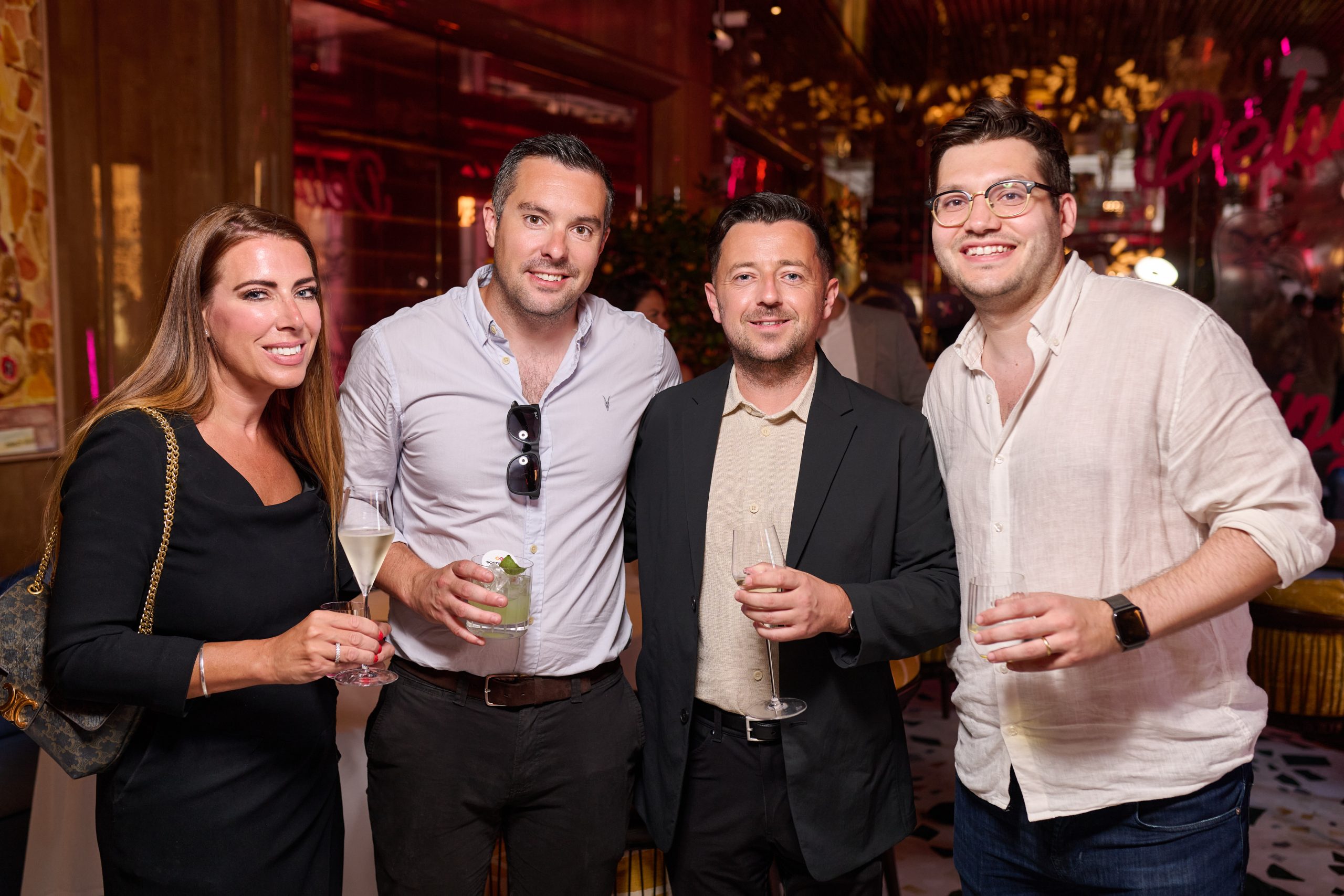
An unforgettable evening, more than 250 industry leaders, and the perfect beginning to a new story in iGaming. DELULU Gaming recently hosted its exclusive Soft Launch Dinner at Alba London, welcoming 250+ partners and C-level executives to an invitation-only celebration that combined exceptional hospitality with the studio’s distinctive creative identity.
The Soft Launch Dinner was DELULU’s first opportunity to welcome the industry in person. Instead of a traditional corporate reception, the evening brought together senior decision-makers in an exclusive setting. Guests learned more about DELULU’s vision and a debut portfolio where every game is designed to leave its own impression.
The event was made even more special by the presence of DELULU’s strategic technology partner, SOFTSWISS, who joined the celebration alongside partners, friends, and industry leaders.

Inspired by the Amalfi Coast, Alba London provided the perfect setting for DELULU’s Soft Launch Dinner. Contemporary Italian interiors, live cooking stations, fresh seafood, authentic Italian pizza, and signature cocktails created an atmosphere that felt both refined and effortlessly welcoming. Every detail, from the bespoke DELULU branding to the finishing touches throughout the venue, made the experience unmistakably DELULU.
Looking around, it was clear that many of the industry’s key players were there. Operators, aggregators, platform providers, media, and long-standing partners all came together to celebrate DELULU’s next chapter. Business conversations quickly became more relaxed as guests caught up with familiar faces and made new connections. The evening also opened the door to conversations about future partnerships, upcoming releases, and DELULU’s ambition to create experiences that stay with players.
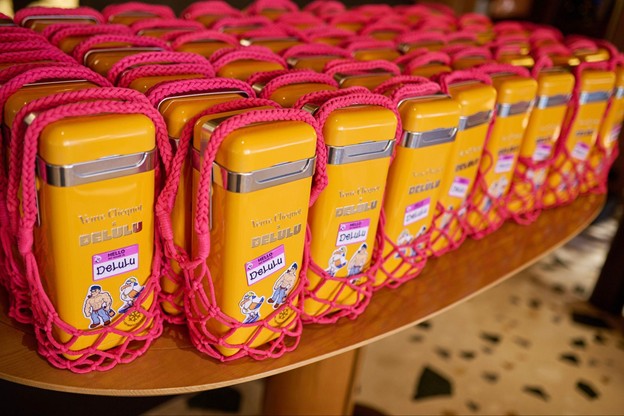
To mark the occasion, every guest received a bottle of Veuve Clicquot champagne presented in exclusive DELULU packaging, created especially for the event. It was a small gesture of appreciation and a lasting reminder of the studio’s first milestone shared with everyone present.
The Soft Launch Dinner was a memorable introduction of DELULU to the industry. It showed DELULU Gaming’s goal to build lasting partnerships while bringing the DELULU approach beyond the games themselves.

“We wanted our first event to feel exactly like DELULU. Creative, welcoming, and full of personality. Having so many industry leaders and partners come together before our official launch was something truly special for our entire team. Thank you to everyone who joined us at Alba London, celebrated this milestone with us, and helped make it such an unforgettable evening. We’re looking forward to growing together, building new partnerships, and sharing many more great moments in the years ahead.” Arthur Sheikhaliev, CEO at DELULU Gaming.
Following the successful Soft Launch Dinner, DELULU Gaming continues expanding its commercial partnerships and bringing its growing portfolio of distinctive games to operators worldwide.
About DELULU
DELULU is a new-generation iGaming game studio focused on delivering high-quality, distinctive gaming experiences. The game studio creates games with bold visuals, tight mechanics, and math engineered for emotional impact. DELULU knows how to win long-term operator trust through titles that players recognize, streamers love to showcase, and the market can’t ignore.
The post DELULU Gaming Hosted an Exclusive Soft Launch Dinner for 250+ iGaming Leaders in London appeared first on Americas iGaming & Sports Betting News.

-

 Compliance Updates7 days ago
Arizona Department of Gaming Issues Cease-and-Desist Orders to Multiple Operators Linked to Underage Gambling and Illegal Activity
-
Compliance Updates7 days ago
Arizona regulator orders five operators to stop alleged illegal gambling activity
-
 Latest News7 days ago
Silver Strike slot machines at the Plaza Hotel & Casino to offer new coins
-
Canada4 days ago
DraftKings Set to Launch its Online Sportsbook and Casino in Alberta
-
Latest News7 days ago
Former WBC World Champion Tony Bellew Joins PartyPoker as Brand Ambassador
-
Canada4 days ago
Altenar Joins Alberta’s New Regulated iGaming Market
-
Latest News7 days ago
Tony Bellew signs as PartyPoker brand ambassador through 2026
-
Latest News3 days ago
EveryMatrix’s Fantasma Games launches three-reel slot Bonus Bullets