Compliance Updates
UK Government launches review to ensure gambling laws are fit for digital age

The Culture Secretary has launched a major and wide-ranging review of gambling laws to ensure they are fit for the digital age as committed to in the manifesto.
Online restrictions, marketing and the powers of the Gambling Commission will be looked at as part of a call for evidence, to examine in detail how gambling has changed over the past 15 years.
Protections for online gamblers like stake and spend limits, advertising and promotional offers and whether extra protections for young adults are needed will all be explored.
The findings will be used to inform any changes to the Gambling Act 2005 to ensure customer protection is at the heart of the regulations, while giving those that gamble safely the freedom to do so.
The review will also look at evidence on the action customers can take where they feel operators have breached social responsibility requirements, such as intervening to protect customers showing clear signs of problematic play, and how to ensure children and young people are kept safe from gambling-related harm.
The Government recognises the need to balance the enjoyment people get from gambling with the right regulatory framework and protections.
It has also been announced today that the minimum age for playing the National Lottery will be raised from 16 to 18 from October 2021.
Secretary of State for Digital, Culture, Media and Sport, Oliver Dowden, said:
“Whilst millions gamble responsibly, the Gambling Act is an analogue law in a digital age. From an era of having a flutter in a high street bookmaker, casino, racecourse or seaside pier, the industry has evolved at breakneck speed.
“This comprehensive review will ensure we are tackling problem gambling in all its forms to protect children and vulnerable people. It will also help those who enjoy placing a bet to do so safely.
“This builds upon our clear track record of introducing tough measures to protect people from the risk of gambling harm – banning the use of credit cards, launching tighter age verification checks and cutting the maximum stake on fixed odds betting terminals.”
Minister for Sport, Tourism and Heritage Nigel Huddleston said:
“We’re committed to protecting young people from gambling related harm which is why we are raising the minimum age for the National Lottery. Patterns of play have changed since its inception, with a shift towards online games, and this change will help make sure the National Lottery, although already low-risk, is not a gateway to problem gambling.”
It follows a range of measures recently introduced by the Government to protect consumers from the risk of gambling-related harm. These include cutting the maximum stake on fixed odds betting terminals, bringing in tighter age and identity checks for online gambling, banning gambling using credit cards and expanding national specialist support through the NHS Long Term Plan.
In September the Government launched a call for evidence to explore young people’s experiences of loot boxes in video games. This will provide a clearer picture of the size of the loot box market in the UK and fully examine any evidence of harms or links to problem gambling.
The review of the Gambling Act 2005 will also consider the Gambling Commission’s powers and resources to ensure it can keep pace with the licensed sector and tackle the black market.
In October the Gambling Commission introduced new rules on VIP schemes, and has called for evidence around how to ensure operators identify and intervene where people are at risk of harm, including through carrying out affordability checks. The Commission will also soon set out new rules on safer game design for online slots and withdrawing winnings.
Alongside the launch of the review, the Government is announcing its decision to raise the minimum age to play the National Lottery from 16 to 18, to protect young people from gambling related harm.
Since it began in 1994 the National Lottery’s games portfolio has changed significantly and there has been a growing trend towards online play and instant win games like scratchcards. Following a consultation, from October 2021 it will be illegal to sell all National Lottery products to under 18s.
The Government is working with the Gambling Commission and Camelot to roll out the new age limit across the National Lottery products as quickly as possible and to ensure that it is in place by October. Under current plans, online sales to 16 and 17 year olds will stop in April 2021.
Source: gov.uk
Powered by WPeMatico


Under the theme “Perspectives,” a total of 43 compliance staff members from the Merkur Group across various countries gathered from 30 June to 1 July to further develop compliance processes in a sustainable manner. Colleagues from Germany, Spain, England, Malta, Australia and the US traveled to the two-day meeting at Benkhausen Castle, the in-house training centre of the Merkur Group. The workshop set the stage with expert presentations on global and digital topics such as cybersecurity, risk management and artificial intelligence. A panel discussion featuring representatives from various international companies within the Merkur Group, as well as a digital quiz, rounded out the programme.
In keeping with its guiding principle, the workshop focused on sharing experiences, fostering global networking and providing impetus for the further development of compliance processes. Because informal exchanges are also key to close cooperation, the evening programme created a relaxed atmosphere and gave participants the opportunity to continue their conversations, make new connections, and further strengthen team spirit across company and national boundaries.
“The ideas and diverse perspectives gained during the workshop will now be incorporated into our day-to-day work and help us to continuously improve collaboration and existing processes,” said Ludwig Beckmann, Chief Compliance Officer of the Merkur Group.
The concluding feedback session also highlighted just how valuable the international exchange is. The term “collaboration” came up particularly often, a clear indication of how highly the participants value working closely together within the international compliance network.
The post Merkur Group Strengthens Global Compliance Strategy appeared first on EE Gaming | Global iGaming & Tech Intelligence Hub.
Anne Marie Caulfield
GRAI Launches New Campaign Helping Parents to Spot the Signs of Underage Gambling

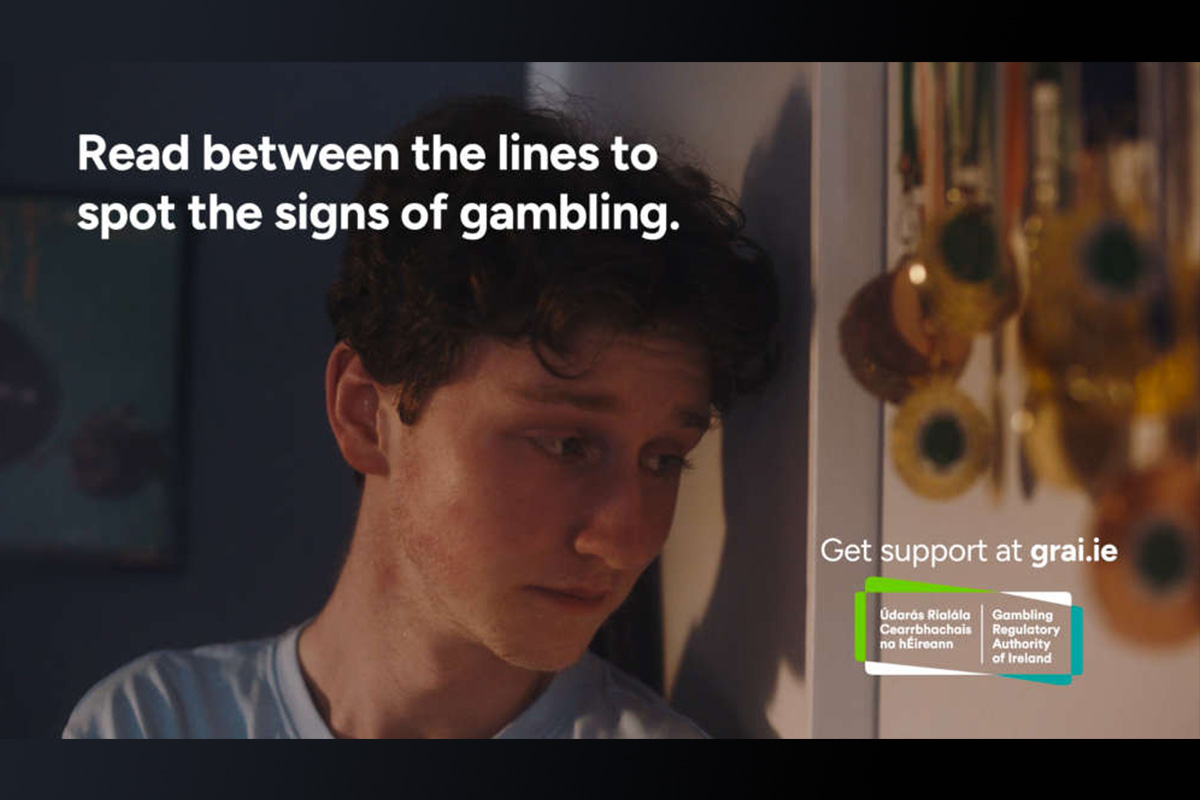
The Gambling Regulatory Authority of Ireland (GRAI) is encouraging parents and guardians to be alert to the signs of gambling among young people and to intervene early to prevent gambling harm.
The signs of gambling aren’t always visible, the GRAI in partnership with the Health Service Executive Addiction Services have developed dedicated advice on www.grai.ie to equip families with the knowledge to recognise the signs, advice on how to start the conversation with their children about gambling, and where to seek help if required.
To support the guidance, the GRAI has launched a national public awareness campaign across video on demand, radio, digital audio, and social media platforms, bringing this message directly to families across Ireland.
With the lines between entertainment and gambling increasingly blurred, especially online, what may look like harmless fun can still involve risk, money and chance in ways that affect young developing brains. Research commissioned by the GRAI and conducted by the Economic and Social Research Institute (ESRI) found that children who gamble are twice as likely to develop a gambling problem as adults.
Anne Marie Caulfield, CEO of the GRAI said: “We have launched this campaign to help parents start an important conversation about the risks of underage gambling. Children and young people are among the most at-risk members of Irish society when it comes to gambling exposure and harm. Children’s brains are still developing the judgement and impulse-control systems used to weigh up risk, which makes gambling appealing to them.
“With online gambling available at any time of the day, it is easy for the warning signs to be hidden. The guidance the GRAI developed with the HSE Addiction Services sets out some of the key behavioural signs to look out for in your child.”
The post GRAI Launches New Campaign Helping Parents to Spot the Signs of Underage Gambling appeared first on EE Gaming | Global iGaming & Tech Intelligence Hub.
Australia
NSW: EOI Opens for Candidates to Replace Retiring NICC Chief Commissioner and Commissioner

The NSW Government has announced the opening of an expression of interest process for Chief Commissioner and Commissioner roles on the NSW Independent Casino Commission (NICC).
On 20 May 2026 the Governor of NSW, on the recommendation of the Minister for Gaming and Racing David Harris, re-appointed the NICC Chief Commissioner Philip Crawford, and Commissioner Stephen Parbery for additional six-month terms to 24 November 2026.
The reappointments will ensure stability in the NICC’s leadership in coming months and an orderly transition to new commissioners.
Mr Crawford and Mr Parbery have announced they will retire from public service when their tenures expire in November.
Both were inaugural members of the NICC when it was established in September 2022 in response to the Bergin Inquiry recommendations to strengthen casino regulation and oversight in NSW.
Prior to appointment to the NICC, Mr Crawford served as Chairperson of the Independent Liquor and Gaming Authority (ILGA), while Mr Parbery served as an ILGA board member.
Both Mr Crawford and Mr Parbery played crucial roles in the NICC’s response to the two Bell inquiries into The Star and have contributed to strengthening oversight and accountability across the casino sector including the transition of Crown Sydney to an unrestricted licence.
The appointment process for the NICC Commissioner vacancies is being undertaken in accordance with requirements under the Casino Control Act 1992.
This includes establishment of a selection panel to prepare a list of recommended candidates for consideration by Minister Harris, as well as the appointment of a probity adviser.
The expression of interest process is open until Monday 3 August.
Minister for Gaming and Racing David Harris said: “I thank Philip Crawford and Stephen Parbery for their service and leadership, particularly during a critical period for casino regulation in NSW.
“As Chief Commissioner, Philip Crawford has played a key role in ensuring both casino operators meet strict regulatory requirements, following the various casino inquiries.
“His leadership has been instrumental in overseeing complex probity assessments, remediation programs and contingency planning during a period of significant regulatory reform and scrutiny.
“Stephen Parbery has also made a substantial contribution as Commissioner, bringing considerable expertise and judgement to the Commission’s work.
“Both Commissioners have helped drive important regulatory improvements that have restored public confidence in the integrity of casino regulation in NSW, and I thank them for their dedicated service.”
The post NSW: EOI Opens for Candidates to Replace Retiring NICC Chief Commissioner and Commissioner appeared first on EE Gaming | Global iGaming & Tech Intelligence Hub.

-

 Compliance Updates6 days ago
Arizona Department of Gaming Issues Cease-and-Desist Orders to Multiple Operators Linked to Underage Gambling and Illegal Activity
-
 Compliance Updates6 days ago
KONAMI GROUP’s Konami Gaming Inc. First to Submit Manufacturer License Application in Japan’s Emerging IR Market
-
Latest News6 days ago
Enjoy Gaming Builds on Slot success with Diamond Slam: Xtra Power
-
Latest News6 days ago
Weekend Reels | Week 28: Slot Drops & Trends
-
Compliance Updates6 days ago
Spillemyndigheden Publishes Report on Illegal Gambling
-
Canada6 days ago
High 5 Games Expands Across Alberta’s Open iGaming Market Following AGLC Supplier Approval
-
Compliance Updates6 days ago
Arizona regulator orders five operators to stop alleged illegal gambling activity
-
Compliance Updates6 days ago
TaDa Gaming Accelerates LatAm Growth with Peru Licence Approval