Latest News
IDnow’s AutoIdent to be the first AI-solution ready for high security transactions


IDnow a leading provider of Identity Verification-as-a-Service solutions, announces Artificial Intelligence (AI) identity verification product AutoIdent Substantial. The product is approved for certification to meet the EU eIDAS regulation following the eID Level of Assurance at Substantial. IDnow will be the first company to have an automated solution that fulfills the EU eIDAS regulation at substantial.
Addressing the rising growth in demand for fully digital solutions on a global scale, identity verification provider IDnow presents AutoIdent Substantial, the first-ever Artificial Intelligence (AI) identity verification product approved for certification to meet the EU’s eIDAS Regulation for identification services following the eID Level of Assurance at Substantial. IDnow believes that reliable security and trust in its products is the bedrock for identity verification in this rapidly growing sphere.
“IDnow is proud to be the only company to possess an approval for certification at this level of assurance for a fully-automated AI product. Understanding the industry and the emerging needs of our clients and prospective users, we knew what to do and harnessed our technological and regulatory leadership,” says Andreas Bodczek, CEO at IDnow. “This is a game-changing development as the benefits of digital identity verification become available to a much wider range of services,” he adds.
AutoIdent Substantial offers digital identity verification with the following features and customizable additions:
• ID document verification
• Authenticity check
• Liveness / Biometric detection
• Optional agent review
• Optional capability for an Advanced Electronic Signature (AES) for contract signing with a Trust Service Provider
The smart solution offers new possibilities to a variety of industries and use cases which require higher levels of vigilance while capitalizing on innovative solutions. Its ease-of-use of a fully-automated and self-guided solution in combination with extraordinary levels of security and extensive regulatory compliance makes AutoIdent Substantial a future-proof product. It will greatly support industries amidst dynamic digitization change processes with ever-changing and increasingly intensified legal and regulatory standards.
In particular, health insurances or health care providers will benefit from this unique offering for sophisticated KYC use cases such as customer portal onboarding, access to electronic health records or issuance of health insurance cards. Furthermore, demanding security requirements of public authorities with a wide range of both regulated and non-regulated KYC use cases for public services will be met without any compromises.
With AutoIdent Substantial being part of the IDnow identity verification platform, customers of any industry will enjoy the unmatched flexibility of this platform with its easy access to a wide range of related products and services, even meeting highest regulatory standards such as eIDAS Level of Assurance ‘High’.
Powered by WPeMatico

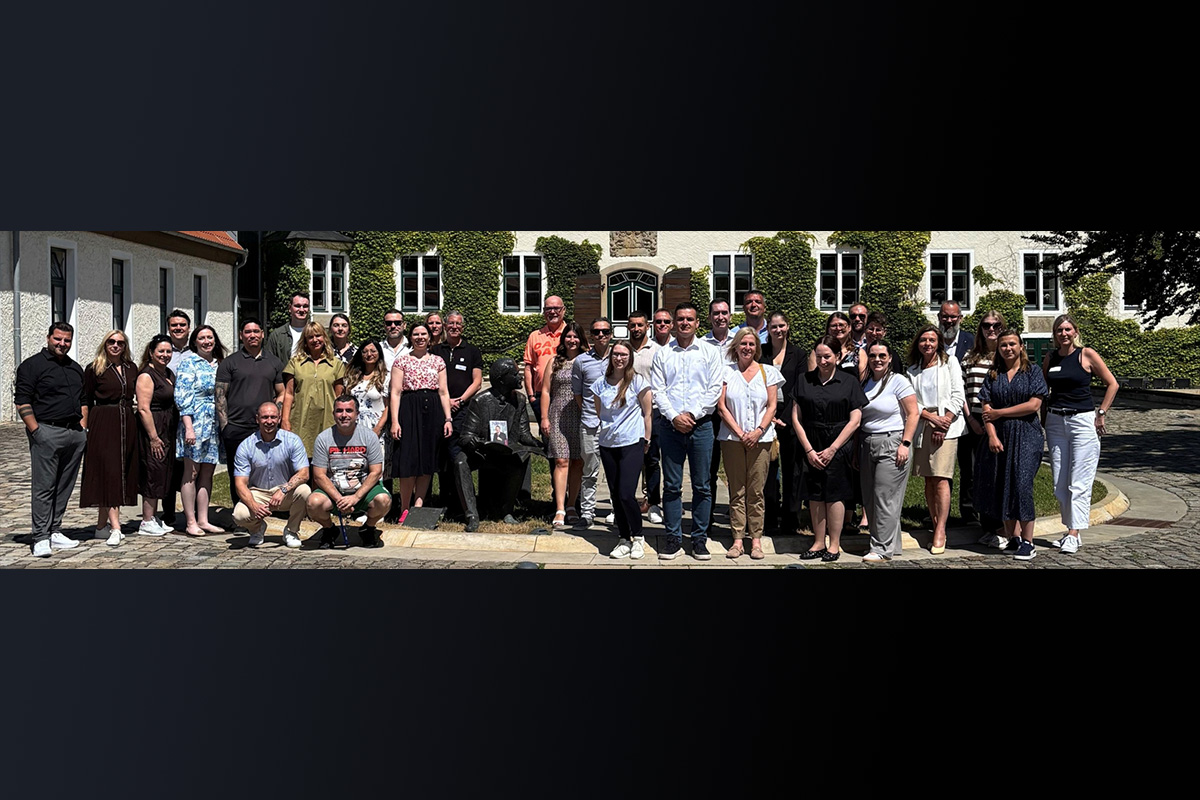
Under the theme “Perspectives,” a total of 43 compliance staff members from the Merkur Group across various countries gathered from 30 June to 1 July to further develop compliance processes in a sustainable manner. Colleagues from Germany, Spain, England, Malta, Australia and the US traveled to the two-day meeting at Benkhausen Castle, the in-house training centre of the Merkur Group. The workshop set the stage with expert presentations on global and digital topics such as cybersecurity, risk management and artificial intelligence. A panel discussion featuring representatives from various international companies within the Merkur Group, as well as a digital quiz, rounded out the programme.
In keeping with its guiding principle, the workshop focused on sharing experiences, fostering global networking and providing impetus for the further development of compliance processes. Because informal exchanges are also key to close cooperation, the evening programme created a relaxed atmosphere and gave participants the opportunity to continue their conversations, make new connections, and further strengthen team spirit across company and national boundaries.
“The ideas and diverse perspectives gained during the workshop will now be incorporated into our day-to-day work and help us to continuously improve collaboration and existing processes,” said Ludwig Beckmann, Chief Compliance Officer of the Merkur Group.
The concluding feedback session also highlighted just how valuable the international exchange is. The term “collaboration” came up particularly often, a clear indication of how highly the participants value working closely together within the international compliance network.
The post Merkur Group Strengthens Global Compliance Strategy appeared first on EE Gaming | Global iGaming & Tech Intelligence Hub.
Anne Marie Caulfield
GRAI Launches New Campaign Helping Parents to Spot the Signs of Underage Gambling


The Gambling Regulatory Authority of Ireland (GRAI) is encouraging parents and guardians to be alert to the signs of gambling among young people and to intervene early to prevent gambling harm.
The signs of gambling aren’t always visible, the GRAI in partnership with the Health Service Executive Addiction Services have developed dedicated advice on www.grai.ie to equip families with the knowledge to recognise the signs, advice on how to start the conversation with their children about gambling, and where to seek help if required.
To support the guidance, the GRAI has launched a national public awareness campaign across video on demand, radio, digital audio, and social media platforms, bringing this message directly to families across Ireland.
With the lines between entertainment and gambling increasingly blurred, especially online, what may look like harmless fun can still involve risk, money and chance in ways that affect young developing brains. Research commissioned by the GRAI and conducted by the Economic and Social Research Institute (ESRI) found that children who gamble are twice as likely to develop a gambling problem as adults.
Anne Marie Caulfield, CEO of the GRAI said: “We have launched this campaign to help parents start an important conversation about the risks of underage gambling. Children and young people are among the most at-risk members of Irish society when it comes to gambling exposure and harm. Children’s brains are still developing the judgement and impulse-control systems used to weigh up risk, which makes gambling appealing to them.
“With online gambling available at any time of the day, it is easy for the warning signs to be hidden. The guidance the GRAI developed with the HSE Addiction Services sets out some of the key behavioural signs to look out for in your child.”
The post GRAI Launches New Campaign Helping Parents to Spot the Signs of Underage Gambling appeared first on EE Gaming | Global iGaming & Tech Intelligence Hub.

Amusnet has launched VIP LIVE Roulette, a new addition to its Live Casino portfolio, offering a premium European roulette experience designed for players who prefer higher stakes, greater comfort and a sophisticated gaming environment.
Created for those who appreciate a more considered approach to live roulette, VIP LIVE Roulette combines elegant studio production with elevated table limits and an extended betting window. The additional betting time allows players to place larger, more strategic wagers at a comfortable pace, creating a smoother and more engaging experience without changing the familiar flow of the game.
Built on the classic European roulette format, the game enhances traditional gameplay with a range of intuitive features that support both convenience and strategic play. Players can personalise their sessions using Favourite & Special Bets, quickly repeat previous wagers with Auto-Rebet and follow live Statistics to inform their decisions throughout the game.
Set in a dedicated VIP studio, the game delivers a polished live presentation with professional dealers, high-definition streaming and a clean, modern environment that recreates the atmosphere of an exclusive casino floor. Every element has been designed to combine the authenticity of live roulette with the expectations of today’s premium player segment.
VIP LIVE Roulette joins Amusnet’s growing Live Casino portfolio, further strengthening the company’s offering with a title that balances timeless gameplay with contemporary player preferences. As operators continue to expand their live casino proposition, the game provides an opportunity to appeal to high-value audiences looking for an elevated roulette experience that combines premium presentation, seamless gameplay and greater flexibility at the table.
History Re-bet feature
Pick again the lucky numbers for the last spins.
Favourite Bets
This function allows players to save their personally tailored bets or bet combinations for quick access during gameplay.
Game Statistics
Make the strategy with statistics for the last spins.
Jackpot Cards
Once the Jackpot Cards Bonus game is triggered, impressive Jackpots are revealed.
The post Amusnet Launches VIP LIVE Roulette, Bringing a Refined Experience to Live Casino Players appeared first on EE Gaming | Global iGaming & Tech Intelligence Hub.

-

 Compliance Updates5 days ago
Arizona Department of Gaming Issues Cease-and-Desist Orders to Multiple Operators Linked to Underage Gambling and Illegal Activity
-
 Latest News7 days ago
ELA Games releases Flames Fruits Frenzy Hold and Win slot
-
Compliance Updates6 days ago
KONAMI GROUP’s Konami Gaming Inc. First to Submit Manufacturer License Application in Japan’s Emerging IR Market
-
Latest News7 days ago
PG Soft appoints Hugo Baungartner as General Manager LatAm
-
Canada7 days ago
Canada’s Safer Gambling Gap: Why Market Success Doesn’t Always Equal Player Safety
-
Latest News7 days ago
Booming Games launches Fish Tales: Double Catch Max Scatter
-
Latest News7 days ago
Tom Horn Gaming ships Royal Ruby FeatureStorm slot worldwide on 14 July 2026
-
Latest News7 days ago
BC.GAME names Guillermo Ochoa brand ambassador for Mexico push