Latest News
iGaming Terms and Conditions Report 2020


A research study looking at the reliability of casino and sportsbook terms and conditions has revealed that a shocking percentage of UK gamblers aren’t taking the time to fully understand the finer details of the offers and bonuses they’re regularly signing up for.
Of over 12,000 players surveyed only 20% admitted to taking the time to read the terms and conditions associated with their chosen site. 62% of players admitted to purposely avoiding them, whilst the remaining 18% admitted they didn’t realise terms and conditions existed at all.
As a result frustrated players are flooding casino customer support teams with complaints regarding issues that could have easily been resolved by simply reading the terms and conditions set out by the operators in the first place.
The most common complaints ranged from incorrect bet settlements, the non-payment of winnings, the inability to withdraw funds and misleading bonuses and promotions.
To understand whether these complaints were justified No Wagering, an online gambling news and comparison website which promotes fairness and transparency meticulously trawled through the terms and conditions of 6 of the UK’s most popular casinos and sportsbooks to determine whether they were fair, concise and clearly displayed.
Sam Gascoyne, Head of Content at No Wagering, said: “The data clearly shows that players are avoiding terms and conditions, which doesn’t come as a huge surprise considering most people tend to ignore them in all walks of life… However, when it comes to online casinos and sportsbooks players certainly need to be a lot more attentive due to the restrictions such as wagering requirements, and minimum withdrawal limits.
“When you compare the amount of people that don’t read terms and conditions to the most common complaints against operators then there were some clear parallels to be made, and it was even clearer that many of these issues could have been avoided with a bit of light reading.”
Click here to see the full analysis of No Wagering’s report into terms and conditions.
Powered by WPeMatico

Central America
FeedConstruct takes exclusive data and streaming rights for Nicaragua’s Liga Primera

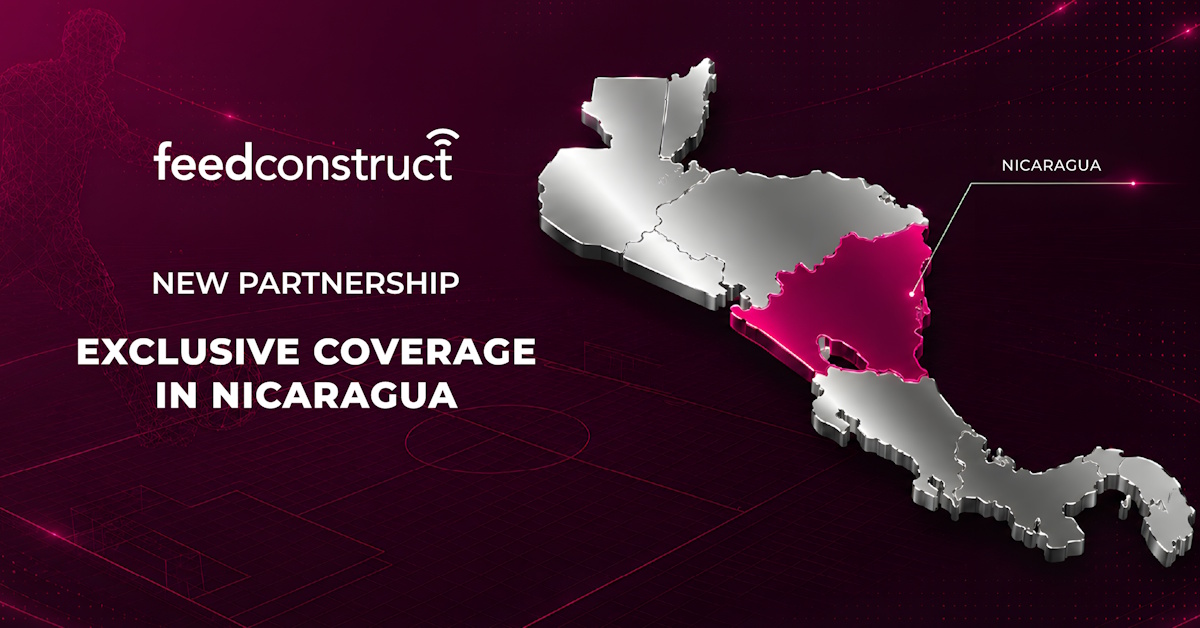
Deal covers worldwide distribution of Liga Primera and Copa Primera content for sportsbooks and betting suppliers.
FeedConstruct has acquired exclusive worldwide streaming and data rights for Nicaragua’s top-tier football competitions, Liga Primera and Copa Primera.
The company said the agreement delivers start-to-finish coverage of every match across both competitions and expands its Central American football portfolio for sportsbook operators and providers using its data integration and streaming.
Ani Isakhanyan, Head of Rights and Content at FeedConstruct, stated, “Securing these exclusive rights is a highly valuable addition to our portfolio. Liga Primera and Copa Primera deliver the consistent football content that the global iGaming industry demands. This acquisition ensures our partners can offer comprehensive coverage of a rapidly emerging betting market.”
Allan J. Chamorro, Managing Partner at Apollo Sports Business Group, added, “Nicaragua has rapidly established itself as one of Central America’s fastest-growing football markets, attracting growing regional recognition and international commercial interest. Our partnership with FeedConstruct builds on that momentum by expanding the global distribution of Liga Primera and Copa Primera while powering sustainable commercial opportunities that strengthen clubs, elevate the competitions, and accelerate the long-term growth of the game.”
Liga Primera and Copa Primera are the main competitions in Nicaragua’s professional football calendar. FeedConstruct said the competitions are gaining regional recognition in Central America, supported by regular participation in CONCACAF tournaments.
The post FeedConstruct takes exclusive data and streaming rights for Nicaragua’s Liga Primera appeared first on EE Gaming | Global iGaming & Tech Intelligence Hub.

The UAE Lottery has partnered with SmartLife Foundation to support outdoor workers during the UAE summer, backing the Cool Bus Shelter initiative in Abu Dhabi on July 20, 2026.
The programme aligns with the UAE’s Midday Break rules, which require outdoor work to stop between 12:30 PM and 3:00 PM during peak heat. As part of the initiative, air-conditioned buses were stationed near labour sites to provide workers a place to rest before returning outdoors.
Volunteers from The UAE Lottery and SmartLife Foundation provided cold towels, cold water and drinks, according to the organisations. Workers also received portable rechargeable neck fans intended to provide additional cooling after the break.
Suzan Kazzi, Associate Director – Corporate Social Responsibility at Momentum- The UAE Lottery, said: “Outdoor workers are the backbone of our cities’ urban development, and initiatives like the Cool Bus Shelter ensure they receive the care and recognition they deserve during the most challenging months of the year. This is our small way of saying thank you and reminding them that their wellbeing truly matters”.
Abhijeet Oak, Vice President at SmartLife Foundation, added: “At SmartLife Foundation, we believe that protecting the wellbeing of outdoor workforce is a shared responsibility. Through the Cool Bus Shelter initiative, we are proud to collaborate with organizations such as The UAE Lottery and other community partners to create moments of comfort, appreciation and human connection that leave a lasting impact”.
The post The UAE Lottery backs Cool Bus Shelter initiative for outdoor workers appeared first on EE Gaming | Global iGaming & Tech Intelligence Hub.
Bally’s Intralot
Intralot Ireland Limited Signs Seven Year Contract Extension with Premier Lotteries Ireland
Bally’s Intralot announced that its subsidiary Intralot Ireland Limited has signed a seven year contract extension, through November 2034, with Premier Lotteries Ireland (PLI). The agreement supports PLI’s continued operation of the Irish National Lottery through the remainder of its license period and reinforces Bally’s Intralot’s role as a trusted technology and services partner.
Under the terms of the agreement, Bally’s Intralot will modernise PLI’s technology ecosystem by deploying its next-generation LotosX Omni solution and PlayerX Player Account Management platform. The solution will provide a modern, cloud-based technology foundation supporting lottery operations across retail and digital channels, while incorporating advanced retailer management, instant games management, device management and content management capabilities. The agreement also includes comprehensive support and maintenance services, along with cloud operations and cybersecurity services for the first year, designed to ensure the long-term reliability, security and performance of PLI’s technology environment.
Through this partnership, Bally’s Intralot will support PLI in delivering a future-ready operating environment designed to enhance operational efficiency, accelerate innovation and strengthen player engagement. The modernisation will provide a secure, scalable and resilient platform that enables PLI to continue evolving its offerings while improving time-to-market implementation of new initiatives, along with maintaining the highest standards of reliability and service to players and retailers across Ireland.
“We are pleased to extend our partnership with Bally’s Intralot, a relationship built on trust, commitment to excellence, and shared ambition since 2014. As we look to the future, this agreement provides a strong platform for continued innovation and growth, ensuring we can deliver a modern, secure, and world-class National Lottery that places responsible play at its heart while continuing to benefit communities across Ireland,” said Cian Murphy, CEO of PLI.
Robeson Reeves, CEO of the Bally’s Intralot Group, said: “We are proud to extend our long-standing partnership with Premier Lotteries Ireland for a further seven years. This agreement reflects the strength of our technology and the trust we have built with PLI over more than a decade of collaboration. We look forward to continuing to support the National Lottery of Ireland and to delivering innovative, responsible gaming experiences to players across the country.”
The post Intralot Ireland Limited Signs Seven Year Contract Extension with Premier Lotteries Ireland appeared first on EE Gaming | Global iGaming & Tech Intelligence Hub.

-

 ESPN Networks3 days ago
THE 57th ANNUAL WORLD SERIES OF POKER® CONCLUDES AN EXTRAORDINARY SUMMER OF GLOBAL ENGAGEMENT AND ELITE COMPETITION
-
Latest News7 days ago
EveryMatrix’s Fantasma Games launches three-reel slot Bonus Bullets
-
Latest News5 days ago
Booming Games launches Tasty Bonanza Max Scatter slot
-
Latest News6 days ago
SCCG Management Launches Dedicated SCCG Brazil Division with Local Partner Thomas Carvalhaes
-
Latest News7 days ago
Blokotech adds Wicked Games slots in new content deal
-
Latest News6 days ago
Esportes Gaming Brasil takes two ClienteSA Awards 2026 wins; exec named Personality of the Year
-
Canada6 days ago
ThrillTech secures AGCO supplier licence for Ontario launch
-
Canada5 days ago
Peter & Sons launches full game portfolio in Alberta