Latin America
Prediction Markets Gain Ground in Brazil as Previlabel Enters the Market


The prediction market is beginning to gain traction in Brazil at a time of transformation for the gaming industry and probability-based digital products.
Although it is still an emerging concept in the country, and a controversial one in neighboring markets, this model, which combines elements of financial markets, technology, and user behavior, has already demonstrated its potential in other regions by offering collective estimations of future events.
However, its development has been uneven across Latin America.
In markets such as Argentina, for example, it has faced restrictions and even bans, amid regulatory debates over its nature and its possible similarity to traditional betting.
In this context, Brazil emerges as a market still in formation, where the recent regulation of sports betting opens the door to discussions around new probability-based digital formats.
It is in this scenario that the figure of Carlos Santos emerges, CEO and one of the promoters of this segment in the Brazilian market with the launch of Previlabel.
With prior experience in the betting ecosystem, Santos chose to move beyond the traditional model and focus on building a new category in the country: prediction markets.
Through his vision and his project, the executive aims not only to introduce this concept in Brazil, but also to develop the technological infrastructure needed for new operators and companies to participate in this emerging ecosystem.
In this interview, Carlos Santos discusses the potential of prediction markets in Brazil, the challenges of their development, and the opportunities that could shape the future of this segment in the region.
Prediction Markets in Brazil
The prediction market is still relatively unknown in Brazil. How would you explain this concept to someone who has never heard of it?
Prediction markets are platforms where people trade probabilities about future events. Instead of simply betting on an outcome, users buy or sell positions based on the likelihood of something happening.
The price of these positions ultimately reflects what the market believes is the probability of that event.
That’s why many people describe this model as a kind of stock exchange for probabilities, where information, opinion, and money come together to form a collective estimate of the future.
Why do you believe Brazil could become a relevant market for prediction platforms?
Brazil has several factors that strongly support this type of market.
First, it is a highly digitally connected country with strong adoption of new financial technologies. Second, there is a strong cultural interest in sports and public events, which naturally drives interest in predictions.
Additionally, the recent regulation of sports betting has opened the door to discussions around products related to probabilities and digital markets.
The country has just regulated sports betting. Are prediction markets a natural evolution of this, or a different industry?
They are related, but not exactly the same. In traditional sports betting, probabilities are set by the bookmaker. In prediction markets, however, users themselves create those probabilities by trading positions with each other.
This creates a dynamic closer to a financial market, where prices change as new information emerges and as people adjust their expectations.
What types of events do you believe could become popular in this market in Brazil?
Sports will likely be the most natural entry point, as there is already a large audience interested in this type of content.
But over time, these markets can expand into areas such as politics, economics, entertainment, and even technology.
In other countries, prediction markets already exist around elections, economic indicators, and major global events.
This shows that the model has the potential to go beyond entertainment.
Is there a risk that prediction markets could be confused with traditional betting?
Yes, especially in the early stages. Since both involve money and probabilities, some confusion is natural. However, the key difference lies in the market dynamics.
In prediction platforms, users can trade probabilities and react to new information, making the system closer to a financial market than a traditional bet.
Over time, as users better understand how it works, this distinction tends to become clearer.
Abroad, prediction platforms have existed for some time. What can Brazil learn from these experiences?
The main lesson is that these markets work best when there is transparency, liquidity, and clear operational rules.
International experiences show that, when well structured, prediction markets can generate highly accurate estimates of future events.
However, they also highlight the importance of integrity mechanisms and a regulatory environment that keeps pace with innovation.
Brazil has the advantage of being able to observe these examples and adapt best practices to its own context.
What made you look at prediction markets instead of continuing only in the traditional betting industry?
At the last SBC in Lisbon, I had a very clear moment of realization about the market.
I understood that I was trying to compete in a very difficult environment for new companies, going directly against well-established giants in the betting sector.
The regulated betting market in Brazil is extremely competitive and dominated by companies with significant capital.
It’s like trying to swim alongside sharks in an ocean that already belongs to them.
That’s when I realized that the opportunity might not be to compete in that market in the traditional way, but rather to help build a new category within the industry.
Prediction markets are still at an early stage in Brazil, which creates space for innovation, technology, and leadership.
I saw that I could bring all the knowledge I developed in the betting sector to help structure this new phase of the market in the country.
When did you decide to turn this into a business?
When I returned to Brazil after SBC Lisbon, my business perspective changed completely.
I began studying prediction markets more deeply and realized that this was not just a global trend, but also a real opportunity to build infrastructure for this sector in Brazil.
From that point, we started a partnership with Mercado Bitcoin, leveraging the company’s expertise in Web3 and digital infrastructure to develop this technology.
The idea was to combine this blockchain experience with our product and market vision, creating a technological foundation capable of bringing more competitiveness and innovation to this new segment.
What were the biggest challenges when starting in this sector?
The main challenge was building the technology.
Prediction markets require very specific infrastructure, including probability trading systems, liquidity management, event handling, and integrity mechanisms.
Since this is still a very new market in Brazil, there were virtually no ready-made solutions adapted to the local reality.
This required a significant development effort to build a robust technology capable of supporting the growth of this ecosystem.
Is the Brazilian public ready to understand and use prediction markets?
I believe so. Brazilians have already demonstrated a strong ability to adapt to new digital products.
Just look at the growth of sports betting, cryptocurrencies, and financial platforms in recent years.
When the model is well explained and the user experience is simple, adoption tends to happen quickly.
What exactly does Previlabel do within this market?
Previlabel is a technology company focused on infrastructure for prediction markets.
We develop the technology that allows entrepreneurs to create their own prediction platforms and build businesses within this new segment that is starting to emerge in Brazil.
Our goal is to make it easier for new operators to enter this market.
You don’t operate just one platform, you sell technology for others to build their own. How does this model work?
Exactly. Previlabel operates as a technology provider for this market. Instead of running a single platform, we develop the infrastructure that operators can use to launch their own brands within the prediction market space.
This allows entrepreneurs and companies to enter the sector much faster, without needing to build the entire technology from scratch.
Do you believe we will see many prediction platforms emerging in Brazil in the coming years?
I believe this will happen very quickly. In the coming months, we should already see several platforms emerging in Brazil.
Historically, the country has always attracted new digital business models due to the size of its market and the high level of technological engagement.
When a promising new segment appears, Brazil often becomes one of the main markets for experimentation.
Is there a kind of “race” to create the first major Brazilian prediction market?
Yes, this is natural in any emerging industry.
When a new market begins to take shape, there is always an initial competition between companies to see who can position themselves first and become a reference.
We are likely at the beginning of this process in Brazil, and those who manage to build solid technology, gain user trust, and scale quickly will have a significant advantage.
The post Prediction Markets Gain Ground in Brazil as Previlabel Enters the Market appeared first on Americas iGaming & Sports Betting News.












Kickoff Roulette Ronaldinho launches with a Gold Number mechanic and English/Portuguese language support.
CreedRoomz has named former football star Ronaldinho as brand ambassador for its new live casino game show, Kickoff Roulette Ronaldinho. The supplier said the title is now available for integration by B2B partners.
The company positions the product as a roulette-led live game show built around a football theme, running from a virtual studio. According to CreedRoomz, the game includes a “Gold Number Mechanic” where randomized lucky numbers can add multipliers from x50 to x700.
When asked about the crossover between football and casino entertainment, Ronaldinho said: “The fact that football is a global passion also helps, so I believe everyone will like “Kickoff Roulette Ronaldinho” for that reason.. and for the innovation of everything that is happening.”
CreedRoomz said the game is available in English and Portuguese, framing Portuguese language support as relevant for operators targeting Brazil and other Portuguese-speaking audiences. Armen Mnaskanian, Head of Sales Department at Creedroomz, said: “Bringing Ronaldinho into the CreedRoomz family represents a massive leap forward for live casino entertainment. Football and iGaming both thrive on passion and excitement. By fusing Ronaldinho’s legendary star power with powerhouse monetization mechanics, we are giving our partners the ultimate competitive edge and a next-generation casino offering.”
The post CreedRoomz signs Ronaldinho to front new Kickoff Roulette live game show appeared first on EE Gaming | Global iGaming & Tech Intelligence Hub.
Latest News
Grupo Esportes Gaming Brasil recebe indicação inédita com três marcas no Prêmio Reclame Aqui 2026

Esportes da Sorte, Onabet e Lottu concorrem em categorias do setor de apostas e reforçam estratégia centrada na experiência do cliente
As três marcas do Grupo Esportes Gaming Brasil (EGB) foram indicadas ao Prêmio Reclame Aqui 2026, uma das principais premiações brasileiras voltadas à reputação e ao relacionamento com consumidores. É a primeira vez que Esportes da Sorte, Onabet e Lottu aparecem simultaneamente entre os indicados, marco que reforça os investimentos da companhia em atendimento, experiência do cliente e construção de confiança.
O Esportes da Sorte concorre na categoria Ultra Casas de Apostas (Bets) – Mega Operações. Já Onabet e Lottu disputam a categoria Casas de Apostas (Bets) – Mega Operações.
A indicação ocorre em um momento de fortalecimento das operações de relacionamento do Grupo EGB, que vem investindo na qualificação dos processos de atendimento, integração de tecnologia, treinamento de equipes e aprimoramento contínuo da jornada dos usuários em todas as suas marcas.
“Receber pela primeira vez a indicação das três marcas do Grupo ao Prêmio Reclame Aqui é um reconhecimento muito significativo para o trabalho que realizamos diariamente. Mais do que um resultado, reflete a estratégia consistente de colocar o cliente no centro das decisões, investindo em tecnologia, eficiência operacional e atendimento humanizado para construir relações de confiança de longo prazo”, afirma Maria Neves, diretora de CX, Suporte ao Cliente e Canais Reputacionais do Grupo Esportes Gaming Brasil.
A empresa tem ampliado os investimentos em tecnologia e experiência do usuário, com iniciativas voltadas à modernização dos canais de atendimento, ao monitoramento contínuo da satisfação dos clientes e à qualificação das equipes. Em anos anteriores, tal iniciativa já havia levado à indicação simultânea do Esportes da Sorte e da Onabet à premiação. Como resultado desse processo, o Grupo reduziu o tempo médio de atendimento humano de 30 para 2 minutos, mantendo uma abordagem centrada na resolução rápida das demandas e na qualidade da experiência oferecida aos usuários.
Considerado um dos mais relevantes reconhecimentos do país em reputação e atendimento ao consumidor, o Prêmio Reclame Aqui tem a participação direta dos consumidores na avaliação das empresas. A fase de votação popular da edição 2026 acontece entre 2 de setembro e 5 de novembro.
A presença simultânea de Esportes da Sorte, Onabet e Lottu entre os indicados reforça a consistência da estratégia de relacionamento adotada pelo Grupo EGB e consolida um marco inédito na trajetória da companhia junto ao prêmio.
The post Grupo Esportes Gaming Brasil recebe indicação inédita com três marcas no Prêmio Reclame Aqui 2026 appeared first on Americas iGaming & Sports Betting News.
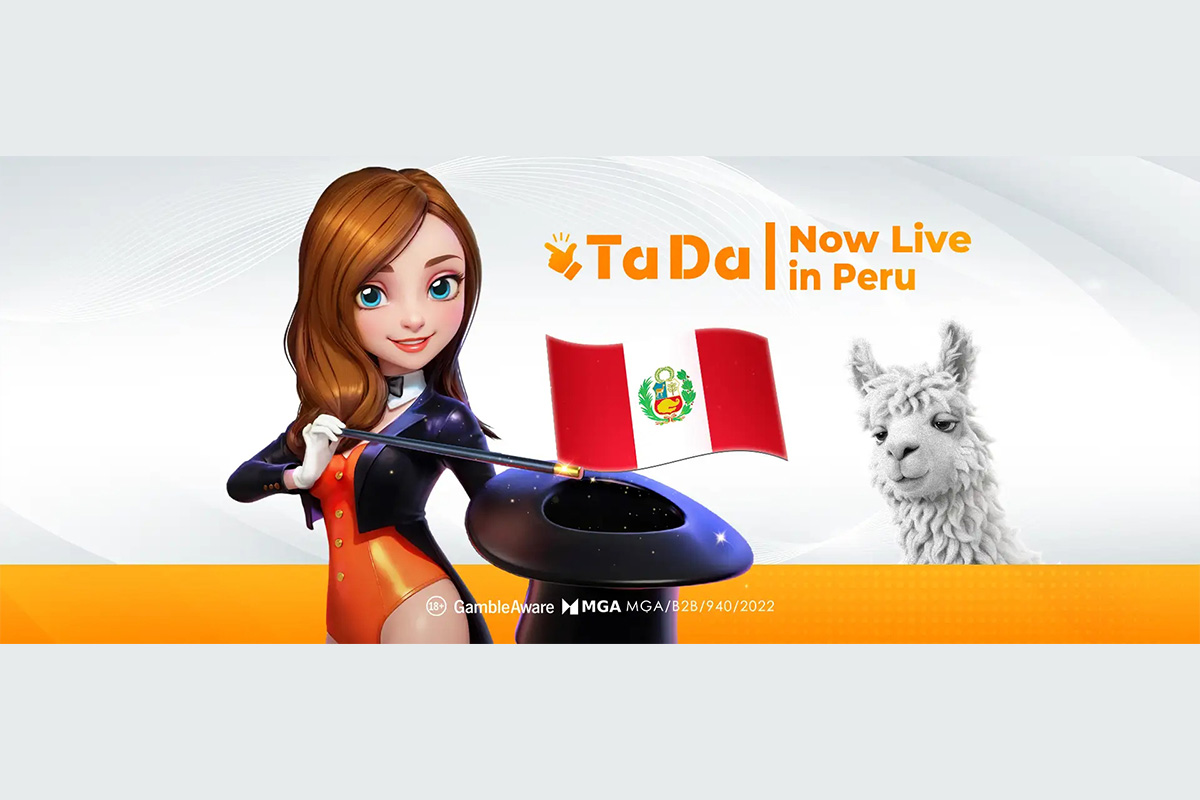
TaDa Gaming has officially secured an online gaming licence from Peru’s Ministry of Foreign Trade and Tourism (MINCETUR),
This marks another milestone in the company’s strategic expansion across Latin America’s regulated iGaming markets and reinforces its reputation as a trusted and responsible global content provider.
Peru has rapidly emerged as one of Latin America’s fastest growing and regulated online gaming markets following the implementation of its licencing framework. With regulatory certainty creating new opportunities for operators and suppliers alike, TaDa has focused on Peru as a key destination within its long-term Latin American growth strategy.
MINCETUR approval was received prior to TaDa’s successful debut at the Peru Gaming Show (PGS) 2026 in Lima, where the company announced its launch with Peru’s leading operator, Apuesta Total, through long-standing distribution partner Bragg Gaming.
15 certified TaDa titles are currently available in Peru, with additional games scheduled for release as the company continues to expand its local offering.
TaDa’s proven success in regulated jurisdictions across Africa, Europe, North America and the UK, as well as Argentina, Brazil, Chile and Mexico, has been built on its highly effective glocalisation strategy.
This combines internationally successful core game mechanics with expertly localised content designed to meet the cultural preferences and playing habits of individual markets.
Alongside its award-winning slot portfolio, TaDa’s distinctive fishing-shooting games continue to attract new audiences through their social, skill-based gameplay and broad demographic appeal, especially to younger and new to iGaming audiences.
Its growing gamification ecosystem is designed to enhance player engagement while supporting responsible gaming. GiftCode, WIN CARD, Hot Hand, Highlights, Daily Rewards and Missions provide operators with powerful retention mechanics that deliver measurable value throughout the player lifecycle.
TaDa’s continued investment in regulated markets reflects the company’s broader strategy of sustainable growth. By working closely with regulators, operators and aggregation partners, the supplier continues to deliver compliant entertainment expertly tailored to local player demands.
Ray Lee, Director of Business Development at TaDa Gaming, said: “Securing the MINCETUR licence was another major achievement in our global strategy to be present in all regulated markets.
“There is strong demand for differentiated and expertly localised content in Peru. We are confident that our brand for safe and trustworthy gaming experiences alongside our reputation for working as growth partners with our clients will enable us to succeed.”
The post TaDa Gaming Accelerates LatAm Growth with Peru Licence Approval appeared first on Americas iGaming & Sports Betting News.

-

 Latest News7 days ago
Eeze opens 1,200 sqm Bucharest hub for technical teams
-
Latest News7 days ago
Play’n GO strengthens Latin American presence with Betano Colombia launch
-
Latest News6 days ago
Belatra signs cooperation deal to distribute slots via VeliGames
-
Latest News6 days ago
BetMakers Technology Group Selected to Distribute ATG Horse Racing Content Across Australia and New Zealand
-
Compliance Updates7 days ago
Kasinohai Audit: Most Slots Could Be Affected by Finland’s Draft Gambling Rules
-
Compliance Updates6 days ago
Pernambuco court revokes Spribe’s interim relief in Aviator trademark dispute
-
Latest News7 days ago
R. Franco Digital releases fighting game-themed slot Spin Fighters
-
Compliance Updates6 days ago
ACMA Warns MMA Fighter Jamie Mullarkey for Breaches of Online Gambling Laws