Latest News
Brazil: Regulation, market dynamics and tax pressure shape a new phase for iGaming

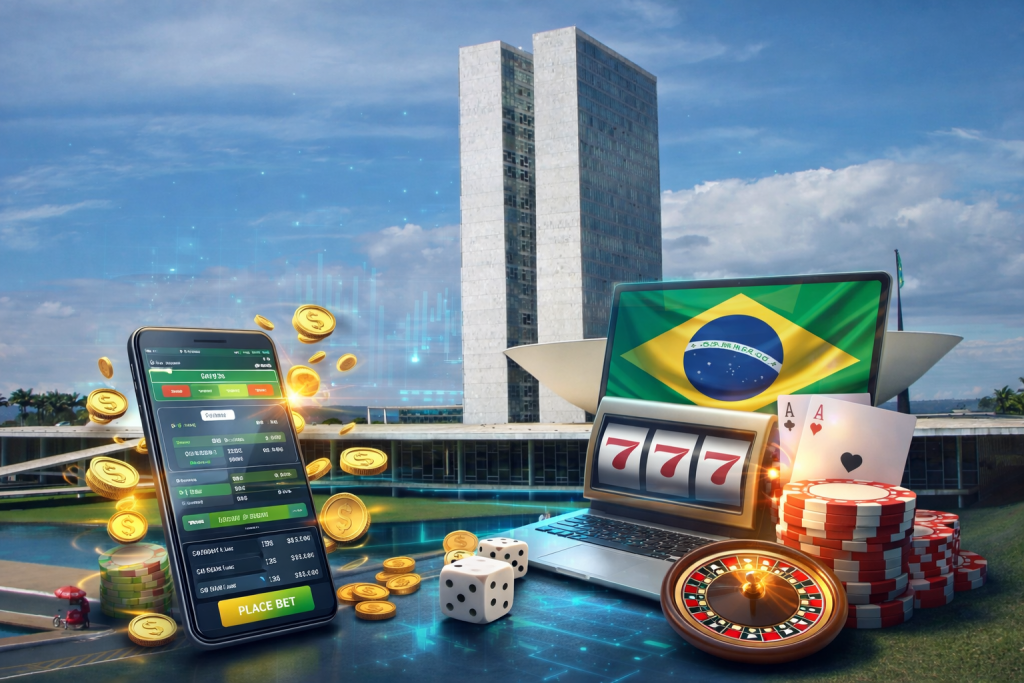
The past week has clearly highlighted how the Brazilian iGaming and sports betting market is moving into a more structured, institutionalized and, at the same time, more demanding phase.
Decisions by the federal government, official data released by the Ministry of Finance, and private initiatives focused on regulatory intelligence point to an ecosystem that is leaving behind its experimental stage and entering a cycle of regulated consolidation.
More than isolated developments, recent events reveal a shift in posture by both public authorities and market participants.
Brazil is no longer treating the sector merely as a new source of tax revenue, but increasingly as an industry that requires governance, legal predictability, systemic oversight and clearly defined enforcement mechanisms.
This approach repositions the country on the international radar, bringing it closer to more mature jurisdictions and raising the level of responsibility for all stakeholders involved.
At the same time, the rapid expansion in the number of authorized operators, the broadening of the regulatory scope beyond B2C activities, and the advancement of the tax debate are creating a more competitive and selective environment.
Operating in Brazil continues to offer scale and growth potential, but it now requires strategic planning, robust compliance capabilities and continuous monitoring of the political and regulatory landscape.
The themes that defined the week help illustrate how Brazil is laying the foundations for its new phase in iGaming — one in which growth, institutional control, market intelligence and tax pressure move in parallel and begin to define who is truly prepared to remain and compete in the medium and long term.
Regulation moves beyond operators
One of the most relevant developments of the week was the launch of a public consultation by the Ministry of Finance to discuss regulatory requirements applicable to suppliers within the betting and iGaming sector.
The initiative is being led by the Secretariat of Prizes and Betting (SPA), the body responsible for implementing and supervising the regulated market, currently operating under the Ministry headed by Fernando Haddad.
Until now, Brazil’s regulatory process has been heavily focused on B2C operators.
With the new consultation, the scope expands to encompass the entire value chain that supports the ecosystem, including technology providers, gaming platforms, aggregators, betting systems, payment methods, KYC, AML, anti-fraud and compliance solutions.
In practical terms, the government is signaling its intention to establish minimum operating criteria, technical responsibilities and compliance standards for suppliers as well, reducing grey areas and operational risks.
The proposal
The proposal follows the logic adopted in more mature regulated markets, where oversight is not limited to consumer-facing offerings but extends to the technological and financial infrastructure behind the operation.
For supplier companies, this represents a significant structural shift.
In addition to increasing adaptation and compliance costs, regulation is likely to redefine commercial relationships, requiring closer alignment between licensed operators and their technology partners.
At the same time, it creates a more predictable environment, with clearer rules and lower exposure to regulatory risk in the medium and long term.
The move also reinforces a clear political message: Brazil does not intend to build its regulated market with a purely permissive or revenue-driven approach.
The expansion of the regulatory scope indicates a strategy of systemic control, aimed at sustainability, operational integrity and greater institutional credibility in the eyes of investors and international bodies.
Official operator list confirms accelerated expansion in Brazil
The publication by the Ministry of Finance of an official list of 184 platforms authorized to operate in Brazil’s regulated online betting market confirms the speed at which the sector has expanded since the new legal framework came into force.
The list, released by the Secretariat of Prizes and Betting (SPA), includes operators deemed eligible to operate in the country under the rules established by the federal government.
The figure is striking not only for its size, but for what it represents in terms of competitiveness and market maturity.
In just a few months, Brazil has moved from a largely unregulated landscape to a formally structured ecosystem, with authorization criteria, compliance requirements and centralized supervision.
According to the Ministry of Finance itself, the publication of the list aims to provide market transparency, guide consumers and signal which companies meet the legal requirements to operate while the licensing process is finalized.
It also serves as a tool to organize the sector at a time of transition from an informal market to a fully regulated model.
As the ecosystem becomes increasingly crowded, simply holding a license ceases to be a competitive advantage and becomes a minimum condition for remaining in the market.
Competition is likely to shift toward factors such as operational efficiency, financial robustness, brand positioning, cultural adaptation to the local audience and the ability to operate within a more stringent regulatory environment.
For international operators, the list also serves as a barometer of global appetite for the Brazilian market, now viewed as one of the most promising — and simultaneously most challenging — among newly regulated jurisdictions.
The full list of authorized platforms is available on the official federal government website.
Data and Intelligence take center stage
Oddsgate launches “Brasil On Track”, a strategic platform for Brazil’s regulated iGaming market
Oddsgate has announced the launch of “Brasil On Track”, a strategic platform designed to help operators and ecosystem participants navigate Brazil’s regulated iGaming market.
The initiative was presented on February 5, 2026, at a time when Brazilian regulation marks its first year under Law 14.790/2023, which introduced greater legal clarity, a defined tax structure and compliance requirements for the sector.
“Brasil On Track provides real-time monitoring of regulatory milestones, market indicators and operational requirements, connecting legal updates to direct business impact and linking directly to official sources,” Oddsgate stated in its launch announcement.
The platform was designed to transform regulatory complexity and legal obligations into a continuous, accessible intelligence framework.
Its features include:
- live tracking of regulatory updates and pending legislation; an operational map translating legal changes into practical compliance actions
- market intelligence on player demographics and key performance indicators
- visibility into tax structures, licensing stages and market entry requirements; and specific focus areas covering KYC (Know Your Customer), AML (Anti-Money Laundering), self-exclusion tools, consumer protection and responsible gaming.
According to Oddsgate’s Director of Regulatory Affairs, Valter Delfraro Jr., Law 14.790/2023 marked a milestone that “ended years of uncertainty and provided legal security and operational clarity.”
He emphasized that this new phase places Brazil’s gaming sector on equal footing with mature markets, increasing international competitiveness and attracting global investors.
“We have transformed regulation into a practical, ongoing guide to operating in Brazil with less risk and greater clarity,” added Wagner Fernandes, Oddsgate’s Chief Marketing Officer, noting that the platform is designed to equip teams entering, expanding or optimizing operations in the country.
The launch of “Brasil On Track” comes amid a rapidly evolving regulatory environment in Brazil, where, according to official data from the Ministry of Finance, the sector generated approximately BRL 36 billion in gross gaming revenue between January and September 2025, with BRL 3.3 billion collected in federal taxes during the same period — highlighting the scale and dynamism of the national market.
The arrival of this tool reflects a growing demand for structured market intelligence, indicating that operators and suppliers are seeking not only news and updates.
But solutions capable of integrating regulatory data with real-time operational and strategic insights.
Taxation moves to the center of the debate
While regulation advances and the market becomes more organized, the tax debate has emerged as one of the most sensitive issues of the moment, both for the government and for industry participants.
The possibility of a total tax burden of up to 42% on iGaming and sports betting is no longer merely theoretical; it is being actively discussed with direct political and economic implications — including in exchanges between Finance Minister Fernando Haddad and industry representatives.
Commenting on proposals to increase taxation, Pietro Cardia, legal director of the National Association of Games and Lotteries (ANJL), warned that tax hikes above international standards could undermine the economic performance of companies operating legally and compliantly in Brazil.
João Fraga, CEO of payment solutions provider Paag, highlighted that tax changes in such a young market could directly impact business strategies, particularly less than a year after operations began under the new regulatory framework.
Organized industry groups have also publicly reinforced the need to balance tax collection with the sector’s ability to compete in a market where illegal operators remain strong.
Organizations such as the Brazilian Institute for Responsible Gaming (IBJR) stress that if tax policy focuses solely on revenue generation without a parallel strengthening of enforcement against unlicensed operators, regulated players may lose ground to the informal market, increasing risk and eroding fiscal revenues.
This discussion returns to the center of the agenda at a time when the Ministry of Finance and the National Congress are debating broader fiscal adjustments in the country — debates in which betting taxation has been explicitly mentioned as part of wider revenue-raising proposals.
The weight of this tax burden is being assessed not only in numerical terms, but also in terms of its impact on investment in product development, technology, compliance and consumer protection, placing operators and suppliers in a dilemma that goes beyond a simple cost calculation.
A larger, clearer — and more demanding market
The week’s developments point to a common denominator: Brazil is rapidly moving toward a more structured, but also more rigorous, regulated market. There is greater legal clarity, stronger institutional control and increased competition, but also higher costs and far less room for improvisation.
For those monitoring Brazil as part of an international strategy, the moment calls for careful analysis. The country continues to offer scale and potential, but now demands regulatory maturity, fiscal planning and a long-term perspective.
The consolidation of iGaming in Brazil is entering a decisive phase.
The combination of broader regulation, growth in the number of operators, professionalization of market intelligence and rising tax pressure is shaping a more predictable — and at the same time more selective — environment.
Brazil is definitively leaving behind the status of a disorganized emerging market and operating under clearer rules and constant oversight.
For companies viewing Brazil as part of a global strategy, this is a moment that requires measured reading and well-calibrated decisions.
Scale potential remains high, but so do entry and operating costs, along with the need for compliance, efficiency and differentiation.
The market is likely to continue growing, but in a more rational manner, favoring players prepared to operate in a regulated, competitive and increasingly tax-intensive environment.
The post Brazil: Regulation, market dynamics and tax pressure shape a new phase for iGaming appeared first on Americas iGaming & Sports Betting News.












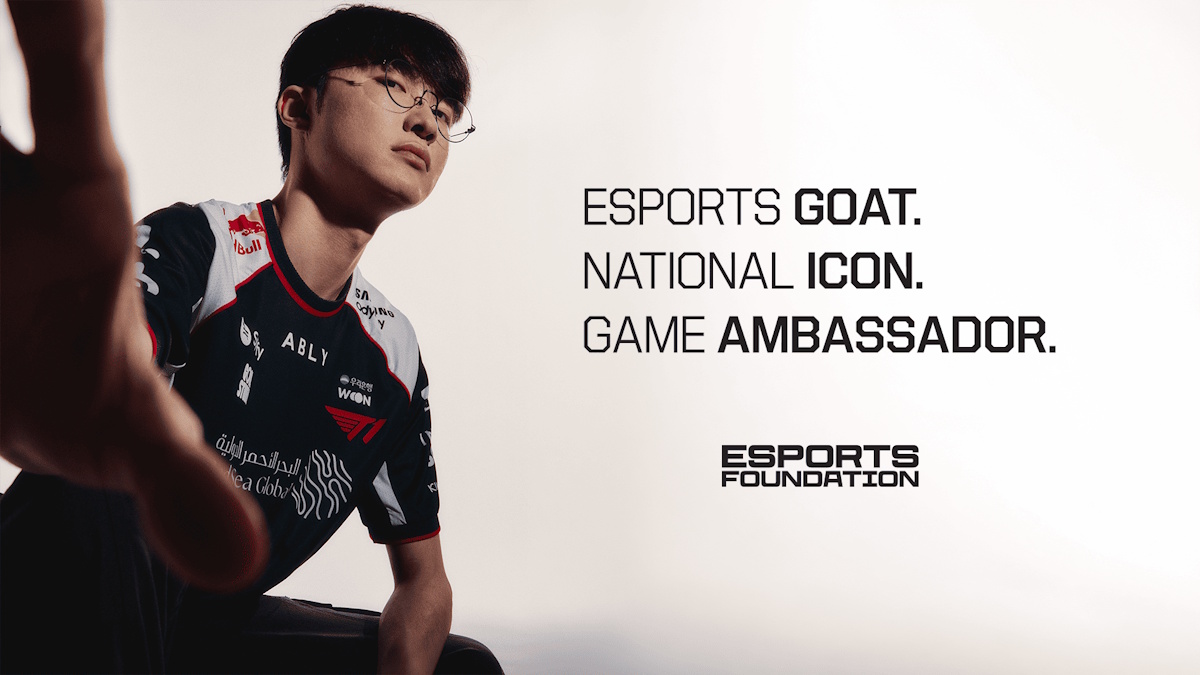
Lee “Faker” Sang-hyeok joins Cristiano Ronaldo and Magnus Carlsen in the Esports Foundation’s Ambassador Program.
The Esports Foundation (EF) has appointed Lee “Faker” Sang-hyeok as a Game Ambassador for the Esports World Cup (EWC) and Esports Nations Cup (ENC) through 2028, the organization said on July 15, 2026 in a statement issued from Riyadh and Paris.
EF said Faker joins Cristiano Ronaldo, listed as the Foundation’s Global Ambassador, and Magnus Carlsen as part of the Esports Foundation Ambassador Program. The Foundation said Faker will represent “the perspective of esports players” across its international events, athlete initiatives, media engagements and leadership forums.
“You can’t talk about esports without mentioning Faker. He is the defining athlete of competitive gaming: a champion whose excellence, discipline and longevity have inspired an entire generation,” said Ralf Reichert, Chief Executive Officer of the Esports Foundation. “As our Game Ambassador, Faker represents something fundamental to the Ambassador Program: esports creates its own global sporting icons. Across EWC, ENC and NGSC, he will help ensure that the players who built this sport have a voice in shaping where it goes next.”
Faker said: “Competition has shaped my life, and I am proud to join the Esports Foundation as Game Ambassador. I want to continue competing for the biggest titles with T1 while representing the players and fans who have helped esports grow worldwide. Through the Esports World Cup, Esports Nations Cup and the Foundation’s wider platforms, I hope to inspire the next generation to pursue excellence, remain resilient and believe in how far competitive gaming can take them. There is still much more to achieve.”
EF highlighted Faker’s competitive record, describing him as a six-time League of Legends World Champion, EWC 2024 winner, two-time MSI champion and ten-time domestic champion with T1. The Foundation also said Faker became the first esports athlete to receive the Blue Dragon Medal in 2026, describing it as the Republic of Korea’s highest sporting honor awarded by President Lee Jae-myung.
The post Esports Foundation names Faker Game Ambassador for EWC and ENC through 2028 appeared first on EE Gaming | Global iGaming & Tech Intelligence Hub.

Midnite has agreed a partnership with Middlesbrough FC that will see the UK bookmaker become the club’s principal partner and front-of-shirt sponsor for the 2026/27 campaign, which Middlesbrough describes as its landmark 150th season.
The companies announced the deal alongside a fan activation at Riverside Stadium on Thursday, July 9, branded “This Season’s On Us”. The initiative offered supporters prizes including 2026/27 season tickets, 2026/27 shirts, match tickets, or a £25 club shop voucher, with fans required to answer Middlesbrough trivia and complete a football challenge.
Middlesbrough former players Craig Hignett and David Wheater attended the event, and, according to the company, took bonus attempts on behalf of participants who missed out.
Andrew Mook, Midnite’s Head of Brand Marketing, said:
“Middlesbrough have a storied history and we’re delighted to announce this partnership during such a monumental year with the club celebrating their 150th anniversary.
“It was great to see so many Middlesbrough fans at the “This Season’s On Us” activation, we hope they enjoyed taking part and meeting club legends, with David Wheater hitting top bins on several occasions and allowing fans to win big with season tickets.
“We can’t wait to get to Riverside Stadium in August to kick-off a new season and we’re excited to say that we have plenty of new and captivating campaigns planned.”
Lee Fryett, Middlesbrough FC Chief Commercial Officer, added:
“We’re delighted to welcome Midnite as our new Principal Partner.
“We’re looking forward to working closely with Midnite to develop engaging campaigns, content and unique experiences that bring our fans even closer to the club.
“We’re confident this partnership will provide real value for our supporters while supporting our ambitions both on and off the pitch.”
The post Midnite signs as Middlesbrough FC principal partner for 2026/27 season appeared first on EE Gaming | Global iGaming & Tech Intelligence Hub.
ThrillTech has been awarded a Gaming-Related Supplier licence by the Alcohol and Gaming Commission of Ontario (AGCO), clearing the company to launch in Ontario’s regulated market.
The licence allows ThrillTech to deploy its opt-in side bet jackpots technology with regulated online casino, sports betting and lottery operators across the province.
Benjamin Bradtke, Co-Founder of ThrillTech, said: “Securing our AGCO licence is a major step in our mission to transform how jackpots are delivered at scale across regulated markets. This latest certification is testament to our robust technology and trusted compliance frameworks, allowing us to continue our global growth trajectory. We are thrilled to bring our proven, compliant jackpot technology to Ontario, empowering locally licensed operators to uplift revenue without cannibalising existing spend.”
The company said its “ThrillPots” mechanics sit as an independent, player-funded side bet and do not alter the underlying game’s return-to-player mathematics.
ThrillTech said the Ontario approval enables its existing multinational partners that also operate in the province to launch its side bet jackpots locally, while it also holds talks with potential new operator partners. The company lists its regulated footprint as including the United Kingdom, Sweden, the Netherlands, Romania, Malta, Gibraltar, Brazil and Peru.
The post ThrillTech secures AGCO supplier licence for Ontario launch appeared first on EE Gaming | Global iGaming & Tech Intelligence Hub.

-

 Compliance Updates5 days ago
Arizona Department of Gaming Issues Cease-and-Desist Orders to Multiple Operators Linked to Underage Gambling and Illegal Activity
-
 Latest News7 days ago
ELA Games releases Flames Fruits Frenzy Hold and Win slot
-
Latest News7 days ago
PG Soft appoints Hugo Baungartner as General Manager LatAm
-
Compliance Updates6 days ago
KONAMI GROUP’s Konami Gaming Inc. First to Submit Manufacturer License Application in Japan’s Emerging IR Market
-
Canada7 days ago
Canada’s Safer Gambling Gap: Why Market Success Doesn’t Always Equal Player Safety
-
Latest News7 days ago
Tom Horn Gaming ships Royal Ruby FeatureStorm slot worldwide on 14 July 2026
-
Latest News7 days ago
Booming Games launches Fish Tales: Double Catch Max Scatter
-
Latest News7 days ago
BC.GAME names Guillermo Ochoa brand ambassador for Mexico push