Latest News
Vegangster Integrates OnAim Gamification Platform to Drive Player Engagement

iGaming operators on the Vegangster platform can now launch configurable gamification campaigns designed to increase player engagement and retention across casino and sportsbook products.
Vegangster has completed a direct integration with OnAim Architecture, embedding its gamification toolkit into the Vegangster ecosystem. The partnership gives operators access to a full suite of engagement features, including leaderboards, reward bars, raffles, Journey Path, a unified Coin and Prize system, ready-to-use templates, and a rich library of mini-games, all managed directly within the platform.
All OnAim features available on Vegangster are fully customisable, from timeframes and prize logic to visual branding. Promotions can be created in minutes and triggered by real player actions such as bets, wins, and logins, enabling operators to run campaigns that feel timely and relevant without added operational complexity.
Through the OnAim Architecture, operators can quickly launch campaigns designed to boost retention, support upsell strategies, or achieve specific KPIs. Engagement can be scaled using a broad range of gamification tools or accelerated with pre-built promotion templates based on proven feature combinations. The toolkit is completed by a drag-and-drop Landing Page Builder, allowing teams to create unlimited, fully branded promotion pages in minutes.
“Operators told us they needed gamification that could scale without technical bottlenecks slowing down every campaign,” said Michael Oziransky, Chief Product Officer at Vegangster. “The OnAim integration delivers exactly that: configurable features that marketing teams can deploy independently and tie directly to player behaviour triggers.”
“By integrating at the core level with Vegangster, we’ve made gamification even more accessible and easy to use. Partners can create fully gamified promotions directly from their platform, starting from scratch or using our proven template system. Campaigns can be launched in minutes, and we’re setting out to build playable, engaging, and fully customisable experiences that turn engagement into real impact,” said Lasha Kalandadze, CTO at OnAim.
The OnAim gamification toolkit is now available for all Vegangster operators. Existing clients can activate gamification features through their account management teams, with campaign configuration managed directly within the Vegangster back office. New operators can access OnAim tools during onboarding as part of their standard platform setup.
Live demonstrations of the partnership will be available at ICE Barcelona, Fira Barcelona Gran Via, 19–21 January 2026. Visit Vegangster at stand 1E20.
About Vegangster
Vegangster provides a full-stack iGaming platform engineered for speed, scalability, and operator control. Its turnkey, white-label, and sweepstakes solutions integrate casino and sportsbook content, payments, CRM, compliance, and social features into a single mobile-first system. With Vegangster, operators can launch quickly and scale with confidence.
About OnAim
OnAim is a no-code gamification-as-a-service platform for iGaming operators, empowering teams to create and optimise gamified experiences in minutes while converting engagement into retention and lasting player loyalty.
Press Contact:
Romans Kozlovskis
Senior Content & PR Manager














eGaming Integrity has been named Independent Online Gambling Assurance Provider of the Year 2026 at the UK Enterprise Awards, organised by SME News. The company is based in the Isle of Man and works with operators in regulated online gambling markets.
According to the company, the award recognises its assurance work aimed at helping gambling operators evaluate whether their compliance processes are prepared for regulated market requirements, as regulatory expectations increase around compliance standards and customer protection.
eGaming Integrity said its internal audit reviews assess how gambling businesses operate in practice, including whether procedures and controls meet standards expected by regulators. The company added that the process is designed to help operators identify where controls are effective and where improvements may be needed before issues emerge.
Emma Shilling, Director at eGaming Integrity, said,
“This award recognises the reason eGaming Integrity was created. Responsible operators want to know where they stand before problems appear, and independent assurance provides that outside perspective.
“Our team has seen regulation from both sides, which helps us understand where processes can break down and how operators can make practical improvements.”
Speaking on the accomplishments of the 2026 winners, Laura O’Carroll, Awards Manager, said,
“The announcement of our UK Enterprise Awards is perhaps one of our most anticipated milestones every year, and the 2026 launch is no different. We are truly pleased to deliver our digital magazine and winners list, showcasing such excellence, to our readers again this year. Atop this, to our winners, and from our team to yours, we wish you all a sincere congratulations on your success in this year’s programme.”
The post eGaming Integrity wins SME News UK Enterprise Award for gambling assurance appeared first on EE Gaming | Global iGaming & Tech Intelligence Hub.
Booming Games has launched Tasty Bonanza Max Scatter, a new online slot released on 16 July 2026 from the supplier’s Malta base. The title is the second game in its Max Scatter series and uses a 6×4 grid with Scatter Pays, cascading wins and a stated maximum win potential of 15,000x.
The game pays when eight or more of the same symbol land. Winning symbols are removed and remaining symbols cascade down, with new symbols dropping in until no further wins are formed.
Free Spins are triggered by landing four or more Scatter symbols, including Scatters and Max Scatters, awarding 10 Free Spins. During the bonus, Random Multipliers can appear with values from 2x to 100x and remain active until the cascade sequence ends, after which multiplier values are combined and applied to the total win. Three or more Scatter symbols during Free Spins add five additional spins, while the feature ends if the max win is awarded.
Booming Games also includes Bonus Buy options priced at 100x the bet amount and a “Super Buy Bonus” at 500x, which the company says offers multipliers from 15x to 100x. A BOOST+ option increases the bet by 25% and increases the chance of triggering bonus features.
Craig Asling, Director of Games at Booming Games, said: “Tasty Bonanza Max Scatter is a great example of how we’re innovating within one of our top performing franchises. By adding exciting new Max Scatter mechanics to one of our most popular slots, we are confident the game will appeal to players looking for top-quality entertainment and high-stakes gameplay.”
The post Booming Games launches Tasty Bonanza Max Scatter slot appeared first on EE Gaming | Global iGaming & Tech Intelligence Hub.

Gaming Realms has launched its Slingo portfolio in Switzerland with Swiss4Win.ch, the online casino brand of Casinò Lugano, on 16th July 2026.
The supplier said the agreement is its second operator launch in the Swiss market and extends distribution of its content library through Playtech’s platform.
Swiss4Win.ch players now have access to a selection of titles including Slingo Sweet Bonanza, Slingo Xxxtreme and Slingo Gold Cash.
Mariachiara Lagravinese, Regional Account Manager at Gaming Realms, said: “Building on our recent debut in Switzerland, this partnership with Swiss4Win.ch will see us reach an even greater audience in the country where our unique content has been popular with local players.
“Switzerland represents an attractive market for us and this launch with a reputable local operator sees us strengthen our foothold in the region.”
Paolo Sanvido, CEO of Casinò Lugano, said: “We’re committed to offering our players a diverse portfolio of premium gaming content, and Gaming Realms’ Slingo titles bring something truly unique to our casino lobby. We’re excited to introduce these games to our customers and further strengthen our entertainment offering with engaging and innovative experiences.”
The post Gaming Realms launches Slingo games with Swiss4Win in Switzerland appeared first on EE Gaming | Global iGaming & Tech Intelligence Hub.

-

 Compliance Updates6 days ago
Arizona Department of Gaming Issues Cease-and-Desist Orders to Multiple Operators Linked to Underage Gambling and Illegal Activity
-
 Compliance Updates6 days ago
KONAMI GROUP’s Konami Gaming Inc. First to Submit Manufacturer License Application in Japan’s Emerging IR Market
-
Latest News7 days ago
PG Soft appoints Hugo Baungartner as General Manager LatAm
-
Canada7 days ago
Canada’s Safer Gambling Gap: Why Market Success Doesn’t Always Equal Player Safety
-
Latest News7 days ago
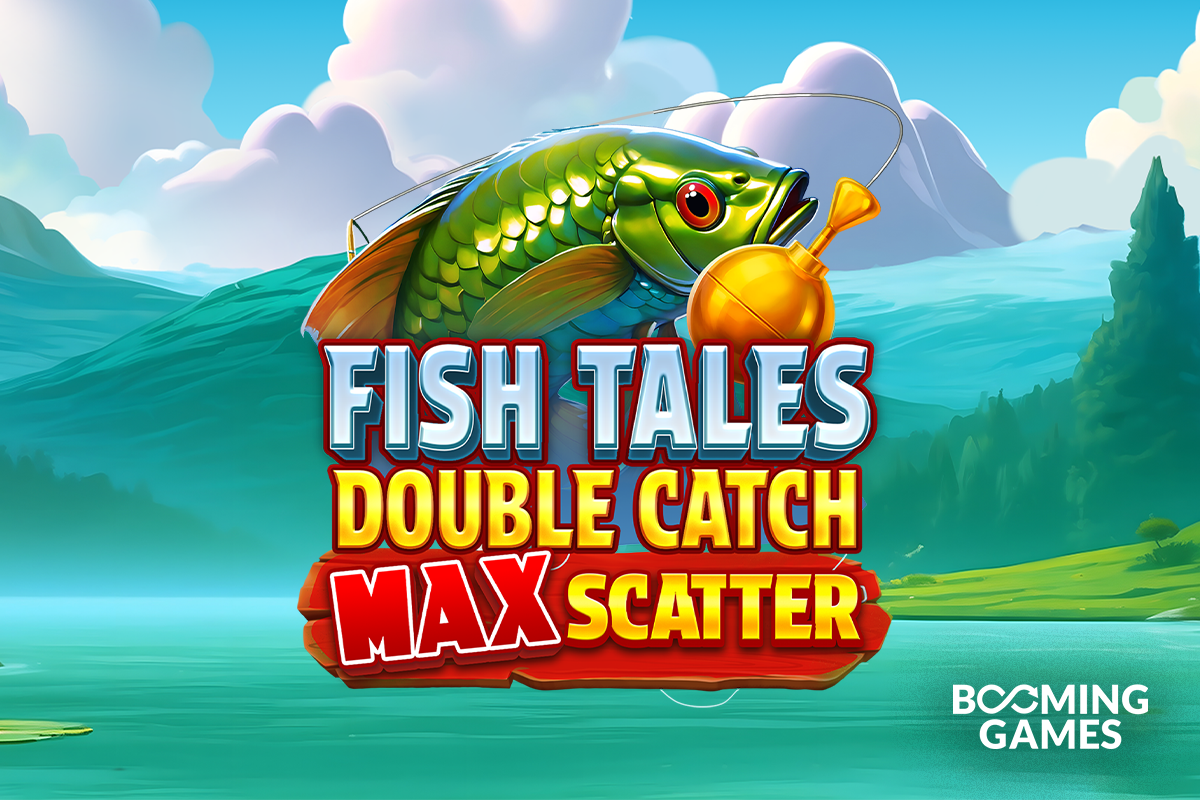
Booming Games launches Fish Tales: Double Catch Max Scatter
-
Latest News7 days ago
Tom Horn Gaming ships Royal Ruby FeatureStorm slot worldwide on 14 July 2026
-
Latest News7 days ago
BC.GAME names Guillermo Ochoa brand ambassador for Mexico push
-
Latest News7 days ago
PG Soft names Hugo Baungartner as General Manager LatAm