Latest News
Rebuilding Consumer Confidence in Online Gambling: Why Trust is the UK Industry’s Greatest Asset


For the UK’s vibrant online gambling sector, rebuilding and maintaining consumer confidence is not merely a regulatory compliance issue; it is the fundamental pillar for sustainable growth and long-term prosperity.
You stand at a pivotal moment in the evolution of the online gambling industry, particularly within the UK. While digital platforms have revolutionised accessibility and choice, they have also placed an unprecedented spotlight on an industry asset more valuable than any marketing budget or technological innovation: trust.
The Trust Deficit in Online Gambling
For too long, the online gambling industry has grappled with a significant trust deficit. You may have observed headlines detailing hefty regulatory fines, concerns over problem gambling, or criticisms regarding advertising practices. This cumulative narrative has fostered a degree of skepticism among the public and policymakers alike. Individuals often question the fairness of games, the security of their personal and financial data, and the genuine commitment of operators to player welfare. This skepticism, while sometimes rooted in misinformation, is nonetheless a potent force that can deter new users and erode the loyalty of existing ones.
The perception of an industry primarily driven by profit, sometimes at the expense of player protection, has led to increased scrutiny. You, as a consumer, need to feel secure that the platforms you engage with are operating with integrity, transparency, and a genuine concern for your well-being. Without this foundational belief, the immense potential of the digital gambling landscape remains constrained by doubt and caution.
Why Trust Matters More Than Ever in a Digital Economy
In today’s digital economy, trust is the new currency. For the online gambling sector, where transactions are virtual and interactions often impersonal, trust becomes an even more critical differentiator. When you entrust a company with your money and personal data, you expect an impermeable shield of security and an unwavering commitment to fair play. If this trust is breached, or even perceived to be vulnerable, the consequences extend far beyond a single lost customer. Negative experiences travel fast in a hyper-connected world, amplified by social media, leading to reputational damage that can take years, if not decades, to repair.
Consider the long-term ramifications: a trusted brand attracts and retains customers more efficiently, reducing the substantial costs associated with acquisition. It fosters loyalty, encouraging repeat engagement and positive word-of-mouth referrals. Moreover, a high level of consumer trust can alleviate regulatory pressure, as a self-regulating, responsible industry is viewed more favorably than one perceived to be exploiting its customers. Ultimately, for you to choose an online gambling platform, the assurance of integrity must outweigh any lingering doubts about its operations.
Technology and Cybersecurity: Building a Safer iGaming Experience
At the heart of rebuilding trust lies a robust commitment to cutting-edge technology and impenetrable cybersecurity. For instance when you choose to play live roulette safely at trusted UK casinos, you are implicitly relying on a complex web of technological safeguards designed to protect your data, ensure fair outcomes, and provide a secure transactional environment. Leading operators invest heavily in advanced encryption protocols, such as SSL (Secure Socket Layer) and TLS (Transport Layer Security), which encrypt all data transmitted between your device and their servers, making it virtually impossible for unauthorised parties to intercept sensitive information.
Beyond data security, the integrity of the games themselves is paramount. Reputable UK casinos utilise certified Random Number Generators (RNGs) for their slot machines and virtual table games, which are independently audited to ensure genuinely random and unbiased outcomes. For live dealer games, transparent displays, professional croupiers, and state-of-the-art streaming technology allow you to observe every action unfold in real-time, replicating the authentic casino experience with added layers of digital verification. Furthermore, robust KYC (Know Your Customer) procedures, multi-factor authentication, and sophisticated fraud detection systems protect both you and the operator from illicit activities. These technological foundations are non-negotiable in fostering the confidence you need to engage safely — a goal further reinforced by the UK Government’s High stakes: gambling reform for the digital age, which sets out planned reforms to strengthen player protection and industry transparency.
Responsible Gambling as a Business Advantage
Your commitment to responsible gambling isn’t just a regulatory checkbox; it is a profound business advantage that directly contributes to trust. An industry that prioritises player welfare demonstrates a long-term vision and an ethical compass, appealing to a broader, more discerning customer base. Responsible gambling initiatives, such as self-exclusion tools, deposit limits, reality checks, and accessible links to support organisations, empower you to manage your play effectively and seek help if needed.
When operators proactively promote these tools, provide clear information on the risks associated with gambling, and train their staff to identify and assist vulnerable players, they are not just complying with regulations; they are building a healthier, more sustainable customer relationship. This approach transforms the perception of the industry from one that merely offers entertainment to one that genuinely cares for its patrons’ well-being. Ultimately, a player who feels supported and protected is far more likely to remain loyal and advocate for the brand.
Source: thelondoneconomic.com
The post Rebuilding Consumer Confidence in Online Gambling: Why Trust is the UK Industry’s Greatest Asset appeared first on European Gaming Industry News.














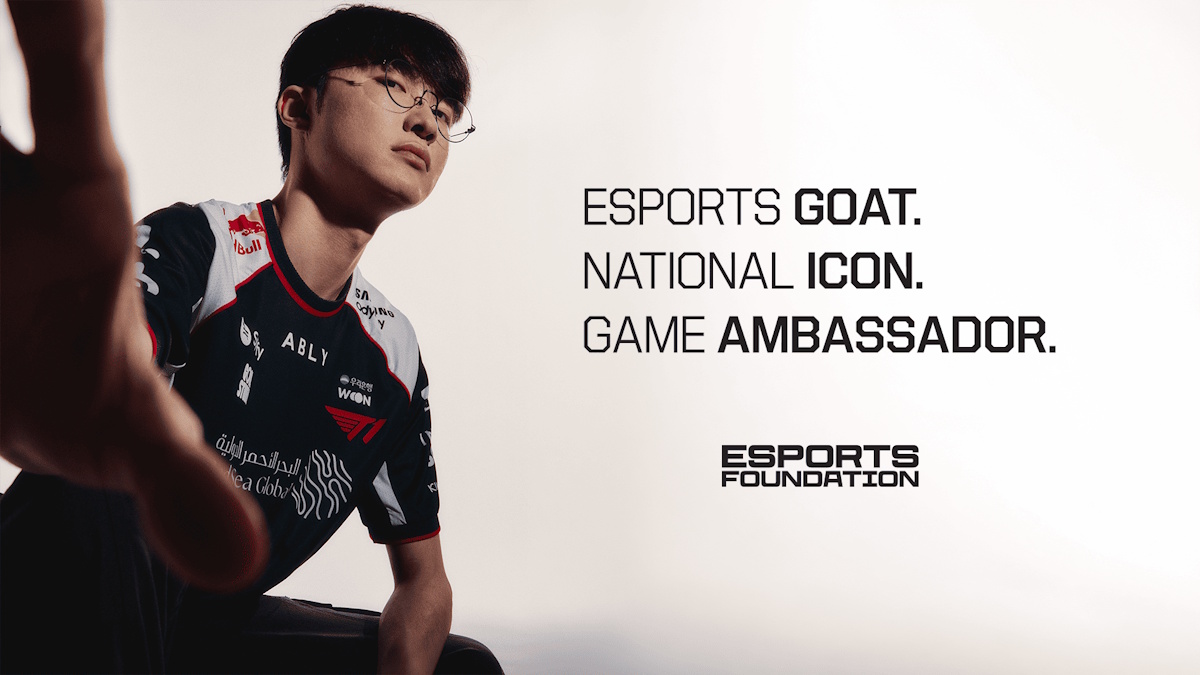
Lee “Faker” Sang-hyeok joins Cristiano Ronaldo and Magnus Carlsen in the Esports Foundation’s Ambassador Program.
The Esports Foundation (EF) has appointed Lee “Faker” Sang-hyeok as a Game Ambassador for the Esports World Cup (EWC) and Esports Nations Cup (ENC) through 2028, the organization said on July 15, 2026 in a statement issued from Riyadh and Paris.
EF said Faker joins Cristiano Ronaldo, listed as the Foundation’s Global Ambassador, and Magnus Carlsen as part of the Esports Foundation Ambassador Program. The Foundation said Faker will represent “the perspective of esports players” across its international events, athlete initiatives, media engagements and leadership forums.
“You can’t talk about esports without mentioning Faker. He is the defining athlete of competitive gaming: a champion whose excellence, discipline and longevity have inspired an entire generation,” said Ralf Reichert, Chief Executive Officer of the Esports Foundation. “As our Game Ambassador, Faker represents something fundamental to the Ambassador Program: esports creates its own global sporting icons. Across EWC, ENC and NGSC, he will help ensure that the players who built this sport have a voice in shaping where it goes next.”
Faker said: “Competition has shaped my life, and I am proud to join the Esports Foundation as Game Ambassador. I want to continue competing for the biggest titles with T1 while representing the players and fans who have helped esports grow worldwide. Through the Esports World Cup, Esports Nations Cup and the Foundation’s wider platforms, I hope to inspire the next generation to pursue excellence, remain resilient and believe in how far competitive gaming can take them. There is still much more to achieve.”
EF highlighted Faker’s competitive record, describing him as a six-time League of Legends World Champion, EWC 2024 winner, two-time MSI champion and ten-time domestic champion with T1. The Foundation also said Faker became the first esports athlete to receive the Blue Dragon Medal in 2026, describing it as the Republic of Korea’s highest sporting honor awarded by President Lee Jae-myung.
The post Esports Foundation names Faker Game Ambassador for EWC and ENC through 2028 appeared first on EE Gaming | Global iGaming & Tech Intelligence Hub.

Midnite has agreed a partnership with Middlesbrough FC that will see the UK bookmaker become the club’s principal partner and front-of-shirt sponsor for the 2026/27 campaign, which Middlesbrough describes as its landmark 150th season.
The companies announced the deal alongside a fan activation at Riverside Stadium on Thursday, July 9, branded “This Season’s On Us”. The initiative offered supporters prizes including 2026/27 season tickets, 2026/27 shirts, match tickets, or a £25 club shop voucher, with fans required to answer Middlesbrough trivia and complete a football challenge.
Middlesbrough former players Craig Hignett and David Wheater attended the event, and, according to the company, took bonus attempts on behalf of participants who missed out.
Andrew Mook, Midnite’s Head of Brand Marketing, said:
“Middlesbrough have a storied history and we’re delighted to announce this partnership during such a monumental year with the club celebrating their 150th anniversary.
“It was great to see so many Middlesbrough fans at the “This Season’s On Us” activation, we hope they enjoyed taking part and meeting club legends, with David Wheater hitting top bins on several occasions and allowing fans to win big with season tickets.
“We can’t wait to get to Riverside Stadium in August to kick-off a new season and we’re excited to say that we have plenty of new and captivating campaigns planned.”
Lee Fryett, Middlesbrough FC Chief Commercial Officer, added:
“We’re delighted to welcome Midnite as our new Principal Partner.
“We’re looking forward to working closely with Midnite to develop engaging campaigns, content and unique experiences that bring our fans even closer to the club.
“We’re confident this partnership will provide real value for our supporters while supporting our ambitions both on and off the pitch.”
The post Midnite signs as Middlesbrough FC principal partner for 2026/27 season appeared first on EE Gaming | Global iGaming & Tech Intelligence Hub.

ThrillTech has been awarded a Gaming-Related Supplier licence by the Alcohol and Gaming Commission of Ontario (AGCO), clearing the company to launch in Ontario’s regulated market.
The licence allows ThrillTech to deploy its opt-in side bet jackpots technology with regulated online casino, sports betting and lottery operators across the province.
Benjamin Bradtke, Co-Founder of ThrillTech, said: “Securing our AGCO licence is a major step in our mission to transform how jackpots are delivered at scale across regulated markets. This latest certification is testament to our robust technology and trusted compliance frameworks, allowing us to continue our global growth trajectory. We are thrilled to bring our proven, compliant jackpot technology to Ontario, empowering locally licensed operators to uplift revenue without cannibalising existing spend.”
The company said its “ThrillPots” mechanics sit as an independent, player-funded side bet and do not alter the underlying game’s return-to-player mathematics.
ThrillTech said the Ontario approval enables its existing multinational partners that also operate in the province to launch its side bet jackpots locally, while it also holds talks with potential new operator partners. The company lists its regulated footprint as including the United Kingdom, Sweden, the Netherlands, Romania, Malta, Gibraltar, Brazil and Peru.
The post ThrillTech secures AGCO supplier licence for Ontario launch appeared first on EE Gaming | Global iGaming & Tech Intelligence Hub.

-

 Compliance Updates5 days ago
Arizona Department of Gaming Issues Cease-and-Desist Orders to Multiple Operators Linked to Underage Gambling and Illegal Activity
-
 Latest News7 days ago
ELA Games releases Flames Fruits Frenzy Hold and Win slot
-
Compliance Updates6 days ago
KONAMI GROUP’s Konami Gaming Inc. First to Submit Manufacturer License Application in Japan’s Emerging IR Market
-
Latest News7 days ago
PG Soft appoints Hugo Baungartner as General Manager LatAm
-
Canada7 days ago
Canada’s Safer Gambling Gap: Why Market Success Doesn’t Always Equal Player Safety
-
Latest News7 days ago
Tom Horn Gaming ships Royal Ruby FeatureStorm slot worldwide on 14 July 2026
-
Latest News7 days ago
Booming Games launches Fish Tales: Double Catch Max Scatter
-
Latest News7 days ago
BC.GAME names Guillermo Ochoa brand ambassador for Mexico push