Latest News
Tackling latency in next-gen gaming

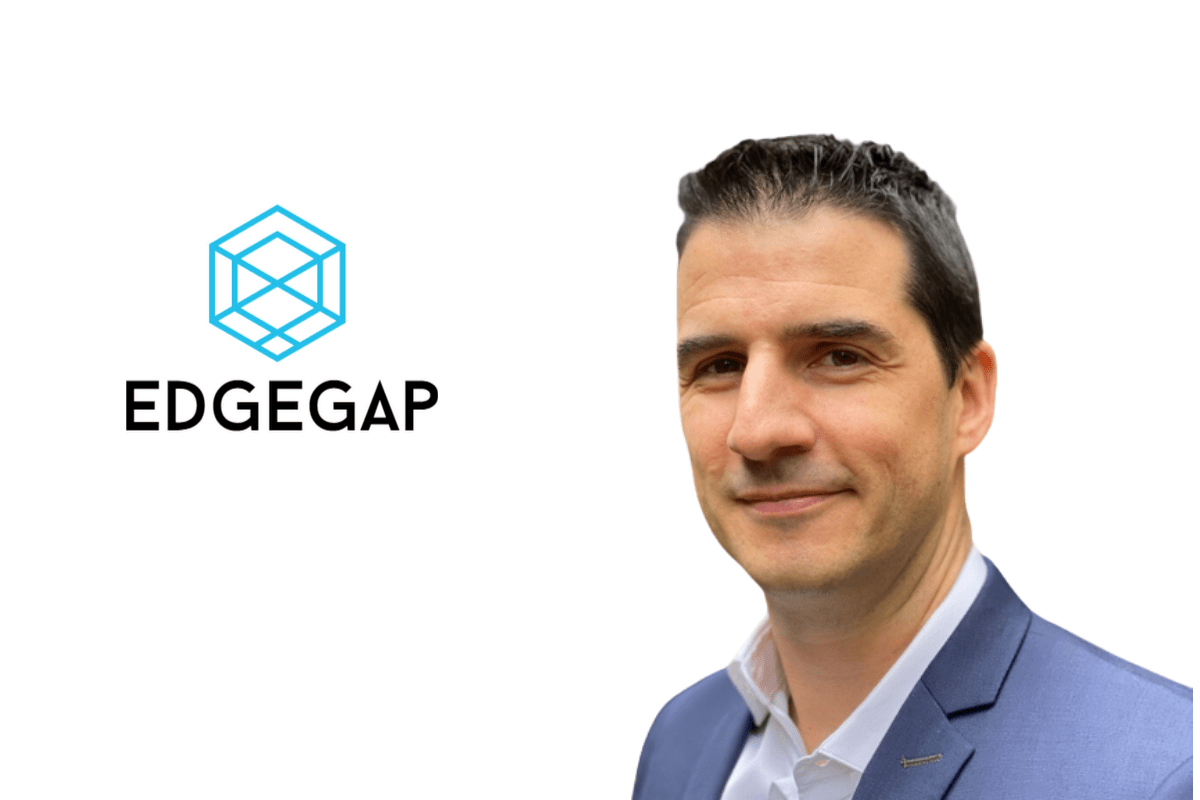
Mathieu Duperré, CEO at Edgegap
Anyone that’s played a video game online has almost certainly experienced some kind of lag and connectivity issues. Despite huge infrastructure advances in the last few decades, latency remains a constant thorn in the side of gamers and detracts from the real-time experience that’s expected today.
Delivering a consistent experience to gamers playing on different devices with varying connection speeds – many of which are separated by thousands of miles – is a complex challenge. Massively popular online games like Roblox and Fortnite are just two of the many games which have benefited from years of investment into infrastructure in order to support millions of concurrent players. As the below chart from SuperJoost shows, multiplayer and online gaming is becoming the preferred way to play games amongst the most active gaming demographic, with all the technical challenges that this creates.
Games which can be played seamlessly across mobile, PC and console (so-called cross-play games) are also pushing the limits of what current internet infrastructure can deliver. Add in a new generation of streaming cloud gaming services like Stadia, Blacknut Games and Amazon’s Luna – plus Microsoft’s Game Pass and Sony’s revamped PlayStation Plus service, and you can see how the promise of console-quality performance over a broadband connection risks overloading networks that were never designed for this level of gaming.
So how can game companies, telcos and ISPs deliver on the performance promises being made to gamers? That’s where edge computing comes in.
Lag, latency and the Edge
When talking about latency it’s important to make it clear exactly what we mean. Latency refers to the amount of time it takes for game data to travel from one point to another. From the gamer’s perspective, it’s the delay between their command and seeing it happen in-game. How much latency a gamer experiences is dependent on the physical distance the data must cross through the multiple networks, routers and cables before it reaches its destination.
To use an extreme example, NASA’s Voyager 1 has made it about 14.5 billion miles from our planet so far, and it takes about 19 hours for its radio waves to reach us. Here on Earth, your latency is (hopefully) measured in milliseconds rather than hours; and gamers need around 30ms for the most optimal performance. Anywhere above 100ms can lead to noticeable lag and a frustrating experience.
This is where Edge computing comes in. As the name implies, Edge computing brings computation and data storage closer to the sources of data, placing it on the edge of the network where the performance gain is the greatest. As you’d expect, reducing unnecessary travel drastically speeds up the process providing an almost lag-free experience.
More players equals more chance for latency to be a problem
In the early days of gaming, local, couch play was part and parcel of the gaming experience. Today, a game where hundreds or even thousands of players are in the same session is nothing out of the ordinary, and there are Battle Royale games now, a whole genre of games where a hundred or more players are whittled down to a single winner.
The sheer scale of some online games dwarfs many of the most popular streaming services. Whilst Netflix remains the most successful streaming video site with 222 million subscribers, kids game Roblox has 230 million active accounts and Fortnite has over 350 million registered players. So if we assume these games reflect a growing trend, the demand on server networks is only going to increase, and gaming companies will have to look for more innovative solutions to continue meeting demand.
Cross-Platform
The ability for gamers on different devices and platforms to play and compete together is becoming an increasingly common feature of AAA multiplayer games like Apex Legends, Fornite and Call of Duty. EA Sports recently confirmed that FIFA 23 will be joining other heavy hitters in exploring cross-platform play. Considering the large amount of games on the market, and the various game modes for each game, studios are looking at crossplay to increase the amount of players who can play together. One of the main driver is to lower matchmaking time and prevent players from having to wait hours before opponents are ready to play with them.
From a latency perspective, different infrastructure across platforms means lag and downtime are far more likely. When it comes to cross-play, studios can’t use P2P (peer-to-peer) since console vendors don’t support direct communication (i.e. an Xbox can’t communicate directly with a playstation). On top of that, P2P may be limited by player’s home network (restrictive natting for example). That’s why studios typically use relays in a handful of centralised locations. Relays are seen as cheaper than authoritative server. They although have large flaws like making it harder for studios to prevent cheating, which is becoming more and more important with Web3 & NFT. This causes higherlatency since traffic needs to travel longer distances between players. For example, when Apex Legends went cross-platform, players were inundated with frame rate drops, lags and glitches.
Edge computing allows studios to deploy cross-play games as close as possible to their players, significantly reducing latency. Which can negate some of the delay issues around differing platforms.
VR and the Metaverse
Despite hitting shelves in 2016, VR is only now slowly making its way into mainstream gaming. Advances in technology have gradually improved the user experience, while also bringing the price of hardware down and closer to the mass market – not to mention the metaverse bringing renewed attention to the tech. But latency issues still present a serious hurdle to wider adoption unless it’s addressed.
Latency impacts the player experience far more in VR than in traditional gaming as it completely disrupts the intended immersive experience. A 2020 research paper found latency of over 30-35ms in VR, had a significant impact on players’ enjoyment and immersion, which was far lower than acceptable margins on a controller. But when it comes to the metaverse, achieving this might not be enough. Latency between headset and player has to be sub 5ms to prevent motion sickness.
In a recent blog, Meta’s VP, Dan Rabinovitsj, explained that cloud-based video games require a latency of around 75–150ms, while some AAA video games with high graphical demand require sub 35ms. Comparatively, Rabinovitsj suggests metaverse applications would need to reduce latency to low double or even single digits.
For better or worse, we’ve seen glimpses of what the metaverse has to offer already. Decentraland’s metaverse fashion week gave major brands like Dolce & Gabbana an opportunity to showcase virtual versions of their products. But attending journalists reported that the event was fraught with lag and glitches.
Gamers are a fickle bunch, so early adopters will simply move back to other games and platforms if they have poor initial experiences. Google’s Stadia promised to revolutionise gaming, but its fate was sealed at launch as the platform simply couldn’t compete with its competitors’ latency. Today, Google has ‘deprioritised’ the platform in favour of other projects.
If the metaverse goes to plan, it should encompass a lot more than traditional gaming experiences. But if it’s going to live up to players’ lofty expectations, akin to Ready Player One, more thought needs to be given to scalable and optimised infrastructure.
Unlocking next-gen gaming
The pace at which modern gaming is evolving is astounding, making the components discussed here work lag-free and as players expect will be a huge undertaking, and even more so when developers attempt to bring them all together in the metaverse.
The issue of latency may be less headline-grabbing than virtual fashion shows, NFTs and Mark Zuckerberg’s slightly unsettling promotional video, but the ability to seamlessly stitch all of these elements together will be critical in making the metaverse live up to expectations, and therefore, to its success.
Powered by WPeMatico


Integration adds Pix, account validation, fraud controls and compliance tools for operators targeting Brazil’s regulated betting market.
Pay4Fun has integrated its financial infrastructure with Betconstruct AI’s platform in Brazil, giving operators connected to the ecosystem access to payments and compliance tooling built for the country’s regulated betting market.
Pay4Fun said Betconstruct AI clients will be able to use Pix payment processing, account ownership validation, transaction monitoring, fraud prevention, and compliance tools aligned with Brazil’s regulatory requirements.
According to Leonardo Baptista, CEO and Co-Founder of Pay4Fun, regulation is pushing operators to look beyond basic processing. “The Brazilian market has entered a new phase of maturity. Today, operators require solutions that go far beyond payment processing. They need partners capable of delivering security, compliance, and operational efficiency in an increasingly demanding regulatory environment. By integrating our solutions with Betconstruct AI, we are expanding access to a financial infrastructure specifically designed to meet the needs of the Brazilian market.”
Betconstruct AI said the integration strengthens its Brazil-facing offer for clients operating in the country or planning entry. “Pay4Fun was selected based on the expertise and industry knowledge the company has built within the Brazilian betting market. As the industry continues to evolve, the importance of working with specialized partners capable of delivering security, operational efficiency, and regulatory compliance continues to grow,” said Beatriz Lopes, the Brazil Regional Director.
Pay4Fun said it was the first payment institution serving the betting industry to receive authorization from the Central Bank of Brazil, and that the company’s infrastructure combines monitoring, identity verification, fraud and anti-money laundering controls, and compliance processes tailored to regulated iGaming operations.
The post Pay4Fun integrates payments into Betconstruct AI ecosystem for Brazil appeared first on EE Gaming | Global iGaming & Tech Intelligence Hub.

Eighth Harmony edition runs July 8–9 and spotlights ADI Predictstreet collaboration ahead of the FIFA World Cup Final.
BetConstruct AI held its Harmony Predictstreet event on July 8–9, 2026 in Yerevan, Armenia, bringing together more than 300 guests for two days of networking and company updates.
The eighth edition introduced the “Predictstreet” branding to reflect BetConstruct AI’s strategic collaboration with ADI Predictstreet, described in the release as “FIFA’s Official Prediction Market Partner.” BetConstruct AI said the partnership includes integrating ADI Predictstreet’s prediction market solutions and official match streaming rights into its platform, timed for “the most important commercial moment in the four-year sports calendar, with the FIFA World Cup Final just days away.”
Day 1 was hosted at Garni Temple for an evening reception, including a live performance by the Armenian National Philharmonic Orchestra, a mapping show and music from DJ Leblanc.
Day 2 began at SoftConstruct headquarters with an office tour and networking session, before moving to Dvin Music Hall for the Harmony Predictstreet Gala Dinner. BetConstruct AI said founders and executive leadership presented updates on Eventbook, the ADI Predictstreet partnership, Betting Mate, The Last Battle Universe, Betbuilder & Powerbank, Softgates, and “the latest updates driving Vivaro.me and Open Stake forward.”
The company positioned the event as a forum for discussing future direction across its ecosystem, and confirmed plans to continue the series with a ninth edition.
The post BetConstruct AI hosts Harmony Predictstreet event in Yerevan appeared first on EE Gaming | Global iGaming & Tech Intelligence Hub.
ESPN Networks
THE 57th ANNUAL WORLD SERIES OF POKER® CONCLUDES AN EXTRAORDINARY SUMMER OF GLOBAL ENGAGEMENT AND ELITE COMPETITION


This summer’s event also saw huge growth in reach and engagement across WSOP’s social media channels, with over 378 million views
With 51 days of thrilling, high-stakes competition in the bag, the 57th annual World Series of Poker (WSOP®) at Paris Las Vegas and Horseshoe Las Vegas officially concluded its summer tournament schedule on July 15, 2026. Featuring a massive slate of 100 live gold bracelet events, this year’s festival once again demonstrated the unparalleled scale, passion, and global community of live tournament poker.
“The 57th annual World Series of Poker proved that Las Vegas remains the undisputed epicenter of the poker universe,” said Ty Stewart, Chief Executive Officer of the WSOP. “The energy inside Horseshoe and Paris Las Vegas was nothing short of electric. What is truly remarkable this year is how our community expanded far beyond the physical walls of the casino floor. Through our newly redesigned final table arena, extensive linear broadcast schedule, and unprecedented digital engagement, we brought the drama, excitement, and glory of winning a WSOP gold bracelet to millions of new fans worldwide. We are incredibly proud of this summer’s success and cannot wait to witness the Final Nine battle for the World Championship on ESPN next month.”
Redefining the Live Experience on Poker’s Biggest Stage
Throughout the summer, the Las Vegas Strip was the focal point of the poker world as players from around the globe competed for poker’s ultimate prize: a WSOP gold bracelet and a place in poker history.
Key milestones from the summer tournament action include:
- Colossal Main Event Field: The legendary $10,000 No-Limit Hold’em World Championship (the ‘Main Event’) attracted a massive field of 9,208 entrants, creating a colossal prize pool and proving the enduring allure of the world’s premier freezeout tournament
- The New Final Table Arena: WSOP officially unveiled a completely redesigned, state-of-the-art Final Table Arena and broadcast environment. The new stage integrates advanced lighting and large-scale digital displays to elevate the presentation of poker’s most prestigious final tables
- Historic Broadcast Expansion: Live coverage of the Main Event returned to ESPN alongside a new multi-year broadcast agreement with Warner Bros. Discovery to distribute coverage across HBO Max, Eurosport, and TNT Sports globally
- The “Final Nine”: The final nine players survived a grueling field to punch their ticket to the historic Main Event Final Table. They will return to Las Vegas from August 3 to 5, 2026, to play down to a champion live on ESPN
- Summer of Superstars: This year’s event saw an unprecedented number of bracelets won by poker luminaries with impressive records in the game’s history books; Daniel Negreanu won his eight WSOP bracelet by taking down Event #76 $100,000 High Roller Pot-Limit Omaha for over $2.2M, while reigning WSOP Main Event champion Michael ‘The Grinder’ Mizrachi further burnished his reputation by winning Event #70 $10,000 Pot-Limit Omaha Championship, claiming his ninth WSOP bracelet and a $1.35M prize. The poker world’s undisputed power couple Kristen and Alex Foxen also made history by each claiming a WSOP bracelet in 2026, taking down Event #19 $25,000 High Roller No-Limit Hold’em and Event #44 $10,000 Super Turbo Bounty No-Limit Hold’em, respectively
- Seamless Player Experience: The WSOP Live mobile app continued to enhance the playing experience, streamlining registration, virtually eliminating cage lines, and providing real-time seat alerts to thousands of players throughout the summer
WSOP 2026 By The Numbers
- 251,899 entries – a new record for the total number of entries in a single WSOP series
- $469,975,059 – total 2026 WSOP gold events prize amount
- 35,157 places paid
- 22,811 entries to Event #63 $1,000 Mystery Millions No-Limit Hold’em – the biggest field in the 2026 series, the largest Mystery Millions event, and the largest $1,000 event in live tournament poker history
- 1,368 entries to Event #68 $1,000 Ladies No-Limit Hold’em Championship – the largest Ladies event in live tournament poker history
- 11,933 entries to Event #18 $1,500 Monster Stack No-Limit Hold’em – the largest Monster Stack event in live tournament poker history
- 4,764 entries to Event #87 $1,000 Mystery Bounty Pot-Limit Omaha – the largest Pot-Limit Omaha event in live tournament poker history
- 12,560 entries to Event #72 $1,000 Mini Main Event – the largest Mini Main event in live tournament poker history
- 41 – The number of $1M+ prizes won across the 2026 series
- 57 events exceeded $2+ million prize pools – equalling last year’s record
- 8 events exceeded $10+ million prize pools
- 149 – number of countries represented in the WSOP 2026 playing field
- Top Ten Countries by WSOP 2026 participants: 1 – United States, 2 – Canada, 3 – France, 4 – Great Britain, 5 – Japan, 6 – China, 7 – Israel, 8 – Germany, 9 – Brazil, 10 – Mexico
- 111 – number of countries represented in the WSOP Main Event 2026 playing field, a new record
- Oldest Player – Merle Vangieson, born June 28, 1931
- Youngest Player – Easton Jorgensen, born July 13, 2005
Worldwide Broadcasts Drive Growth Of Game
With thrilling WSOP action broadcast exclusively on ESPN Networks, Eurosport, TNT Sports, Abema Japan, Groupe M6 in France, and other media partners, poker fans had more opportunities than ever to follow their heroes, new and old, at the felt in 2026.
Comprehensive linear and digital coverage, available in more than 300 million homes across 70+ countries, ensured that countless big moments – from calculated bluffs to cunning value bets – were analyzed and enjoyed by enthusiasts on every continent.
Edited WSOP broadcasts will air from July 21, allowing a worldwide audience to catch up on all the summer’s action.
Explosive Digital Reach: WSOP’s Social Media Footprint
A highlight of the 57th annual WSOP was its unprecedented digital growth. While fans packed the physical tournament rooms, millions more watched the action unfold online. Across all major platforms, WSOP social media channels generated an astronomical 378.3 million total views during the 100-bracelet series, adding 222,828 total new followers across its digital ecosystem.
WSOP 2026 Social Media Performance
|
Platform |
Total Views/Impressions |
New Audience Growth |
|
YouTube |
38.7 million views |
103,128 new subscribers |
|
|
125 million views |
54,450 new followers |
|
|
127 million views |
56,800 new followers |
|
X |
36.6 million impressions |
8,450 new followers |
Looking Ahead: A True Global Season
While the Main Event action in Las Vegas has paused until the Final Table resumes in August, the WSOP excitement continues year-round. This year marks the formal rollout of the ambitious, revamped $1 Million Global Player of the Year (POY) race. The new global leaderboard unifies the brand’s three flagship festival pillars: WSOP Europe (which completed its historic run in Prague earlier this spring), the Las Vegas summer series, and the upcoming WSOP Paradise winter festival.
The global POY winner will be crowned at the conclusion of WSOP Paradise, hosted at Baha Mar resort in The Bahamas from December 1 to 17, 2026. In the meantime, the WSOP Circuit (WSOP-C) continues its action-packed year, including a special concurrent Circuit run in Las Vegas from July 14 to 25, 2026.
Players should follow @WSOP on X (formerly Twitter) and Instagram or check WSOP.com for more news and updates on WSOP events.
The post THE 57th ANNUAL WORLD SERIES OF POKER® CONCLUDES AN EXTRAORDINARY SUMMER OF GLOBAL ENGAGEMENT AND ELITE COMPETITION appeared first on Americas iGaming & Sports Betting News.

-

 Canada5 days ago
DraftKings Set to Launch its Online Sportsbook and Casino in Alberta
-
Canada5 days ago
Altenar Joins Alberta’s New Regulated iGaming Market
-
Latest News4 days ago
EveryMatrix’s Fantasma Games launches three-reel slot Bonus Bullets
-
Latest News2 days ago
Booming Games launches Tasty Bonanza Max Scatter slot
-
Latest News3 days ago
SCCG Management Launches Dedicated SCCG Brazil Division with Local Partner Thomas Carvalhaes
-
Latest News4 days ago
Blokotech adds Wicked Games slots in new content deal
-
Latest News3 days ago
Esportes Gaming Brasil takes two ClienteSA Awards 2026 wins; exec named Personality of the Year
-
Latest News5 days ago
Altenar Joins Alberta’s New Regulated iGaming Market