Latest News
Mobile-first gaming round table with experts from Habanero, Evoplay, OneTouch and ESA Gaming


In recent years, mobile-first gaming has rapidly risen as smartphone companies continuously enhance their products, making it easier for players to access games whilst on the go. This technological development has brought forward an industry shift, that has seen iGaming companies redirect their focus towards mobile-first content.
With more and more companies embracing the increase in mobile gaming, we explored the success of this new generation offering and what the future holds.
According to you, what brought forward the increase in mobile-first gaming?
Arcangelo Lonoce – Head of Business Development at Habanero:
The watershed moment came a number of years ago when smartphones finally managed to deliver a properly premium gaming experience. Indeed, phones have improved exponentially to the point where you could argue that mobile technology is as good as if not better than desktop.
This has been made possible by the improvements in ‘light betting’, by which I mean data, allowing players to enjoy parallel matches etc. When you can reach that point, laptop gaming becomes obsolete as you can flick through just as seamlessly as on desktop. Just of course like the wider world, when it comes to relaxing on the couch, mobile will always be your primary channel over a laptop – whether that’s shopping, gaming or Instagram.
Of course, with HTML5 becoming ubiquitous and flash disappearing has accelerated the mobile-gaming trend. You can look at emerging markets or countries that never went through the ‘laptop era’, as given the leap in tech developments in the last decade, it means that smartphones are simply more affordable and accessible to players than MacBooks ever will be. Latin America is a great example of this.
Vladimir Malakchi, CCO at Evoplay:
The accelerated growth and penetration of global smartphone usage across every corner of the world is the key driver behind the impressive rise we have seen in smartphone gaming. Data from 2021 reveals that over 6 billion people use mobile phones worldwide, and this number continues to grow, with the 5G standard being one of the catalysts. Emerging markets are catching up fast too – with the majority of regions now greatly investing in the development of mobile technology.
In addition to this, according to our research, three-quarters of gamblers prefer to play on mobile, doing so every 4.2 days on average. Other sources show that in 2020, 50% of the online gambling revenue came from mobile, which isn’t surprising as 75% of traffic belongs to mobile. The numbers clearly don’t lie, and the high demand for mobile gaming is a call to action for suppliers to accept this trend.
Thomas Smallwood, Head of Marketing at ESA Gaming, comments:
A mix of technology and convenience is the short answer. Mobiles now provide a simpler and faster way for players to enjoy their favourite games. It’s fair to say that the trend towards mobile has also probably been accelerated during the pandemic as the move from retail to online has quickened.
Madis Raus – Head of Product at OneTouch:
Obviously, the widespread use of smartphones and availability internet has had a positive effect on mobile-first gaming. These days people use mobile devices to perform certain tasks, their far easier to use and more accessible than laptops and desktops. Additionally, mobile devices allow people to do things whenever and wherever they want, whether they’re commuting or simply passing time.
By making the mobile-gaming experience seamless and engaging at the same time, players will continue using mobile devices for entertainment. This is something which will naturally increase over time, as mobile devices continue advancing and being capable to perform at higher standards.
Are there any verticals that perform better on smartphones? And how can developers improve those verticals that don’t work as efficiently?
Arcangelo Lonoce:
As an expert on slots and table games – I would say table games are inherently easier to develop and render when performing on smartphones compared to slots, but if we look at numbers, slots are dominant, with a market share of around 85% or so, which shows that the player demand this vertical more than any other.
However, looking at table games, there’s a lot to be said about performance. They have excellent stable rates of acquisition and retention – so there is less motivation to tweak a formula that is clearly working. They also have higher average bets, greater lifetime value and from a mathematical and user interface viewpoint, I would certainly rank them up there as one of the best performers.
Given market demand though, we can assume slots will always retain the lion’s share. So how does one improve the vertical? Stories, subject matter and narrative are key, as is the UI, although we mustn’t forget, it all starts with the maths – you need to get that right first, and then you can start talking other improvements.
Vladimir Malakchi:
Actually, all verticals and mechanics perform well on smartphones. However, while creating a product for hand-held devices, there are key principles to follow: easy-to-understand UX, simplicity of a game, uncomplicated graphics, and adaptation to vertical view.
One thing is for sure – it makes no sense for suppliers to choose a specific type of game to develop for smartphones. The fundamental point is to accept that the mobile-first approach is a basic demand for players.
Thomas Smallwood:
I think sports betting is a natural vertical for mobile. With the ability to play high-quality live streams on mobile devices, in-play betting is no longer just for retail or desktop and the fact that bets can be placed anytime, anywhere is a major factor.
The limit in phone storage also means that casino can be trickier on mobile, especially in apps where users often need to download the games they want to play exactly because of this limitation.
These are two factors behind ESA Gaming’s development of ultra-lightweight games for sportsbooks. The EasySwipe suite of games is accessed through a widget we have designed and developed which enables players to seamlessly move between games and sports bets rather than being re-directed to another part of the site or a cumbersome casino page. The sports betting experience is unhindered and conversion to casino games happens at lower cost.
Madis Raus:
Mobile device usage differs slightly from desktop usage, this means that mobile users have different expectations. Since people use mobiles to pass time or when they’re in between things, the attention span of the mobile user is often shorter, these are things to consider when providing content to them.
In my opinion it’s the matter of the speed of games rather than specific verticals, fast games tend to perform better, as the player doesn’t need to wait too long, which is a bonus especially when they’re looking to kill some time.
To improve further, developers need to consider the peculiarities of mobile device usage and think about ways of implementing content that doesn’t depend on usage patterns, making the products more appealing and engaging to players.
What are the difficulties of adopting games to function on smartphones?
Arcangelo Lonoce:
Habanero as a company operates with a mobile-first approach, therefore, we don’t find any real challenge when it comes to rendering games on mobile since our products are designed with smartphones in mind. After all, we disposed of Flash in 2015 and since then we have always developed our games using HTML5.
Vladimir Malakchi:
Adapting a visual component to all models of smartphones, including early versions, isn’t an easy task but is possible thanks to cutting-edge technologies. They allow us to create visually stunning products compatible with most smartphones. The optimisation of UX, UI, resolution and graphics for all platforms is the main priority, as we want to ensure that our players get high-quality content on any device.
Another challenge, which we have also overcome, is the amount of data used by games. Our proprietary game engine Spinential, developed in-house has been a real gamechanger for us, accelerating the loading speed and optimising the storage capacity. This solution has been designed with a purely mobile-first approach in mind, and we’ve really reaped the benefits.
Thomas Smallwood:
The obvious thing is the greatly reduced screen space and the practicality of a hand-held device. Because of this, we have chosen to develop ‘mobile-first games’ and move away from adapting desktop content. This means every aspect of the game is thought out with the mobile user in mind, ideally with the ability to do everything just with a thumb. Of course, the challenge is to make everything on the screen accessible, so it is a constant evolution as the user demands more features.
Madis Raus:
Different game types have different elements, for slots it may be the screen ratio, for example how to make symbols as big as possible and still keep the popular grids. Alternatively for Live games, you need to consider the screen size, ensuring that the player can see what is happening in the stream and whether the cards shown are in sync with what’s being reported etc.
As mentioned above, when adapting games, it’s important to consider the peculiarities of mobile device usage, developers must think about ways they can make games as fast and seamless as possible but at the same time still engaging on a smaller screen.
How fundamental is it for operators and developers to adopt a mobile-first strategy?
Arcangelo Lonoce:
It’s extremely important, otherwise you’re missing out on 80% of the market! There were some suppliers that were very late to the HTML5 adoption, which made it incredibly frustrating for operators – plenty of which I saw first-hand back when I was at BetVictor during the 2010s. To put things into perspective today, you simply cannot launch a game as without considering a mobile-first approach, since you’re forgoing an absolutely huge amount of revenue.
Moreover, mobile gaming allows people to play remotely, therefore players don’t need to depend on a desktop or laptop to participate in their hobby. With mobiles advancing and 5G becoming the norm, we’re now looking at a whole new world of possibilities to enhance mobile-first even more, the ramifications of which will be huge, especially when it comes to content and loading speeds.
Vladimir Malakchi:
Keeping in mind the number of global smartphone users, prioritising mobile devices when creating gaming products is a must. Moreover, it is expected that in a couple of years, this number will grow to seven billion. Currently, the US, China and India lead the list of countries with the highest rate of mobile penetration. However, as the latest data shows, the potential of emerging markets in regard to mobile usage shouldn’t be underestimated. This is a direct sign for suppliers to throw all efforts on products focused on mobile gamblers. The mobile-first approach isn’t just a trend, it is a philosophy, which is getting more and more supporters. There is no better time to embrace mobile-gaming than now.
Thomas Smallwood:
You could argue it is a percentages game. When desktop provided the higher user count it made sense to develop content for desktop. With the advancements in mobile technology, the increased numbers using mobile and the loyalty associated with apps I think a ‘mobile-first’ strategy is key in the growth of any gaming brand.
Madis Raus:
This is very essential, especially when it comes to companies surviving in this extremely volatile industry. Just by looking at how much traffic is already generated from mobile channels, you can see how strong the area is, and there’s nothing that indicates a potential decrease in mobile device usage.
If companies wish to attract modern players, it is really essential to adopt a mobile-first strategy, as modern players will look for a seamless mobile experience, if it isn’t available on your brand then they will simply look elsewhere.
With smartphones continuing to evolve, what does the future hold for mobile-first gaming?
Arcangelo Lonoce:
I would expect mobile-first gaming to be the only way forward – it’s the old debate on how much entertainment is a part of iGaming. Whilst entertaining is a key aspect, you must also keep the experience flawless. Certain things haven’t worked out, 3D gaming for example, as we’ve learnt that people don’t really gamble to get lost into the symbology of the slot – but rather the thrill of the win, which is the entertainment.
So, in my view, mobile gaming will gain an even larger market share than it has now, it could soon become by far the only way of enjoying this experience. Additionally, with new demographics coming online, the future holds lots of opportunities for interaction of everything from social to multiplayer, shared in any possible way. Cross-sell opportunities are also endless, with push notifications and the like, as players can carry their game anywhere they go – whether that’s being entertained at home, when out and about or during the commute.
Vladimir Malakchi:
I am sure that we will see an industry-wide adaptation of gaming content to mobile platforms in the very near future. Once the value of mobile gambling is fully understood, the industry will immediately aim to transform existing and future products.
I believe the iGaming world will continue to develop in this direction as an exponential pace, focusing on innovative technical solutions, mechanics, features and visuals optimised for various mobile platforms, models and markets. The key is to find the balance between the quality of gaming products and their adaptation to mobile – and getting this right is where developers need to be investing their energy.
Thomas Smallwood:
Smartphones will continue to develop but I would place more focus on the changing user demands. New game types, more regional content as well as promotion and gamification features are already driving us to change the titles we design and develop.
We will soon launch new in-game promotional tools for operators as well as new style of games, including bespoke games.
Madis Raus:
I believe that the introduction of 5G will bring a ton of opportunity to the table, as the introduction of 5G will bring forward a range of improvements to speed and accessibility. This may also give developers a bit more freedom when they think about creating games for mobile phones.
With smartphones being so advanced these days, the size of the game doesn’t matter as much as it once did, the quality is now the utmost important factor when it comes to designing new mobile-games. This is the same with live content, with the technological improvements, it’s now easier to provide good quality streams, so now developers need to focus on other elements that will make their game stand out from the competition.
Powered by WPeMatico


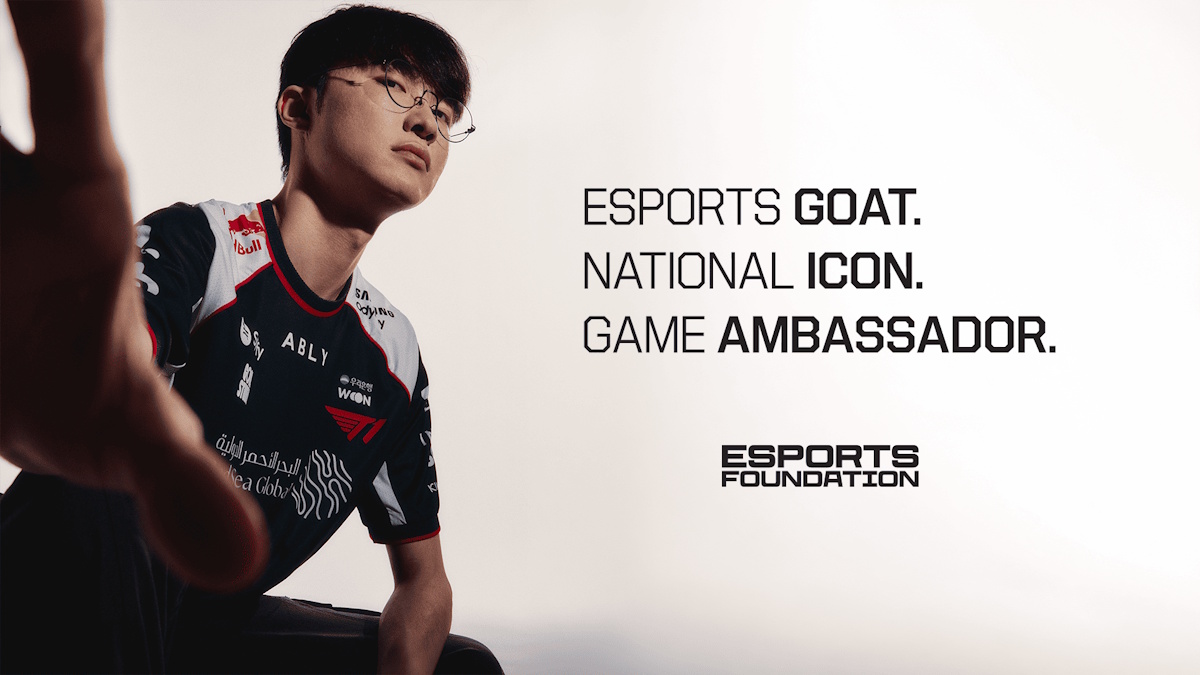
Lee “Faker” Sang-hyeok joins Cristiano Ronaldo and Magnus Carlsen in the Esports Foundation’s Ambassador Program.
The Esports Foundation (EF) has appointed Lee “Faker” Sang-hyeok as a Game Ambassador for the Esports World Cup (EWC) and Esports Nations Cup (ENC) through 2028, the organization said on July 15, 2026 in a statement issued from Riyadh and Paris.
EF said Faker joins Cristiano Ronaldo, listed as the Foundation’s Global Ambassador, and Magnus Carlsen as part of the Esports Foundation Ambassador Program. The Foundation said Faker will represent “the perspective of esports players” across its international events, athlete initiatives, media engagements and leadership forums.
“You can’t talk about esports without mentioning Faker. He is the defining athlete of competitive gaming: a champion whose excellence, discipline and longevity have inspired an entire generation,” said Ralf Reichert, Chief Executive Officer of the Esports Foundation. “As our Game Ambassador, Faker represents something fundamental to the Ambassador Program: esports creates its own global sporting icons. Across EWC, ENC and NGSC, he will help ensure that the players who built this sport have a voice in shaping where it goes next.”
Faker said: “Competition has shaped my life, and I am proud to join the Esports Foundation as Game Ambassador. I want to continue competing for the biggest titles with T1 while representing the players and fans who have helped esports grow worldwide. Through the Esports World Cup, Esports Nations Cup and the Foundation’s wider platforms, I hope to inspire the next generation to pursue excellence, remain resilient and believe in how far competitive gaming can take them. There is still much more to achieve.”
EF highlighted Faker’s competitive record, describing him as a six-time League of Legends World Champion, EWC 2024 winner, two-time MSI champion and ten-time domestic champion with T1. The Foundation also said Faker became the first esports athlete to receive the Blue Dragon Medal in 2026, describing it as the Republic of Korea’s highest sporting honor awarded by President Lee Jae-myung.
The post Esports Foundation names Faker Game Ambassador for EWC and ENC through 2028 appeared first on EE Gaming | Global iGaming & Tech Intelligence Hub.

Midnite has agreed a partnership with Middlesbrough FC that will see the UK bookmaker become the club’s principal partner and front-of-shirt sponsor for the 2026/27 campaign, which Middlesbrough describes as its landmark 150th season.
The companies announced the deal alongside a fan activation at Riverside Stadium on Thursday, July 9, branded “This Season’s On Us”. The initiative offered supporters prizes including 2026/27 season tickets, 2026/27 shirts, match tickets, or a £25 club shop voucher, with fans required to answer Middlesbrough trivia and complete a football challenge.
Middlesbrough former players Craig Hignett and David Wheater attended the event, and, according to the company, took bonus attempts on behalf of participants who missed out.
Andrew Mook, Midnite’s Head of Brand Marketing, said:
“Middlesbrough have a storied history and we’re delighted to announce this partnership during such a monumental year with the club celebrating their 150th anniversary.
“It was great to see so many Middlesbrough fans at the “This Season’s On Us” activation, we hope they enjoyed taking part and meeting club legends, with David Wheater hitting top bins on several occasions and allowing fans to win big with season tickets.
“We can’t wait to get to Riverside Stadium in August to kick-off a new season and we’re excited to say that we have plenty of new and captivating campaigns planned.”
Lee Fryett, Middlesbrough FC Chief Commercial Officer, added:
“We’re delighted to welcome Midnite as our new Principal Partner.
“We’re looking forward to working closely with Midnite to develop engaging campaigns, content and unique experiences that bring our fans even closer to the club.
“We’re confident this partnership will provide real value for our supporters while supporting our ambitions both on and off the pitch.”
The post Midnite signs as Middlesbrough FC principal partner for 2026/27 season appeared first on EE Gaming | Global iGaming & Tech Intelligence Hub.

ThrillTech has been awarded a Gaming-Related Supplier licence by the Alcohol and Gaming Commission of Ontario (AGCO), clearing the company to launch in Ontario’s regulated market.
The licence allows ThrillTech to deploy its opt-in side bet jackpots technology with regulated online casino, sports betting and lottery operators across the province.
Benjamin Bradtke, Co-Founder of ThrillTech, said: “Securing our AGCO licence is a major step in our mission to transform how jackpots are delivered at scale across regulated markets. This latest certification is testament to our robust technology and trusted compliance frameworks, allowing us to continue our global growth trajectory. We are thrilled to bring our proven, compliant jackpot technology to Ontario, empowering locally licensed operators to uplift revenue without cannibalising existing spend.”
The company said its “ThrillPots” mechanics sit as an independent, player-funded side bet and do not alter the underlying game’s return-to-player mathematics.
ThrillTech said the Ontario approval enables its existing multinational partners that also operate in the province to launch its side bet jackpots locally, while it also holds talks with potential new operator partners. The company lists its regulated footprint as including the United Kingdom, Sweden, the Netherlands, Romania, Malta, Gibraltar, Brazil and Peru.
The post ThrillTech secures AGCO supplier licence for Ontario launch appeared first on EE Gaming | Global iGaming & Tech Intelligence Hub.

-

 Compliance Updates5 days ago
Arizona Department of Gaming Issues Cease-and-Desist Orders to Multiple Operators Linked to Underage Gambling and Illegal Activity
-
 Latest News7 days ago
ELA Games releases Flames Fruits Frenzy Hold and Win slot
-
Compliance Updates6 days ago
KONAMI GROUP’s Konami Gaming Inc. First to Submit Manufacturer License Application in Japan’s Emerging IR Market
-
Latest News7 days ago
PG Soft appoints Hugo Baungartner as General Manager LatAm
-
Canada7 days ago
Canada’s Safer Gambling Gap: Why Market Success Doesn’t Always Equal Player Safety
-
Latest News7 days ago
Booming Games launches Fish Tales: Double Catch Max Scatter
-
Latest News7 days ago
Tom Horn Gaming ships Royal Ruby FeatureStorm slot worldwide on 14 July 2026
-
Latest News7 days ago
BC.GAME names Guillermo Ochoa brand ambassador for Mexico push