Latest News
Stellar Gaming e the best World Cup of all time

The World Cup 2026 promises to be a turning point for the Brazilian sports betting market, the first major stress test in a fully regulated environment, with projections reaching R$ 19 billion in turnover in the country.
In this scenario, Stellar Gaming (EstrelaBet) positions itself at the center of this transformation, where technology, legal security, and user experience become strategic pillars of growth.
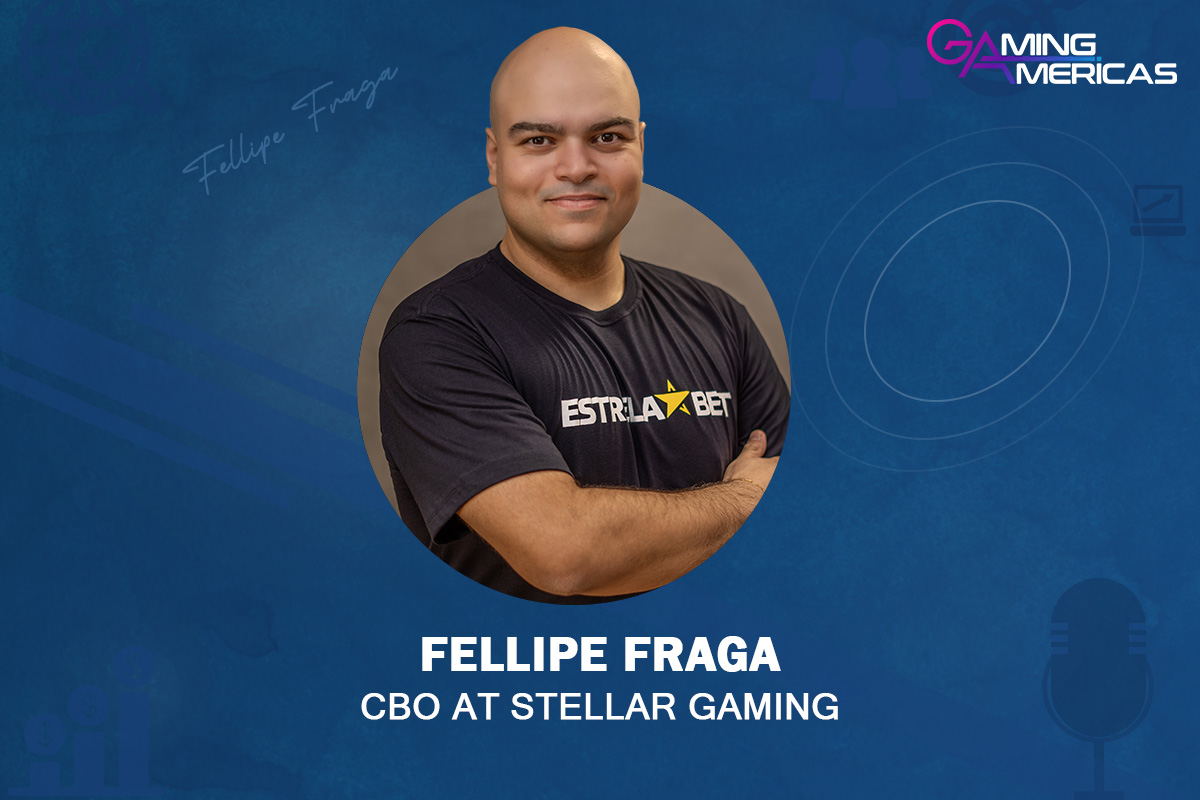
In an exclusive interview, Fellipe Fraga, CBO of Stellar Gaming, analyzes how the maturity of the regulated market, the advancement of responsible gaming, the evolution of technological infrastructure, and the fight against the illegal market will shape the “best World Cup of all time” for digital entertainment in Brazil, and the legacy this event will leave for the industry.
The World Cup 2026 is the first major ‘stress test’ of the fully regulated Brazilian market, with projections of around R$ 19 billion in turnover in the country. How does Stellar Gaming assess that legal certainty and operational maturity will make this tournament the ‘best World Cup of recent times’ for digital entertainment in Brazil?
Fellipe Fraga – In the 2022 World Cup, we were still fighting for market regulation, which unfortunately did not happen in time.
This time, we will have the opportunity to test not only at the technology level, but also in terms of customer behavior, as we will see the impact of the biggest sporting event in the world.
In addition, in regulated operations, the control tools provided for in the specific regulations ensure a safe experience for the customer and enhance the reach of responsible gaming.
With this, the next two months represent great expectations for the sector.
In a mass event that attracts millions of new bettors, concerns about problem gambling come into focus. EstrelaBet has a pioneering partnership with FUMEC. How does the AI-based predictive risk matrix work in practice to identify atypical patterns and ensure that the World Cup is a safe leisure moment, distancing the brand from the stigma of the ‘gray’ market of the past?
One of the great advantages of technological advancement is being able to use it to improve the collective experience, and it is no different when we talk about responsible gaming.
By introducing machine learning mechanisms with data and behavioral science concepts, we can improve risk predictability in behaviors where the customer shows signs of moving away from responsible gaming.
This allows the operation to act to reduce these risks, ensuring that betting entertainment is only what it is meant to be: fun.
We know that Brazilian users are mobile-first and do not tolerate friction during an important match. EstrelaBet has recently improved loading time by 60% and reduced live betting latency by 80%. How does this “Formula 1” infrastructure, led by the technology team, translate into trust and user retention during tournament peak moments?
The main direction we must take is to put ourselves in the customer’s shoes and understand what can create friction in the experience. A site that is unstable and slow is not well received.
That is why we adopted a mindset we called “EstrelaTech”, focused on technological development to improve the customer experience.
This automatically generates confidence in performance, stability, and service quality, which, combined with our technology partners, enables the delivery of a platform where entertainment happens more smoothly.
The brand’s CEO, João Gerçossimo, recently brought from SXSW the concept of the “Attention Economy 3.0”, where community belonging surpasses aggressive offers. How does EstrelaBet plan to apply this philosophy during the World Cup to retain customers without relying solely on transactional acquisition bonuses?
The World Cup is an excellent opportunity to bring the customer closer to the brand.
On June 5th, we will launch a major campaign that connects the audience and the brand to the national desire to achieve the sixth world title.
This connection goes beyond the product itself and is about the relationship between the customer and the company.
Our marketing team’s work has been outstanding, including in the choice of media partners, who are able to communicate with the audience and deliver key messages, not only about entertainment but also about a modern mindset regarding health, physical activity, and technology.
Sports integrity is a cornerstone of a strong regulated market. Today, EstrelaBet uses AI systems that achieve up to 90% accuracy in detecting suspicious behavior, such as multi-account abuse. How will this technology be used to protect the platform against fraudsters during the high volatility of the World Cup?
The betting product is essentially about uncertainty about the future, whether in an online game or a sporting event.
Any situation that tries to guarantee a future outcome empties the essence of the product.
Therefore, defending sports integrity is extremely important to us in itself, and combined with our passion for sport as an entertainment platform, it makes us even more committed to protecting it.
With technology and partnerships, we are able to monitor suspicious behavior and track fraud attempts in real time.
Although the World Cup carries the weight of being the biggest sporting event, with all eyes on it and consequently reducing the risk of suspicious behavior on the field, it is essential to ensure that there is also no negative influence on operations, allowing not only AI but also dialogue with partners to work in the best possible way.
With the World Cup taking place in the Americas (USA, Mexico, and Canada), the time zone is extremely favorable for Brazilian bettors. Combined with the advancement of 5G, what is EstrelaBet’s expectatio for the explosion of in-play betting and micro-moments during Brazil’s matches?
The Brazilian market already predominantly uses mobile phones. Matches taking place, often outside working hours, will allow the act of sitting down and watching a game to be enhanced.
Therefore, the trend is for a significant increase in activity during the World Cup, where the social factor—being with friends, watching the game together, and betting—will play an important role.
You, Fellipe Fraga, as the brand’s CBO, have been vocal about the fact that overly restricting licensed platforms only pushes users toward the illegal market. During an event with the scale of the World Cup, how can the regulated sector and the government work together to educate the public and prevent revenue leakage to unlicensed operators
The World Cup is a huge opportunity for the public sector in a broad sense, not only the regulator, but also the Federal Government and even legislators, to join forces in favor of the regulated sector.
Only through proper operations is it possible to have data, access to behavioral insights, and proper tax collection that will enable the country’s development, along with the correct promotion of responsible gaming initiatives.
We hope this awareness helps to combat an illegal market that, if not addressed, will only benefit illicit activities.
For the market, the 2026 World Cup is considered the “extended Super Bowl.” After the final whistle on July 19, what will be the main legacy of this US$ 35 billion tournament for the Brazilian sports betting market, considering the advances achieved in governance, technology, and end-user protection?
The 2026 World Cup will allow a full understanding of customer behavior in the betting market.
We will have data, results, and information collected from the various initiatives and strategies the market adopts.
The increase in volume will allow the validation of responsible gaming and sports integrity theses, as well as ensuring that users treat betting as proper entertainment during leisure moments while watching matches.
The post Stellar Gaming e the best World Cup of all time appeared first on Americas iGaming & Sports Betting News.











GR8_TECH has partnered with Setanta Bet, a locally licensed online betting operator in Georgia and part of the wider Setanta Sports ecosystem. The collaboration marks another important step in GR8_TECH’s expansion across regulated markets, with Setanta Bet successfully launching the GREAT_SPORTSBOOK iFrame solution.
By joining the Champions Club—GR8_TECH’s exclusive network of ambitious operators powered by high-performance technology—Setanta Bet gains access to a sportsbook solution designed to accelerate growth, enhance player engagement, and maximize operational efficiency.
“We are delighted to welcome Setanta Bet as a partner of GR8_TECH and a proud addition to our Champions Club,” said Vardan Hakobyan, Head of Sales at GR8_TECH. “The brand has successfully created a strong connection between sports content, player engagement, and entertainment. With GREAT_SPORTSBOOK iFrame, Setanta Bet can further enhance its betting offering while preserving its unique brand identity and delivering a richer, more engaging experience for its players.”
“Setanta Bet was launched on the foundation of the region’s largest and most successful sports media, representing the most vital part of Setanta as a major brand,” said Tamar Badashvili, CEO at Setanta Bet. “It is the ideal synergy between sports media and the betting business, a model already successfully proven by leading global brands. We launched our sportsbook in partnership with GR8_TECH because their regional experience, along with their platform’s features and functionality, perfectly matched our requirements. We believe this collaboration will be mutually beneficial; not only will Setanta Bet succeed, but our vast operational experience in the industry will provide valuable feedback to help further develop the GR8_TECH platform.”
GREAT_SPORTSBOOK iFrame provides Setanta Bet with a scalable, high-performance sportsbook solution designed for rapid deployment and local-market adaptability. The solution delivers more than 180,000 monthly events across 50+ sports and esports disciplines, supported by 24/7 live betting coverage, AI-powered recommendations, embedded CRM capabilities, and extensive customization options.
The solution also includes a comprehensive suite of engagement and revenue optimization tools, including cashout, multi-bets, odds personalization, margin personalization, geo-targeted content, customizable widgets, and a fully mobile-first experience designed to meet the expectations of modern players.
Get in touch with GR8_TECH to learn how the GREAT_SPORTSBOOK iFrame can help launch, upgrade, or scale your iGaming business.
GR8_TECH. Platform for Champions
GR8_TECH is an award-winning provider, delivering high-performance sportsbook and iGaming solutions that empower operators to lead and win in competitive markets. GR8_TECH’s comprehensive portfolio includes the GREAT_TURNKEY and GREAT_CRYPTO TURNKEY solutions, GREAT_SPORTSBOOK, and GREAT_CASINO AGGREGATION.
With a geo-specific approach to solutions, a focus on practical innovations, and an operator-first mindset, GR8_TECH helps its clients achieve measurable results in their target markets quickly and efficiently. Trusted by top operators worldwide, GR8_TECH has over 100 successful cases and earned multiple recognitions, including the title of Platform Provider of the Year by SBC Awards 2025.


BOYLE Sports is expanding its Serbia-based technology hub after hiring just over 65 people in the past 12 months, the company said on 14th July, 2026. The hires are based in Belgrade and support BOYLE Sports’ next phase of development as an omni-channel betting operator.
BOYLE Sports said it aims to increase headcount in Serbia by an additional 30% over the next few months. The company positioned the hub as a way to access experienced developers with gaming industry knowledge, as it continues to build out its technology capability.
Jim Parkins, Chief Technology Officer at BOYLE Sports, said: “Serbia gives us access to exceptional technology talent, with the development experience and gaming-sector knowledge we need to support our continued growth. We have been deliberate in how we have built the team, and are delighted with the calibre of people on board.
“AI is changing how technology teams work and we are embracing that while simultaneously continuing to invest in people, because the strongest businesses will be those that combine smart technology with talented teams who know how to apply it.”
The Serbia expansion follows BOYLE Sports’ recent announcement of a partnership with AWS, which the company said is intended to bolster its technology stack and support growth across the markets where it operates.
The post BOYLE Sports adds 65 hires to Belgrade tech hub, targets further growth appeared first on EE Gaming | Global iGaming & Tech Intelligence Hub.

Kaizen Gaming has released betting data from its Betano sportsbook indicating users are backing Argentina and France to reach the World Cup final. The company said the data was extracted on the morning of 13 July 2026 across 18 markets, excluding the UK.
In Betano’s “To Qualify” market for the semi-finals, Kaizen said 71% of users backed Argentina to qualify over England. France was a stronger favourite in the same market, with 79% of users expecting France to beat Spain.
Kaizen also shared player scoring selections for the semi-finals. It said Kylian Mbappe was backed by 60% of players to score in the first semi-final, while Lionel Messi led the “any time” scoring selections in the second semi-final at 34%.
For England’s match, Kaizen said users were backing Jude Bellingham to score (28%), ahead of captain Harry Kane (20%). The company noted that “The international data sources may vary according to betting option availability per market.”
The post Betano betting data favours Argentina and France to reach World Cup final appeared first on EE Gaming | Global iGaming & Tech Intelligence Hub.

-

 Latest News6 days ago
BetMakers Technology Group Selected to Distribute ATG Horse Racing Content Across Australia and New Zealand
-
Latest News7 days ago
Belatra signs cooperation deal to distribute slots via VeliGames
-
Compliance Updates7 days ago
Pernambuco court revokes Spribe’s interim relief in Aviator trademark dispute
-
Compliance Updates6 days ago
ACMA Warns MMA Fighter Jamie Mullarkey for Breaches of Online Gambling Laws
-
 Compliance Updates4 days ago
Arizona Department of Gaming Issues Cease-and-Desist Orders to Multiple Operators Linked to Underage Gambling and Illegal Activity
-
Latest News6 days ago
DEGEN Studios unleashes the Plague City chase
-
Canada6 days ago
Gaming Corps expands Entain partnership with major Canadian rollout
-
Latest News5 days ago
PG Soft appoints Hugo Baungartner as General Manager LatAm