Latest News
Are betting operators to blame, or is it Brazil’s economic framework of the last 35 years?


Are betting companies to blame or is it Brazil’s economic framework of the last 35 years?
This is the central question raised by Carlos Akira Sato in his analysis of Brazil’s rising household debt.
Rather than attributing over-indebtedness to sports betting platforms, he argues that the issue is rooted in decades of economic transformation shaped by credit expansion, financialization, and increasingly sophisticated systems of consumer stimulation across multiple sectors.
The debate surrounding Brazilian household debt has gained a new preferred target: sports betting platforms.
The so-called “bets” have taken center stage in the news, political discourse, and regulatory discussions, often associated with rising default rates and financial compulsiveness.
But perhaps the correct question is another one: did the over-indebtedness of Brazilian families really begin with bets?
The answer, under a serious historical analysis, is no.
The phenomenon predates the regulation of sports betting by decades and is linked to a profound economic, cultural, and technological transformation that began in the 1990s, when Brazil gradually abandoned a closed and inflationary economy to enter a modern logic of consumption, credit, and the financialization of everyday life.
The economic opening promoted during the Collor administration changed the country’s consumption patterns.
A few years later, the Real Plan brought monetary stability and transformed the population’s economic psychology itself.
For the first time, millions of Brazilians began financing goods, using credit cards, paying in installments, and incorporating debt as a normal part of economic life.
This process represented progress and financial inclusion.
But it also consolidated a new economic model based on the anticipation of families’ future income. Credit ceased to be an exception and became permanent infrastructure supporting national consumption.
Banks, retailers, and financial institutions quickly understood this change. Large retail chains stopped acting solely as product distributors and became financial platforms.
Private-label cards, sophisticated installment plans, and permanent financing mechanisms became part of consumers’ daily lives. In many cases, financial margins became just as relevant as the sale of the products themselves.
Throughout the 2000s, the model deepened.
The expansion of banking access, electronic payment methods, and fintechs accelerated the financialization of everyday life.
From 2013 onward, with the regulatory opening promoted by Law No. 12,865, mobile phones simultaneously became banks, digital wallets, credit platforms, marketplaces, and permanent environments for behavioral monetization.
Credit became instant, invisible, and integrated into the digital experience. Consumers started obtaining financing in just a few clicks, often within the purchasing flow itself. Brazil definitively entered the era of behavioral hyperstimulation of consumption.
And this is where the contemporary debate begins to reveal an important contradiction.
While the country spent decades building a sophisticated economic architecture based on credit expansion, emotional advertising, gamification, attention capture, and monetization of future income, structural investment in financial education remained insufficient.
Brazil taught its population how to consume before teaching them how to build wealth.
Today, virtually every relevant sector of the economy operates advanced behavioral stimulation mechanisms: digital retail, apps, streaming platforms, delivery services, marketplaces, banks, fintechs, and social networks.
Advertising is no longer merely informative; it has become algorithmic, personalized, and emotional. The modern consumer competes for attention and self-control against systems designed to maximize engagement and continuous consumption.
This phenomenon appears even in sectors rarely associated with regulatory debates.
The food retail industry, for example, uses sophisticated neuromarketing techniques to boost the consumption of ultra-processed foods, alcoholic beverages, and impulse-buy products. Yet few segments have faced a level of monitoring similar to that imposed on sports betting.
Brazil’s regulated betting sector emerged under one of the strictest frameworks in the digital economy.
Platforms are required to biometrically identify users, monitor behavior, track transactions, report suspicious activity to COAF, implement responsible gaming policies, and prevent bets financed through credit.
The Brazilian model requires prior deposits and prohibits “uncovered” betting.
In other words, regulators correctly understood that the combination of compulsiveness and credit could become socially explosive.
But here an inevitable question arises: why have sectors historically associated with the over-indebtedness of Brazilian families operated for decades under significantly lower levels of behavioral monitoring?
Data from CNC show that the percentage of indebted families reached 80.2% in February 2026 — the highest level in the historical series.
This scenario did not begin with bets. It is the result of decades of aggressive credit expansion, financialization of daily life, hyperstimulation of consumption, and the structural absence of economic education for the population.
Comparative framework: regulatory and behavioral obligations
| Topic / Obligation | Betting operators | Banks | Retail / Food |
|---|---|---|---|
| Formal customer identification (KYC) | Mandatory, robust, biometric | Mandatory | Limited |
| Account ownership validation | Mandatory | Generally mandatory | Usually nonexistent |
| Behavioral monitoring | High | Focused on fraud and credit | Low |
| Prohibition of credit use | Yes | No | No |
| Emotional advertising | Under increasing restrictions | Permitted with limits | Widely used |
| Protection against compulsiveness | Mandatory | Very limited | Practically nonexistent |
| Self-exclusion tools | Mandatory | Nonexistent | Nonexistent |
| Obligation to report to COAF | Yes | Yes | Limited |
| Source-of-funds control | Mandatory | Mandatory | Generally nonexistent |
| Behavioral oversight | Intense | Moderate | Low |
| Formal responsible consumption policies | Mandatory | Partial | Generally nonexistent |
Perhaps the most provocative point is precisely the regulatory asymmetry revealed by this debate.
Several sectors historically associated with compulsiveness, hyperconsumption, and dependency have operated for decades under a less interventionist regulatory logic than the one currently applied to sports betting.
In the end, the real debate may not simply be “how should betting be regulated?”, but rather how to prepare society to live in a digital, hyper-financialized economy permanently driven by attention capture, consumption, and behavioral monetization.
Carlos Akira Sato
Co-Founder of Fenynx Digital Assets and specialist in Regulated Markets, Financial Infrastructure, Governance, and Innovation. Vice President of Institutional Relations at PAGOS (Association for Electronic Payment Management).
The post Are betting operators to blame, or is it Brazil’s economic framework of the last 35 years? appeared first on Americas iGaming & Sports Betting News.













Midnite has agreed a partnership with Middlesbrough FC that will see the UK bookmaker become the club’s principal partner and front-of-shirt sponsor for the 2026/27 campaign, which Middlesbrough describes as its landmark 150th season.
The companies announced the deal alongside a fan activation at Riverside Stadium on Thursday, July 9, branded “This Season’s On Us”. The initiative offered supporters prizes including 2026/27 season tickets, 2026/27 shirts, match tickets, or a £25 club shop voucher, with fans required to answer Middlesbrough trivia and complete a football challenge.
Middlesbrough former players Craig Hignett and David Wheater attended the event, and, according to the company, took bonus attempts on behalf of participants who missed out.
Andrew Mook, Midnite’s Head of Brand Marketing, said:
“Middlesbrough have a storied history and we’re delighted to announce this partnership during such a monumental year with the club celebrating their 150th anniversary.
“It was great to see so many Middlesbrough fans at the “This Season’s On Us” activation, we hope they enjoyed taking part and meeting club legends, with David Wheater hitting top bins on several occasions and allowing fans to win big with season tickets.
“We can’t wait to get to Riverside Stadium in August to kick-off a new season and we’re excited to say that we have plenty of new and captivating campaigns planned.”
Lee Fryett, Middlesbrough FC Chief Commercial Officer, added:
“We’re delighted to welcome Midnite as our new Principal Partner.
“We’re looking forward to working closely with Midnite to develop engaging campaigns, content and unique experiences that bring our fans even closer to the club.
“We’re confident this partnership will provide real value for our supporters while supporting our ambitions both on and off the pitch.”
The post Midnite signs as Middlesbrough FC principal partner for 2026/27 season appeared first on EE Gaming | Global iGaming & Tech Intelligence Hub.
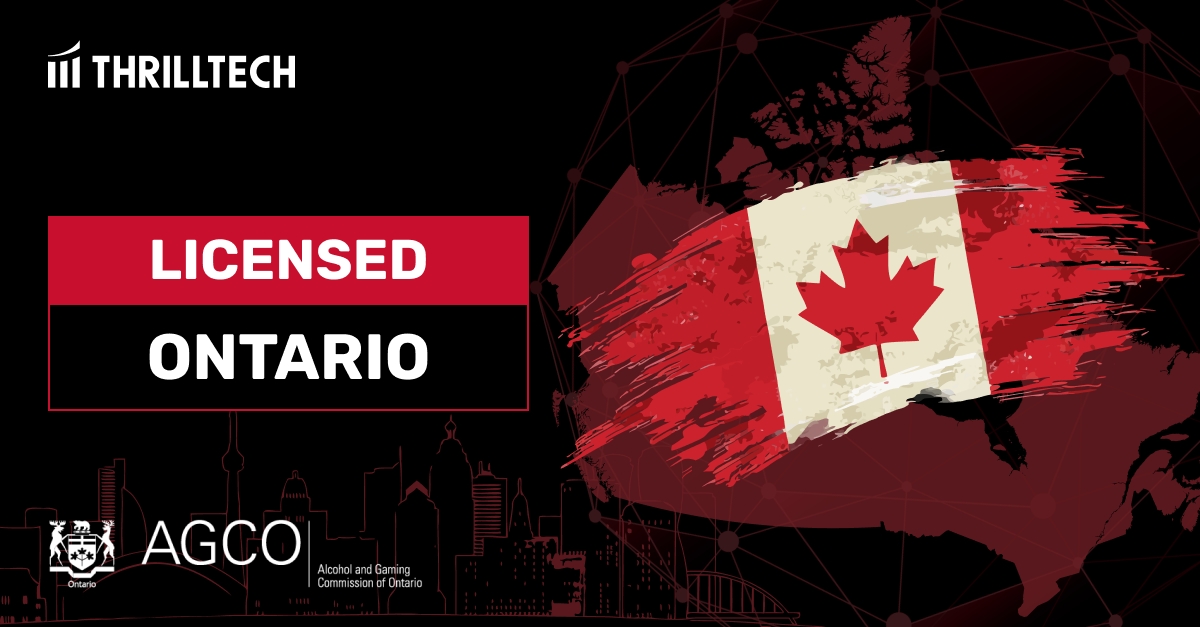
ThrillTech has been awarded a Gaming-Related Supplier licence by the Alcohol and Gaming Commission of Ontario (AGCO), clearing the company to launch in Ontario’s regulated market.
The licence allows ThrillTech to deploy its opt-in side bet jackpots technology with regulated online casino, sports betting and lottery operators across the province.
Benjamin Bradtke, Co-Founder of ThrillTech, said: “Securing our AGCO licence is a major step in our mission to transform how jackpots are delivered at scale across regulated markets. This latest certification is testament to our robust technology and trusted compliance frameworks, allowing us to continue our global growth trajectory. We are thrilled to bring our proven, compliant jackpot technology to Ontario, empowering locally licensed operators to uplift revenue without cannibalising existing spend.”
The company said its “ThrillPots” mechanics sit as an independent, player-funded side bet and do not alter the underlying game’s return-to-player mathematics.
ThrillTech said the Ontario approval enables its existing multinational partners that also operate in the province to launch its side bet jackpots locally, while it also holds talks with potential new operator partners. The company lists its regulated footprint as including the United Kingdom, Sweden, the Netherlands, Romania, Malta, Gibraltar, Brazil and Peru.
The post ThrillTech secures AGCO supplier licence for Ontario launch appeared first on EE Gaming | Global iGaming & Tech Intelligence Hub.
ThrillTech said it has been awarded a Gaming-Related Supplier licence by the Alcohol and Gaming Commission of Ontario (AGCO), clearing the company to offer its side-bet jackpot technology to regulated online casino, sports betting, and lottery operators in Ontario.
Benjamin Bradtke, Co-Founder of ThrillTech, said: “Securing our AGCO licence is a major step in our mission to transform how jackpots are delivered at scale across regulated markets. This latest certification is testament to our robust technology and trusted compliance frameworks, allowing us to continue our global growth trajectory. We are thrilled to bring our proven, compliant jackpot technology to Ontario, empowering locally licensed operators to uplift revenue without cannibalising existing spend.”
The company said its ThrillPots product lets operators add player-funded, opt-in side-bet jackpots on top of existing games, without changing gameplay or the underlying return-to-player (RTP) calculations. ThrillTech positions the mechanic as a way to drive incremental engagement and revenue.
ThrillTech said the Ontario licence enables existing multinational partners that also operate in the province to roll out ThrillTech-powered jackpots locally, and added it is in discussions with potential new operator partners. The company listed other regulated jurisdictions it serves as the United Kingdom, Sweden, the Netherlands, Romania, Malta, Gibraltar, Brazil, and Peru.
The post ThrillTech wins AGCO supplier licence to enter Ontario market appeared first on Americas iGaming & Sports Betting News.

-

 Compliance Updates5 days ago
Arizona Department of Gaming Issues Cease-and-Desist Orders to Multiple Operators Linked to Underage Gambling and Illegal Activity
-
 Latest News6 days ago
PG Soft appoints Hugo Baungartner as General Manager LatAm
-
Latest News6 days ago
ELA Games releases Flames Fruits Frenzy Hold and Win slot
-
Compliance Updates5 days ago
KONAMI GROUP’s Konami Gaming Inc. First to Submit Manufacturer License Application in Japan’s Emerging IR Market
-
Canada6 days ago
Canada’s Safer Gambling Gap: Why Market Success Doesn’t Always Equal Player Safety
-
Latest News6 days ago
Booming Games launches Fish Tales: Double Catch Max Scatter
-
Latest News6 days ago
Tom Horn Gaming ships Royal Ruby FeatureStorm slot worldwide on 14 July 2026
-
Latest News6 days ago
BC.GAME names Guillermo Ochoa brand ambassador for Mexico push