Compliance Updates
Labour MP Raises Questions Over Impact of UK Gambling Tax Hike on Gibraltar Economy

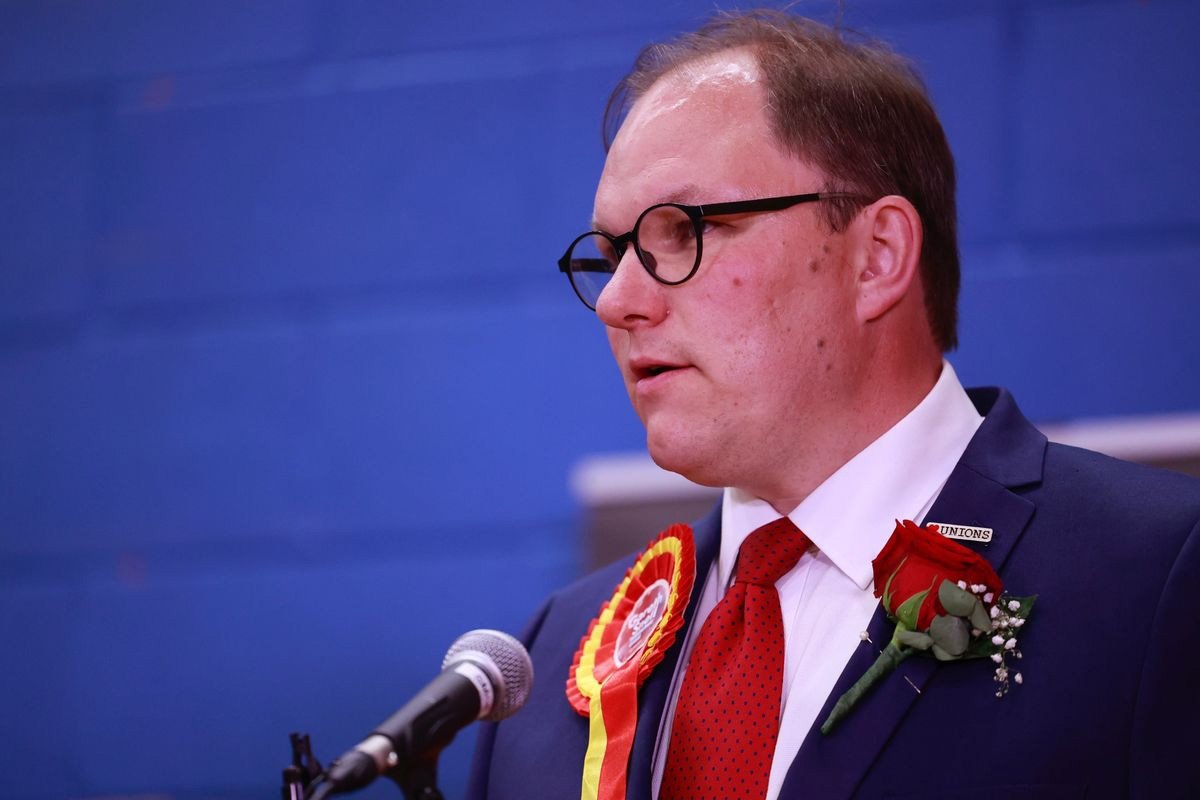
The House of Commons was reminded last week that the decisions it took could have “a huge impact” on Gibraltar, as a Labour MP warned that a planned increase to UK gaming taxes could “leave a huge hole” in the Rock’s economy.
Gareth Snell used a Commons debate on the Finance Bill to warn that changes to the UK’s remote gaming and remote betting duty could have a significant impact on Gibraltar’s public finances, and that higher costs in the regulated sector risked driving more gamblers into the black market.
Mr Snell tabled an amendment to the Bill requiring the UK Government to conduct an impact assessment on Gibraltar, whose economy he said was heavily reliant on the gaming and gambling sector.
Citing his discussions with Nigel Feetham, Gibraltar’s Minister for Trade, Industry and Justice, Mr Snell said the gaming accounts for 30% of Gibraltar’s GDP, employs 3500 people and generates one third of Gibraltar’s tax receipts.
He said companies with a footprint in Gibraltar pay Gibraltar corporation tax as well as levies in the UK and argued that changes to the UK duty structure could have an immediate effect on Gibraltar’s revenues because of the way the tax is applied.
“The minister will be acutely aware that the gaming and gambling sector in Gibraltar is a huge part of their economy,” he said, addressing Labour MP Dan Tomlinson, the Exchequer Secretary at the Treasury.
“So…anything that we do in this place that has an impact on the sector in Gibraltar will leave a huge hole in the Gibraltar economy which will have to be filled.”
Mr Snell also linked the issue to Gibraltar’s wider importance to the UK, saying tax decisions taken in Westminster could affect its ability to fund public services.
He said Gibraltar needed stability and called on the minister to set out what contact the Treasury had had with Gibraltar on the issue.
“Gibraltar is of strategic importance to us,” he said.
“It is part of the family of nations that make up who we are.”
“And decisions that we take in this Finance Bill are having a huge impact on their economy and on their ability to fund their public services and fund their defence.”
Alongside his comments on Gibraltar, Mr Snell devoted substantial attention to what he said were the risks of pushing consumers towards unregulated operators.
He tabled a separate amendment calling for an independent assessment of the impact of the duty changes on the black market, arguing that any effective response to gambling harm depended on keeping consumers inside the regulated sector.
He said the black market offered none of the protections available through licensed operators and warned that those using unregulated sites would be more exposed to harm.
“The more people we push into the black market, where there is no support, there is no gam care, there is no lockout system,” Mr Snell said.
“It means people are more at risk of harmful activity and being preyed upon by predatory organisations.”
“And companies that are outside of the UK do not pay taxes here and are simply not worried about the participants.”
He cited an independent study by Ernst and Young for the Betting and Gaming Council, which he said estimated that £6 billion worth of stakes could be diverted to the black market as a result of the changes.
He told the Commons this would amount to a 140% increase in stakes moving into unregulated channels.
“Now, the independent study done by Ernst and Young for the Betting and Gaming Council did come up that there is a potential for £6 billion worth of stakes to be diverted to black market as a result of this change,” Mr Snell said.
“That’s six billion pounds of stakes that were going to be made somewhere but will go into the black market.”
Mr Snell also said illicit operators were easily accessible and that money staked through those sites could be linked to criminal activity overseas.
“Every single one of us is no more than two clicks away from an unregulated gaming or gambling site, where, again, that money often goes into questionable activities overseas,” he said.
“Some of it is funding organised crime.”
Mr Snell said the Treasury had earmarked £26 million for the UK Gambling Commission as part of broader regulatory changes, but argued that the UK Government had not yet assessed whether that would be sufficient to address the scale of any shift to the black market.
He also said the Treasury had not given him an answer on when a post-implementation review might take place.
“To be honest, we just simply don’t know how big the impact is going to be,” he said.
“The assessment simply hasn’t been done by government to determine whether that £26 million is enough.”
In the debate, Mr Snell said his concern was not to revisit the principle of the tax changes themselves, but to secure an assessment of their unintended consequences for both Gibraltar and the black market.
Alex Ballinger, another Labour MP, took a different stance on the issues raised by Mr Snell, saying any impact on Gibraltar should be weighed against how operators fared in other jurisdictions with higher taxes than the UK.
“I think if the tax changes are going to be as economically damaging as claimed for Gibraltar, we do need to consider how it works in other jurisdictions, because there are often the same gambling organisations operating in other countries with much higher tax rates than the UK and they manage to survive profitably in those sectors,” he said.
“So I think we should take that into consideration when we’re looking at the impact on Gibraltar as well.”
As for concerns about pushing people to black market sites, he said the threat was “overblown” and other sectors such as the tobacco industry had employed a similar narrative in the past that later proved unfounded.
“And again, when we introduced the [gaming sector] point of consumption tax in 2014, again, there was no surge in unregulated or the black market gambling at that point either,” he added.
A study by the UK Gambling Commission in 2021 found only “a very small proportion” of UK gamblers ever used unlicensed sites, “and these were mostly by accident”.
Mr Ballinger welcomed investment to tackle harmful gambling.
“But I think we should not buy into the narrative that risks from the black market should stop us making changes that keep people safe from the most harmful forms of gambling,” he said.
Responding, Mr Tomlinson said he had met twice with Mr Feetham to discuss the impact of the changes on Gibraltar’s economy.
“I do understand there are significant impacts on the economy in Gibraltar and that is something that I hope to keep engaging on and discussing,” he said.
Mr Tomlinson was pressed by Mr Snell who asked whether he would give an assurance that there would be “no future surprises and no significant tax changes” that could impact Gibraltar negatively.
Mr Tomlinson declined “to write future budgets”, adding: “We have made a significant change when it comes to gambling taxation and rather than make further changes the Government will of course monitor to see the impact of that change.”
The Bill passed its third reading and the amendment on Gibraltar was not adopted.
The post Labour MP Raises Questions Over Impact of UK Gambling Tax Hike on Gibraltar Economy appeared first on Eastern European Gaming | Global iGaming & Tech Intelligence Hub.












Finland has submitted technical gambling regulations covering a regulatory data vault and the Official Control Signing Service (OCSS) to the EU’s Technical Regulation Information System (TRIS) on 10 July.
According to the notified documents, operators must submit signed gaming and player-account data to the authority through a secure SFTP data vault in a prescribed format. The rules also require operators to retain the data for five years and ensure “its integrity, availability and retrievability.”
The documentation also sets out requirements for using the authority’s OCSS to sign gaming data. It specifies signing generally every five minutes for gaming transactions and at least once daily for player-account data, alongside obligations to manage API keys and handle technical disruptions.
The technical documents are currently available only in Finnish. The press release says unofficial English translations have been prepared, titled “eCertification of Gaming Transactions and Gaming Account Transactions EN” and “Submission of Gaming Transactions and Gaming Account Transactions EN.”
The press release also lists the broader status of technical documentation supporting Finland’s new gambling regulation. It says randomness checks and reliability and information security requirements have been adopted into national legislation; the OCSS signing and data-vault transfer specifications have been notified via TRIS; player-account and game-event data specifications are being prepared following an earlier public consultation; a Ministry of the Interior decree is under public consultation; and drafts are still awaited covering player identification APIs, jurisdiction-wide self-exclusion checks, and certification requirements for games and platforms.
The post Finland notifies EU of gambling tech rules for data vault and OCSS signing appeared first on EE Gaming | Global iGaming & Tech Intelligence Hub.

Under the theme “Perspectives,” a total of 43 compliance staff members from the Merkur Group across various countries gathered from 30 June to 1 July to further develop compliance processes in a sustainable manner. Colleagues from Germany, Spain, England, Malta, Australia and the US traveled to the two-day meeting at Benkhausen Castle, the in-house training centre of the Merkur Group. The workshop set the stage with expert presentations on global and digital topics such as cybersecurity, risk management and artificial intelligence. A panel discussion featuring representatives from various international companies within the Merkur Group, as well as a digital quiz, rounded out the programme.
In keeping with its guiding principle, the workshop focused on sharing experiences, fostering global networking and providing impetus for the further development of compliance processes. Because informal exchanges are also key to close cooperation, the evening programme created a relaxed atmosphere and gave participants the opportunity to continue their conversations, make new connections, and further strengthen team spirit across company and national boundaries.
“The ideas and diverse perspectives gained during the workshop will now be incorporated into our day-to-day work and help us to continuously improve collaboration and existing processes,” said Ludwig Beckmann, Chief Compliance Officer of the Merkur Group.
The concluding feedback session also highlighted just how valuable the international exchange is. The term “collaboration” came up particularly often, a clear indication of how highly the participants value working closely together within the international compliance network.
The post Merkur Group Strengthens Global Compliance Strategy appeared first on EE Gaming | Global iGaming & Tech Intelligence Hub.
Anne Marie Caulfield
GRAI Launches New Campaign Helping Parents to Spot the Signs of Underage Gambling
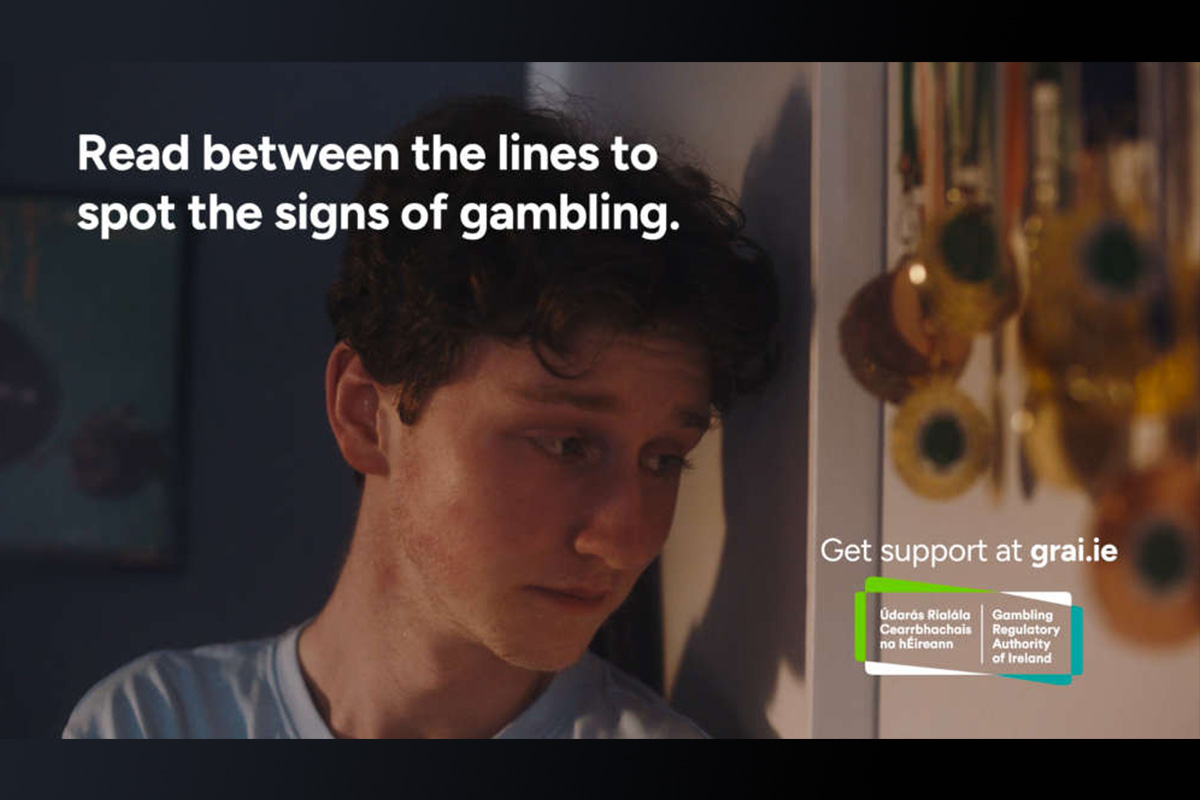
The Gambling Regulatory Authority of Ireland (GRAI) is encouraging parents and guardians to be alert to the signs of gambling among young people and to intervene early to prevent gambling harm.
The signs of gambling aren’t always visible, the GRAI in partnership with the Health Service Executive Addiction Services have developed dedicated advice on www.grai.ie to equip families with the knowledge to recognise the signs, advice on how to start the conversation with their children about gambling, and where to seek help if required.
To support the guidance, the GRAI has launched a national public awareness campaign across video on demand, radio, digital audio, and social media platforms, bringing this message directly to families across Ireland.
With the lines between entertainment and gambling increasingly blurred, especially online, what may look like harmless fun can still involve risk, money and chance in ways that affect young developing brains. Research commissioned by the GRAI and conducted by the Economic and Social Research Institute (ESRI) found that children who gamble are twice as likely to develop a gambling problem as adults.
Anne Marie Caulfield, CEO of the GRAI said: “We have launched this campaign to help parents start an important conversation about the risks of underage gambling. Children and young people are among the most at-risk members of Irish society when it comes to gambling exposure and harm. Children’s brains are still developing the judgement and impulse-control systems used to weigh up risk, which makes gambling appealing to them.
“With online gambling available at any time of the day, it is easy for the warning signs to be hidden. The guidance the GRAI developed with the HSE Addiction Services sets out some of the key behavioural signs to look out for in your child.”
The post GRAI Launches New Campaign Helping Parents to Spot the Signs of Underage Gambling appeared first on EE Gaming | Global iGaming & Tech Intelligence Hub.

-

 Compliance Updates7 days ago
Arizona Department of Gaming Issues Cease-and-Desist Orders to Multiple Operators Linked to Underage Gambling and Illegal Activity
-
Compliance Updates7 days ago
Arizona regulator orders five operators to stop alleged illegal gambling activity
-
 Latest News7 days ago
Silver Strike slot machines at the Plaza Hotel & Casino to offer new coins
-
Canada4 days ago
DraftKings Set to Launch its Online Sportsbook and Casino in Alberta
-
Latest News7 days ago
Tony Bellew signs as PartyPoker brand ambassador through 2026
-
Latest News7 days ago
Former WBC World Champion Tony Bellew Joins PartyPoker as Brand Ambassador
-
Canada4 days ago
Altenar Joins Alberta’s New Regulated iGaming Market
-
Bonus Bullets3 days ago
EveryMatrix’s Fantasma Games launches three-reel slot Bonus Bullets