Industry News
Glacial Pace of Change: Web Notifications Coming Soon to Apple Devices?

Apple’s dragging its feet in response to Anti-Trust Pressure; Bob Lawson, Optimove’s Director of Mobile offering, looks at what that actually means
Operators and mobile app developers love Apple’s App Store. Specifically, those who have a high percentage of their players on iPhones. They love the reach the stores give them to acquire new players.
Operators and mobile app developers dislike Apple’s App Store. They are tired of the hoops they need to jump through to get their app listed. Not to mention Apple’s 13,000-word “guidelines,” which include restrictions for types of apps they will accept, and where, AND the slice that the App Stores take on every dollar spent through the app, kicking a big hole in potential revenue operators can earn from their players.
It’s fair to say operators and mobile app developers alike have a love-hate relationship with the App Stores and Apple in particular.
Recently Apple has come under increasing pressure from Anti-Competition lobbyists to offer other ways for users to utilize their apps on iPhones. But a business with over 745 million software subscribers, grossing over $70bn in direct app revenue a year, isn’t going to give that up easily. Add to this their slowing revenue from hardware sales, and some commentators see Apple increasingly as a software company rather than a vendor of high-end devices. What are we to make of these somewhat conflicting messages? Consider the following:
- Apple is under pressure from antitrust regulators to show opportunities for companies that don’t, or can’t, have apps in the App Store. The ruling from their very public lawsuit with Epic Games in the US, and the EU ruling in favor of Spotify, also means that Apple needs to show tangible proof that the Apple ecosystem isn’t closed to competition.
- Apple is doing everything it can to hold onto its dominant position while appearing to listen to software makers’ concerns. They continue to make only minor tweaks to App Store terms in response to class actions and slowly introduce small, frequent changes. Those Changes make it very difficult for developers to stay on top of what would make Apple block their new app listing.
So how do the recent announcements at the June 22 WWDC event give us a clue to Apple’s response to pressures? First, it continues to show Apple’s strategy for the glacial pace of change.
- Apple has for years been reluctant, to say the least to allow applications other than approved apps on its store, accessing phone and browser functionality. Push notifications, for example, have been possible on Apple mobile apps since June 17, 2009. Just 11 months after it introduced the App Store in July 2008. They have always seen the Apple Push Notifications service (APNs) as a critical part of the iPhone experience.
And in the meantime, next door, Google has allowed much more extensive options for delivering notifications on Android devices. For example, since 2013, it has been possible to deliver notifications on an Android phone to users who don’t have the mobile app installed but have subscribed for notifications from a mobile responsive website or progressive web app (PWA).
But there’s a big difference here and it is that neither websites nor PWAs are downloaded from the Google Play Store, so they aren’t governed by the submission rules or delivering a revenue cut for the Play Store.
- Apple’s resistance to following Google’s lead could easily be seen as an attempt to restrict the popularity of Web-Based Applications over mobile apps published through its stores. After all, in the past it did follow Google’s lead when it first introduced notifications to mobile apps published through the Google Play Store.
- Apple argues that it’s about maximizing users’ customer experience, but increasingly it has been seen as anti-competitive. It’s strongly suspected that the recent announcement at WWDC 22 to introduce web push notifications to Apple devices is a way to demonstrate that they have no platform bias. They will soon introduce web notifications to browsers running on mobile devices, closing the gap between Mobile Apps and Web Apps.
- The technology has been available as a developer test build for months. At their developer conferences, Apple often announces features well into the future to get their community excited about what’s to come. Rarely do they announce something that will be available up to a year later. So why announce now, and why so far in advance?
- Antitrust pressure may have led to the announcement this year. And maybe, just maybe, by kicking the can down the road, the heat will come off. They have built it, but will they come? Only time will tell.
What does this mean for the industry?
Marketing automation tolls will relish the prospect of allowing more freedom around mobile devices. CRM Marketing Platforms have many customers who don’t, and won’t, have apps in the store for one reason or another. So being able to offer an experience that is on a par with that of a Native Mobile app is a compelling idea. The power of push notifications to re-engage with lapsed players and send reminders to Apple users, as has been possible with Android, is undoubtedly a good thing.
Is Apple ready to truly embrace customer experience across mobile and web applications? It’s anyone’s guess, well anyone not named Tim Cook, anyway. We’ll be watching this space closely over the coming months.
Bob Lawson is Director of Mobile Offerings at Optimove. He joined Optimove early in 2022, when it acquired Kumulos, the company he co-founded. Kumulos was a market-leading Mobile and Web Messaging Platform serving a broad range of industries. Bob has spent more than 18 years in technology, particularly Mobile MarTech. He has held commercially facing roles in start-ups, scale-ups, and large enterprise businesses, particularly in Mobile Technology. Before working in the Tech space, he spent 15 years in Financial Services, most recently as Marketing Director of one of Europe’s largest Fund Management Companies.
Powered by WPeMatico


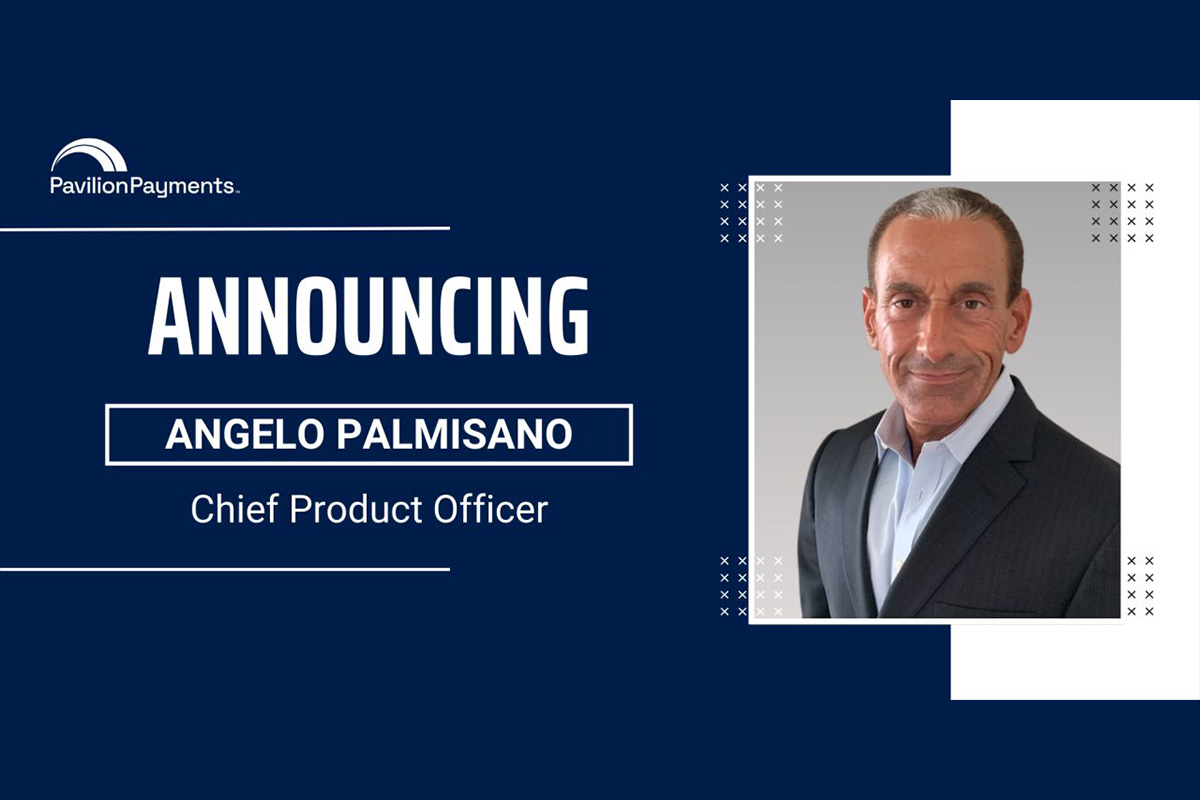
Pavilion Payments, the gaming industry’s leading omnichannel payment solutions provider, has appointed Angelo Palmisano as its Chief Product Officer. In this role, Palmisano will lead Pavilion Payments’ product and innovation strategy, guiding the continued evolution of the company’s platform and overseeing product development and design across its expanding portfolio of solutions for casino operators.
Palmisano brings more than 35 years of experience across the global gaming industry, with deep expertise in casino technology, product development, gaming systems, electronic gaming machines, payments, automation, loyalty technologies, and digital signage.
He founded Paltronics and grew the company into a global gaming technology business with offices across North America, Australia, South Africa, and Asia before the North American division was acquired by Aristocrat Technologies in 2014. Following the acquisition, Palmisano joined Aristocrat as Senior Vice President of Global Strategy and Innovation, where he helped evolve the company’s systems portfolio into a multi-property enterprise platform and supported major deployments with operators including Boyd Gaming, Choctaw Casinos, and the Cordish Companies. Prior to joining Pavilion Payments, he also served as Chief Strategy Officer for Win Systems.
In his new role, Palmisano will lead Pavilion Payments’ product organization, overseeing product development, design, and innovation, while guiding the continued evolution of Pavilion’s platform across payments, compliance, and iGaming initiatives.
“Angelo has been at the forefront of gaming technology innovation for many years, and we’re excited to have him join Pavilion. He brings a unique combination of entrepreneurial vision, product expertise, and deep industry knowledge. As we continue evolving our platform with deeper systems integrations and data insights, Angelo will be pivotal in guiding that journey,” said Diallo Gordon, CEO of Pavilion Payments.
Palmisano said the opportunity to join Pavilion Payments was driven by both the leadership team and the company’s strong product foundation.
“Pavilion has built a strong product foundation and has a real opportunity to capitalize on the technology and business shifts happening across our industry. I’m looking forward to working with the team to continue building solutions that help our customers succeed and support Pavilion’s long-term growth,” said Palmisano.
The post Pavilion Payments Appoints Angelo Palmisano as its Chief Product Officer appeared first on Americas iGaming & Sports Betting News.

LCKY Group has announced the appointment of Alex Manning as Group Chief Technology Officer, marking the first major leadership hire since the company’s strategic rebrand earlier this year.
Previously known as Glitnor Group, the entrepreneurial-led organisation entered a new phase of its development in January when it adopted the name LCKY Group. The rebrand was designed to better reflect the strong portfolio of brands operating under the group while also positioning the business for future expansion.
Alex’s appointment as Group CTO represents a significant step in this next stage of growth. With more than 25 years of experience across the fintech and iGaming sectors, Alex brings deep expertise in scaling businesses and leading complex digital transformations.
Prior to joining LCKY Group, Alex served as CTO of iGaming at Light & Wonder, where he led a major engineering transformation. During his four-year tenure, he transitioned the team to a product-led, cross-functional delivery model, oversaw the development of several first-of-their-kind products, and supported the company’s expansion into new regulated markets.
Richard Brown, Group CEO at LCKY Group, said:
“Everyone at LCKY Group is delighted to welcome Alex at what is a defining moment in the company’s evolution. He brings extensive experience across regulated fintech and iGaming markets, and his proven ability to guide organisations through successful scale-ups and digital transformations makes him an ideal fit for the role of Group CTO.”
Alex Manning, Group CTO at LCKY Group, added:
“I’m excited to join LCKY Group at a time when the business is focused on strengthening its international presence and growing its influence across key regulated markets. My priority will be to build on the strong culture that already exists within the group, creating a high-performance environment where teams can thrive, innovation is encouraged, and each of our brands is given the platform it deserves.”
The post LCKY Group announce Alex Manning as Group CTO appeared first on Eastern European Gaming | Global iGaming & Tech Intelligence Hub.

PropellerAds, a top performance advertising platform worldwide, has just published the 2025 Ads Safety Report, which offers an in-depth analysis of ad fraud trends, protective measures for the platform, and guidance for advertisers on compliance.
The report emphasizes that as fraudulent methods grow more advanced, the organization’s multi-tiered security measures are essential in protecting advertisers, traffic providers, and end users.
Advancing Ad Fraud Methods and High-Risk Areas
In 2025, ad fraud advanced considerably, transitioning from basic techniques to more intricate, infrastructure-intensive schemes. Fraudsters exploited cloaking, malware distribution networks, and social engineering tactics aimed at messenger accounts, frequently across various ad formats. PropellerAds enhanced initial moderation and foundational detection to identify high-risk actions before campaigns launched.
Throughout the year, the platform processed 729,794 campaign rejections, mainly driven by content compliance and user safety issues, with adult content and malware alerts representing the largest portions. These actions guaranteed that campaigns were halted prior to delivery, safeguarding advertisers, publishers, and end users, while upholding a consistent and reliable advertising landscape. In comparison to 2024, campaign rejections rose by 35%, indicating enhanced moderation reach and more robust preventive measures.
Markets of high value, such as Turkey and Spanish-speaking areas, saw increased levels of fraudulent behavior. Approximately 80% of identified attacks aimed at users of Windows and Android. Fraud patterns typically integrated technical, behavioral, and content indicators, emphasizing the necessity for ongoing monitoring and thorough infrastructure evaluation.
High-Risk Accounts and Safeguarding Methods
Cloaking continued to be the primary high-risk infraction, making up more than 80% of verified account suspensions. This method consists of displaying varying content to moderation systems and users, masking the actual essence of campaigns. Ransomware, unsuccessful identity verification, and scam schemes also played a role in account suspensions, albeit to a smaller degree. Fraud that relies on heavy infrastructure necessitates multi-tiered enforcement and ongoing monitoring to guarantee platform safety.
In 2025, schemes of fraud grew more advanced. Cloaking methods encompassed multi-tiered traffic management, selective content distribution, and decentralized architecture. Malware distribution has progressed from basic redirects to immediate file downloads or complex interactions. Incidents of Messenger account hijacking rose, featuring phishing sites, counterfeit login forms, and mobile-centric social engineering assaults. Certain campaigns even utilized compromised or left-behind servers and domains, necessitating thorough technical and behavioral analysis for detection.
AI and automation contributed to fraud prevention by analyzing behavioral patterns, identifying high-risk signals, and aiding expert evaluations. Although fraudsters tried to utilize AI for creating counterfeit documents or modifying creative assets, PropellerAds guarantees that all campaigns undergo expert reviews and infrastructure checks prior to traffic delivery, stopping high-risk operations from accessing users.
Advertiser Adherence and Risk Oversight
PropellerAds advises advertisers to adhere closely to platform guidelines, verify that ad content aligns with format and regional specifications, comprehend the entire user experience, and track infrastructure and domain reputation. The use of cloaking or misleading tactics is deemed high-risk and typically leads to permanent account termination.
The PropellerAds team highlights that preventing fraud is an ongoing and developing process that demands technology, expert evaluation, and collaboration across the ecosystem. The organization continues to prioritize improving platform safety, ensuring transparency, and safeguarding all individuals involved in the advertising ecosystem.
The post PropellerAds 2025 Ad Safety Outlook appeared first on Eastern European Gaming | Global iGaming & Tech Intelligence Hub.

-

 Agilysys Inc6 days ago
Winford Resort & Casino Manila Philippines Deploys Agilysys Hospitality Technology to Elevate Operations and Service
-
Inferno Mayhem7 days ago
PG Soft cranks up the volume with electrifying Inferno Mayhem slot
-
Brazil7 days ago
Brazil intensifies debate on betting regulation as Lula criticizes online gambling
-
Celtic Coins7 days ago
Spinomenal expands Hold & Hit 3×3 series with Celtic Coins
-
Africa6 days ago
Booming Games teams up with Agreegain to power continued African growth
-
Canada6 days ago
Wazdan launches Green Brick Labs partnership via Maverick Games to expand Ontario reach
-
Brasil7 days ago
Brasil intensifica el debate sobre la regulación de apuestas mientras Lula critica el juego online
-
Australia5 days ago
Regulating the Game Global Awards: First-Ever Winners Announced